
State Action For Employment Disputes: How To Choose An Agency
Explore how federal and state agencies, laws, and procedures work together when employees pursue workplace disputes and protect their rights.
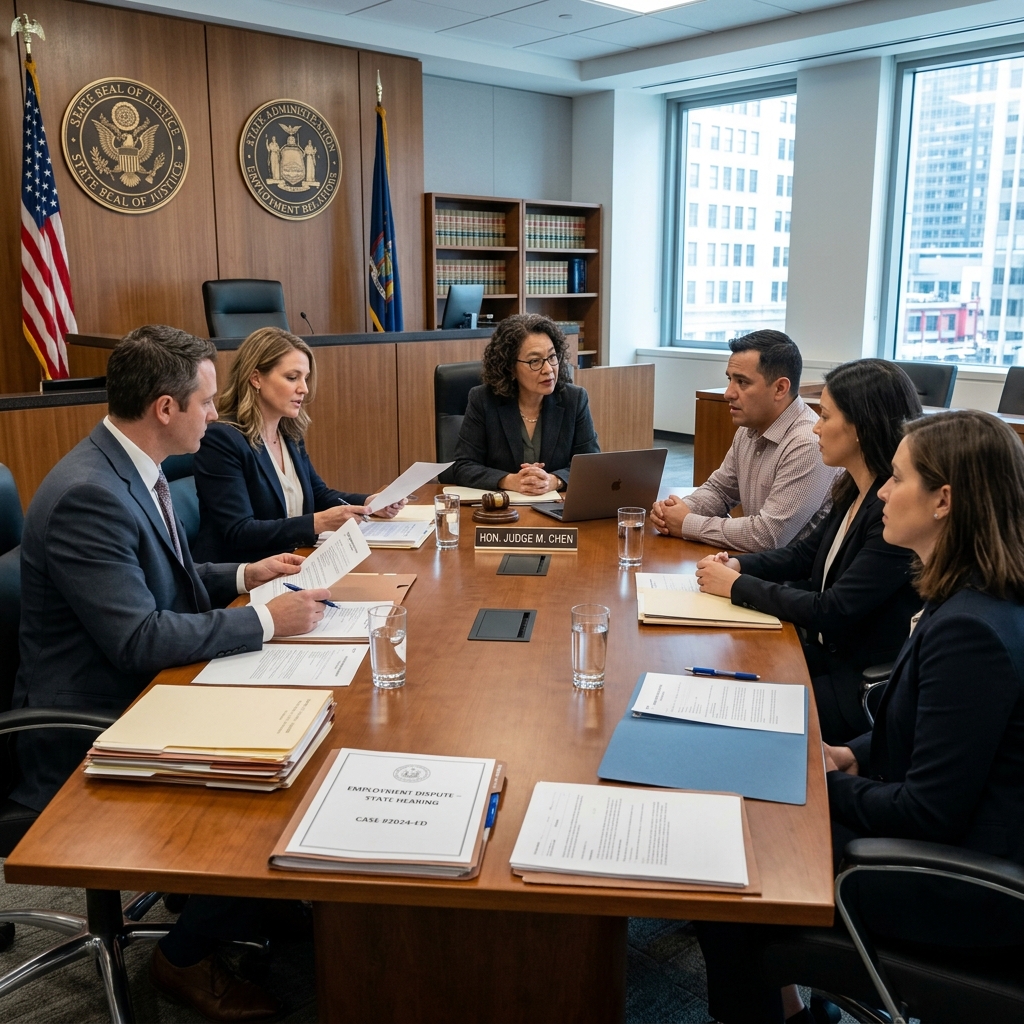
Workplace conflicts rarely stay private. When an employee faces unpaid wages, discrimination, harassment, unsafe conditions, or retaliation for asserting legal rights, government agencies often become involved. State and federal bodies share responsibility for enforcing employment laws, and knowing how this system works is essential for anyone considering a formal complaint or claim.
Federal law sets a baseline of protections for workers, while states frequently add additional rights or create different enforcement mechanisms. As a result, pursuing an employment dispute usually means deciding whether to turn first to a state agency, a federal agency, or, in some cases, the courts.
Layers of Workplace Regulation: Federal, State, and Local
Employment law in the United States operates through overlapping layers of regulation. Each level of government plays a distinctive role in shaping and enforcing workplace rules.
Federal Framework for Employment Rights
The federal government establishes core workplace standards that apply across the country. Many of these rules are enforced by the U.S. Department of Labor (DOL), which oversees wage and hour laws, family and medical leave obligations, and certain benefit-related requirements under statutes such as the Fair Labor Standards Act (FLSA) and the Family and Medical Leave Act (FMLA).
Several specialized federal agencies also enforce workplace protections:
- Equal Employment Opportunity Commission (EEOC) – Investigates and prosecutes claims of discrimination, harassment, and retaliation under federal civil rights laws, including Title VII, the Americans with Disabilities Act (ADA), and the Age Discrimination in Employment Act (ADEA).
- Occupational Safety and Health Administration (OSHA) – Issues and enforces safety and health standards, conducts inspections, and responds to complaints about dangerous working conditions.
- National Labor Relations Board (NLRB) – Administers federal law governing union formation, collective bargaining, and unfair labor practices in many private workplaces.
These agencies provide complaint procedures, investigation powers, and in some cases the ability to seek remedies such as back pay, reinstatement, or civil penalties.
State and Local Employment Laws
Every state also maintains its own labor and employment laws, enforced through state departments of labor or human rights agencies. These bodies can adopt regulations, investigate complaints, and pursue enforcement actions regarding state-specific rules on wages, hours, discrimination, and related issues.
Key features of state-level regulation include:
- State wage and hour rules – Many states enact minimum wage levels higher than the federal standard and set additional rules for overtime, meal and rest breaks, or timing of paychecks.
- State anti-discrimination protections – States often extend protections to additional characteristics, such as marital status, sexual orientation, gender identity, or prior conviction history.
- Retaliation protections – State laws commonly prohibit employers from punishing workers who file complaints or participate in investigations, with agencies providing complaint forms and hotlines.
- Public sector-specific rules – Employees of state and local governments may have extra procedural rights, such as due process protections before termination or discipline.
Local governments—cities, counties, and municipalities—sometimes add further requirements, such as local minimum wage ordinances or paid sick leave mandates. These can be enforced by local offices or coordinated through state agencies.
Where Employees Typically Start: State Agencies
In many routine employment disputes, workers begin by contacting a state labor or human rights agency rather than going directly to court. These agencies are designed to receive complaints, conduct investigations, and, where appropriate, issue orders or seek settlements.
Common Issues Handled at the State Level
State agencies frequently serve as the first point of contact for disputes involving:
- Wage and hour violations – Unpaid overtime, minimum wage violations, unpaid final paychecks, illegal deductions, or failure to pay for required off-the-clock work.
- Discrimination and harassment – Unequal treatment or hostile work environment based on protected characteristics, handled by state human rights or civil rights agencies.
- Retaliation – Adverse action (such as firing, demotion, or reduction in hours) after an employee complains about violations of state labor law.
- Safety complaints – Reports of dangerous conditions, insufficient safety training, or violations of state occupational safety regulations when states operate their own OSHA-approved plans.
Employees may be able to file complaints online, by mail, or in person. Many agencies provide guidance in multiple languages and offer support for workers who are unsure which type of complaint fits their situation.
Why State Action Matters
State action is crucial because it can determine:
- Which legal standards apply – State laws may provide more generous protections or longer filing deadlines than federal law.
- Available remedies – Some state statutes allow for treble (triple) damages, civil penalties, or attorneys’ fees for certain violations, especially wage theft.[10]
- Procedural requirements – In some jurisdictions, an administrative complaint is mandatory before an employee can file a lawsuit in court, particularly in discrimination cases.
- Access to justice – State agencies can offer lower-cost, more accessible alternatives to litigation, helping workers who cannot afford private counsel.[10]
Because the interplay among these laws is complex, many employees consult legal counsel or worker advocacy organizations before choosing a path.[10]
Key Federal and State Bodies in Employment Disputes
When a dispute arises, multiple agencies may potentially have jurisdiction. Understanding the differences among them helps employees select the most effective route.
| Agency | Level | Primary Focus | Typical Employee Complaints |
|---|---|---|---|
| Department of Labor (DOL) | Federal | Wages, hours, leave, certain benefits | Minimum wage, overtime, misclassification, FMLA rights |
| EEOC | Federal | Discrimination, harassment, retaliation | Unequal pay, hostile environment, failure to accommodate |
| NLRB | Federal | Union rights and collective bargaining | Unfair labor practices, interference with organizing |
| OSHA or State OSHA Plan | Federal/State | Workplace safety and health | Hazardous conditions, lack of protective equipment |
| State Department of Labor | State | State wage, hour, and retaliation laws | State minimum wage, retaliation for complaints, pay frequency |
| State Human Rights or Civil Rights Agency | State | State-level discrimination and harassment protections | Broader protected categories, state contract nondiscrimination clauses |
Choosing Between Federal and State Remedies
Employees often face a strategic choice: pursue a federal claim, a state claim, or both (where allowed). The optimal route depends on the facts, deadlines, desired remedies, and the comparative strength of federal versus state law in a given area.[10]
Factors to Consider When Selecting a Forum
- Scope of protection – State laws may cover more workers (for example, smaller employers) or additional protected categories beyond federal law.
- Statute of limitations – Filing deadlines can differ significantly between federal and state systems; some worker advocates encourage states to extend limitations periods to improve access to justice.[10]
- Remedies and damages – Certain state wage laws allow enhanced damages or administrative penalties that might not be available under federal law.[10]
- Administrative prerequisites – Discrimination claims may require filing with an agency (state or EEOC) before a lawsuit can be filed; wage claims may be pursued administratively or in court depending on the jurisdiction.
- Practical considerations – The workload and resources of a given agency can affect investigation speed and the likelihood of a negotiated resolution.
Because many disputes implicate both federal and state rights, coordination between agencies is common. For example, some states have “worksharing” agreements with the EEOC for discrimination complaints, allowing a single filing to satisfy both state and federal requirements.
Alternative Paths: Arbitration and Mediation
Not all employment disputes go through public agencies or courts. Employers often include arbitration or mediation clauses in employment contracts or handbooks, directing certain conflicts into private dispute resolution processes.
Employment Arbitration
Arbitration is a private process in which an impartial arbitrator decides the dispute based on evidence and arguments from both sides. Organizations such as the American Arbitration Association (AAA) administer employment arbitration proceedings under established rules.
Typical features of employment arbitration include:
- Filing a demand – A party submits a demand for arbitration, copies the contract clause requiring arbitration, and pays a filing fee. For AAA-administered employment cases, employee fees are generally capped to keep the process accessible.
- Selection of arbitrator – The parties select an arbitrator from a roster, often someone with experience in employment law.
- Limited public record – Proceedings and outcomes are usually confidential, which can influence how disputes are perceived and whether systemic issues become publicly visible.
Recent federal legislation has limited the reach of mandatory arbitration in specific areas. For instance, a 2022 amendment to the Federal Arbitration Act allows employees alleging sexual harassment or sexual assault to choose court instead of mandatory arbitration, even if they signed an arbitration agreement.
Employment Mediation
Mediation is a facilitated negotiation process. While mediators do not issue binding decisions, they may help the parties craft voluntary settlements. The AAA and other organizations provide structured mediation services in employment cases.
Mediation can be initiated by:
- Contract clause – Many employment contracts encourage or require mediation before litigation or arbitration.
- Mutual agreement – Parties may voluntarily agree to mediate a dispute even in the absence of a contract clause.
Because mediation is collaborative and typically faster than formal proceedings, it can be a useful option alongside or in place of state agency complaints or lawsuits.
Public Sector Employment and State Action
Employment disputes involving public sector workers raise additional issues because government agencies act both as employers and as regulators. Public employees may have constitutional or statutory due process rights that require notice and an opportunity to respond before termination or significant discipline.
The legal concept of state action is central in these cases. Courts examine whether a challenged employment decision is attributable to the state itself, which can trigger constitutional protections under provisions such as the Fourteenth Amendment.
When public employees challenge discipline or termination, they may pursue internal grievance procedures, state administrative appeals, or judicial review. These routes can coexist with standard labor and employment claims, reflecting the overlapping roles of the state as both employer and regulator.
Retaliation and Protection for Workers Who Assert Rights
Retaliation laws ensure that workers can seek enforcement of labor rights without fear of punishment. For example, New York’s Department of Labor emphasizes that employees who complain about labor law violations or file wage complaints must not be retaliated against; they provide mechanisms for workers to report retaliation directly to the agency.
Anti-retaliation provisions generally prohibit actions such as:
- Firing or laying off an employee after a complaint
- Demoting, transferring, or reducing hours in response to protected activity
- Threatening immigration-related consequences or reporting workers for asserting wage rights
- Blacklisting or spreading negative information to deter future employment
Employees who experience retaliation can often file separate complaints or claims, and in some jurisdictions, retaliation can result in additional penalties or damages beyond the underlying violation.[10]
Practical Tips for Employees Considering State Action
An employee facing a workplace dispute can take several steps to prepare for possible state or federal action:
- Document events – Keep detailed records of schedules, pay stubs, performance evaluations, emails, text messages, and notes about incidents.
- Identify the legal issue – Determine whether the dispute primarily involves wages, discrimination, safety, retaliation, or union-related rights; this affects which agency is appropriate.
- Check deadlines – Look up or confirm statutes of limitations and filing deadlines for complaints or claims in your jurisdiction.[10]
- Explore agency guidance – Many state labor and human rights agencies provide clear instructions, forms, and FAQs to assist workers.
- Consult legal counsel – An employment lawyer can help evaluate strategic choices, including whether state or federal law provides stronger protections and what remedies are realistically available.
Frequently Asked Questions
Do I always have to start with a state agency before going to court?
Not always. Some claims, especially wage disputes, can be filed directly in court in many jurisdictions. However, discrimination and certain public sector employment claims may require filing with an administrative agency first. The rules depend on the type of claim and the laws of your state.
Can I file both a state and a federal discrimination complaint?
In many states, filing with the local human rights agency can also count as filing with the EEOC under a worksharing agreement, which helps avoid duplication. In other situations, separate filings may be necessary. Employees should check local procedures or seek legal advice before filing.
What if my employer requires arbitration for all disputes?
Arbitration clauses can be enforceable for many employment disputes, but recent federal law allows employees bringing sexual harassment or sexual assault claims to choose court instead, regardless of pre-dispute arbitration agreements. Some states also impose additional limits on waiving employment rights. Reviewing the clause with an attorney can clarify your options.
How do I know which agency to contact?
Agency websites typically describe the kinds of complaints they handle, such as wage violations, discrimination, or safety hazards. State departments of labor often include guidance explaining when to contact them versus another body, and many provide telephone hotlines or email addresses for questions.
What if my employer retaliates after I file a complaint?
Retaliation is itself a separate violation of many labor and anti-discrimination laws. Employees who experience retaliation can often file a new complaint or amend an existing one, and may be entitled to additional remedies such as reinstatement or enhanced damages.[10]
References
- State Action to Pursue Employment Disputes — LegalMatch. 2023-05-01. https://www.legalmatch.com/law-library/article/state-action-to-pursue-employment-disputes.html
- State Action Doctrine, U.S. Constitution Annotated — Legal Information Institute, Cornell Law School. 2020-07-01. https://www.law.cornell.edu/constitution-conan/amendment-14/state-action-doctrine
- Retaliation — New York State Department of Labor. 2023-03-10. https://dol.ny.gov/retaliation
- Workplace Dispute Resolution: Employment Arbitration & Mediation — American Arbitration Association. 2022-11-15. https://www.adr.org/industries/employment
- Employers Can’t Require Employees to Arbitrate or Waive Collective Actions of Sexual Assault or Sexual Harassment Disputes — Miller Nash LLP. 2022-03-10. https://www.millernash.com/industry-news/employers-cant-require-employees-to-arbitrate-or-waive-collective-actions-of-sexual-assault-or-sexual-harassment-disputes
- Access to Justice: State Policy Clearinghouse — National Institute for Workers’ Rights. 2023-06-20. https://niwr.org/state-policy-clearinghouse/spc-access-to-justice/
- Legislation: Equal Employment Opportunities in State Contracts (Section 312) — New York State Senate. 2019-01-01. https://www.nysenate.gov/legislation/laws/EXC/312
Similar Articles








Read full bio of medha deb




