
Can Cops Confiscate Your Phone for Filming Them?
Know your rights: Police generally cannot take your phone for filming public activities, but exceptions apply under specific legal conditions.
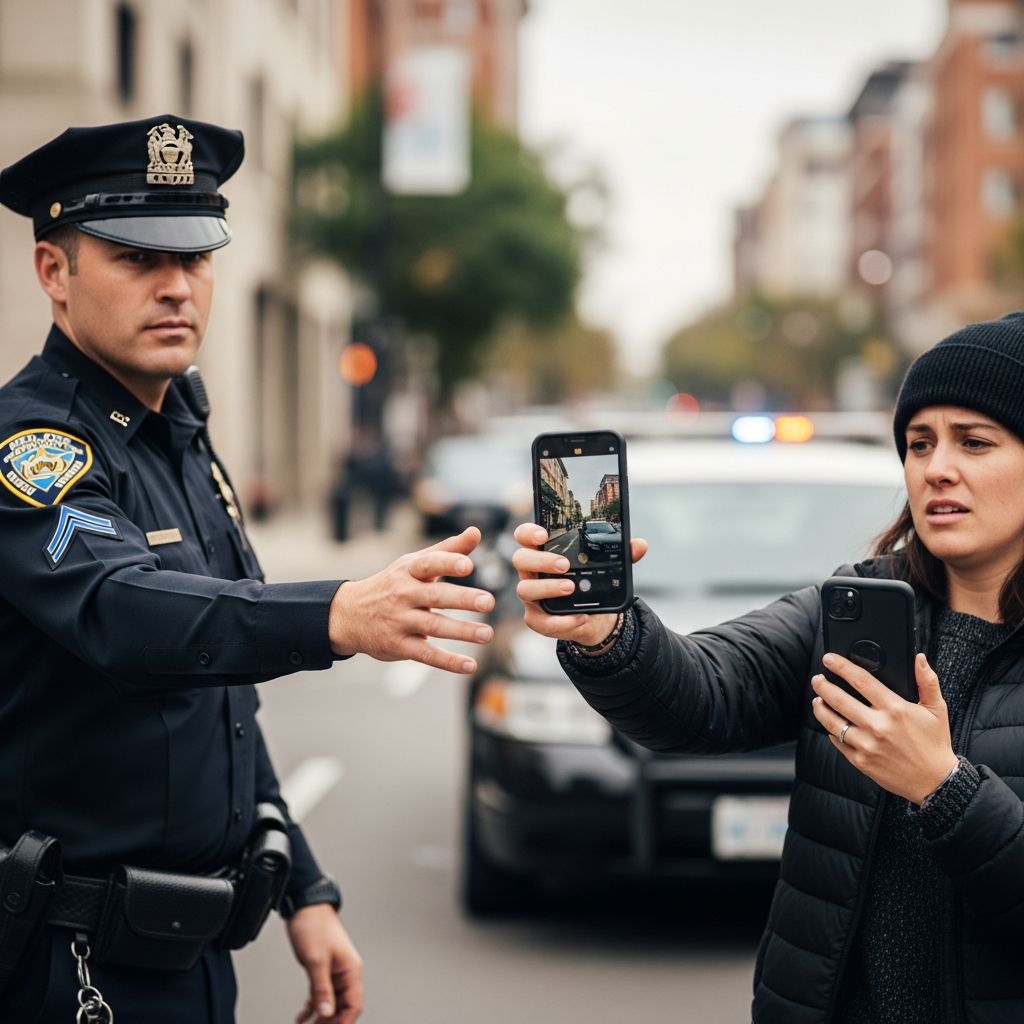
Your smartphone is more than a communication tool—it’s a powerful device for documenting public events, including interactions with law enforcement. In an era where police accountability is under scrutiny, many citizens wonder: if I record officers performing their duties in public, can they legally take my phone? The short answer is no, in most cases, thanks to robust First Amendment protections. However, nuances exist around interference, evidence preservation, and warrant requirements that every recorder should understand.
This comprehensive guide breaks down the legal landscape, drawing from federal court decisions, ACLU advocacy, and practical advice. Whether you’re a bystander at a protest, a concerned parent during a traffic stop, or an activist monitoring patrols, knowing these rules empowers you to exercise your rights confidently and safely.
The Constitutional Foundation of Recording Police
The right to record police stems directly from the
First Amendment
, which safeguards freedom of speech and the press. Courts across the U.S. have consistently ruled that capturing video or audio of officers in public spaces constitutes protected expressive activity. Police perform official duties as government agents in plain view, forfeiting any reasonable expectation of privacy in those settings.Federal circuits, including the First, Third, Seventh, Ninth, and Eleventh, have issued binding precedents affirming this right. For instance, rulings emphasize that bystanders may film from a safe distance without obstructing operations. This protection extends to smartphones, as modern devices are ubiquitous tools for journalism and civic oversight.
- Key Principle: No expectation of privacy for public police actions.
- Scope: Applies to arrests, traffic stops, protests, and routine patrols.
- Live Streaming: Equally protected, as platforms like Facebook or YouTube amplify public discourse.
State laws vary slightly, but federal supremacy ensures core protections nationwide. In places without strict wiretapping statutes, like New York, recording audio alongside video poses no issue if done openly in public.
When Police Cannot Touch Your Device
Officers lack authority to demand you stop recording, delete footage, or surrender your phone solely because you’re documenting them. Any such order infringes on your rights unless tied to legitimate safety or investigative needs.
| Scenario | Legal Status | Why Protected |
|---|---|---|
| Filming an arrest from sidewalk | Allowed | First Amendment; public space |
| Recording traffic stop nearby | Allowed | No interference assumed |
| Live-streaming protest policing | Allowed | Enhances accountability |
| Officer demands deletion | Illegal | Tampering violates evidence integrity |
Even if police claim ‘interference,’ courts define it narrowly: physical blockage, refusal to step back when ordered, or endangering safety. Standing 10-15 feet away with your phone raised typically clears this bar. Verbally asserting your rights calmly reinforces compliance without escalation.
Exceptions: When Seizure Might Be Justified
Absolute rights have limits. Police may intervene if your recording genuinely hampers duties or captures potential evidence of a crime unrelated to their conduct.
- Obstruction or Interference: If ordered to retreat for safety and you refuse, officers can detain you. Proximity that blocks views or audio for other officers crosses the line.
- Exigent Circumstances: Immediate threats, like evidence destruction (e.g., you attempting to delete footage mid-incident), allow temporary seizure without warrant.
- Evidence on Device: If your phone holds material pertinent to an ongoing crime (e.g., filming a robbery then the aftermath), police might secure it—but only after supervisor approval and with a warrant for search.
Post-seizure, protocols in departments like Washington, DC, mandate warrants before accessing contents. The Supreme Court’s Riley v. California (2014) ruling cements this: phones’ vast data troves demand judicial oversight, not on-scene rummaging.
Real-World Court Victories Protecting Recorders
Landmark cases illustrate these principles in action. In Massachusetts, ACLU litigation struck down a 1968 wiretap law misused against ‘secret’ public recordings, affirming open filming even if discreet for safety. Boston activists, fearing felony charges, secured a federal injunction clarifying that public police duties fall outside wiretap prohibitions.
In California, defense attorneys highlight that no warrant equals no seizure for mere recording. Courts reject ‘interference’ pretexts pushing recorders beyond effective range, viewing them as rights violations. These precedents bind lower courts, offering nationwide leverage.
Police cannot seize or examine your phone without a warrant, nor delete material—ever.
Navigating High-Tension Encounters
Knowledge alone isn’t enough; execution matters. During volatile moments like arrests or demonstrations, de-escalation preserves your footage and freedom.
- Stay calm and compliant with non-recording orders (e.g., ‘Step back’).
- Announce: ‘I’m recording public activities in a public place; I won’t interfere.’
- Position safely: Use zoom features to maintain distance.
- Backup footage: Cloud sync or multiple devices mitigate seizure risks.
- Share promptly: Upload to secure platforms before potential confiscation.
If intimidated, note badge numbers, vehicle details, and witnesses. Politely decline consent to searches: ‘I do not consent to searches.’
What Happens If They Take Your Phone Anyway?
Illegal seizures happen despite the law. Officers might grab devices during chaos, claiming necessity. Your recourse includes:
| Action | Timeline | Potential Outcome |
|---|---|---|
| File police report | Immediately | Official record of incident |
| Contact ACLU or civil rights lawyer | 24-48 hours | Legal support, 1983 claim |
| Demand return/suppression | Court filing | Evidence tossed, device back |
| Sue for damages | Within statute limits | Compensation for violations |
Section 1983 lawsuits target constitutional breaches, yielding phone return, evidence suppression, and monetary awards. Strong cases feature clear overreach, like warrantless searches revealing private data.
State-by-State Variations and Best Practices
While federal law dominates, states differ:
- One-Party Consent States: Easiest for audio (e.g., New York, California).
- Two-Party States: Public exception often applies to police (check locally).
- Protest Hotspots: Enhanced protections in cities like DC via policy reforms.
Best practices: Download rights apps (e.g., Mobile Justice), train with groups like Copwatch, and stay informed via DOJ settlements mandating recording policies.
Frequently Asked Questions (FAQs)
Can I record police inside my car during a stop?
Yes, from your vehicle, as long as you don’t physically interfere. Keep hands visible for safety.
What if I’m on private property?
Owner permission governs; public right doesn’t extend indoors unless invited.
Do body cams change my rights?
No—officer recordings complement, not supersede, civilian ones for fuller context.
Can police arrest me for not stopping?
Only if you obstruct after lawful orders; recording alone isn’t arrestable.
How do I get my phone back after seizure?
File a motion to suppress and return; consult counsel promptly.
Empowering Citizens Through Informed Action
Recording police isn’t defiance—it’s democracy in action. By understanding boundaries, you deter misconduct and bolster accountability. Stay safe, stay legal, and keep the camera rolling.
References
- Photographing Police: What Happens When the Police Think Your Phone Holds Evidence of a Crime? — ACLU. 2012-08-31. https://www.aclu.org/news/national-security/photographing-police-what-happens-when-police-think-your-phone-holds-evidence
- The Right to Record Police Doesn’t Disappear When You Put Your Phone in Your Pocket — ACLU of New Hampshire. 2017-05-15. https://www.aclu-nh.org/news/right-record-police-doesnt-disappear-when-you-put-your-phone-your-pocket/
- Police Took Your Phone for Recording? Here’s Why You Have a Case — HornWright Law. 2023-11-07. https://www.hornwright.com/civil-rights-law/police-took-your-phone-for-recording-heres-why-y/
- Can police seize my phone if I record them? — Neil Shouse, Criminal Defense Attorney (YouTube Transcript). 2022-06-15. https://www.youtube.com/watch?v=BPVSCjrvDps
- United States v. Glensato (Riley v. California Influence) — U.S. Supreme Court (via secondary analysis). 2014-06-25. https://www.supremecourt.gov/opinions/13pdf/13-132_8l9c.pdf
Similar Articles








Read full bio of Sneha Tete




