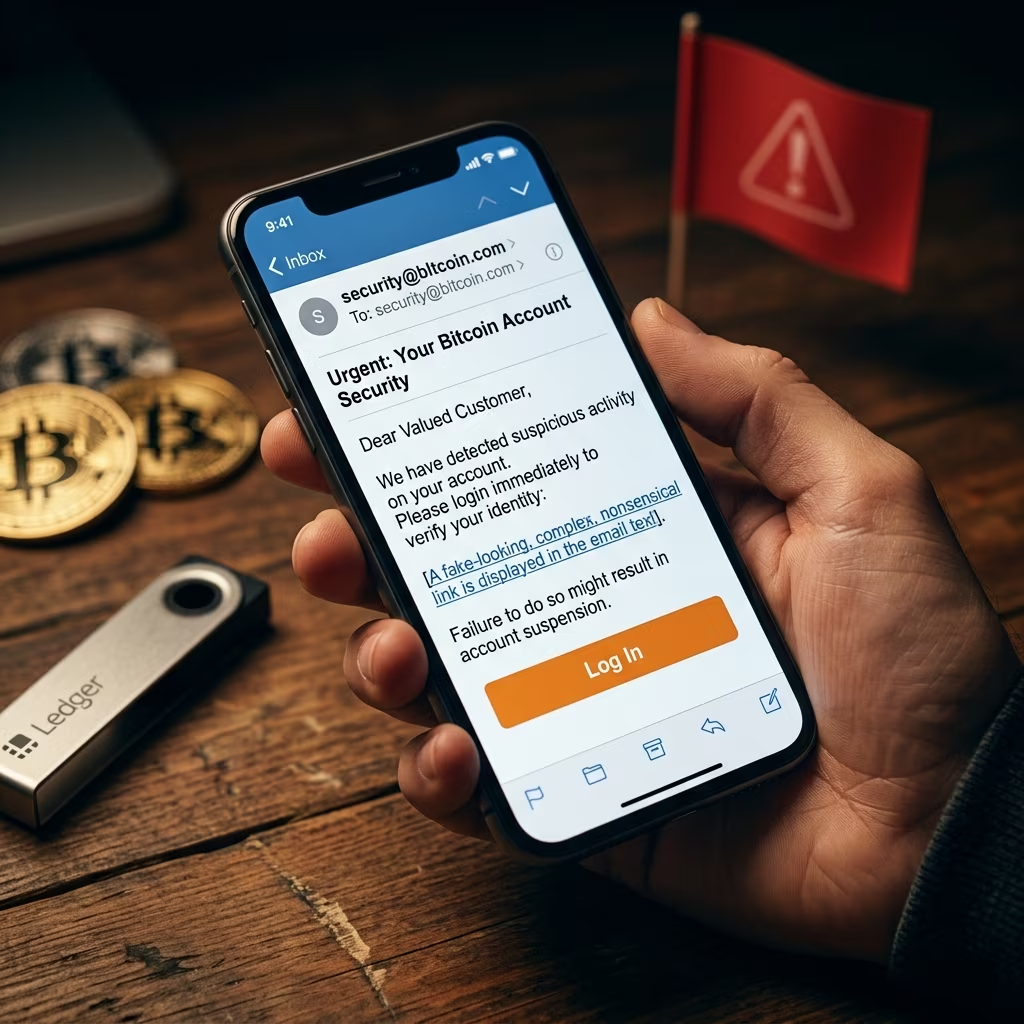
Bitcoin Phishing Emails: How to Spot the Trap Before It Works
Phishing attacks aimed at cryptocurrency users are designed to feel urgent, believable, and technical enough to discourage questions. In a Bitcoin-themed scam, criminals often pretend to be exchanges, wallet providers, payment processors, or customer support teams in order to push a victim into clicking a malicious link, revealing account credentials, or sending funds to a fraudulent address.
The safest approach is to assume that any unexpected message involving Bitcoin or other digital assets deserves extra scrutiny. Most scam emails rely on a small number of recognizable patterns, and once you know what to look for, the deception becomes much easier to spot. Public guidance from consumer protection agencies and cybersecurity organizations consistently warns that scammers use pressure, fake branding, unrealistic promises, and demands for payment or sensitive information to separate people from their money.
Why crypto phishing works so well
Cryptocurrency is a common target because transfers can be fast, irreversible, and difficult to recover once completed. That makes it attractive to fraudsters who want victims to act before thinking carefully. Phishing emails often imitate the look of legitimate platforms and borrow the language of account security, compliance, or transaction verification to make the request appear routine.
Scammers also understand human behavior. They know that people are more likely to click first and verify later when they see an alarming message about a locked account, an unauthorized transfer, or a supposed security problem. That pressure is intentional. It is meant to create confusion, and confusion is what scammers need most.
The most common red flags in a Bitcoin phishing email
Some warning signs appear again and again across crypto scams and broader phishing campaigns. The details may change, but the strategy usually does not.
| Red flag | What it may look like | Why it matters |
|---|---|---|
| Urgent language | “Verify now,” “account will be frozen,” or “act immediately” | Pressure is used to stop careful review |
| Unexpected sender | An unfamiliar address or a display name that does not match the real domain | Impersonation is a classic phishing tactic |
| Suspicious link | A link that looks close to a real exchange or wallet site | Lookalike domains often lead to fake login pages |
| Requests for crypto payment | Pay in Bitcoin to unlock funds, fix an error, or avoid penalties | Legitimate businesses do not demand crypto from unsolicited messages |
| Pressure for sensitive data | Seed phrase, private key, password, or two-factor code requests | These details give direct control over accounts |
These warning signs appear in guidance from the FTC, which states that no legitimate business or government agency will email, text, or message you unexpectedly and demand payment in cryptocurrency. Consumer education resources also emphasize that requests for immediate action, strange sender details, and messages that lack context are all common indicators of phishing.
Three patterns that should make you pause
While many scam messages are sloppy, some are polished enough to fool even experienced users. Three features are especially important to evaluate carefully.
- Pressure to act fast: A scammer wants you to click before you inspect the email address or the destination link.
- Promised protection or recovery: Messages may claim your funds are at risk unless you “confirm” or “secure” the account right away.
- Requests for direct control: Any demand for your private key, seed phrase, remote access, or login credentials should be treated as fraudulent.
Crypto fraud guidance from regulators and consumer agencies repeatedly identifies urgency, fake websites, and requests for payment or access as major warning signs.
What a legitimate crypto company usually does differently
Real exchanges and wallet services may send security alerts, but their messages tend to include behavior you can verify independently. They generally direct users to sign in through the official app or website rather than through a random email link. They also avoid asking for information that would let an outsider seize control of the account.
Authentic messages are more likely to provide context, use consistent branding, and match the organization’s known contact channels. If an email looks official but something feels off, that inconsistency deserves attention. Phishing often succeeds because one detail is just believable enough to pass a quick glance.
How to verify a suspicious message safely
Never rely on the sender’s word or the visible text of a link alone. A convincing scam can disguise the true destination behind a familiar-looking label. The safer habit is to verify the account or transaction by navigating to the service independently rather than by using links or phone numbers inside the message.
- Open a new browser window and type the company’s address yourself.
- Check your account from the official mobile app if you already use one.
- Contact support using a number or chat option you obtained separately, not from the email.
- Inspect the sender domain carefully for misspellings, added characters, or odd substitutions.
- If the message claims to involve a transaction, review your transaction history directly through the official platform.
Security organizations recommend hovering over links to preview the real destination and avoiding unexpected attachments or sign-in prompts that appear inside unsolicited messages. That advice is especially important in cryptocurrency because a fake login page can steal access in seconds.
Why scammers love “too good to be true” offers
Not every Bitcoin scam arrives as a fake warning. Some arrive as an opportunity. A message may promise guaranteed profits, secret trading tools, or a chance to recover lost funds. These offers are attractive because they combine hope with urgency. The scam may claim you can multiply your money quickly, access an exclusive investment pool, or unlock a bonus if you deposit funds right away.
That same pattern appears in consumer alerts about crypto fraud. Regulators warn that criminals frequently make big claims without clear explanations, promise unrealistic returns, or pressure people to send more money before they can withdraw anything. If a message includes both excitement and urgency, that combination should be treated as a warning rather than a selling point.
Common email clues that are easy to miss
Some phishing messages are revealed by small details rather than one obvious mistake. A sender name may look correct while the actual email address is unrelated to the company. The design may appear professional, but the logo could be low-resolution or slightly distorted. The wording may be generic, as if it was written for thousands of targets at once.
Even formatting can provide clues. Inconsistent fonts, awkward spacing, broken English, or unusual punctuation may indicate that the message was rushed or copied from another source. Cybersecurity guidance notes that suspicious formatting, mismatched branding, and odd contact information are all warning signs that an email is not what it claims to be.
What to do if you clicked anyway
If you clicked a link, opened an attachment, or entered information into a suspicious page, speed matters. The goal is to reduce damage before the attacker can use the information.
- Change the password for the affected account immediately using the official website or app.
- Enable or reset two-factor authentication if the service supports it.
- Contact the platform’s support team through a trusted channel.
- Review recent account activity for unauthorized transfers or login attempts.
- If you shared a seed phrase or private key, assume the wallet is compromised and move remaining assets to a new wallet as soon as possible.
If money was sent or personal information was exposed, report the incident to the relevant company and, when appropriate, to consumer protection or law enforcement channels. The FTC advises reporting suspicious cryptocurrency fraud and related scams through its fraud reporting system, and it also points consumers toward the SEC, CFTC, and IC3 for crypto-related complaints.
Safer habits that reduce your risk
Good email hygiene makes a major difference. Many phishing attempts succeed because the victim is distracted, busy, or using mobile devices where it is harder to inspect details. Building a short routine for verification can lower the odds of a costly mistake.
- Slow down before responding to any crypto message.
- Assume unexpected requests are suspicious until proven otherwise.
- Never share a private key, seed phrase, or one-time login code.
- Use bookmarks for exchanges and wallet services you visit often.
- Keep software updated so security tools can block known threats.
These habits are simple, but they work because they interrupt the scammer’s main advantage: your speed. The longer you take to verify, the less likely you are to fall for a message crafted to trigger an automatic reaction.
Frequently asked questions
Can a real cryptocurrency company ask me to verify my account by email?
Yes, legitimate companies may send security notifications, but they should not ask for your seed phrase, private key, or password, and they should not pressure you to pay in cryptocurrency in order to keep your account safe.
What is the biggest warning sign in a Bitcoin phishing email?
The clearest warning sign is often a request that pushes you to click, log in, or pay immediately. Urgency combined with a demand for sensitive information is a strong sign of fraud.
Should I reply to confirm whether the message is real?
No. Replying confirms that your address is active and may expose you to more scam attempts. Use an official contact method from the company’s verified website instead.
What if the email says my funds will be lost unless I act now?
That language is a classic pressure tactic. Stop, verify independently, and do not click any embedded links until you confirm the claim through a trusted source.
Are all crypto emails scams?
No, but unsolicited messages should always be treated carefully. A genuine alert is possible, but verification should happen through official channels rather than through the message itself.
Final practical rule
If a Bitcoin-related email asks you to hurry, pay, or surrender control of your wallet, treat it as suspicious until verified independently. That simple rule blocks most phishing attempts because it forces the conversation back onto your terms instead of the scammer’s.
References
- The 14 Phishing Red Flags Your Users Need to Know (2026) — Hoxhunt. 2026. https://hoxhunt.com/blog/phishing-red-flags
- How to Spot a Crypto Scam: The Top Red Flags to Watch For — McAfee. 2026. https://www.mcafee.com/blogs/internet-security/how-to-spot-a-crypto-scam-the-top-red-flags-to-watch-for/
- Top 5 Red Flags of Phishing Scams: How to Stay Safe Online — North Shore Trust and Savings. 2024-10-01. https://www.northshoretrust.com/2024/10/01/top-5-red-flags-of-phishing-scams-how-to-stay-safe-online/
- What are the red flags of crypto fraud? — GetSmarterAboutMoney.ca / Ontario Securities Commission. 2024. https://www.getsmarteraboutmoney.ca/learning-path/crypto-assets/red-flags-of-crypto-fraud/
- What To Know About Cryptocurrency and Scams — Federal Trade Commission. 2024. https://consumer.ftc.gov/articles/what-know-about-cryptocurrency-scams
- Crypto Scam Tracker — California Department of Financial Protection and Innovation. 2024. https://dfpi.ca.gov/consumers/crypto/crypto-scam-tracker/