
Beyond the Averages: Why Disaggregated Data Drives Health Equity
Discover why tracking demographic metrics is the essential cornerstone for dismantling systemic barriers and achieving true healthcare equity.
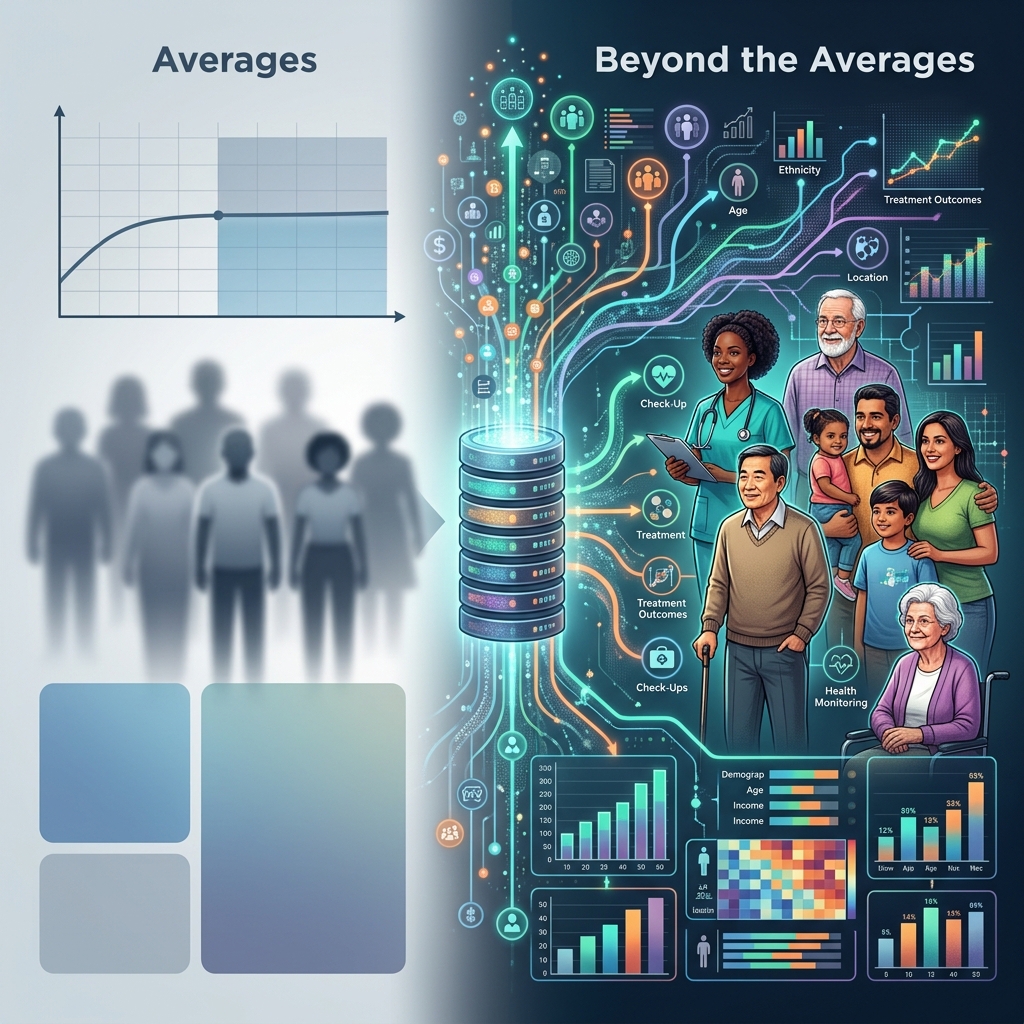
Public health crises have a unique way of acting as a societal magnifying glass, exposing the deep-seated fractures and systemic inequities that lie beneath the surface of modern healthcare systems. While illnesses, chronic conditions, and infectious diseases are often described as indiscriminate forces of nature, the reality is that their impacts are heavily dictated by preexisting social, economic, and geographic factors. When public health agencies and policymakers look only at broad, aggregated national or state-wide averages, they inadvertently mask the localized, severe crises occurring within marginalized communities. Achieving genuine health equity—which the World Health Organization defines as the condition in which every individual has a fair and just opportunity to attain their highest potential for health and well-being—requires a profound and structural shift in how we collect, track, analyze, and act upon public health metrics.
For decades, healthcare policies were often drafted using a generalized approach, assuming that a rising tide would lift all boats. However, historical data and recent global health emergencies have emphatically proven that equal distribution of resources does not equate to equitable outcomes. To distribute healthcare resources fairly, we must first understand exactly who is falling through the cracks and why. This understanding is impossible without disaggregated demographic data—information broken down meticulously by race, ethnicity, age, geographic location, and socioeconomic status. It is only through the lens of robust, transparent data that society can identify the precise systemic barriers preventing vulnerable populations from accessing life-saving care, and consequently, engineer targeted solutions to dismantle them.
Decoding the Intersecting Barriers to Healthcare Access
To understand why demographic data tracking is so critical, one must first recognize the multifaceted, intersecting barriers that prevent equitable healthcare access. These obstacles are rarely singular; they layer upon one another, creating a compounding effect that disproportionately marginalizes low-income communities, communities of color, and disabled individuals. A systemic barrier is not necessarily an outright denial of service; rather, it is a structural reality that makes accessing standard care exponentially more difficult for certain groups compared to the general population.
Infrastructure Deficits and the Transportation Divide
One of the most persistent and invisible barriers to healthcare is spatial inequity. In both densely populated urban centers and sprawling rural landscapes, physical access to medical facilities remains a monumental hurdle. Many marginalized neighborhoods are classified as “healthcare deserts,” lacking sufficient primary care clinics, pharmacies, or specialized medical centers. For individuals residing in these zones, seeking basic preventive care or vaccinations requires significant travel. When this spatial deficit is coupled with inadequate public transportation infrastructure, the barrier becomes insurmountable. A recent systematic review highlighted that disabled individuals face severe disparities influenced by location; in rural areas, the absolute lack of facilities and transport options isolates vulnerable populations, whereas urban dwellers face systems that are overcrowded and difficult to navigate. Without reliable transit, a simple thirty-minute medical consultation can morph into an exhausting, multi-hour ordeal, effectively discouraging individuals from seeking care until an emergency arises.
Economic Pressures: Time Poverty and Employment Realities
Economic instability introduces another formidable layer of difficulty: time poverty. The modern labor market is starkly divided between salaried professionals with robust benefits and hourly wage workers—frequently populated by racial and ethnic minorities—who lack paid sick leave or flexible scheduling. For a worker juggling multiple part-time jobs to make ends meet, taking half a day off to visit a clinic is not just an inconvenience; it represents a direct loss of essential income and potentially risks their employment. Furthermore, the cost associated with seeking care extends beyond the medical bill itself. It includes childcare expenses for the duration of the appointment and the aforementioned transportation costs. When policymakers rely on broad data sets that do not account for occupational hazards and socioeconomic constraints, they design interventions that require a degree of temporal and financial flexibility that marginalized communities simply do not possess.
The Digital Divide in Modern Medicine
As the healthcare sector increasingly pivots toward digital solutions—ranging from telehealth consultations to online appointment booking portals—a new systemic barrier has emerged: the digital divide. While digital health tools offer unprecedented convenience for those with high-speed internet and digital literacy, they inadvertently lock out vulnerable demographics. Elderly populations, low-income households, and rural residents often lack the broadband infrastructure or the devices necessary to navigate complex online systems. When a public health rollout relies exclusively on web-based registration, it systematically prioritizes the connected and affluent while leaving the disconnected behind. Demographic tracking helps expose these digital dead zones, signaling to health departments that alternative, analog outreach methods are urgently required.
Why Disaggregated Demographic Data is a Necessity
The aforementioned barriers thrive in the dark. Without specific data, it is easy for local governments to claim success based on overall utilization rates, even if entire demographics are being entirely overlooked. Transitioning from a colorblind or geography-blind public health strategy to one rooted in granular data is the only mechanism to ensure accountability and targeted relief. The Centers for Disease Control and Prevention (CDC) notes that gathering and analyzing surveillance data by demographic groups is essential to understand who is most affected by health conditions and to subsequently drive actions that eliminate those inequities.
Shifting from Colorblind Policies to Targeted Interventions
A “colorblind” approach to public health is inherently flawed because it ignores the historical and structural realities that shape health outcomes. For instance, if a county reports a fifty percent success rate for a new community health screening program, that figure might seem commendable. However, if disaggregated data reveals that the screening reached eighty percent of the affluent, predominantly white neighborhoods but only ten percent of the lower-income, minority neighborhoods, the program is actually exacerbating existing health disparities rather than closing them. Detailed data tracking by race, ethnicity, and primary language forces visibility. It highlights exactly where the public health apparatus is failing and demands a reallocation of resources to address those specific shortfalls. As far back as 1999, the U.S. Department of Health and Human Services recognized that without expanding data collection on social and economic factors alongside race and ethnicity, fully understanding and eliminating disparities would remain impossible.
Core Metrics for Equitable Public Health Monitoring
To effectively harness demographic data, health departments must standardize the metrics they track. Haphazard or inconsistent data collection yields incomplete pictures. A robust equitable health framework should monitor several overlapping categories to generate a holistic view of community vulnerability.
| Metric Category | Examples of Data Collected | Impact on Health Equity Strategy |
|---|---|---|
| Demographic & Identity | Race, Ethnicity, Age, Gender Identity, Primary Language | Identifies specific cultural or linguistic groups being bypassed, enabling targeted multilingual outreach. |
| Socioeconomic Status | Income level, Occupation type, Housing stability, Education | Reveals correlations between poverty and health access, guiding financial support and clinic placement. |
| Geographic & Spatial | Zip code, Proximity to transit, Distance to nearest hospital | Maps “healthcare deserts” to deploy mobile clinics or subsidize medical transportation networks. |
| Accessibility Needs | Disability status, Broadband access, Digital literacy levels | Ensures alternative access routes (e.g., phone hotlines, at-home visits) are available for those who need them. |
Translating Metrics into Actionable Equity
Collecting the numbers is only the first step; the true test of health equity lies in how those numbers are mobilized to change realities on the ground. Once demographic tracking pinpoints a gap in access, the public health response must be immediate, localized, and culturally competent. Data transforms from passive statistics into active equity when it informs logistics and resource deployment.
Hyper-Local, Community-Based Interventions
When data indicates a specific neighborhood is lagging in health service utilization, the solution is to bring the services directly to the people. This means abandoning the expectation that residents will navigate arduous transit routes to reach a centralized mega-clinic. Instead, health departments must deploy hyper-local interventions. This can take the form of mobile screening units parked in grocery store lots, pop-up clinics hosted in community centers, or extended operational hours that accommodate the schedules of shift workers. By placing medical resources in the heart of the community, policymakers effectively neutralize the transportation and time barriers that data tracking helped uncover.
Fostering Trust Through Transparent Communication
Access is not merely a matter of physical proximity; it is deeply intertwined with trust. Historically marginalized communities have well-documented, valid reasons for harboring skepticism toward medical institutions, stemming from decades of systemic disenfranchisement and unethical medical practices. If demographic data shows high hesitancy or low engagement within a specific racial or ethnic group, pushing top-down mandates will likely fail. Instead, health organizations must partner with trusted community messengers—such as faith leaders, local activists, and culturally congruent healthcare workers. Communicating public health information through recognized, respected voices within the community bridges the trust deficit, ensuring that when healthcare access is physically provided, it is also socially accepted.
A Long-Term Vision for Health Equity Metrics
The reliance on disaggregated demographic data cannot be relegated to acute crisis management; it must become a permanent fixture of everyday public health infrastructure. Whether addressing chronic illnesses like diabetes and heart disease, or managing the fallout of environmental hazards, continuous data tracking is the baseline requirement for fairness. Moving forward, governments and health systems must invest in modernizing their data collection methods, ensuring privacy and security while simultaneously mandating the granular breakdown of health outcomes. By committing to transparency and actively seeking out the populations hidden behind the averages, society can move closer to a healthcare system where an individual’s demographic profile no longer dictates their medical destiny.
Frequently Asked Questions
What exactly is disaggregated data in the context of public health?
Disaggregated data refers to the practice of breaking down broad, overall data sets into smaller, more specific subpopulations. Instead of reporting a single health metric for an entire city, the data is separated by race, ethnicity, age, income, and zip code. This detailed breakdown prevents the experiences of marginalized minorities from being mathematically overshadowed by the majority, allowing experts to pinpoint exactly where health disparities exist.
How do systemic barriers differ from personal choices in healthcare?
Systemic barriers are structural, societal, and economic obstacles that are outside an individual’s direct control, such as a lack of public transportation, absence of paid sick leave, or the digital divide. While personal choice plays a role in health behaviors, systemic barriers dictate whether a person even has the opportunity or resources to make a healthy choice or access medical care in the first place.
Why is it important to track both race and socioeconomic status together?
Health inequities are intersectional. A low-income individual faces distinct access barriers, but a low-income individual from a marginalized racial group often faces compounded discrimination and historical disenfranchisement. Tracking both metrics simultaneously allows policymakers to see the nuanced, intersecting realities of vulnerability, leading to more comprehensive and effective health interventions.
References
- Health Equity Science: Data to Inform Health Equity Actions — Centers for Disease Control and Prevention. 2024-08-14. https://www.cdc.gov/chronicdisease/healthequity/data.htm
- Health equity — World Health Organization (WHO). 2026-05-12. https://www.who.int/health-topics/health-equity
- Bridging healthcare disparities: a systematic review of healthcare access for disabled individuals in rural and urban areas — Frontiers in Health Services. 2025-11-18. https://doi.org/10.3389/frhs.2025.1695320
- Improving the Collection and Use of Racial and Ethnic Data in HHS — U.S. Department of Health and Human Services (ASPE). 1999-11-30. https://aspe.hhs.gov/reports/improving-collection-use-racial-ethnic-data-hhs-0 (Note: Though an older source, this uniquely authoritative foundational report established the framework for modern demographic tracking in public health).
Similar Articles








Read full bio of Sneha Tete


