
Bench vs. Jury Trials in Violent Sports Incidents
How negligent homicide charges, sports brawls, and trial choices intersect in modern criminal courts.
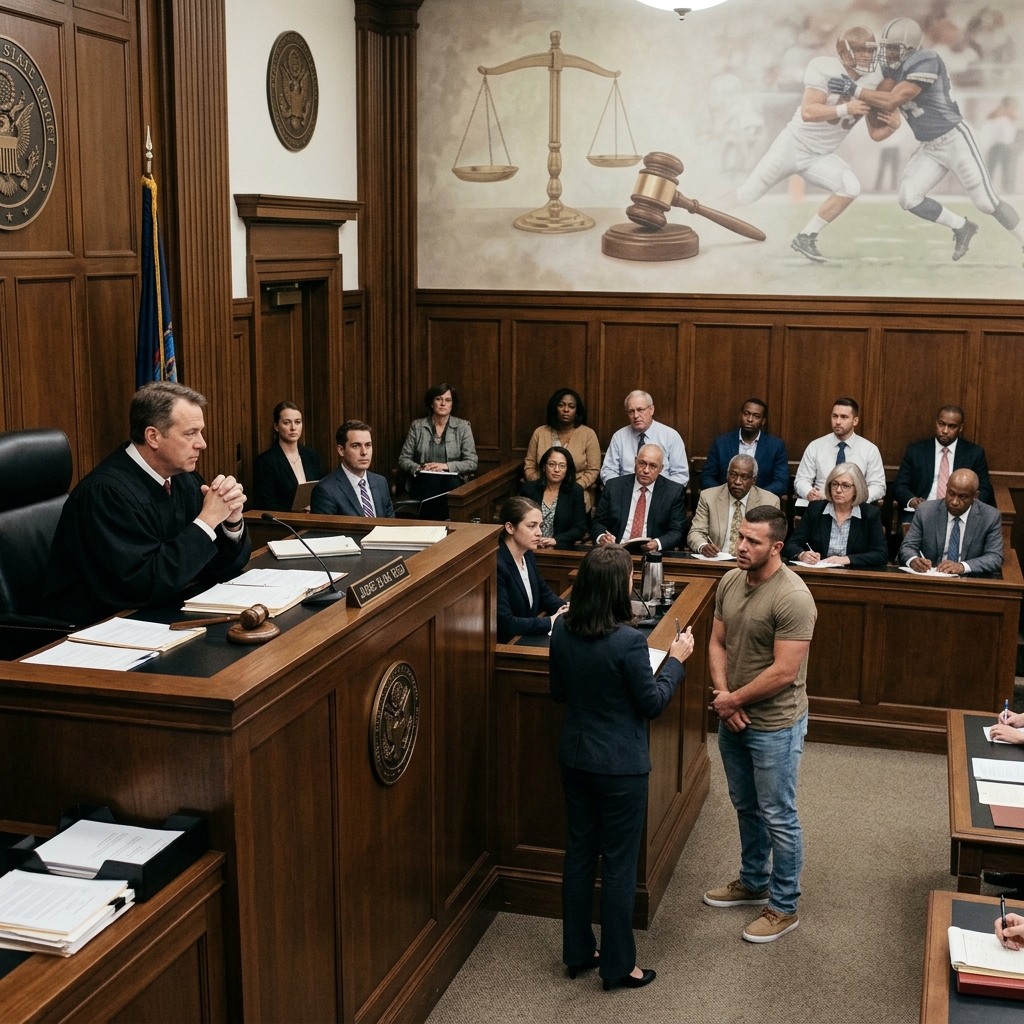
Criminal charges arising from sports-related fights occupy a difficult space between competitive emotion and legal responsibility. When a softball player or other athlete is accused of negligent homicide after a brawl, courts must decide whether a death was a tragic accident or a criminally blameworthy act. At the same time, defendants and lawyers must choose between a bench trial before a judge and a jury trial before community members, knowing that this strategic choice can dramatically influence the outcome.
This article explores how negligent homicide is applied in violent sports incidents, how courts analyze intent and foreseeability, and what practical differences exist between bench and jury trials. It uses real-world criminal law principles and authoritative legal sources as a foundation, while keeping the discussion accessible to non-lawyers.
From Competitive Game to Criminal Case
Team sports regularly involve aggressive physical contact, heated arguments, and emotional conflict. Most of the time, those moments are resolved on the field by officials or league disciplinary rules, not criminal courts. Yet when a brawl escalates to serious injury or death, police and prosecutors can treat the incident as a violent crime.
In such cases, the legal system must balance:
- Context of the game: Was the violence part of normal play or clearly outside accepted rules?
- Level of force used: Did the conduct resemble a typical sports foul, or did it look more like an assault?
- Predictability of harm: Could a reasonable person foresee that the action might cause serious injury or death?
- Post-incident behavior: Did the person attempt to help, flee the scene, or escalate the conflict further?
These factors shape whether prosecutors pursue charges like assault, manslaughter, or negligent homicide, and whether judges or jurors perceive the defendant as a reckless aggressor or an athlete caught in a chaotic moment.
Understanding Negligent Homicide
Negligent homicide is generally defined as causing another person’s death through criminal negligence rather than intentional killing. In many jurisdictions, criminal negligence means a gross deviation from the standard of care a reasonable person would exercise, creating a substantial and unjustifiable risk of death or serious harm.
Key elements usually include:
- Duty of care: The defendant had a basic responsibility to act with reasonable care in the situation.
- Breach of that duty: Their actions were far more careless or dangerous than ordinary behavior.
- Causation: The negligent conduct contributed significantly to the death.
- Foreseeability: A reasonable person could have anticipated the risk of serious harm.
In sports incidents, the foreseeability and causation elements are often contested. For example, if an athlete starts a bench-clearing brawl, prosecutors may argue that serious injury was a foreseeable outcome. Defense counsel might respond that the brawl was chaotic, others contributed, and the specific fatal injury was not reasonably predictable.
Negligence vs. Manslaughter vs. Murder
Understanding where negligent homicide sits on the spectrum of homicide offenses helps clarify why prosecutors might choose one charge over another:
| Offense | Typical Mental State | Common Contexts |
|---|---|---|
| Negligent homicide | Criminal negligence (carelessness creating serious risk) | Deadly accidents caused by reckless driving, unsafe behavior, or dangerous brawls |
| Manslaughter | Recklessness or sudden passion, but not pre-planned intent to kill | Deadly fights, dangerous driving, or acts done in the heat of the moment |
| Murder | Intent to kill or extreme indifference to human life | Planned attacks or extremely dangerous acts showing disregard for life |
Legal definitions vary by state, but this framework captures the general distinction recognized in American criminal law.
How Courts Evaluate Sports Brawls
When a sports brawl results in a fatal injury, judges and jurors must reconstruct a chaotic event, often using video, eyewitness accounts, and expert testimony. Several recurring questions shape their assessment:
Did the Conduct Exceed Ordinary Sports-Risk?
All players accept some risk of injury when they participate in sports. However, criminal law usually becomes relevant only when the conduct is clearly outside accepted norms—for example, a deliberate punch to the head after play has stopped or using an object like a bat as a weapon.
Courts look for whether the defendant’s behavior was:
- Within the rules or ordinary roughness of the sport
- An intentional attack unrelated to legitimate play
- Part of a group brawl where individual fault is harder to isolate
Video evidence and league rules can be critical, helping judges or jurors distinguish between aggressive sportsmanship and criminal violence.
Was Serious Injury Reasonably Foreseeable?
Foreseeability is central to negligent homicide analysis. Legal authorities often ask whether a reasonable person in the defendant’s position would recognize that their actions might set in motion events leading to serious injury or death.
Factors that influence this assessment include:
- Number of people involved in the altercation
- Presence of older or vulnerable participants
- Use of weapons or dangerous objects
- Confined spaces, hard surfaces, or obstructions increasing risk
In some cases, prosecutors argue that a defendant “triggered” a chain of events, even if they did not physically strike the person who later died, relying on evidence that their reckless behavior initiated the situation.
Causation and Chain-of-Events Problems
Sports brawls often involve multiple actors and complex movements. Establishing that one person’s conduct legally caused the fatal injury can be difficult. Modern case discussions show prosecutors and defense lawyers disputing whether a defendant’s actions, including reckless driving or aggressive behavior, truly caused the accident or death, or merely preceded independent acts by others.
Courts may look for:
- A clear temporal link between the defendant’s act and the injury
- Evidence that the injury was a natural and probable consequence of the act
- Absence of highly unusual or unforeseeable intervening causes
When evidence suggests that a defendant could not reasonably have known their actions would lead to a crash or fatal injury occurring some distance away, prosecutors may struggle to sustain negligent homicide charges.
Bench vs. Jury Trials: Strategic Choice
In most serious criminal cases, defendants have a constitutional right to a jury trial. They may waive that right and choose a bench trial, where the judge alone decides guilt and, sometimes, sentencing. This choice is particularly important in emotionally charged cases like sports brawls, where public sympathy for victims and strong feelings about violence can influence outcomes.
What Is a Jury Trial?
A jury trial involves a panel of citizens who listen to evidence, apply the judge’s instructions on the law, and deliver a verdict. In U.S. criminal cases, the jury must typically reach a unanimous decision to convict. The judge oversees legal procedure, rules on admissibility of evidence, and instructs the jury about legal standards.
Advantages often cited by defense attorneys include:
- Community perspective: Jurors may be more sympathetic to defendants who seem like ordinary people caught in a tragic situation.
- Disagreement potential: If even one juror has reasonable doubt, the jury can hang, leading to a mistrial.
- Emotional resonance: Defense narratives about chaos, confusion, and shared fault may resonate more strongly with lay jurors.
However, risks include the possibility that jurors, moved by the severity of the victim’s death or media coverage, may be more inclined to convict.
What Is a Bench Trial?
In a bench trial, the judge serves as both legal authority and fact-finder. There is no jury; the judge hears evidence, applies the law, and issues a verdict. Bench trials can be shorter and more procedurally efficient because the judge is familiar with legal standards and evidentiary rules.
Common reasons for choosing a bench trial include:
- Complex legal issues: Cases with intricate causation questions or technical negligence standards may be better understood by a judge.
- Concern about prejudice: Where media coverage or community anger is high, defendants may fear jurors will be biased.
- Predictability: Experienced attorneys sometimes prefer the relative predictability of a judge whose prior rulings and views on similar cases are known.
On the other hand, a bench trial removes the possibility of a hung jury and places the defendant’s fate entirely in one person’s hands.
Comparing Bench and Jury Trials
| Feature | Jury Trial | Bench Trial |
|---|---|---|
| Decision-maker | Group of lay citizens | Single judge |
| Emotional impact | Higher; jurors may be influenced by sympathy or anger | Lower; judge expected to focus on legal standards |
| Handling complex law | Explained through jury instructions; may be challenging | Judge is trained to interpret nuanced legal concepts |
| Risk of bias | Varies with community attitudes and publicity | Depends on judge’s background and prior experience |
| Trial length | Often longer due to jury selection and instructions | Often shorter and more streamlined |
Defense teams weigh these features against case-specific facts when advising athletes or others facing negligent homicide charges arising from sports-related incidents.
Key Factors Lawyers Consider in Violent Sports Cases
When an athlete is charged with negligent homicide or manslaughter after a brawl or related event, defense lawyers perform a detailed analysis before recommending bench or jury trial. Some of the main considerations include:
- Strength of video evidence: Clear footage showing who started the fight and how the victim was injured may strongly shape trial strategy.
- Local attitudes toward violence: In communities deeply affected by sports-related tragedies, juries may be particularly harsh or sympathetic depending on context.
- Complexity of causation: If the case turns on nuanced questions about whether the defendant’s act truly caused the death, a judge may be better equipped to parse the evidence.
- Background of the defendant: A clean record, strong community ties, or status as a student-athlete may influence jury perceptions; a judge might focus more narrowly on legal elements.
- Possible sentencing range: Where conviction could carry long prison terms, the perceived odds of acquittal or reduced charges via jury or bench trial matter greatly.
In practice, attorneys often seek plea negotiations, but when a case goes to trial, the bench-versus-jury choice is a central strategic decision.
Practical Consequences of Negligent Homicide Convictions
Convictions for negligent homicide or related offenses like manslaughter can lead to significant penalties. Depending on jurisdiction, sentences may range from several years to decades in prison, especially when courts find severe recklessness or prior dangerous behavior.
Legal sources consistently highlight consequences such as:
- Incarceration: Multi-year or, in some manslaughter cases, potentially life sentences.
- Probation or supervision: Post-release monitoring, including conditions on behavior and travel.
- License consequences: In incidents involving vehicles, lifetime revocation of driving privileges has been imposed.
- Financial penalties: Fines and restitution to victims or their families.
- Long-term impact: Criminal record affecting employment, education, and athletic careers.
These outcomes underscore why athletes and their counsel treat such charges with utmost seriousness, even when the original incident began as a spontaneous on-field confrontation.
FAQs: Negligent Homicide and Trial Choices in Sports Brawls
Can a player be charged even if they did not strike the person who died?
Yes. Prosecutors may charge a player whose reckless conduct triggered a sequence of events leading to a fatal injury, even if the player did not physically hit the victim. Courts focus on whether the defendant’s actions significantly contributed to the chain of events and whether serious harm was foreseeable.
Is every serious sports injury a potential criminal case?
No. Most injuries occur within the ordinary risks of the sport and are handled through league rules or civil lawsuits. Criminal charges generally arise only when conduct clearly exceeds accepted norms—such as deliberate attacks, use of weapons, or reckless behavior unrelated to legitimate play.
Why would a defendant choose a bench trial in a high-profile sports case?
Defendants may fear that jurors affected by media coverage or sympathetic to the victim could be biased. In cases involving complex causation or legal nuance, a bench trial allows a trained judge to focus on legal standards rather than emotional reactions, which can be advantageous in some circumstances.
Can new evidence change how negligence is viewed?
Yes. Additional video footage, expert analysis, or investigative reports can alter assessments of causation and foreseeability. Legal authorities may reconsider whether evidence supports the conclusion that a defendant should have known their actions would cause the fatal event, sometimes impacting charging decisions or appellate review.
What should athletes and leagues do to reduce the risk of criminal liability?
Clear enforcement of rules against fighting, education on safe conduct, and prompt intervention by coaches and officials can reduce brawl risk. Leagues may also develop protocols for documenting incidents, cooperating with investigations, and providing training on conflict de-escalation to protect players and minimize legal exposure.
References
- Driver in crash that killed softball player sentenced to prison — ESPN. 2025-02-11. https://www.espn.com/college-sports/story/_/id/46246287/driver-accused-fatal-crash-softball-player-sentenced-prison
- Fatal car accidents: Alabama woman convicted of manslaughter — Michael R. Corrigan, Attorney at Law. 2019-04-05. https://www.mrblaw.com/fatal-car-accidents-alabama-woman-convicted-of-manslaughter/
- Police release video evidence in NFL draft prospect Kyren Lacy’s crash case — ABC News. 2025-06-18. https://abcnews.com/US/police-release-video-evidence-nfl-draft-prospect-kyren/story?id=126294993
- New Evidence Emerges in Fatal Crash Case After Kyren Lacy’s Death — WWL-TV / YouTube. 2025-06-20. https://www.youtube.com/watch?v=qXuQagG_64k
- Former LSU Wide Receiver Kyren Lacy Exonerated in Negligent Homicide Case — Reddit r/CFB (summarizing DA communication). 2025-07-03. https://www.reddit.com/r/CFB/comments/1nxc1uc/former_lsu_wide_receiver_kyren_lacy_exonerated_in/
- Torrance Vehicular Manslaughter Lawyer — Law Office of Pat Carey. 2022-03-01. https://www.patcareylaw.com/practice-areas/dui/vehicular-manslaughter/
Similar Articles








Read full bio of medha deb




