
Airline Baggage Delays: How New Refund Rules Protect You
Understand when airlines must refund bag fees and how to claim compensation for delayed, lost, or damaged luggage.
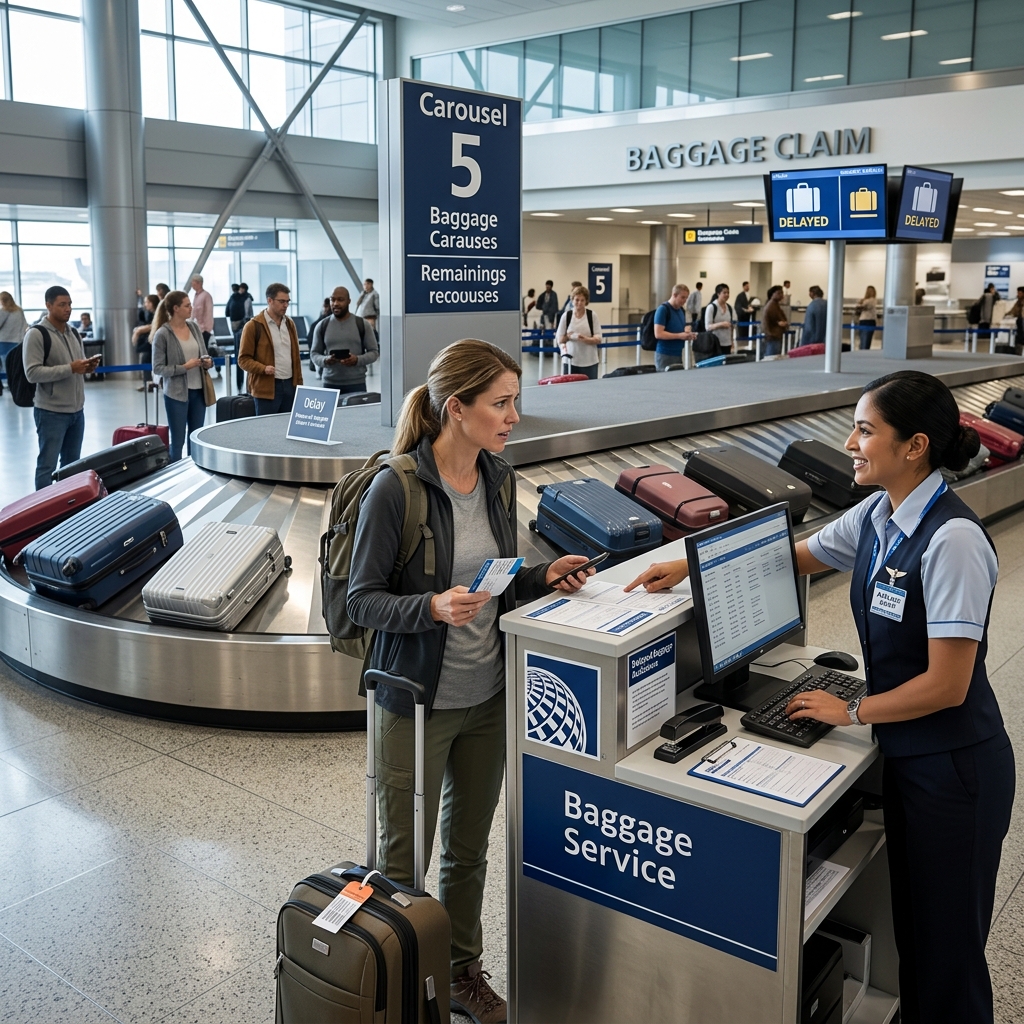
Checked a bag, paid a fee, and then watched the carousel stop with your luggage nowhere in sight? Modern air travel rules increasingly require airlines to refund baggage fees and offer compensation when bags are delayed, lost, or damaged. These protections are designed to stop airlines from keeping your money when they fail to deliver the service you paid for.
This guide explains what these new and existing requirements mean in practice, how regulators define a “significant delay,” and the exact steps you should take to secure refunds and reimbursement if your luggage problem isn’t quickly resolved.
1. Why Baggage Fee Refund Rules Matter
For years, airlines charged separate fees for checked bags without clearly tying those fees to performance. If your luggage arrived late or went missing, you often faced a maze of customer service and unclear policies. Recent regulatory changes and enforcement efforts aim to rebalance that relationship by linking baggage fees to the timely delivery of your luggage.
From a consumer perspective, these rules matter because:
- You are no longer paying full price when the airline only delivers part of the service.
- Standards for what counts as a delayed bag are now defined in hours, not vague promises.
- Refunds can be owed even when the bag eventually arrives, if the delay meets regulatory thresholds.
- Clear timelines and documentation requirements help you prove your claim and get money back.
In short, the law increasingly treats luggage transport as a concrete obligation: if the airline fails to deliver your bag on time or at all, you may be entitled to both a refund of bag fees and additional compensation for losses.
2. How Regulators Define “Lost” and “Significantly Delayed” Bags
To know when you qualify for a refund, you need to understand how authorities define key terms such as lost and significantly delayed. In the United States, the Department of Transportation (DOT) publishes guidance that airlines must follow on flights to, from, or within the country.
2.1 When Is a Bag Considered Lost?
A bag is typically considered lost when the airline formally declares it lost after failing to locate and deliver it within a set period. On many itineraries, a common benchmark is around 21 days, but the exact threshold can depend on the airline’s tariff (its official policy document) and applicable international rules.
Once the bag is declared lost, you are generally entitled to:
- A refund of any checked baggage fee you paid for that bag.
- Compensation for the bag and its contents, subject to liability limits and documentation.
2.2 What Counts as a “Significant” Delay?
The concept of a significant delay is crucial because refunds can be owed even if the bag eventually arrives. DOT guidance and airline policies often align around specific hour-based thresholds.
| Flight Type | Typical Threshold for Significant Delay |
|---|---|
| Domestic flights within the U.S. | Bag not delivered within 12 hours after arrival. |
| International flights (duration 12 hours or less) | Bag not delivered within 15 hours after arrival. |
| International flights (duration more than 12 hours) | Bag not delivered within 30 hours after arrival. |
The delay length is measured until the bag is either picked up at the airport or delivered to a location agreed upon with the airline, such as your hotel or home.
Once your delay meets these thresholds, you may have a right to a baggage fee refund even if the bag arrives later.
3. When Airlines Must Refund Bag Fees
Regulatory changes and updated airline policies now specify situations where bag fees cannot simply be kept by the carrier. Two scenarios are central: when the bag is declared lost and when it is significantly delayed according to official criteria.
3.1 Refunds for Lost Baggage
Once your bag is officially recognized as lost, airlines are generally required to refund any fees charged to transport that bag. This applies to:
- Standard checked bag fees.
- Additional bag charges for second or third checked bags.
- Oversize or overweight surcharges applied specifically to the missing bag.
Beyond fee refunds, you may also be entitled to compensation for the value of your belongings, subject to liability limits such as those found in international conventions and airline tariffs. Although exact amounts vary, domestic U.S. rules set maximum liability levels for lost baggage, and airlines may offer higher contracted limits in some cases.
3.2 Refunds for Significantly Delayed Baggage
Even if your bag eventually appears, a significant delay can trigger refund obligations. According to DOT guidance, a consumer is entitled to a refund of baggage fees when a bag has been significantly delayed under the time thresholds described earlier. Several major carriers have adopted policies that match these thresholds so their internal rules align with regulatory expectations.
In practice, this means:
- If your bag arrives after the defined hour threshold for your flight type, you may request a refund of the checked bag fee.
- Some airlines also reimburse “reasonable expenses” (such as clothing and toiletries) needed during the delay, though specific limits and documentation requirements vary.
These rules encourage airlines to prioritize timely bag delivery and provide relief to passengers whose trips are disrupted by lengthy delays.
4. Compensation Beyond Bag Fee Refunds
Refunding the bag fee is only one part of the picture. When bags are delayed, lost, or damaged, passengers may also be able to recover money for necessities purchased during the delay or for the value of missing or damaged items.
4.1 Reasonable Expense Reimbursement
Many airlines reimburse “reasonable expenses” caused by delayed baggage, such as clothing, toiletries, or essential items needed until your bag arrives. Policy specifics vary by airline, but examples include:
- Daily reimbursement caps (for instance, a set amount per day for the first few days of delay).
- Requirements to submit receipts proving what you purchased during the delay.
- Claim forms that must be completed within a certain number of days after the incident.
Regulators emphasize the importance of documentation. Keeping receipts and noting the date and time you received your bag strengthens your claim and helps ensure that legitimate costs are repaid.
4.2 Compensation for Lost or Damaged Items
Where luggage or its contents are damaged or permanently lost, international rules such as the Montreal Convention and national regulations allow passengers to claim compensation, subject to liability limits. To succeed, you usually need to:
- File a damage or loss claim within strict deadlines (often 7 days for damage and 21 days for delay on international trips).
- Provide evidence of value, including receipts, photos, or repair estimates.
- Describe each item affected and the circumstances of the loss or damage.
While these claims can be more complex than simple fee refunds, they can significantly reduce the financial impact of a serious baggage incident.
5. Step-by-Step: What to Do When Your Bag Is Missing or Late
Your actions in the first hours after a baggage incident strongly influence whether you receive refunds and compensation. Authorities in multiple jurisdictions stress the importance of quick reporting and good documentation.
5.1 At the Airport
- Wait until the carousel stops. Confirm that your bag is not simply late offloading.
- Visit the airline baggage service desk. File a report immediately with your airline’s baggage office before leaving the airport, if possible.
- Get a reference number. Ensure you receive a Property Irregularity Report (PIR) or similar claim number that documents your case.
- Confirm contact details. Provide accurate phone, email, and delivery address so the airline can reach you and deliver the bag if found.
5.2 In the Following Days
- Track your claim. Use the airline’s online baggage portal or contact center to monitor status.
- Keep receipts. Save receipts for any emergency purchases you make because your bag is missing or delayed.
- Document delivery time. Note the exact time and date when your bag is returned to you; this helps determine whether it met the “significant delay” threshold.
- Inspect for damage. Examine your bag and its contents promptly and take photos if you find damage.
If your bag is still missing after several days, many airlines will ask you to complete a more detailed property loss claim, including itemized lists and estimated values.
5.3 Filing Claims for Refunds and Compensation
To pursue refunds or compensation, you will typically need to submit a claim through the airline’s customer service or baggage office.
- Request bag fee refund. Once delay thresholds are met or the bag is declared lost, ask for a refund of any baggage fees you paid.
- Submit documentation. Provide your boarding pass, bag tag, PIR reference number, receipts, and photos.
- Mention legal frameworks when appropriate. For international trips, referencing compensation under the Montreal Convention can signal that you understand your rights.
- Respect deadlines. Many regimes require damage claims within 7 days and delay claims within 21 days, particularly on international flights.
If the airline rejects or ignores your claim, you can sometimes escalate the matter to a national enforcement body or, as a last resort, to small claims court within a defined limitation period.
6. Practical Tips to Reduce Risk and Strengthen Your Case
While refund and compensation rules offer important protection, you can also take proactive steps to lower the likelihood of serious baggage problems and make any claim easier to prove.
- Photograph your baggage. Before departure, take clear photos of your bag and its contents; this helps show pre-flight condition and approximate value.
- Label inside and outside. Place contact details on a durable luggage tag and inside your bag so it can be identified if external tags are lost.
- Avoid irreplaceable items. Keep medications, keys, important documents, and high-value electronics in carry-on luggage whenever possible.
- Keep bag tags and boarding passes. These are essential for reporting issues and making claims.
- Know your airline’s policy. Review baggage sections of your airline’s tariff or website before flying; this clarifies reimbursement limits and deadlines.
7. Frequently Asked Questions (FAQs)
Q1: If my bag arrives late but I still catch all my connections, can I get a refund of the bag fee?
Possibly. Refund eligibility does not depend on whether you missed a connection but on whether the bag delay meets the defined hour thresholds (for example, more than 12 hours on a U.S. domestic flight). If those thresholds are exceeded, you may request a baggage fee refund even if your itinerary continued as planned.
Q2: Are refunds automatic when a bag is significantly delayed?
Usually not. Most airlines require you to file a claim or contact customer service to request the refund, referencing the delay and your baggage fee payment. Retaining your bag receipt, boarding pass, and any claim reference numbers will help.
Q3: Does travel insurance affect my rights to refunds and airline compensation?
Travel insurance may provide additional coverage, such as higher compensation limits or quicker reimbursement, but it does not remove the airline’s obligations under regulatory or treaty-based rules. In some cases, an insurer may ask you to pursue the airline claim first and then cover remaining losses.
Q4: How long does the airline have to find my bag before it is considered lost?
On many international itineraries, 21 days is a common point at which a bag that has not been delivered may be treated as lost, though exact definitions vary by airline and jurisdiction. Once the airline declares your bag lost, you can pursue both a baggage fee refund and compensation for the missing contents up to the applicable liability limit.
Q5: Can I claim compensation for emotional distress caused by lost luggage?
Typically, compensation frameworks for baggage focus on economic loss (the value of items and reasonable expenses) rather than emotional distress. Documentation such as receipts, photos, and repair estimates are central to these claims.
8. Key Takeaways for Air Travelers
Modern baggage refund and compensation rules are designed to make air travel fairer and more predictable. When airlines charge you to check a bag, they are increasingly required to refund those fees when your luggage is lost or significantly delayed, and to provide additional reimbursement where appropriate.
If your bag does not arrive as expected, remember these core steps:
- Report the issue to the airline immediately and obtain a formal reference number.
- Track delivery time carefully to see if the delay meets refund thresholds.
- Keep all receipts and documents related to emergency purchases, repairs, or replacement items.
- File claims within the required deadlines, and escalate if necessary through designated complaint channels.
By understanding your rights and acting promptly, you can turn a stressful baggage delay into a well-documented claim that recovers your fees and mitigates your losses.
References
- Lost, Delayed, or Damaged Baggage — U.S. Department of Transportation. 2024-01-18. https://www.transportation.gov/lost-delayed-or-damaged-baggage
- Damaged, Delayed or Lost Baggage — Delta Air Lines. 2024-05-01. https://www.delta.com/us/en/baggage/delayed-lost-damaged-baggage
- Get airline compensation for lost or delayed luggage — Citizens Advice. 2023-08-10. https://www.citizensadvice.org.uk/consumer/holiday-cancellations-and-compensation/get-airline-compensation-for-lost-or-delayed-luggage/
- Lost, damaged or delayed baggage — Canadian Transportation Agency. 2023-11-21. https://protection-passager-passenger.otc-cta.gc.ca/en/when-an-issue-happens/lost-damaged-or-delayed-baggage
- Bag Help — United Airlines. 2024-02-15. https://www.united.com/en/us/baggage/bag-help/
Similar Articles








Read full bio of medha deb


