
Your Rights and Duties During a Traffic Stop
Understand your constitutional rights, what you must do, and how to stay safe and protected when police stop your vehicle on the road.
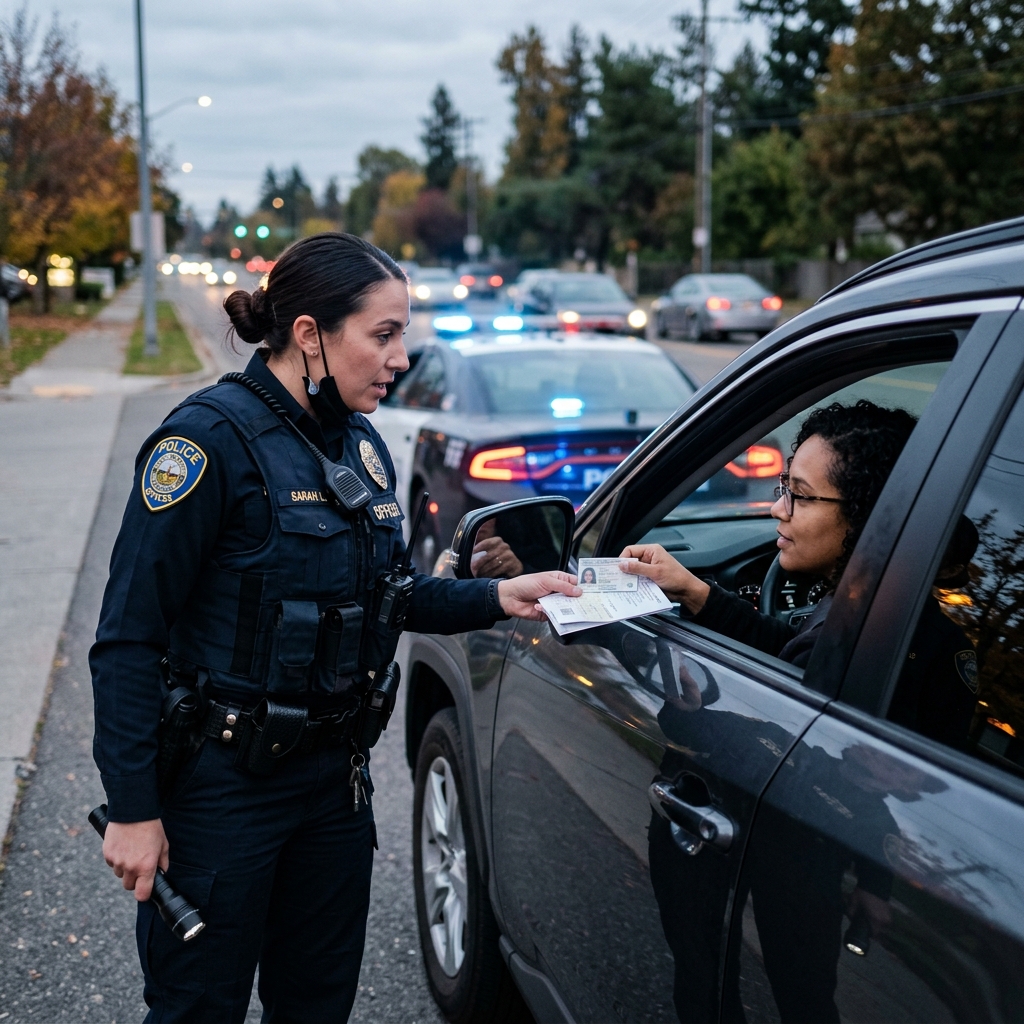
Being pulled over by the police can be stressful, even when you believe you did nothing wrong. Understanding both your
legal obligations
and yourconstitutional rights
can significantly reduce the risk of misunderstanding, protect you from unlawful searches, and help you respond calmly and safely.This guide explains what typically happens during a traffic stop, what you must do by law, which rights you can assert, and how to document and challenge potential violations later. It is general information based largely on U.S. constitutional principles and common state rules; specific requirements can vary by state, so always check local law if possible.
1. What Triggers a Traffic Stop?
Police may stop a vehicle for a wide range of reasons, including minor traffic violations or suspicion of criminal activity. Under the U.S. Constitution, a traffic stop is usually considered a type of
seizure
, which means the officer must have at least a reasonable basis to stop your car.- Common reasons for a stop: speeding, failing to signal, broken taillight, expired registration, or using a mobile phone while driving.
- Investigatory stops: officers may stop a vehicle if they reasonably suspect drunk driving, drug activity, or other crimes.
- Checkpoints: sobriety checkpoints and border checkpoints are governed by different rules but are still constrained by constitutional protections.
Even when the initial reason for the stop is minor, the interaction can expand if the officer notices signs of impairment or criminal activity, or if the driver or passengers consent to further questioning or searches.
2. Your Core Constitutional Rights at the Roadside
Several key rights apply whenever you encounter law enforcement in the United States, including on the roadway. Knowing them helps you make conscious, informed choices instead of reacting under pressure.
2.1 Right to Remain Silent
You have a
constitutional right to remain silent
and to avoid self-incrimination. In many situations, you are not required to answer investigative questions beyond providing basic identification and required vehicle documents.- You may verbally state: “I am exercising my right to remain silent.”
- Refusing to answer questions about where you are coming from, where you are going, or what you were doing is generally protected.
- Remaining silent must be done calmly and non-aggressively; silence does not authorize you to disobey lawful orders, such as showing your license.
2.2 Right to Refuse Consent to Searches
In most routine traffic stops, officers cannot search your vehicle solely because of a simple traffic violation. They generally need
probable cause
, a warrant, or your voluntary consent.- If an officer asks, “Can I look in your car?” you have the right to say
no
. - You may respond clearly: “I do not consent to any searches.”
- Officers may still visually inspect what is in plain view through your windows, even without consent.
Refusing consent does not guarantee that a search will not happen, but it preserves your legal position and can affect whether evidence is admissible later.
2.3 Right to Ask if You Are Free to Go
Once the original purpose of the stop is completed—such as issuing a warning or ticket—the officer generally must have a lawful basis to continue detaining you.
- You can ask: “Am I being detained, or am I free to go?”
- If the officer says you are free to go, you may politely leave.
- If they say you are detained, you still retain rights to remain silent and to refuse consent to searches, subject to lawful exceptions.
2.4 Right to an Attorney (If Arrested)
If a traffic stop escalates into an
arrest
, you have the right to consult an attorney before answering questions.- State clearly: “I want to speak to a lawyer.”
- After invoking this right, you should not discuss the incident or answer further questions until you have legal counsel.
- If you cannot afford an attorney, you may be entitled to appointed counsel once formal charges are filed.
3. Legal Duties During a Traffic Stop
Your rights exist alongside certain obligations. Failing to comply with lawful requirements—such as presenting a driver’s license—can itself be a violation, even if the original stop was minor.
3.1 Pulling Over Safely and Cooperating
When you see police lights or hear a siren directed at you, you should:
- Slow down and pull over to a safe location as soon as reasonably possible.
- Turn off the engine, roll down your window, and keep your hands visible on the steering wheel.
- Stay in the vehicle unless instructed otherwise by the officer.
These steps help ensure everyone’s safety and reduce the likelihood that the officer misinterprets your actions as threatening.
3.2 Identification and Vehicle Documents
In most states, drivers are legally required to present:
- Valid driver’s license
- Vehicle registration
- Proof of insurance (where required by law)
If any of these items are not immediately accessible, tell the officer where they are before you reach for them to avoid alarming movements.
3.3 Following Lawful Orders
During a stop, officers typically have authority to give certain safety-related instructions, such as asking you to step out of the vehicle or to keep your hands visible.
- Officers may order drivers and passengers out of the car even during a routine stop.
- If the officer reasonably believes you may be armed or dangerous, they may conduct a brief pat-down for weapons.
- Refusing lawful commands may lead to additional charges or escalate the encounter.
4. Searches of You and Your Vehicle
Traffic stops are often where questions about search authority arise. The rules depend heavily on whether the officer has
probable cause
, a warrant, or your consent.| Type of Search | Typical Legal Basis | Your Rights |
|---|---|---|
| Visual inspection of interior | Plain view doctrine; no special basis needed | Officer may look through windows; you cannot block their view. |
| Consent search | Your voluntary permission | You may refuse consent and are not required to explain why. |
| Probable cause search | Reasonable belief evidence or contraband is in the vehicle | Officer may search specific areas without consent; challenging occurs later in court. |
| Pat-down of your person | Reasonable suspicion you may be armed and dangerous | Limited to checking for weapons; you may still verbally refuse non-weapon searches. |
| Inventory search after arrest | Administrative search of impounded vehicle | Generally allowed even without consent; primarily to list property and secure items. |
Throughout any search, you can calmly repeat that you do not consent. Do not physically resist, as this can lead to additional charges or harm.
5. Best Practices to Stay Safe and Protected
Beyond legal rules, certain practical habits can make traffic stops safer and minimize legal risk if something goes wrong.
5.1 Stay Calm and Avoid Escalation
- Keep your voice steady and avoid arguing or insulting the officer.
- Do not run, make sudden movements, or attempt to leave without clarification.
- Remember that anything you say or do may later be used as evidence.
5.2 Use Clear, Polite Phrases
Simple, respectful language helps you assert rights without provoking conflict:
- “Officer, can you tell me why I was stopped?”
- “I am exercising my right to remain silent.”
- “I do not consent to any searches.”
- “Am I free to go, or am I being detained?”
- “I want to speak to a lawyer.”
5.3 Recording the Encounter
In many jurisdictions, you may legally record police officers performing their duties in public as long as you do not interfere with their work.
- Keep the camera steady and avoid obstructing the officer or reaching suddenly for devices.
- Inform the officer you are recording if you wish, though it is often not legally required.
- Officers generally may not take or delete your recordings without a warrant or exigent circumstances.
6. After the Stop: Documenting and Challenging Issues
Whether the stop ends with a warning, ticket, or arrest, your actions afterward can be crucial if you believe your rights were violated.
6.1 Handling Citations
If the officer issues a citation:
- Signing a ticket usually acknowledges receipt, not guilt; you typically retain the right to contest it in court.
- Do not argue the details of the case on the roadside; save legal defenses for a formal hearing.
6.2 Recording Details While Fresh
- Write down the date, time, location, and sequence of events as soon as possible.
- Note officer names, badge numbers, and patrol car numbers if available.
- Identify potential witnesses and obtain their contact information.
6.3 Filing Complaints and Seeking Legal Help
If you believe the stop involved unlawful conduct—such as excessive force, discriminatory treatment, or unlawful searches—consider:
- Contacting a qualified attorney to review your case and advise on next steps.
- Filing a complaint with the relevant law enforcement agency, using their internal affairs or civilian review process.
- Preserving all records, photographs, medical files, and messages related to the incident.
7. Frequently Asked Questions (FAQs)
7.1 Do I have to answer the officer’s questions?
You generally must provide your driver’s license, registration, and proof of insurance when lawfully stopped, but you are not required to answer investigative questions about your activities or travel beyond basic identification.
7.2 Can I refuse a search of my vehicle?
Yes. You have the right to refuse consent to a search of your car or belongings. If the officer has independent probable cause, they may still search certain areas, but your refusal can matter in court.
7.3 Is it legal to record the traffic stop?
In many jurisdictions, you may lawfully record police interactions in public as long as you do not interfere. Officers generally may not delete or force you to hand over recordings without a warrant.
7.4 What if I think the stop was discriminatory or unlawful?
Do not argue or resist at the scene. Once you are safe, document what happened and consult an attorney. You can challenge the legality of the stop in court and may file a formal complaint with the agency.
7.5 Do passengers have rights during a traffic stop?
Passengers typically also have the right to remain silent and to refuse consent to searches of their own bodies or belongings, while still needing to comply with lawful orders (such as staying inside or exiting the car).
References
- Traffic Stops by Police & Your Legal Rights — Justia. 2023-05-01. https://www.justia.com/traffic-tickets/police-stops/
- Stopped by Police — American Civil Liberties Union (ACLU). 2022-06-15. https://www.aclu.org/know-your-rights/stopped-by-police
- Stopped by the Police — ACLU of North Carolina. 2021-09-10. https://www.acluofnorthcarolina.org/know-your-rights/stopped-police/
- When Stopped by an Officer — ACLU of Southern California. 2021-04-20. https://www.aclusocal.org/know-your-rights/when-stopped-officer/
- What To Do If Stopped By The Police: Know Your Rights and Responsibilities — Central Connecticut State University Police Department. 2020-02-01. https://www.ccsu.edu/police/what-do-if-stopped-police-know-your-rights-and-responsibilities
- Know Your Rights: What To Do If You’re Stopped By The Police — New York Civil Liberties Union (NYCLU). 2017-02-01. https://www.nyclu.org/uploads/2017/02/kyroverhaul-nyclu-stoppedbypolice-onepager-v01.pdf
- Your Rights During a Police Stop in Pennsylvania — Sutton Lovette PLLC. 2023-08-10. https://suttonlovette.com/blog/rights-during-police-stop-pa
Similar Articles








Read full bio of medha deb




