
When Your Product Hurts a Consumer: Legal and Practical Steps
Clear, practical guidance for businesses on what to do when a consumer is injured by a product and how to manage product liability risk.
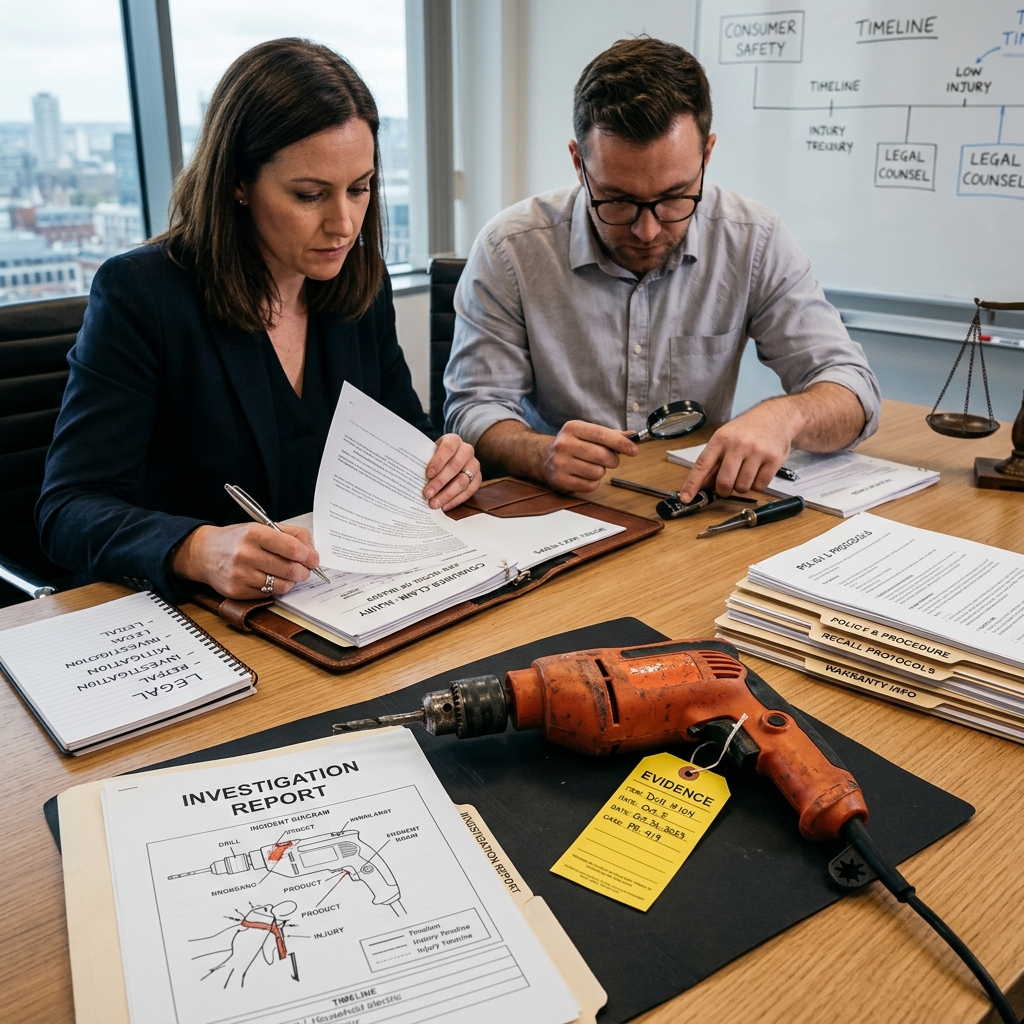
For any business that designs, manufactures, distributes, or sells products, one of the most difficult events you can face is learning that a customer was injured while using something you put into the marketplace. Beyond the human concern for the injured person, this type of incident can trigger complex legal, financial, and reputational consequences. Understanding what to do in the first hours, days, and weeks after the injury can greatly influence how the situation unfolds.
This article explains how product liability works, the steps you should take immediately after learning about an injury, and how to work with insurers and attorneys to protect both consumers and your business. It is written for businesses rather than injured consumers, but the principles apply across many industries.
Core Idea: Your Duties When a Product Causes Harm
Product liability is the body of law that holds businesses responsible when defective or dangerously designed products injure people. In the United States, manufacturers, distributors, and retailers can all be held accountable if a product defect or inadequate warning leads to an injury. Some claims are based on negligence, others on strict liability (where fault is not required), and others on breach of warranty.
When you learn that a consumer may have been hurt by your product, you are essentially confronting two parallel responsibilities:
- Safety and ethical responsibilities – ensuring the injured person receives appropriate attention, investigating whether other consumers might be at risk, and correcting any safety issues going forward.
- Legal and business responsibilities – preserving evidence, complying with laws and regulations, notifying insurers, and preparing for potential litigation or claims.
Both sides matter. A well-managed response can protect people and, at the same time, reduce legal exposure and reputational damage.
Step One: Respond to the Injury While Preserving Evidence
When an injury is reported, your first reaction should prioritize the consumer’s well-being. At the same time, you must begin preserving information that may later be critical to determining what went wrong and who is legally responsible.
Immediate Safety and Communication Actions
Once you learn that someone has been injured, take these initial actions as soon as reasonably possible:
- Express concern and encourage medical care. Without admitting fault, acknowledge the seriousness of the incident and encourage the injured person to seek medical evaluation if they have not already done so.
- Gather basic incident details. Ask for the date, time, and location of the incident; the specific product model or batch; and a brief description of what happened and how the product was being used.
- Identify witnesses. If the incident occurred in a workplace, store, or facility, note who saw the event. Witness accounts may become important later.
- Avoid unnecessary admissions. In early conversations, do not speculate about fault or promise specific compensation. Instead, focus on listening and documenting.
Preserving the Product and Surrounding Evidence
Evidence preservation is central to product liability disputes: courts, insurers, and regulators often rely on physical products and documentation to determine whether a defect exists and whether it caused the injury. Take care to secure the following:
- The product itself. If you can obtain the product, preserve it in its post-incident condition. Do not repair, alter, or disassemble it before consulting legal counsel and your insurer.
- Packaging and instructions. Retain copies of labels, warnings, user manuals, assembly guides, and marketing materials that accompanied the product.
- Photos and video. If available, collect photos or video of the product, the site of the incident, and any visible damage. These visual records can later help experts understand how the product performed.
- Purchase and distribution records. Secure receipts, invoices, warranty registrations, and distribution logs that show where and when the product was sold or shipped.
Failing to preserve evidence can hinder your defense and, in some cases, lead to adverse inferences in court. Many courts treat spoliation of evidence very seriously, particularly when a product is central to the claim.
Understanding the Types of Product Defects
To evaluate your legal exposure, you need to understand how product defects are categorized. Product liability law generally recognizes three main types of defects:
| Type of defect | What it involves | Typical examples |
|---|---|---|
| Design defect | A flaw in the overall design that makes all units of the product unreasonably dangerous when used as intended. | Power tools lacking guards, furniture prone to tipping, toys with choking hazards. |
| Manufacturing defect | An error in production that causes a particular unit or batch to deviate from the intended design and become unsafe. | Contaminated food items, cracked components, misassembled parts in a small number of units. |
| Marketing (warning) defect | Failure to provide adequate instructions or warnings about foreseeable risks of using the product. | Medication without proper side-effect warnings, cleaning chemicals lacking clear hazard labeling. |
The type of defect matters because it shapes how experts investigate the case and which documents become critical (design specifications, quality control records, labeling review files, etc.).
Legal Basics: How Consumers May Pursue Claims
When a consumer is injured, they may bring a product liability claim under several possible legal theories. Although specifics vary by state, common approaches include:
- Strict product liability. In many jurisdictions, an injured person can recover by proving that the product was defective and that the defect caused their injury, without having to show that your company was negligent.
- Negligence. The consumer may argue that your company failed to use reasonable care in designing, manufacturing, testing, or warning about the product, and that this failure led to the injury.
- Breach of warranty. Claims may rely on express warranties (statements made about the product) or implied warranties (such as the product being fit for ordinary use).
Regardless of the theory, certain elements tend to be central to any claim:
- Defect or unreasonable danger. The consumer must show that the product was defective or unreasonably dangerous when it left your control.
- Causation. There must be a direct link between the defect and the injury, rather than an unrelated event causing harm.
- Foreseeable use. Courts often look at whether the product was used in a way you could reasonably expect, even if not strictly according to instructions.
- Damages. The consumer must prove measurable harm, such as physical injury, property damage, medical costs, or lost wages.
Understanding these elements helps you anticipate what evidence will matter and how your legal team may respond.
Internal Investigation: How Businesses Should Analyze the Incident
After the immediate response, businesses should conduct a structured internal review. The goal is not only to prepare for potential legal action but also to improve product safety and quality.
Forming an Incident Response Team
Depending on your size and industry, your response team may include:
- Quality assurance or product engineering staff.
- Risk management or compliance personnel.
- Customer service leadership.
- In-house counsel or an external attorney experienced in product liability.
- Public relations or communications staff, if the incident may attract public attention.
This group should coordinate facts, documentation, and communication so that the company speaks with a consistent, accurate voice.
Key Questions for the Internal Review
The team should address, at minimum, the following questions:
- What was the exact product involved (model, batch, production date, serial number)?
- How was the product intended to be used, and how was it actually being used when the injury occurred?
- Has the company received prior complaints, incident reports, or warranty claims involving similar issues?
- Do quality control records or test data show any anomalies for the relevant production run?
- Were warnings, instructions, and labels current and consistent with industry and regulatory standards?
- Are there potential design, manufacturing, or marketing defects that could explain the incident?
Answers to these questions can guide your next steps, including whether to consider a voluntary corrective action, design changes, or engaging external experts for further analysis.
Working with Insurance and Legal Counsel
Most businesses carry some form of liability insurance that may cover claims arising from product-related injuries. Timely communication with your insurer is critical. At the same time, involving counsel early helps manage risk and ensure your internal work product is appropriately protected.
Notifying Your Insurer
Business insurance policies typically require prompt notice of incidents that could give rise to claims. Best practices include:
- Review your policy. Identify coverage types that may apply (general liability, product liability, completed operations) and any notice provisions.
- Provide factual information. Inform the insurer of what has occurred, the parties involved, and any known damages, without speculating about fault.
- Coordinate defense. Many policies give the insurer the right to appoint or approve defense counsel. Understand these provisions and work collaboratively with appointed attorneys.
Engaging a Product Liability Attorney
Attorneys experienced in product liability will help you navigate complex issues such as multi-jurisdictional claims, class actions, and regulatory reporting. They can:
- Advise on preserving evidence and avoiding spoliation.
- Evaluate potential exposure based on defect type, industry standards, and prior case law.
- Communicate with the injured consumer or their lawyer on your behalf.
- Develop strategies for settlement, litigation, or alternative dispute resolution.
- Coordinate expert testimony from engineers, safety professionals, and medical experts.
Early legal involvement often reduces missteps, such as informal statements or document handling errors, that can later complicate your defense.
Regulatory and Reporting Considerations
In some industries, the law requires businesses to report certain product-related injuries, especially when defects could pose a broader risk to the public. For example, consumer product makers may have reporting duties to federal safety agencies, and businesses in regulated sectors like pharmaceuticals or transportation have additional obligations.
If an internal review suggests that your product may present a systemic hazard, you should:
- Consult counsel about whether mandatory reporting rules apply.
- Evaluate whether a voluntary recall, repair program, or safety notice is appropriate.
- Coordinate messaging to ensure consumers receive clear, accurate information about any identified risks.
Regulators often look favorably on proactive, transparent responses to safety issues, though you must balance public communication with careful legal analysis.
Long-Term Risk Management After an Incident
Once the immediate incident is addressed, businesses should treat it as a learning opportunity to improve their systems. Effective product liability risk management commonly involves:
- Strengthening design review and testing. Incorporate more rigorous hazard analysis, user testing, and failure mode evaluations for new and existing products.
- Improving warnings and instructions. Periodically review labels and manuals to ensure they remain clear, up-to-date, and consistent with regulatory expectations.
- Enhancing quality control. Review production processes, inspections, and supplier management to reduce the chance of manufacturing defects.
- Training staff. Provide training for customer service, sales, and technical support teams on how to handle safety complaints and incident reports.
- Incident tracking. Develop a structured system for logging and analyzing complaints to identify patterns that may signal emerging safety concerns.
These measures not only protect consumers but also support a stronger defense if a future claim arises; courts often consider whether a company invested in reasonable safety processes.
Frequently Asked Questions for Businesses
Do we have to admit fault when a consumer is injured?
No. You should respond with empathy and encourage medical care, but you are not legally required to concede responsibility at the outset. Fault will be determined based on facts, expert analysis, and legal standards.
What if the product was used in a way we did not intend?
Even if the product was not used exactly as described in the instructions, courts often focus on whether the use was foreseeable—that is, whether a typical consumer might reasonably use the product in that way. Foreseeable misuse can still lead to liability, especially if the risk was known or should have been known.
How important are medical records in product injury disputes?
Medical records are essential for demonstrating the type and extent of injuries and for linking the harm to the incident involving your product. They are typically central evidence in any product liability case, whether you are defending or resolving the claim.
Can a retailer or distributor be liable, or only the manufacturer?
Product liability law often allows injured consumers to sue any entity in the chain of distribution, including manufacturers, distributors, and retailers. The exact allocation of responsibility depends on state law and the facts of the case, but sellers are frequently named alongside manufacturers.
What is the statute of limitations for product liability claims?
Time limits vary by state and by the legal theory used (strict liability, negligence, breach of warranty). Many jurisdictions impose multi-year deadlines that start when the injury was discovered or reasonably should have been discovered. Your attorney can advise on the specific timelines that apply to claims against your business.
References
- The Process Of A Product Liability Claim Explained — TorHoerman Law. 2023-05-01. https://www.torhoermanlaw.com/legal-guides/product-liability-lawsuit/process-of-a-product-liability-lawsuit/process-of-a-product-liability-claim/
- When a Defective Product Causes Injury: How Product Liability Claims Work — West Columbia Law Firm. 2022-11-10. https://westcolumbialaw.com/about/blog/when-a-defective-product-causes-injury-how-product-liability-claims-work/
- Product Liability Law in California — Bart Kaspero Law. 2023-03-15. https://www.bartkasperolaw.com/product-liability-law/
- Product Liability: What It Means and How to Pursue a Claim — GBW Lawyers. 2022-08-20. https://www.gbw.law/product-liability-what-it-means-and-how-to-pursu/
- Product Liability Cases: Identifying Common Types and Their Legal Ramifications — Finch McCranie LLP. 2021-09-30. https://www.finchmccranie.com/blog/product-liability-cases-identifying-common-types-and-their-legal-ramifications/
- Elements of a Product Liability Claim — Lowe Law Group. 2022-05-12. https://www.lowelawgroup.com/blog/elements-of-a-product-liability-claim/
- Products Liability (Wex Legal Dictionary) — Legal Information Institute, Cornell Law School. 2020-10-01. https://www.law.cornell.edu/wex/products_liability
Similar Articles








Read full bio of medha deb


