
Sharpie Arrests: Parents Guide To Rights, Risks, And Remedies
How a middle-schooler with a Sharpie ended up in handcuffs, and what it reveals about zero-tolerance discipline and criminalization in schools.
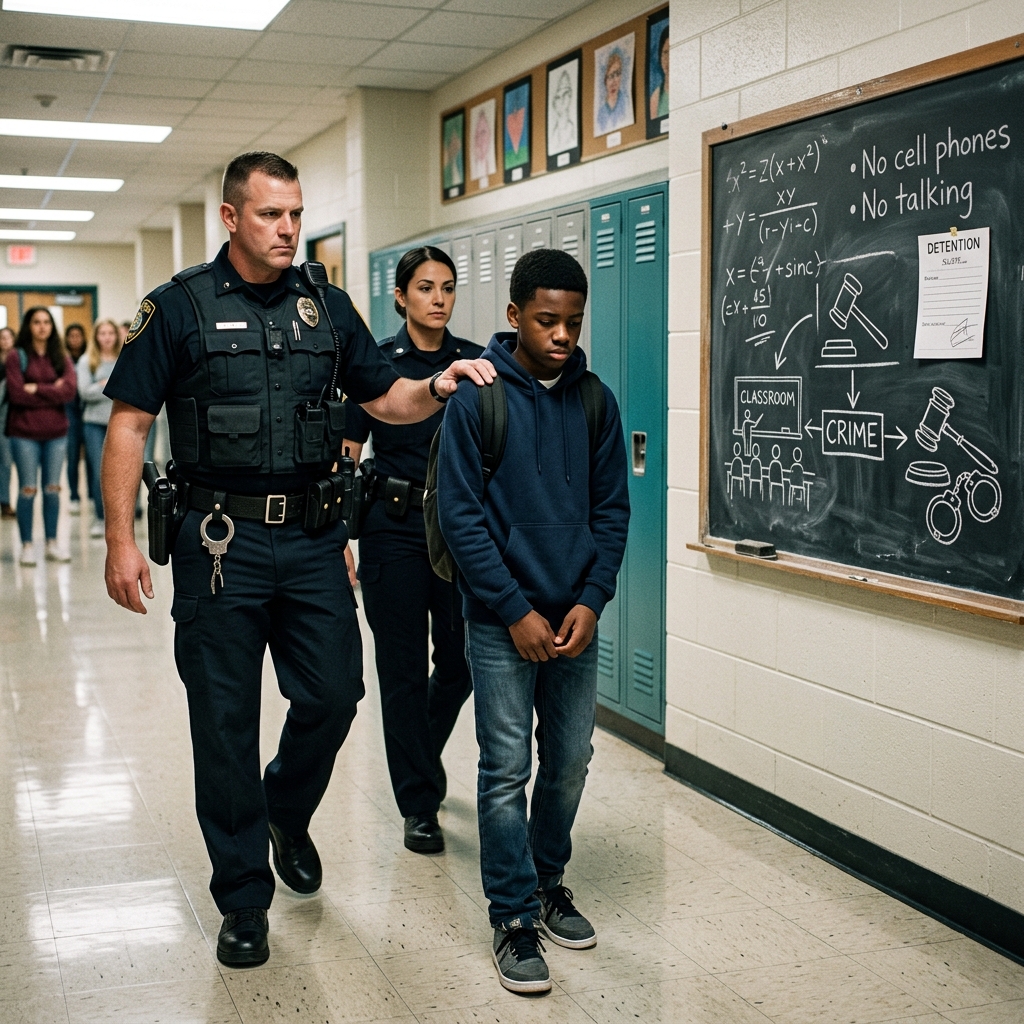
A middle school classroom, a permanent marker, and a marked desk are not unusual. What is unusual is a child leaving that classroom in handcuffs for what would once have been handled by a teacher with an eraser, a phone call home, or detention. The case of a 13-year-old boy arrested for using a Sharpie on his desk illustrates how far some schools have moved toward criminalizing routine misbehavior.
This article uses that incident as a starting point to examine zero-tolerance discipline, the growing use of police in schools, and the legal rights and consequences that families should understand. It also explores alternative approaches that hold students accountable without pushing them into the criminal justice system.
The Sharpie Incident: From Classroom to Custody
According to public records and reporting, the student was using a permanent marker during class when ink bled through the paper and onto the desk surface. Instead of being treated as minor property damage, the incident escalated into a criminal matter. School staff contacted law enforcement, and the student was arrested on allegations related to possession or misuse of the marker and defacing school property.
Key elements of the situation include:
- Age: The student was 13 years old, a typical middle-schooler.
- Object: A permanent marker commonly used for art and labeling supplies.
- Conduct: Writing on paper, with ink seeping onto the desk; the markings were reportedly not threats or obscene messages.
- School response: Staff involved law enforcement instead of relying solely on internal discipline systems.
- Outcome: The child was handcuffed, taken into custody, and entered into the juvenile justice process over a classroom incident.
This was not an isolated phenomenon. In New York City, the arrest of a 13-year-old girl for writing on her school desk triggered concern from civil liberties advocates, who described it as a “wake-up call” about the use of police in schools. These episodes show how school discipline and criminal law can collide in ways that are disproportionate to the behavior.
Zero-Tolerance Policies and the School-to-Prison Pipeline
The Sharpie arrest sits within a broader trend sometimes referred to as the school-to-prison pipeline—the pattern of harsh school discipline and law-enforcement involvement that increases the likelihood that students, especially those from marginalized communities, end up in the juvenile or criminal justice systems. Researchers and civil rights organizations have documented how zero-tolerance rules and in-school policing contribute to this pattern.
What Are Zero-Tolerance Policies?
Zero-tolerance policies impose predetermined consequences—often suspension, expulsion, or referral to law enforcement—for certain categories of conduct, regardless of context or intent. Originally promoted in the 1990s as a way to address drugs and weapons in schools, these policies have expanded in some jurisdictions to cover many forms of misbehavior, from fighting to vandalism and threats.
Under such policies, once behavior fits a defined rule violation, administrators may feel obligated to refer the case to police or impose severe discipline, even where:
- No one was physically harmed.
- The behavior was impulsive or lacked malicious intent.
- The student has no prior history of serious misbehavior.
- The issue could be resolved through restorative or educational responses.
Legal and educational experts have questioned whether zero-tolerance policies are effective. Studies and government guidance have noted that exclusionary discipline (like suspension and expulsion) is associated with lower academic achievement and increased risk of dropping out, without clear evidence of improved safety. Official reviews have highlighted that such policies can also disproportionately affect students of color and students with disabilities.
How Routine Misconduct Becomes a Criminal Case
In the Sharpie case, what would historically be handled as a minor rule violation—defacing school property—became an arrest because the school chose to treat it as a law-enforcement matter. From a criminal-law perspective, even small property damage can potentially constitute an offense, but police and prosecutors typically exercise discretion.
When schools rely on law enforcement for discipline, that discretionary buffer narrows. Children can receive:
- Juvenile arrest records for acts that once led to detention or a phone call home.
- Court oversight for behavior rooted in normal adolescent impulsivity.
- Conditions or probation that are difficult for a young student to navigate.
In some jurisdictions, laws define specific school-based offenses, including vandalism or written threats. For instance, in Florida, children have been arrested on felony charges for writing threats or “kill lists” on desks and classroom surfaces. These statutes are designed to address serious risks, but their application can be controversial when the student is very young or the threat appears non-credible.
Legal Framework: Property Damage and Written Threats
To understand how discipline crosses into criminal law, it helps to look at two categories of offenses that frequently arise in school settings: property damage and written threats.
| Type of Conduct | Typical School Response | Potential Criminal Charge |
|---|---|---|
| Writing on desks, walls, lockers | Detention, cleaning, restitution | Vandalism or criminal mischief |
| Writing threats or “kill lists” on school property | Immediate investigation, parental notification | Written threat to kill or harm, terroristic threat |
| Carrying prohibited items (e.g., weapons) | Suspension, possible expulsion | Weapons offenses, assault-related charges |
Defacing School Property
Many states have laws against criminal mischief or vandalism that cover intentional damage to property. Writing on a desk with permanent ink, particularly if difficult to remove, can technically fit these definitions. In practice, however, police and prosecutors often handle such minor incidents informally or decline to pursue charges.
The Sharpie case stands out because the school chose the most punitive path by involving law enforcement in what appears to have been low-level damage that could be cleaned or repaired. Advocates have argued that this kind of response treats children as criminals for conduct better addressed through school discipline, and risks long-term consequences that far exceed the harm caused.
Written Threats and “Kill Lists”
On the other end of the spectrum are cases where children write explicit threats. In Florida, for example, law enforcement has arrested elementary and middle school students for writing “kill lists” or gun threats on desks and whiteboards, charging them with making written threats to kill. Such statutes reflect serious concerns about school violence.
Key legal considerations in threat cases include:
- Whether the statement can reasonably be interpreted as a threat.
- Context, including the student’s age and history.
- Evidence of intent to carry out the threat.
- How the school and police assess credibility and risk.
Even in threat cases, experts have recommended balanced responses that prioritize safety while avoiding unnecessary criminalization of very young students. Official guidance and case law increasingly emphasize the importance of considering developmental differences and using threat-assessment processes rather than reflexive arrest when possible.
Students’ Rights and Protections During School Arrests
When police enter the classroom, students do not check their rights at the school door. However, those rights can be difficult for children to exercise, especially under stress and in the presence of authority figures. Families should be aware of the general principles that apply when a student is questioned or arrested at school.
Questioning and Miranda Warnings
In the United States, police must provide Miranda warnings before custodial interrogation—questioning after a person has been significantly deprived of freedom. Courts have recognized that a child’s age is relevant to deciding whether they are “in custody” for Miranda purposes, and that students cannot be treated as miniature adults when evaluating coercion. The U.S. Supreme Court has emphasized that children are generally more vulnerable to pressure and less able to understand legal rights than adults.
Factors that can be important in determining whether Miranda applies in a school setting include:
- Whether the student is told they are free to leave.
- Presence of police officers versus school staff alone.
- Use of handcuffs or physical restraints.
- Location of questioning (e.g., principal’s office versus police station).
Parents concerned about police questioning at school may wish to clarify with administrators how they handle law enforcement interviews and whether they notify families before such questioning takes place. Some districts have adopted policies requiring parental notification or presence in serious cases.
Due Process in School Discipline
Separate from criminal procedure, students have due process rights when facing serious school discipline. For suspensions of more than a short period and expulsions, schools typically must provide notice of the alleged misconduct and some form of opportunity to be heard. Federal and state law also impose specific protections for students with disabilities, including requirements for reviewing whether behavior is related to a disability.
When discipline overlaps with criminal charges—such as in the Sharpie arrest—families may find themselves navigating two systems at once: school discipline procedures and juvenile court processes. Legal organizations and public-interest groups often recommend that families seek advice if a child faces potential criminal consequences for school behavior.
Impact of Criminalizing Classroom Misconduct
Arresting children for school-based misbehavior can have lasting effects that extend well beyond the immediate incident. Research and policy analyses have raised several concerns about these practices.
- Academic disruption: Court involvement and possible suspension or expulsion interrupt learning, leading to missed instructional time and falling behind academically.
- Emotional and psychological harm: Being handcuffed or taken into custody from school can be traumatic, undermining trust in adults and institutions.
- Record and stigma: Even when juvenile records are confidential, the experience of being treated as a criminal can alter how teachers and peers see a student.
- Disproportionate impact: Data from various jurisdictions show that students of color and students with disabilities are more likely to experience arrests and harsh discipline for similar behaviors.
In the Sharpie case, the gap between the student’s conduct and the intensity of the response is particularly visible: the harm caused—a marked desk—was minor and easily remediable, yet the response involved criminal procedure rather than educational correction.
Alternatives to Arrest: Building Safer, Fairer Schools
Schools committed to safety do not need to rely on arrest as a default response. Numerous evidence-informed approaches can reduce misbehavior and improve school climate while minimizing unnecessary contact with the justice system.
Restorative Practices
Restorative justice in schools focuses on repairing harm and rebuilding relationships rather than simply punishing rule violations. In a case involving minor property damage like a marked desk, restorative responses might include:
- Having the student help clean the desk or contribute to repair costs.
- A facilitated conversation between the student and teacher about expectations and respect for shared property.
- Reflection exercises on how actions affect the classroom community.
Studies in several districts have found that restorative practices can reduce suspensions and improve perceptions of fairness and safety without sacrificing order.
Clear Expectations and Graduated Consequences
Effective discipline systems articulate clear behavioral expectations and use graduated consequences—responses that escalate only if misbehavior repeats or becomes more serious. For minor infractions, this often means:
- Verbal warnings and reteaching rules.
- Loss of privileges or brief time-outs.
- Contact with parents or guardians for patterns of misbehavior.
- School-based consequences such as detention or in-school support.
Police involvement is reserved for genuinely dangerous situations, such as credible threats of violence, serious assaults, or weapons possession.
Training for Educators and School Resource Officers
Where schools employ school resource officers (SROs), training and clear role definitions are critical. Many professional guidelines recommend that SROs focus on safety planning and relationship building rather than routine discipline, and that they be specifically trained in adolescent development, de-escalation, and implicit bias.
Similarly, teachers and administrators benefit from training on:
- Recognizing when a situation truly requires law enforcement involvement.
- Alternatives to arrest for low-level wrongdoing.
- How bias and stereotypes may influence discipline decisions.
What Parents and Students Can Do
Parents and students cannot control school policy, but they can take steps to understand their rights and advocate for fair discipline. In situations like the Sharpie arrest, informed families are better able to respond.
Practical Steps for Families
- Request school discipline policies: Ask for the student handbook and any district codes of conduct to see how misbehavior is supposed to be handled.
- Ask about law-enforcement protocols: Find out under what circumstances the school calls police and whether parents are notified before or during student questioning.
- Discuss rights with your child: In age-appropriate language, explain that they have rights when speaking with police and can ask for a parent or guardian.
- Seek legal advice for arrests: If a child is arrested, consider consulting a lawyer experienced in juvenile law to understand possible consequences and options.
- Engage with school boards: Participate in meetings or committees where discipline policies and SRO roles are discussed.
FAQs: School Discipline, Arrests, and Sharpie Cases
Can a child really be arrested for writing on a school desk?
Yes. If school officials treat the incident as vandalism or criminal mischief and involve law enforcement, police can arrest a student for defacing school property, even if the damage is minor. Whether prosecutors pursue charges is another matter, and many advocates argue such arrests are inappropriate for routine misbehavior.
Is using a permanent marker in class illegal?
Using a permanent marker is not inherently illegal. The legal issue arises when it is used in ways that deface property or violate specific statutes or school rules. In the Sharpie case, the marker’s ink bleeding onto the desk was treated as property damage.
What is the difference between school discipline and criminal charges?
School discipline involves internal consequences such as warnings, detention, suspension, or expulsion. Criminal charges involve the justice system: arrest, court appearances, and potential sanctions imposed by a judge. In some cases, like the Sharpie arrest, a single incident can trigger both school discipline and criminal proceedings.
Are schools required to call police for rule violations?
No. In most jurisdictions, schools have discretion and are not legally required to call police for ordinary rule violations. Some safety-related incidents—like credible threats or weapons—may trigger mandatory reporting under state law, but writing on a desk typically does not. How schools choose to respond is influenced by district policy, local culture, and administrative judgment.
What can be done to prevent unnecessary arrests in schools?
Districts can revise discipline codes to limit law-enforcement involvement to serious safety threats, invest in restorative practices, train staff and SROs on de-escalation and adolescent development, and monitor discipline data for disparities. Parents and community members can advocate for these changes through school boards and local policymaking processes.
References
- Boy Arrested for Using Sharpie on Desk — FindLaw (archived). 2010-12-22. https://archive.findlaw.com/legalblogs/criminal-defense/boy-arrested-for-using-sharpie-on-desk/
- Boy, 13, Busted For Illegal Marker Possession — The Smoking Gun. 2010-12-22. http://www.thesmokinggun.com/documents/bizarre/boy-13-busted-illegal-marker-possession
- Arrest Of 13-Year-Old For Writing On Desk Should Be Wake-Up Call For City, NYCLU Says — New York Civil Liberties Union. 2007-04-03. https://www.nyclu.org/press-release/arrest-13-year-old-writing-desk-should-be-wake-call-city-nyclu-says
- 11-year-old Florida boy arrested for writing “kill list” on school desk — WFTV. 2024-05-21. https://www.wftv.com/news/local/11-year-old-florida-boy-arrested-writing-kill-list-school-desk/MKAAWC4S4FGTZH6BETKUU3VGBI/
- Volusia County student, 10, in custody after allegedly writing gun threat on school whiteboard — FOX 35 Orlando. 2024-05-22. https://www.fox35orlando.com/news/volusia-county-student-10-custody-after-allegedly-writing-gun-threat-school-whiteboard
Similar Articles








Read full bio of medha deb




