
When Product Recalls Become Criminal Risk
How delayed or inadequate product recalls can expose businesses and executives to criminal investigation and prosecution.
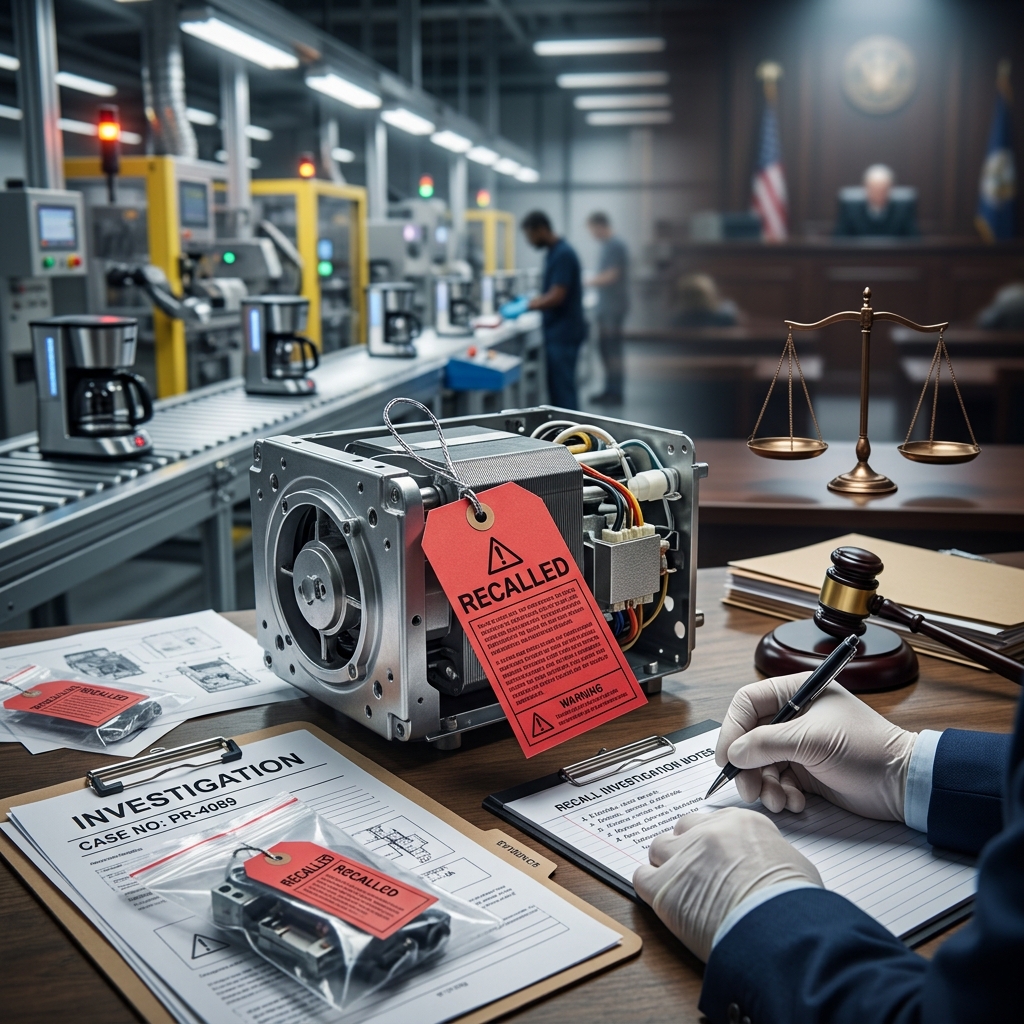
Most business owners think of product recalls as an expensive inconvenience or a public relations problem. In reality, recall decisions can carry far more serious consequences: in some circumstances, failing to act on a dangerous defect or mishandling a recall can expose a company and its leaders to criminal liability. Understanding where civil product liability ends and criminal exposure begins is critical for any organization that designs, manufactures, distributes, or sells consumer goods.
Why Product Recalls Matter Beyond Civil Lawsuits
Product liability is usually discussed in the context of civil lawsuits where injured consumers seek compensation for harms caused by defective products. These cases focus on money damages and often end in settlements or jury verdicts. Criminal cases, by contrast, involve the government accusing individuals or corporations of violating statutes that may carry fines, probation, or imprisonment.
Recalls sit at the intersection of these two systems. A recall may be:
- Evidence in civil lawsuits that a product was defective or unsafe.
- Required or strongly encouraged by regulators under specific safety laws.
- Relevant to criminal charges if a company ignored known dangers, failed to report them, or misled authorities and consumers about risks.
Because of this, recall decisions must be treated as part of an overall compliance and risk-management strategy, not just a marketing or customer-service problem.
Core Legal Framework Governing Product Recalls
In the United States, recall-related obligations stem from a combination of product-safety statutes, sector-specific regulations, and general criminal laws. The details differ by industry, but several major federal regimes are especially relevant.
Consumer Product Safety Laws
For most household consumer products, the Consumer Product Safety Commission (CPSC) oversees safety and recall activity. Under the Consumer Product Safety Act and related statutes, manufacturers, importers, distributors, and retailers must report certain product hazards to the CPSC and may need to conduct recalls when a product presents a substantial risk of injury or death.
Key obligations typically include:
- Promptly informing the CPSC when a product may contain a defect that creates an unreasonable risk of serious injury or death.
- Cooperating with the agency in evaluating the risk and, when appropriate, designing and implementing a correction or recall program.
- Ensuring recall notices are accurate, not misleading, and adequately disseminated to affected consumers.
Failure to follow these requirements can lead to civil penalties and, in some cases, criminal charges, especially if the violation is deliberate or repeated.
Food, Drugs, and Medical Products
In the food, drug, and medical device sectors, the U.S. Food and Drug Administration (FDA) regulates safety under the Federal Food, Drug, and Cosmetic Act (FDCA). The FDCA makes certain acts criminal, including introducing adulterated or misbranded products into interstate commerce and failing to meet various reporting obligations.
Importantly:
- The FDCA allows the government to pursue misdemeanor criminal liability even without proof that executives knew about the violation, under the so-called “responsible corporate officer” doctrine.
- Companies may incur civil and criminal liability for marketing unsafe food regardless of whether they subsequently recall the product.
- Inadequate or misleading recall efforts can worsen liability by demonstrating disregard for consumer safety or regulatory requirements.
General Criminal Statutes
Beyond product-specific laws, businesses may face prosecution under broader criminal statutes, such as:
- Fraud and false statements (for example, providing misleading information to regulators or consumers).
- Obstruction of justice (destroying records or interfering with investigations).
- Conspiracy (agreeing with others to cover up known product risks).
These laws can apply even when no explicit recall statute is violated, if the company’s conduct around a defective product constitutes deceptive or obstructive behavior.
When Failing to Recall Can Become a Criminal Issue
Not every delayed or imperfect recall will trigger criminal charges. Most recall-related problems are handled as regulatory or civil matters. Criminal exposure tends to arise in more extreme scenarios involving disregard of known risks, deception, or systemic noncompliance.
Knowledge of Serious Hazards
A common factor in criminal investigations is evidence that company personnel knew, or reasonably should have known, that a product posed a serious danger but failed to act. For example, internal testing, consumer complaints, or prior incidents may reveal a defect that presents a substantial risk of death or serious injury.
If a business ignores this information and continues selling the product, delays reporting to regulators, or chooses not to recall, prosecutors may argue that it:
- Willfully violated reporting or safety obligations.
- Recklessly endangered consumers.
- Engaged in fraud by marketing the product as safe despite known defects.
Violations of Statutory Reporting and Recall Duties
Many safety laws require companies to notify regulators when certain thresholds of risk, incidents, or defect information are met. Potential criminal exposure can arise when a firm:
- Fails to report hazards within a reasonable time after discovering them.
- Conceals test results or internal analyses that show serious safety problems.
- Knowingly sells products that violate statutory safety standards.
In industries like food and drugs, such acts can constitute criminal violations under the FDCA and similar statutes, even if no formal recall is ever initiated.
Misleading Regulators or Consumers
Criminal liability may also be triggered by dishonesty during recall-related communications. Conduct that can raise prosecutorial interest includes:
- Issuing recall notices that downplay or misrepresent the severity of the risk.
- Providing incomplete or false data to regulatory agencies during investigations.
- Using marketing or public statements to reassure consumers despite internal evidence of ongoing danger.
Such behavior can support charges involving false statements, wire or mail fraud, or obstruction, depending on the facts and statutes at issue.
Civil vs. Criminal Product Liability: Key Differences
| Aspect | Civil Product Liability | Criminal Liability |
|---|---|---|
| Primary goal | Compensate injured consumers for losses | Punish unlawful conduct and deter future violations |
| Who brings the case? | Private plaintiffs (individuals, classes) or, occasionally, government agencies seeking civil penalties | Government prosecutors (federal or state) |
| Typical consequences | Damages, injunctions, recall costs, compliance requirements | Fines, probation, corporate monitoring, imprisonment for individuals |
| Role of recalls | Evidence of defect or reasonable care; may reduce or increase liability depending on timing and adequacy | Relevant to whether company complied with statutory duties or engaged in deception or recklessness |
How Recalls Influence Civil Lawsuits and Regulatory Actions
Even when criminal charges are not at issue, recall decisions have significant legal implications across civil litigation and enforcement.
Recalls as Evidence of Defects
Civil courts often allow juries to hear about recalls when assessing whether a product was defective or unreasonably dangerous. A recall can suggest that the manufacturer recognized a safety problem, though it does not automatically prove liability. Plaintiffs still must establish the elements of their claim, such as defect, causation, and damages.
Impact on Manufacturer Defenses
Manufacturers sometimes argue that a timely, well-executed recall shows they acted reasonably once they became aware of the risk. However, courts may scrutinize whether:
- Recall notices were specific and reached affected consumers.
- Remedies (such as repair, replacement, or refund) were practical and accessible.
- The company’s post-recall conduct reduced, rather than exacerbated, ongoing dangers.
A broad but poorly targeted recall, or one that fails to reach core users, may provide little protection in civil litigation and could raise regulatory concerns about adequacy.
Best Practices to Reduce Criminal and Civil Recall Risk
While no strategy can eliminate legal exposure, businesses can significantly reduce the likelihood of recall-related criminal scrutiny by building robust safety and compliance programs.
Develop a Structured Product Safety Program
An effective program typically includes:
- Systematic monitoring of consumer complaints, warranty data, and incident reports for patterns that suggest defects.
- Clear escalation pathways for engineers, quality assurance, and customer-service teams to report potential hazards to compliance staff and legal counsel.
- Documentation protocols to preserve testing results, hazard analyses, and decision-making records in a coherent and accessible manner.
Establish Recall Decision and Response Procedures
Companies should have written procedures for evaluating whether a recall or other corrective action is warranted and, once decided, how to execute it. Components may include:
- Criteria for determining when a defect poses a substantial risk of serious harm.
- Steps for immediate consultation with regulatory counsel when a potential recall scenario arises.
- Guidelines for crafting clear, accurate, and non-misleading recall communications to consumers and regulators.
Coordinate Closely with Regulators
Open, collaborative engagement with agencies such as the CPSC and FDA can help reduce the likelihood of enforcement actions escalating to criminal investigations. Effective coordination may involve:
- Timely submission of required reports on product hazards and incidents.
- Responding fully and honestly to information requests, including providing relevant data and analyses.
- Participating in recall program design discussions and implementing agreed corrective actions promptly.
Regulators often focus criminal resources on companies that show patterns of noncompliance or dishonesty, rather than those that promptly cooperate in addressing problems.
Train Leadership and Staff on Legal Obligations
Human decisions are central to recall outcomes. Training should emphasize:
- The difference between civil product liability and criminal exposure, and why intent and transparency matter.
- Employees’ duty to report safety concerns within the organization.
- Policies forbidding destruction or alteration of safety-related records and communications.
Executives and managers should understand that they may be held personally responsible for regulatory violations in certain sectors, even absent direct knowledge, under doctrines like responsible corporate officer liability.
Special Considerations for Small and Emerging Businesses
Smaller enterprises and startups often lack dedicated legal or compliance departments, which can make recall obligations seem daunting. However, these organizations are not exempt from safety laws, and some features of small-business operations can increase risk:
- Less formal documentation of design and testing processes.
- Limited internal expertise on regulatory standards.
- Greater reliance on third-party manufacturers or suppliers, which can complicate responsibility for defects.
To manage these challenges, small businesses should consider:
- Engaging outside counsel familiar with product-safety regimes relevant to their sector.
- Implementing lean but clear safety and incident-reporting procedures.
- Including recall and safety compliance obligations in contracts with suppliers and distributors.
Frequently Asked Questions About Recalls and Criminal Liability
Does every defective product require a recall?
No. Not every defect or problem necessitates a formal recall. The decision depends on factors such as the severity of the risk, likelihood of harm, number of affected units, and applicable regulatory standards. In some situations, alternative corrective measures may be sufficient. However, when a product presents a substantial risk of serious injury or death, regulators often expect strong corrective actions, which may include a recall.
Can a recall protect a company from criminal charges?
A timely, honest, and thorough recall can reduce the likelihood of criminal prosecution because it demonstrates proactive efforts to protect consumers and comply with the law. However, a recall is not a guarantee against criminal charges. If the company previously concealed hazard information, delayed reporting, or misled regulators, a later recall might not erase that history.
Is a company criminally liable if it did not know about the defect?
In many areas of law, criminal liability requires proof of knowledge or intent. But certain product-safety statutes, such as the FDCA, allow for misdemeanor liability even without proof that executives knew of the violation, under doctrines that hold responsible corporate officers strictly accountable for regulatory breaches. Knowledge is still relevant for more serious felony charges or enhanced penalties.
How do recalls affect civil lawsuits?
Recalls often become central evidence in civil product liability litigation. Plaintiffs may argue that a recall shows the product was defective, while defendants may contend that the recall demonstrates responsible conduct and mitigates ongoing harm. Courts evaluate the timing, scope, and effectiveness of the recall when assessing liability and damages.
What should a company do first when it suspects a major defect?
When serious safety concerns arise, companies should:
- Secure and review relevant data (test results, complaints, incident reports).
- Consult internal or external legal counsel with product-safety expertise.
- Consider immediate steps to prevent further harm while evaluating recall options.
- Prepare to notify regulators as required by applicable statutes.
Early, informed action can help protect consumers and limit both civil and criminal exposure.
References
- Consumer Product Safety Act and Related Statutes — U.S. Consumer Product Safety Commission. 2024-03-01. https://www.cpsc.gov/Regulations-Laws–Standards/Statutes
- Can Product Liability Be Criminal? — Harris Lowry Manton LLP. 2019-07-22. https://www.hlmlawfirm.com/blog/can-product-liability-be-criminal/
- Civil and Criminal Liability Associated With Food Recalls — Food and Drug Law Journal (via JSTOR). 2018-01-01. https://www.jstor.org/stable/26659673
- Criminalizing Product Liability Law: Putting to Rest a Bad Idea — Victor E. Schwartz, Institute for Legal Reform. 2006-09-01. https://instituteforlegalreform.com/wp-content/uploads/2006/09/schwartz.pdf
- Crimes and Misdemeanors: Food Recalls and Food Product Litigation — Jenner & Block LLP. 2012-02-01. https://www.jenner.com/a/web/9JY9eiRRdbXEuBUL8NLjVJ/4HRMZQ/Crimes_and_Misdemeanors.pdf
- Product Recalls: Anticipating the Product Liability Lawsuits — Jones Day. 2012-02-01. https://www.jonesday.com/en/insights/2012/02/product-recalls-anticipating-the-product-liability-lawsuits
- The Impact of a Recall on Product Liability — Herrick & Hart, S.C. 2017-05-10. https://www.eauclairelaw.com/blog.phtml/product_liability/1B2A990B/the_impact_of_a_recall_on_product_liability
Similar Articles








Read full bio of medha deb




