
When a Cyclist Damages Your Car: Who Pays and How
Understand when a bicyclist’s insurance, your own auto policy, or other coverage pays after a bike–car crash that damages your vehicle.
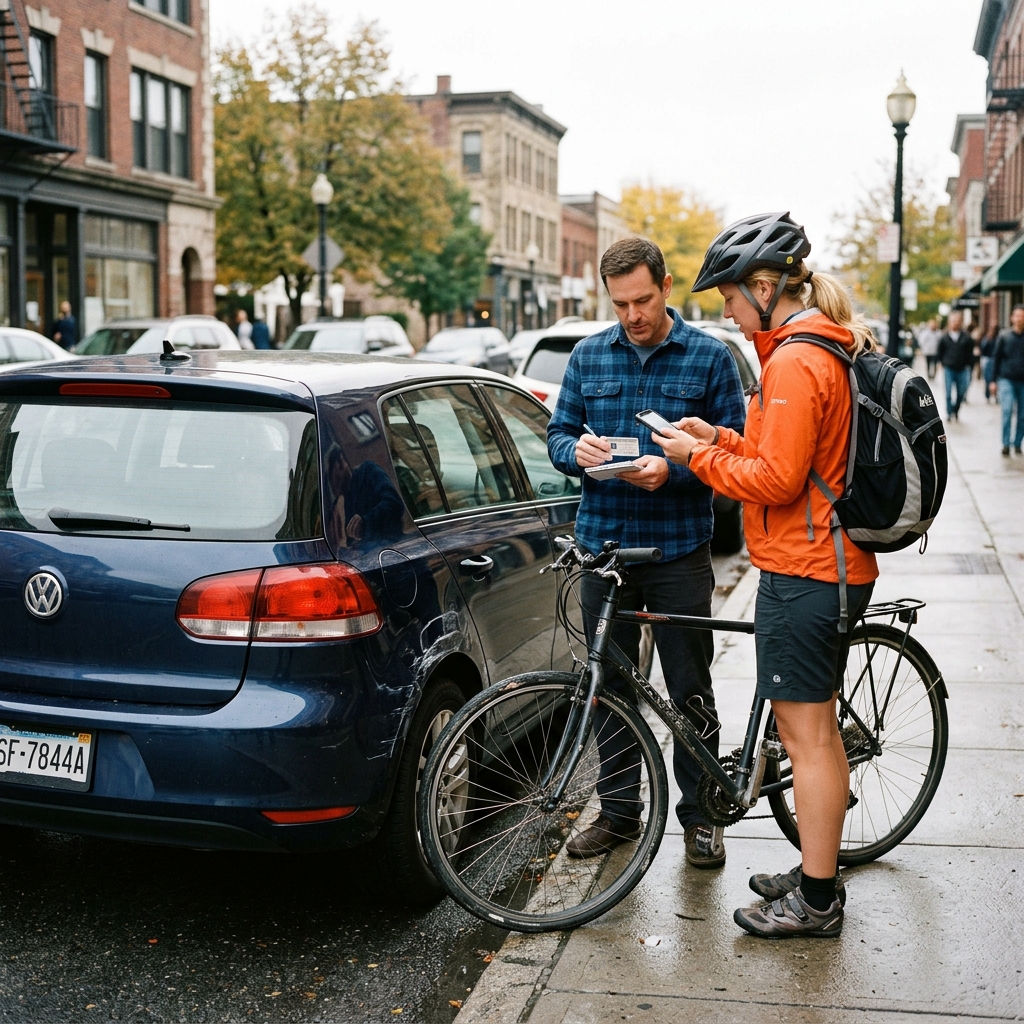
Collisions between cars and bicycles are not always the familiar scenario of a driver harming a cyclist. Sometimes a bicyclist makes a mistake, crashes into a vehicle, and leaves the driver with a dented fender, broken mirror, or worse. Understanding which insurance policies apply in this situation is critical to protecting your finances and resolving the claim efficiently.
This guide explains how liability rules work when a bicyclist damages your car, what insurance coverages may respond, and practical steps you can take to pursue compensation. It is based on general U.S. insurance principles and common state laws, but individual outcomes depend on where you live and the policies involved.
Key Takeaways at a Glance
- Fault matters: The person whose negligence caused the crash is usually financially responsible for the damage.
- Bicyclists are not automatically uninsured: Their homeowners or renters insurance may include personal liability coverage that applies to bicycle accidents.
- Your own auto policy can help: Collision coverage on your car insurance can pay for repairs regardless of who was at fault, subject to your deductible.
- In no-fault states: Personal Injury Protection (PIP) often covers medical bills but usually does not pay for damage to your car.
- Documentation is crucial: Photos, witness statements, and a police report significantly strengthen your claim.
How Fault Is Determined When a Bike Hits a Car
Insurance companies and courts start with a basic question: who was negligent? Negligence means failing to use reasonable care under the circumstances. Both drivers and bicyclists must obey traffic laws and operate carefully.
Typical Ways a Cyclist Can Be Found at Fault
- Riding against traffic in a lane meant for vehicles
- Ignoring stop signs or red lights and crashing into a car lawfully entering an intersection
- Weaving between parked cars and colliding with a vehicle pulling out
- Riding at night without required lights or reflectors and striking a car they failed to see
If the bicyclist’s actions violate traffic rules or basic safety expectations, insurers are more likely to assign them primary responsibility for the damage.
Shared Fault: When Both Parties Contributed
In many states, accidents are treated under comparative negligence, meaning each party can be assigned a percentage of blame.
- In modified comparative negligence states, an injured party may recover damages only if they are under a specified fault threshold (often 50%), and their compensation is reduced by their fault percentage.
- In pure comparative negligence states, like California, a party can recover even if they were mostly at fault, but their recovery is reduced according to their share of responsibility.
For property damage claims, these rules affect how much an insurer pays. If both the driver and cyclist contributed to the crash, each party’s insurer may pay in proportion to fault.
Which Insurance Policies Might Cover Your Car Damage?
Contrary to a common assumption, there is no universal rule that a bicyclist’s auto insurance will cover damage they cause while riding. Instead, several different insurance policies might apply depending on the circumstances.
Your Auto Insurance
| Coverage Type | What It Can Do After a Bike–Car Crash |
|---|---|
| Liability coverage | Pays for damage you cause to others, including cyclists and pedestrians, when you are at fault. It does not pay to repair your own car. |
| Collision coverage | Pays for repairs to your car caused by a collision with another vehicle, a bicycle, or an object, regardless of fault, minus your deductible. |
| Comprehensive coverage | Applies to non-collision losses (theft, vandalism, falling objects) and usually does not cover bike–car impact damage. |
| Personal Injury Protection (PIP) | Covers medical expenses and sometimes lost wages for you and your passengers, often regardless of fault, but generally excludes property damage. |
If a bicyclist damages your car and their insurer refuses to pay or has low limits, you may rely on your own collision coverage to restore your vehicle more quickly, then allow your insurer to seek reimbursement from the cyclist or their insurer (a process called subrogation).
The Cyclist’s Homeowners or Renters Insurance
When a bicyclist is at fault and does not have relevant auto coverage, the next place to look is often their homeowners or renters insurance. These policies typically include personal liability coverage for injuries or property damage the policyholder causes through everyday activities, including riding a bicycle.
- Personal liability coverage can pay for damage to your car and related costs (such as a rental vehicle) if the cyclist’s negligence is proven.
- Coverage limits vary by policy, but common limits range from tens of thousands to hundreds of thousands of dollars.
- These policies usually exclude liability arising from operating a motor vehicle, but bicycling is generally not treated as motor vehicle use.
From the driver’s standpoint, you would make a claim against the cyclist’s homeowners or renters policy, just as you might if a neighbor accidentally damaged your property in another way.
Umbrella Liability Policies
Some individuals carry umbrella liability insurance, which provides an extra layer of protection on top of auto and homeowners policies. If a bicyclist has such a policy and their underlying homeowners or renters limits are exhausted, the umbrella coverage may pay additional amounts for your car damage and related losses.
Because umbrella coverage is optional and less common, you usually discover its existence only after contacting the cyclist’s primary insurer.
Bicyclist’s Auto Insurance
Auto liability policies are designed to cover damage caused by the use of a motor vehicle. When the policyholder is riding a bicycle, the vehicle named in the policy is not being operated, so standard auto liability coverage typically does not apply.
However, auto policies may still help the cyclist with their own injuries if a car was involved in the crash. For example:
- If a driver hits a cyclist, the driver’s auto liability insurance is generally primary for the cyclist’s injuries and bike damage.
- The cyclist’s own uninsured/underinsured motorist (UM/UIM) coverage and medical payments coverage can provide additional compensation if an at-fault driver has insufficient insurance.
These benefits mainly protect the cyclist rather than the driver whose car was damaged, but they illustrate why auto coverage becomes relevant once a motor vehicle is involved.
Realistic Scenarios and How Claims Might Be Handled
Scenario 1: Cyclist Clearly At Fault, Driver Has Collision Coverage
A cyclist runs a red light, hits your car, and causes $3,000 in damage. They admit fault and provide homeowners insurance information.
- You file a claim with the cyclist’s homeowners insurer, seeking payment for repairs and any rental car costs.
- To avoid delay, you may also use your own collision coverage to repair the vehicle promptly, paying your deductible.
- Your insurer then pursues reimbursement from the cyclist’s insurer; if successful, your deductible may be refunded.
Scenario 2: Disputed Fault in a Comparative Negligence State
You open a car door without checking for approaching traffic; a cyclist swerves to avoid you and clips your bumper. The cyclist argues you were partially at fault.
- Each insurer evaluates evidence (photos, witness accounts, traffic rules) and assigns fault percentages.
- If you are found, for example, 40% at fault and the cyclist 60% at fault, the cyclist’s liability coverage may pay 60% of the damage, and your policy responds to the remainder.
- Negotiating fault allocations may require legal assistance, particularly if injuries are also involved.
Scenario 3: Cyclist Uninsured, Minimal Documentation
A cyclist scrapes your car and rides away without providing information. You have only a partial license plate and blurry photo.
- Without identifying the cyclist, it is difficult to make a claim on any liability policy they may have.
- Your main option is to repair the vehicle through your collision coverage, if you carry it.
- If your state and policy allow, uninsured motorist property damage coverage might apply, but many UM provisions focus on motor vehicle–related incidents.
Steps to Take Immediately After a Bike–Car Collision
Your actions in the minutes and hours after the incident can significantly influence the outcome of any insurance claim.
1. Prioritize Safety and Medical Care
- Move vehicles and bicycles out of traffic if it is safe to do so.
- Call emergency services if anyone is injured.
- Do not engage in arguments or admit fault at the scene.
2. Contact Law Enforcement
A police report helps establish key facts, including location, visible damage, and statements from both parties. Insurers often rely on this report when evaluating fault.
3. Collect Evidence
- Photograph your car, the bicycle, the scene, traffic signs, and road conditions.
- Exchange names, addresses, phone numbers, and insurance details with the cyclist.
- Obtain contact information from any witnesses.
4. Notify Your Insurer Promptly
Most auto policies require timely notice of potential claims. Provide your insurer with:
- The police report number
- Photos and videos from the scene
- The cyclist’s insurance information (if available)
Your insurer can advise whether to pursue a claim through the cyclist’s liability coverage, your own collision coverage, or both.
When You May Need Legal Advice
While minor property damage claims often resolve through routine insurance processes, some situations warrant consulting a personal injury or property damage attorney:
- Disputes over fault where substantial damage or injuries are involved
- Denial of coverage by the cyclist’s homeowners or renters insurer
- Complex comparative negligence issues in multi-party crashes
- Cases involving severe injuries, lost income, or long-term disability in addition to car damage
An attorney can clarify how state law applies, help gather stronger evidence, and negotiate with insurers or file a lawsuit if necessary.
Frequently Asked Questions
Does a bicyclist’s auto insurance pay when they damage my car?
Generally, no. Auto liability coverage is tied to the use of the insured motor vehicle, not to bicycle riding. If the person is on a bicycle, their auto policy typically does not pay for damage they cause to others’ property. More often, their homeowners or renters insurance provides liability coverage.
Can I use my collision coverage even if the bicyclist was at fault?
Yes. Collision coverage is designed to pay for your vehicle repairs after a collision with another vehicle, bicycle, or object, regardless of who caused the accident. You may owe a deductible, but your insurer can seek recovery from the cyclist’s insurer afterward.
What if the cyclist has no insurance at all?
If the cyclist lacks homeowners, renters, umbrella, or relevant auto coverage, they are still personally liable for the damage under general negligence principles. You may need to pursue compensation directly from them through negotiation or, in serious cases, through a lawsuit. Practically, many drivers rely on their own collision coverage in such situations.
Does my liability coverage help repair my own car?
No. Liability coverage pays for damage you cause to other people’s property or injuries when you are at fault. It does not cover repairs to your own vehicle; that is the role of collision or comprehensive coverage.
How do comparative negligence rules affect my claim?
In states using comparative negligence, each party can be assigned a portion of fault. Your recovery for property damage may be reduced by your percentage of responsibility, and insurers may share the costs accordingly. In some modified systems, being 50% or more at fault can bar recovery entirely.
Practical Tips to Protect Yourself Financially
- Review your policy: Check whether you carry collision coverage and confirm your deductible amount.
- Consider UM/UIM coverage: While mainly focused on crashes involving motor vehicles, uninsured/underinsured motorist coverage can be valuable if a car is involved and the at-fault driver has inadequate insurance.
- Document all communications: Keep records of conversations and letters with insurers and the bicyclist.
- Act promptly: Delays in reporting or repairs can complicate the claim and may weaken your position.
- Seek legal guidance when stakes are high: For expensive repairs or injury claims, professional advice can improve outcomes and ensure deadlines are met.
While bicycle–car collisions that damage vehicles may be less common than crashes injuring cyclists, they raise important questions about liability and insurance. By understanding how different policies interact and taking systematic steps after an incident, you can better protect your financial interests and move toward a fair resolution.
References
- Bicycle Accidents and Insurance Coverage — Progressive. 2024-01-10. https://www.progressive.com/answers/bicycle-accidents/
- How Insurance Coverage Works If the Cyclist Is at Fault for a Car Accident — Max Meyers Law. 2023-05-12. https://www.maxmeyerslaw.com/insurance-coverage-if-cyclist-is-at-fault-for-car-accident/
- Will Insurance Cover You If You’re Hit While Biking in Colorado? — Ramos Law. 2023-09-18. https://www.ramoslaw.com/will-insurance-cover-when-hit-on-a-bicycle/
- Does Car Insurance Cover Bicycle Accidents? — Pacific Law Group (PLG). 2022-11-03. https://www.plgroupla.com/blog/how-bicycle-accident-claims-navigate-vehicle-insurance-laws/
- Does Car Insurance Cover Bicycle Accidents? — Ben Crump Law. 2022-08-09. https://bencrump.com/faqs/does-car-insurance-cover-bicycle-accidents/
- Cover Yourself! Liability Insurance for the Cyclist — Bicycle Law. 2016-06-27. https://www.bicyclelaw.com/newsletter/viral-cycling/cover-yourself-liability-insurance-for-the-cyclist/
Similar Articles








Read full bio of medha deb




