
When Can Police Legally Search Your Car Trunk?
Learn when officers may inspect your vehicle’s trunk, which legal rules apply, and how to assert your constitutional rights calmly and effectively.
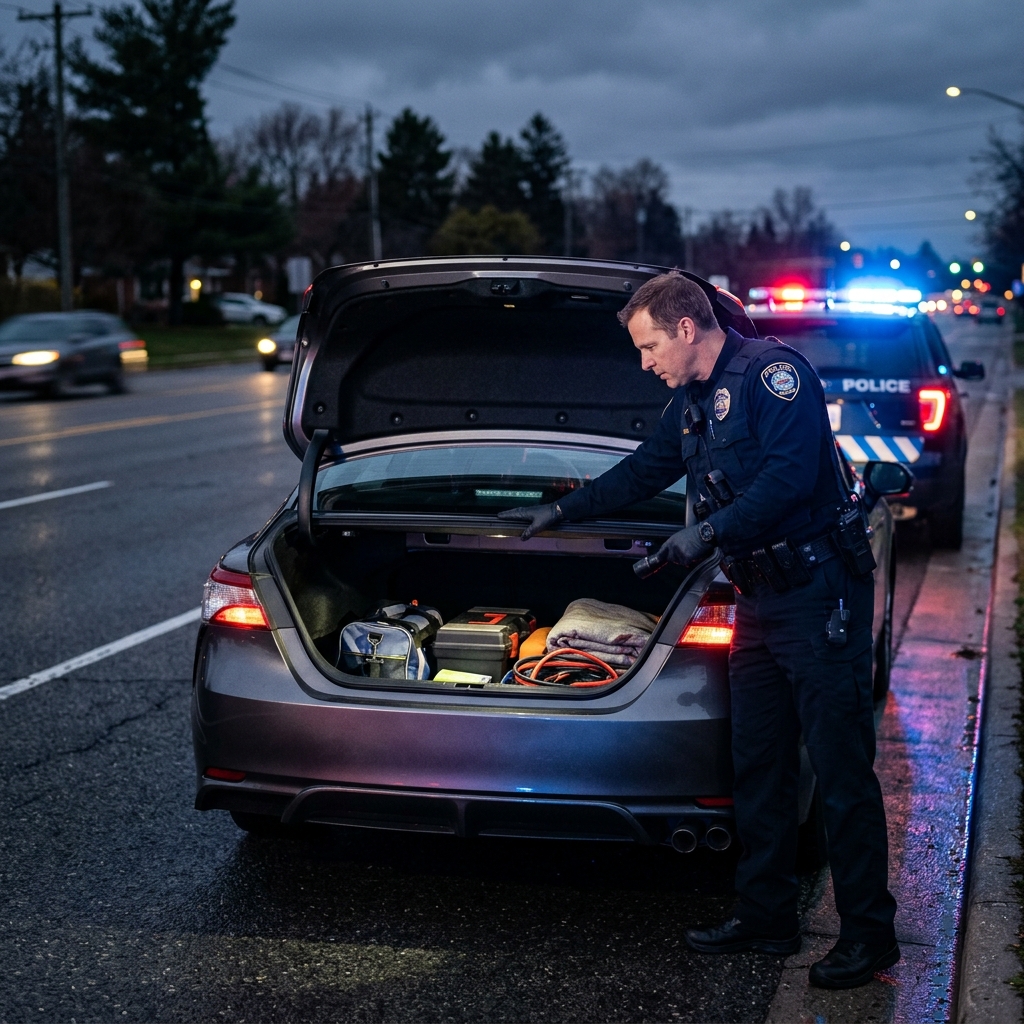
The trunk of your car is one of the most private parts of your vehicle. It is where people commonly store luggage, personal belongings, work materials, and sometimes sensitive items they would never leave in plain sight. Yet during a traffic stop or roadside encounter, drivers are often unsure whether officers may open the trunk and look inside. This article explains when the police can legally search your trunk, when they typically need a warrant, and which exceptions allow a warrantless search under United States law.
Most of the analysis is rooted in the Fourth Amendment to the U.S. Constitution, which protects against unreasonable searches and seizures and generally requires law enforcement to obtain a warrant before searching private property. However, courts have long recognized special rules for vehicles because they are mobile, heavily regulated, and used on public roads. Understanding these rules helps you recognize lawful police conduct and identify situations where a search may be challenged later in court.
Core Legal Principles Behind Trunk Searches
Before looking at specific scenarios, it is useful to understand the basic legal framework courts use to evaluate vehicle and trunk searches.
- Reasonableness is the key standard. The Fourth Amendment does not absolutely forbid searches; it forbids unreasonable searches. A search is usually considered reasonable if there is a valid warrant or if a recognized exception applies.
- Warrantless searches are presumed unreasonable. Courts often start from the idea that searching without a warrant is unlawful, and then examine whether an exception such as consent or probable cause justifies the search.
- Vehicles are treated differently than homes. Because cars are mobile and subject to licensing and safety regulations, courts recognize an “automobile exception” that allows some searches without warrants when probable cause exists.
- Scope matters. Even when a search is permitted, officers may only look in places where the suspected evidence could reasonably be located. Whether the trunk can be searched depends on the legal basis for the search and what officers are looking for.
Major Legal Grounds for Trunk Searches
There are several common situations in which officers may lawfully open and search a vehicle trunk. Each has its own requirements and limits.
1. Consent: Voluntary Permission
One of the most frequent justifications for trunk searches is consent. If you clearly agree to let officers check your trunk, they do not need a warrant or probable cause. Consent must generally be voluntary and not the result of coercion or threats. Officers often ask questions like “Do you mind if I look in your trunk?” during routine stops.
Key points about consent:
- You have the right to refuse consent. Politely saying “I do not consent to a search” is usually enough to decline.
- Consent can be limited in scope. If you only allow officers to look in the passenger area, that does not automatically authorize opening the trunk. Clear, narrow wording helps define what is allowed.
- Consent may be withdrawn. In many situations, you can change your mind and tell officers you no longer consent, though any evidence already found may still be used.
- Officers do not have to tell you that you can refuse. Courts generally do not require officers to warn you of your right to say no.
If you do give broad consent such as “You can search the car,” courts often interpret that to include the trunk and other compartments, unless you clearly limit it.
2. Probable Cause and the Automobile Exception
Another major basis for trunk searches is probable cause combined with the so‑called automobile exception. Probable cause means officers have reasonable, objective grounds to believe that evidence of a crime or contraband is somewhere in the vehicle. Under the automobile exception, if a vehicle is readily mobile and officers have probable cause, they may search it without a warrant, including areas like the trunk where the suspected evidence could be stored.
Examples that may contribute to probable cause include:
- Strong odors associated with illegal drugs or alcohol coming from the vehicle.
- Visible contraband or suspicious packaging on seats or the floor.
- Statements from the driver or passengers suggesting the presence of illegal items.
- Reliable tips from informants or witnesses that the car is carrying evidence.
Once probable cause exists, officers may search locations where evidence might reasonably be hidden. For example, if officers believe stolen electronics are in the car, the trunk may be searched because such items could easily be stored there.
| Probable Cause | Mere Suspicion |
|---|---|
| Specific facts and observations suggest a crime (e.g., visible drugs, strong odor, incriminating statements). | General hunch or feeling that something is wrong without concrete evidence. |
| Courts often uphold searches based on this level of information. | Usually insufficient to justify opening the trunk or conducting a full search. |
| Supports use of the automobile exception and may extend to trunk and containers. | May support further brief questioning, but not a comprehensive search. |
3. Plain View and Observations During the Stop
The plain view doctrine allows officers to seize illegal items and sometimes expand their investigation if those items are clearly visible from a lawful vantage point. For example, if an officer who lawfully stopped your car for speeding sees a bag of narcotics on the back seat, that plain view observation may contribute to probable cause for a broader search, potentially including the trunk.
Important aspects of plain view:
- Officers must be lawfully present where they are observing the item (e.g., standing by your window during a legitimate stop).
- The incriminating nature of the item must be reasonably obvious; ordinary luggage or tools are not enough.
- Plain view alone may allow seizure of the visible item, and, combined with other facts, can justify searching areas where related evidence might be found.
4. Search Incident to Arrest (Limited Reach)
If you are lawfully arrested during a traffic stop—for example, for driving under the influence or an outstanding warrant—officers are often allowed to search areas within your immediate reach for weapons or evidence related to the arrest. This is called a search incident to arrest.
However, courts typically limit this doctrine. It usually covers the passenger compartment, glove box, and areas you could quickly access, but not automatically the trunk, which is generally considered outside your immediate reach while seated in the car. To lawfully search the trunk after an arrest, officers typically need:
- Consent from the driver, or
- Independent probable cause supporting an automobile‑exception search, or
- A valid inventory search if the car is being impounded.
5. Inventory Searches After Impoundment
When police legally impound or tow a vehicle, they may conduct an inventory search, often including the trunk, to document the contents for safekeeping and to protect against claims that property was lost or stolen. Courts generally allow such searches if they follow standardized procedures and are not simply a pretext for looking for evidence.
Characteristics of a valid inventory search:
- The vehicle was lawfully impounded (for example, after an arrest, accident, or serious parking violation).
- Officers follow a regular, written policy about what areas and containers to open.
- The primary purpose is administrative (listing property), not solely investigative.
During a proper inventory of an impounded vehicle, the trunk and closed containers may be opened according to department policy, and any contraband discovered can often be used as evidence.
6. Exigent Circumstances and Safety Concerns
In some situations, exigent circumstances—urgent, pressing conditions—can justify a warrantless search of a vehicle, including the trunk. Courts recognize that officers may need to act quickly if they reasonably believe evidence will be destroyed or someone’s safety is at risk.
Examples include:
- Officers reasonably suspect a weapon is hidden in the vehicle and poses an immediate danger.
- There is credible information that a person is being held in the trunk or in another concealed part of the vehicle.
- Officers fear evidence will be quickly removed or destroyed if they delay.
Even in exigent circumstances, courts will later examine whether the officer’s judgment was reasonable, based on the facts available at the time.
State‑Specific Nuances: Why Location Matters
While the overarching rules come from the U.S. Constitution and federal cases, individual states may apply and interpret these principles differently. For instance, one state might allow broader automobile‑exception searches, while another requires both probable cause and an additional exigency before a trunk can be opened.
Illustrative differences:
- Some states emphasize that a warrantless search is presumed unreasonable unless a clear exception is proven, strictly limiting officer discretion.
- Others highlight the mobility of vehicles and more readily permit searches based solely on probable cause.
- Rules about whether the smell of marijuana alone creates probable cause may vary, especially where cannabis laws have changed.
Because state law can significantly affect outcomes, consulting a local criminal defense attorney is important if you believe a trunk search was unlawful.
Your Rights During a Traffic Stop
Knowing your rights helps you navigate encounters with police more calmly and effectively. The way you respond during a traffic stop can affect both the officer’s actions and your legal options later.
Key Rights to Remember
- Right to be free from unreasonable searches. Officers generally need either a warrant, your consent, or a recognized legal exception to search your trunk.
- Right to refuse consent. You may politely decline a voluntary trunk search if there is no clear legal justification. Saying “I do not consent to a search” is a simple and effective phrase.
- Right to remain silent. You are not required to answer investigative questions about where you are going, what is in the trunk, or other potentially incriminating topics. Silence can prevent statements from being used to support probable cause.
- Right to avoid physical resistance. Even if you believe the search is illegal, physically resisting is likely to make the situation worse and could lead to additional charges. Legal challenges should be made later through an attorney and the courts.
Practical Tips for Drivers
- Keep your license, registration, and insurance easily accessible so you can provide them without rummaging through the trunk.
- If asked for consent to search, calmly decide whether to agree. If you wish to refuse, use clear, respectful language.
- Do not argue roadside about the law. You can note your objection (“I don’t consent”) but avoid confrontational behavior.
- After the encounter, write down details: time, place, officers’ names, what they said, and what they searched. This record can assist your lawyer later.
If You Believe Your Trunk Was Searched Illegally
Sometimes officers act outside the boundaries of the law. A trunk search may lack a valid warrant, consent, probable cause, or other proper justification. If that happens, the law provides mechanisms to challenge the search.
Common steps include:
- Stay calm and avoid resistance during the stop, even if you think the search is unlawful.
- Document what happened as soon as possible, including what you said, any basis the officer claimed for the search, and where the officer looked.
- Consult a criminal defense attorney promptly. An attorney can evaluate whether the search violated the Fourth Amendment or state law.
- Seek suppression of evidence. If the search is found unlawful, your lawyer may ask the court to exclude evidence from the trunk, meaning it cannot be used against you at trial.
Quick FAQs About Police Trunk Searches
Can police search my trunk after a minor traffic violation?
Generally, no. A simple traffic infraction—such as speeding or a broken taillight—does not, by itself, give officers authority to open the trunk. They would need consent, probable cause, or another valid exception.
Does agreeing to a search of my “car” automatically include the trunk?
Often it does. Courts frequently interpret broad consent to search the car as covering the trunk, unless you expressly limit the search area. If you only want to permit a limited search, you should state that clearly.
Can officers open my trunk if they arrest me?
Not automatically. A search incident to arrest usually allows inspection of areas within your immediate reach, which rarely includes the trunk. To lawfully search the trunk, officers typically need consent, probable cause supporting the automobile exception, or a valid inventory search after impoundment.
What if the police smell drugs but don’t see anything?
Odor can contribute to probable cause, but whether it alone justifies a trunk search may depend on local law and court decisions, especially in states that have changed their drug laws. In some jurisdictions, more evidence is required.
Are inventory searches just a way to bypass the warrant requirement?
Inventory searches are permitted for administrative reasons when a vehicle is lawfully impounded, but they must follow standardized procedures and cannot be a disguised attempt to investigate without probable cause. If policy is not followed, a court may find the search unlawful.
References
- Can Police Search My Car Without a Warrant? — Neal Davis Law Firm. 2023-06-01. https://www.nealdavislaw.com/criminal-defense-guides/police-search-without-warrant/
- Searching Vehicles Without Warrants — Federal Law Enforcement Training Centers (FLETC). 2018-01-01. https://www.fletc.gov/sites/default/files/imported_files/training/programs/legal-division/downloads-articles-and-faqs/downloads/other/visorcard.pdf
- Can Police Search Your Car Without a Warrant in Virginia? — Marquis Law Group. 2023-10-10. https://marquislawgroup.com/police-search-car-without-warrant-virginia/
- Can Michigan Police Search Your Car Without A Warrant? — Sharks & Win Law Blog. 2023-05-15. https://sharkswin.com/blog/can-michigan-police-search-your-car-without-a-warrant/
- Can a Cop Search Your Car Without Consent in Georgia? — Blake Poole Law. 2022-09-20. https://blakepoolelaw.com/blog/can-a-cop-search-your-car-without-consent-in-georgia
- Can Police Search My Car in Pennsylvania Without a Warrant? — The Town Law. 2023-02-01. https://www.thetownlaw.com/the-town-law-article/can-police-search-my-car-in-pennsylvania-without-a-warrant/
- When Can a Police Officer Search Your Trunk During a Traffic Stop? — Legal Justice Matters. 2021-08-10. https://www.legaljusticematters.com/when-can-a-police-officer-search-your-trunk-during-a-traffic-stop
Similar Articles








Read full bio of medha deb




