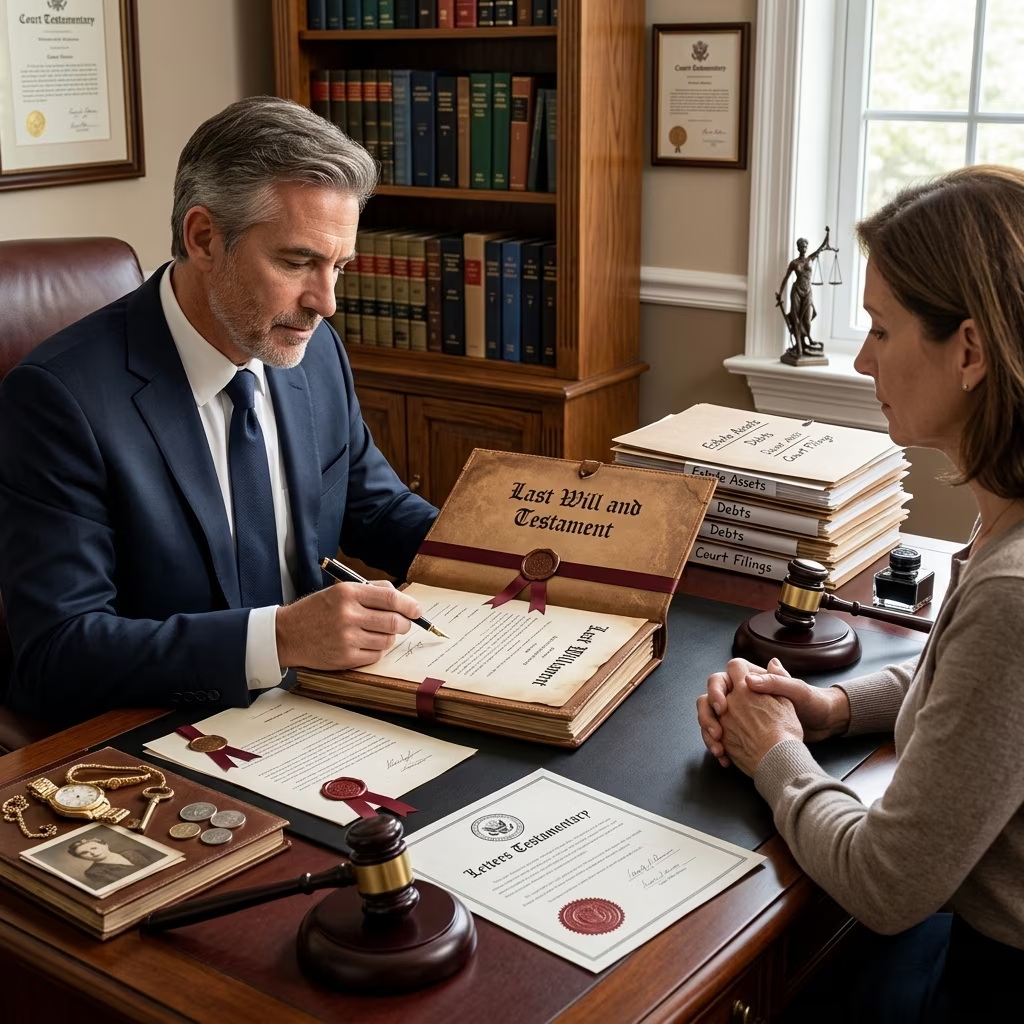
Probate is the court-supervised legal process used to settle a person’s estate after death. In practical terms, it is the system that helps confirm a will, identify property, pay valid debts, and transfer remaining assets to the right people. When no will exists, probate also gives the court a way to distribute property under state intestacy laws.
Many people use the word probate to describe the entire process of estate administration, even though the term originally referred more narrowly to proving that a will is valid. In everyday use, the broader meaning is usually the one that matters: probate is the legal route for wrapping up someone’s financial and property affairs after death.
Why probate exists
Probate serves several important legal purposes. It gives a court a structured way to recognize a valid will, appoint a person to manage the estate, and make sure creditors and beneficiaries are treated fairly. The process helps prevent confusion about who may act on behalf of the deceased person and reduces the risk that property will be distributed incorrectly.
Without probate, heirs, creditors, and beneficiaries could face disputes over ownership, unpaid obligations, or the authority to transfer assets. By placing the process under court supervision, probate creates a formal record of what property existed, what debts had to be paid, and who ultimately received the remaining assets.
What happens during probate
Although probate varies by state, the process usually follows a similar path. The court receives the will, if there is one, and confirms whether it meets the legal requirements for validity. The court then appoints a personal representative, often called an executor, who is responsible for administering the estate.
Once appointed, the executor typically gathers estate assets, identifies debts, gives notice to creditors, handles taxes and other expenses, and prepares the property for distribution. After the estate’s obligations are resolved, the remaining assets are transferred to the beneficiaries named in the will or, if there is no will, to the heirs determined by state law.
Key steps in the probate process
- Filing the will and petitioning the court: The executor or another interested person asks the court to open probate.
- Appointment of a personal representative: The court gives legal authority to a person who will manage the estate.
- Inventorying assets: Estate property is identified and valued so the court and interested parties know what exists.
- Paying debts and taxes: Valid claims, final bills, and tax obligations are paid from estate funds.
- Distributing the remaining property: Whatever is left is transferred to beneficiaries or heirs.
Probate assets versus nonprobate assets
Not every asset a person owns must pass through probate. The difference usually depends on how the property is titled and whether it has a built-in transfer mechanism. Assets owned solely in the deceased person’s name commonly go through probate, while assets with a survivorship feature or a designated beneficiary may transfer outside the court process.
This distinction is central to estate planning. A person may have a sizeable estate, but only some assets may be subject to probate. For example, a bank account with a payable-on-death beneficiary, jointly owned property with rights of survivorship, or assets held in a properly funded trust may bypass probate altogether.
| Usually subject to probate | Often avoid probate |
|---|---|
| Property titled only in the deceased person’s name | Jointly owned property with survivorship rights |
| Accounts without a beneficiary designation | Accounts with payable-on-death or transfer-on-death designations |
| Assets not placed in a trust | Property held in a properly funded revocable living trust |
| Some individually owned real estate | Many retirement accounts and life insurance proceeds with named beneficiaries |
Who handles the estate
The executor named in the will is usually the person responsible for managing the probate process. If the will does not name someone, or if there is no will, the court appoints a personal representative under state law. That person has a legal duty to act in the best interests of the estate and follow the court’s instructions.
This role can involve practical tasks such as collecting mail, securing property, canceling accounts, locating documents, communicating with beneficiaries, and working with lawyers, accountants, or appraisers. The executor does not own the estate assets personally; instead, the executor acts as a fiduciary, meaning the person must handle the property with care and loyalty.
What if there is no will?
When someone dies without a will, the estate is considered intestate. In that situation, probate still may be required, but the court uses state intestacy laws rather than the person’s written instructions to decide how the property should be distributed. These laws typically prioritize close relatives such as a surviving spouse, children, parents, or siblings, depending on who is alive and what state law provides.
Dying without a will does not mean the estate cannot be settled. It means the court must rely on a default legal framework. That framework can be efficient in straightforward cases, but it may also create delays or results that differ from what the deceased person might have chosen personally.
How long probate takes
The timeline for probate depends on the size of the estate, whether the will is contested, how quickly creditors come forward, and whether the estate includes unusual assets. A simple and uncontested estate may be completed in a matter of months, while larger or disputed estates can take much longer.
Delays often arise when property is difficult to value, heirs disagree about distributions, or tax issues remain unresolved. In many cases, the probate timeline is less about the court itself and more about how quickly the personal representative can gather information, resolve claims, and complete required filings.
Common costs and expenses
Probate can involve several types of costs. Some are administrative, such as court filing fees, publication costs, and appraisal expenses. Others may include compensation for the personal representative and fees for lawyers, accountants, or other professionals hired to help the estate.
The total expense depends on the complexity of the estate and the rules of the state where probate occurs. A small estate with few assets and no conflict may cost relatively little, while a large estate with real estate, business interests, or disputes may require substantially more time and money to complete.
Ways people try to reduce probate
Many people engage in estate planning partly to limit how much of their property will pass through probate. This is not always about avoiding court entirely. Often, the goal is to simplify the transfer of assets, reduce delay, and make things easier for loved ones.
- Use beneficiary designations: Retirement accounts, life insurance, and certain bank accounts can transfer directly to named beneficiaries.
- Hold property jointly where appropriate: Joint ownership with survivorship rights can allow automatic transfer at death.
- Create a living trust: Assets placed in a properly funded trust may be distributed without probate.
- Review title and account forms: Even well-written estate plans can fail if ownership records are inconsistent.
These strategies are most effective when they are coordinated. For example, a trust may not help if important property was never transferred into the trust, and a beneficiary form may override instructions in a will. Careful organization matters as much as the planning tool itself.
Probate myths and practical realities
One common myth is that probate is always disastrous, expensive, or impossible to avoid. In reality, the process is simply a legal mechanism. For some estates, probate is brief and routine. For others, especially when there are debts, multiple heirs, or unclear ownership records, probate provides an important structure for resolving the estate correctly.
Another misconception is that a will completely avoids probate. A will is important because it gives instructions, but those instructions usually still need to be validated and carried out through probate. The will guides the process; it does not eliminate the process by itself.
When probate becomes more complicated
Probate tends to become more complex when the estate includes real property in more than one state, a closely held business, unresolved tax issues, family disputes, or creditors contesting the estate’s handling. Any of these issues can increase the amount of paperwork, valuation work, and court involvement required.
Contested wills can be particularly difficult because the court may need to decide whether the document is valid, whether the deceased person had capacity, or whether anyone exerted improper influence. In those situations, probate becomes not just an administrative process but also a forum for legal dispute resolution.
Frequently asked questions
Is probate always required?
No. Whether probate is required depends on the type of property involved, the way it is titled, state law, and the size of the estate. Some estates can be handled through simplified procedures or may pass outside probate entirely.
Does a will avoid probate?
No. A will usually must go through probate so the court can recognize it and authorize the executor to act. A will can direct how assets should be distributed, but it generally does not bypass the process.
Can probate be avoided completely?
Sometimes, yes. Property that passes by beneficiary designation, joint ownership, or trust arrangements may not need probate. However, many people still have at least some assets that must be handled through the court system.
Why should someone care about probate in advance?
Because probate affects how easily loved ones can access property after death. Understanding probate helps people organize accounts, choose transfer methods, and reduce unnecessary delays for their families.
Why probate matters in estate planning
Probate is not just a legal technicality. It shapes how property is transferred, how quickly beneficiaries receive assets, and how much work an executor must do after a death. For some families, probate provides essential oversight and legal clarity. For others, it is a process they hope to streamline through careful planning.
The most effective estate plans usually account for both worlds: they include a valid will while also using beneficiary forms, title planning, and trusts where appropriate. That approach can make the eventual transition far easier and can reduce the chance of avoidable conflict.
References
- What is Probate? — Oregon State Bar. 2024-01-01. https://www.osbar.org/public/legalinfo/1117_probate.htm
- The Probate Process — American Bar Association. 2024-01-01. https://www.americanbar.org/groups/real_property_trust_estate/resources/estate-planning/probate-process/
- What is probate, and how does it work? — Fidelity Investments. 2024-01-01. https://www.fidelity.com/learning-center/life-events/what-is-probate
- What Is Probate? — U.S. Bank. 2024-01-01. https://www.usbank.com/wealth-management/financial-perspectives/trust-and-estate-planning/what-is-probate.html
- What Is Probate? How It Works & Its Impact — MetLife. 2024-01-01. https://www.metlife.com/stories/legal/what-is-probate/