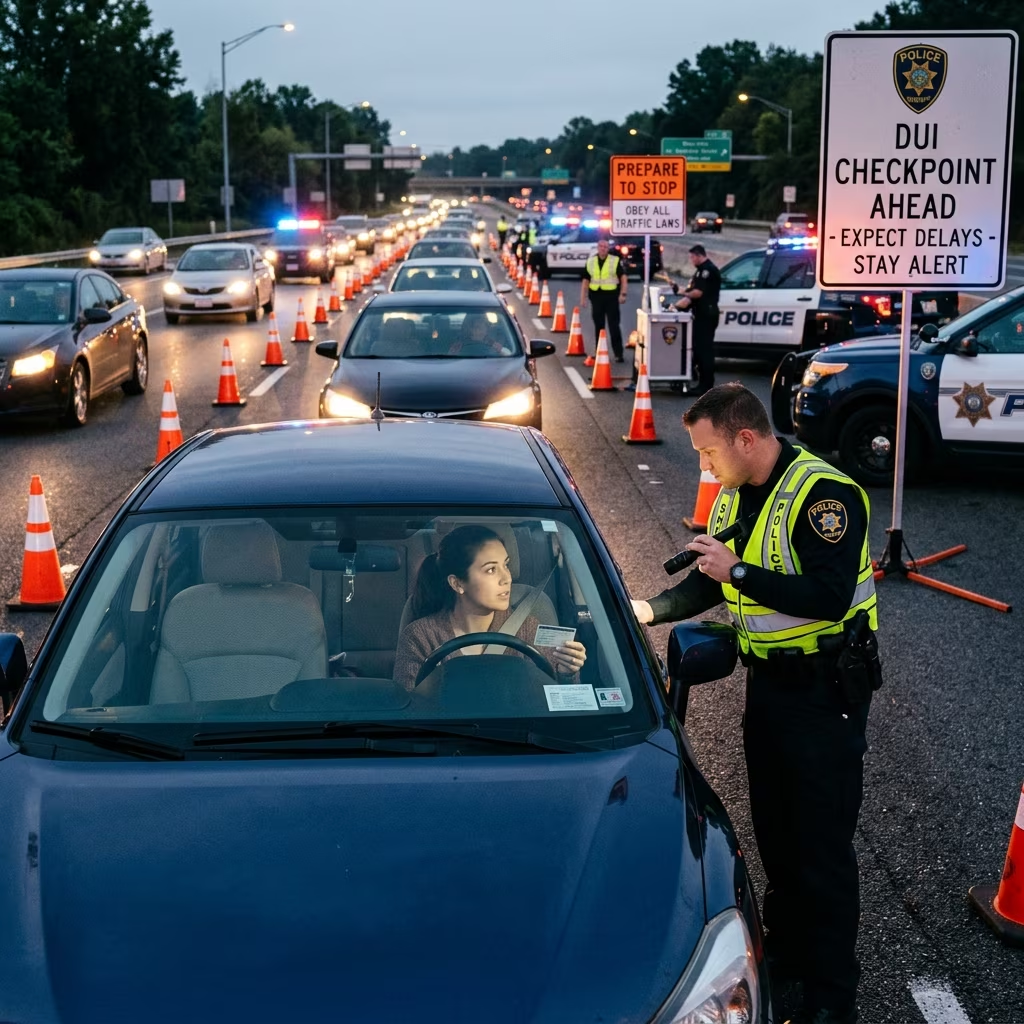
DUI checkpoints, often called sobriety checkpoints, are roadside stops where police temporarily halt vehicles to check for signs of alcohol or drug impairment. These checkpoints raise important questions about driver rights, constitutional protections, and what you must (and do not have to) do when you encounter one.
This article explains how DUI checkpoints work, the legal framework that governs them, in which states they are allowed or prohibited, and practical steps for handling a checkpoint while asserting your rights lawfully.
What Is a DUI Checkpoint?
A DUI checkpoint is a temporary roadblock set up by law enforcement on a public roadway to screen drivers for evidence of impairment from alcohol or drugs. Officers stop vehicles according to a pre-planned pattern, briefly interact with drivers, and look for signs that someone may be driving under the influence.
- Purpose: To detect impaired drivers and deter people from driving after consuming alcohol or other drugs.
- Location: Typically placed on roads with high traffic or a history of alcohol-related crashes, often during evenings, weekends, and holidays.
- Method: Vehicles are stopped based on neutral criteria, such as every car or every third or fourth car, rather than at an officer’s whim.
- Duration: For sober drivers, the stop is usually very brief, often lasting less than a minute.
Because every stopped driver experiences a seizure under the Fourth Amendment, courts require checkpoints to be conducted in a carefully controlled and minimally intrusive way.
How DUI Checkpoints Typically Operate
Although checkpoint procedures can vary by state and police agency, most sobriety checkpoints follow a similar pattern designed to meet constitutional standards and safety goals.
Standard Steps at a Checkpoint
- Advance visibility: Signs, cones, and flashing lights alert drivers that they are approaching a checkpoint, often with officers directing traffic into a designated lane.
- Neutral stopping pattern: Officers stop every vehicle or vehicles at regular intervals (for example, every fourth car) based on a pre-set plan.
- Brief interaction: An officer asks for your driver’s license, registration, and proof of insurance, and may ask simple questions such as where you are coming from or whether you have been drinking.
- Observation for impairment: During this short conversation, officers look for signs of intoxication such as slurred speech, odor of alcohol, bloodshot eyes, or difficulty following instructions.
- Further testing if warranted: If the officer suspects impairment, they may direct you to a separate area for field sobriety tests and, in some cases, breath, blood, or urine testing after an arrest.
Drivers who show no signs of impairment generally proceed on their way after only a brief delay.
Common Types of Testing Linked to Checkpoints
If an officer develops reasonable suspicion or probable cause that you are driving under the influence, they may use several tools to evaluate impairment.
- Field sobriety tests: Tasks such as walking heel-to-toe, standing on one leg, or following a pen with your eyes are used to check for coordination and attention problems associated with intoxication.
- Breath tests: Portable breath tests may be used as screening tools, while official breathalyzer machines are often used after arrest to measure blood alcohol concentration (BAC).
- Blood or urine tests: In some cases, especially where drug impairment is suspected, officers may seek blood or urine tests after an arrest.
Refusal rules and consequences depend on state law, particularly under implied consent statutes, so the legal impact of refusing a test can differ significantly from one jurisdiction to another.
Constitutional Framework: Why Many Checkpoints Are Legal
DUI checkpoints implicate the Fourth Amendment, which protects against unreasonable searches and seizures by the government. Under normal circumstances, police must have reasonable suspicion of wrongdoing to stop a vehicle. Checkpoints are an exception recognized by courts when certain conditions are met.
Key Supreme Court Principles
The United States Supreme Court has held that properly conducted sobriety checkpoints can be constitutional when they serve a significant public safety interest and impose only a limited intrusion on motorists.
- Special need beyond general crime control: Checkpoints are justified by the specific goal of reducing alcohol-impaired crashes and saving lives, rather than as broad crime-fighting tools.
- Minimal intrusion: Stops must be brief, non-intimidating, and focused narrowly on impaired driving, limiting the interference with individual liberty.
- Neutral operation plan: Agencies must follow an official plan that defines when, where, and how checkpoints are run, reducing officer discretion and avoiding arbitrary or discriminatory stops.
- Objective site selection: Locations are chosen based on safety-related criteria, such as crash data or impaired-driving patterns, rather than targeting certain groups of drivers.
- Public awareness: Publicized checkpoints and visible signage reinforce deterrence and help show that the program is focused on safety, not surprise enforcement.
Court decisions have emphasized that the seriousness of impaired driving and its impact on public safety can justify limited checkpoint programs when they comply with these safeguards.
Basic Rights at a Checkpoint
Even though checkpoints are allowed in many states, drivers retain important constitutional rights.
- Protection from unreasonable search: Police generally cannot search your vehicle at a checkpoint without a warrant, probable cause, or an established exception (such as contraband in plain view or search incident to a lawful arrest).
- Limited questioning: You must present required documents, but you are not generally obligated to answer every question posed by officers and may assert your right to remain silent.
- Right to be free from discrimination: Checkpoints must use neutral stopping criteria and cannot target drivers based on race, ethnicity, age, or other protected characteristics.
Where Are DUI Checkpoints Legal?
Checkpoint legality is largely determined by state law and state constitutional provisions. While federal constitutional standards permit sobriety checkpoints under certain conditions, states may choose to restrict or prohibit them.
Currently, most states allow some form of sobriety checkpoint, but a minority have banned them or do not use them.
| Category | General Status | Notes |
|---|---|---|
| States allowing checkpoints | Approximately 38 states plus Washington, D.C. | Checkpoints may be subject to strict procedural and publicity requirements. |
| States prohibiting or not using checkpoints | About 12 states | Some state courts have found checkpoints violate their state constitutions, or statutes do not authorize them. |
| States with additional limitations | Varies | Even where checkpoints are permitted, state law may impose extra safeguards or require specific operational plans. |
Because rules differ significantly between jurisdictions, drivers should be aware of their own state’s policy on sobriety checkpoints and any local practices that might affect how checkpoints are operated.
What You Should Do When Approaching a Checkpoint
Knowing how to respond calmly and lawfully at a DUI checkpoint can reduce stress and help you avoid escalating a routine interaction into a more serious situation.
Practical Step-by-Step Guidance
- Slow down and follow directions: As you approach the checkpoint area, reduce your speed and watch for cones, signs, and officer signals. Failing to stop when directed can result in serious charges.
- Have documents ready: Keep your driver’s license, registration, and proof of insurance accessible so you can present them promptly.
- Stay calm and polite: Maintain a respectful tone, avoid sudden movements, and comply with basic lawful instructions such as rolling down your window or placing the vehicle in park.
- Limit conversation if desired: You may choose to answer simple questions, but you can also assert your right not to answer questions beyond identifying information, especially if you are uncomfortable.
- Do not consent to unnecessary searches: If an officer asks for permission to search your vehicle and you do not wish to agree, you may clearly and calmly state that you do not consent. Officers must have a legal basis to search without your consent.
Turning Around or Avoiding a Checkpoint
Many drivers wonder if they are allowed to turn around when they see a checkpoint ahead. The answer depends in part on where you are when you make that decision and whether you obey other traffic laws.
- Before entering the checkpoint area: In many jurisdictions, you may lawfully turn away from a checkpoint if you can do so safely and without violating any traffic rules (such as improper U-turn or lane changes).
- After entering the checkpoint lane: Once you are directed into the checkpoint area, you are generally required to proceed through it and cannot simply make a sudden turn to escape.
- Officer observations: If you turn around in a way that appears suspicious or violates a traffic law, officers may stop you based on that conduct, independent of the checkpoint itself.
Your Legal Rights During a Checkpoint Stop
Even when law enforcement is operating a lawful checkpoint, your constitutional rights still apply. Understanding these rights helps you make informed decisions about cooperation, questioning, and searches.
Key Rights to Remember
- Fourth Amendment protections: Officers must respect your right to be free from unreasonable searches and seizures. They generally need probable cause, a warrant, or a recognized exception to conduct more intrusive searches beyond the brief roadside screening.
- Right to remain silent: You must provide identification and required documents, but you do not have to answer every question and may politely state that you choose not to answer.
- Right to refuse consent to search: If officers ask to search your vehicle without a clear legal basis, you can refuse consent. However, if they believe they have probable cause, they may proceed without your permission.
- Right to legal counsel after arrest: If you are arrested following a checkpoint stop, you have the right to consult an attorney and to avoid self-incrimination.
- Right to record the encounter (in many areas): In numerous jurisdictions, individuals can lawfully record interactions with police, as long as they do not interfere with officers performing their duties.
Exercising these rights respectfully—without physical resistance or hostile behavior—reduces the risk of additional charges or misunderstandings.
Public Safety Impact of DUI Checkpoints
Sobriety checkpoints serve both enforcement and deterrence functions in efforts to reduce alcohol-impaired driving.
- Identifying impaired drivers: Checkpoints allow officers to remove intoxicated or drug-impaired drivers from the road before they cause crashes.
- Deterring risky behavior: Highly visible and well-publicized checkpoints increase the perceived likelihood of being stopped and arrested for drunk driving, which can discourage people from driving after drinking.
- Promoting community awareness: Media coverage and local announcements regarding checkpoint programs highlight the dangers of impaired driving and reinforce safety messages.
For checkpoint programs to be effective, agencies typically conduct them regularly and incorporate strong public messaging so drivers expect enforcement and perceive a credible risk of being caught if they drive under the influence.
Frequently Asked Questions About DUI Checkpoints
Are DUI checkpoints legal everywhere?
No. While federal constitutional law permits sobriety checkpoints under certain conditions, individual states decide whether to authorize them. Most states allow checkpoints, but some states prohibit or do not use them based on their own constitutions or statutes.
Do police need probable cause to stop my car at a checkpoint?
At a lawfully operated sobriety checkpoint, police may briefly stop vehicles without individualized suspicion, so long as they follow a neutral, pre-planned pattern and comply with constitutional safeguards. However, they need reasonable suspicion or probable cause to extend the stop, conduct searches, or make an arrest.
Can I refuse field sobriety or chemical tests?
In many states, you have the option to refuse certain tests, but refusal can have serious consequences, such as license suspension under implied consent laws or use of the refusal as evidence in court. Because the rules vary widely by state, the legal impact of refusal depends on local law.
Will officers search my car at a checkpoint?
Routine checkpoint procedures do not usually involve searching vehicles. Officers may look into the interior from outside and ask questions, but more intrusive searches generally require probable cause, a warrant, or a recognized exception. You can decline consent to search, though officers may proceed if they believe they have lawful grounds.
What happens if I drive through without stopping?
Ignoring officer instructions or failing to stop at a visible, lawful checkpoint can lead to serious charges, including evading police or related traffic offenses. It is important to slow down, follow directions, and resolve any concerns through legal channels rather than attempting to bypass the checkpoint.
When to Seek Legal Advice
If you were arrested, cited, or believe your rights were violated at a sobriety checkpoint, consulting a qualified attorney can be crucial. Laws vary by state, and courts treat individual cases differently depending on the specifics of the checkpoint plan, officer conduct, and your behavior during the stop.
An attorney experienced in impaired-driving or constitutional law can review whether the checkpoint complied with applicable requirements, whether officers had sufficient cause for further testing or arrest, and what defenses might be available in your case.
References
- DUI Checkpoints & Legal Requirements — Justia. 2023-05-01. https://www.justia.com/criminal/drunk-driving-dui-dwi/handling-a-dui-stop/sobriety-checkpoints/
- DUI Checkpoint Laws by State — FindLaw. 2022-11-15. https://www.findlaw.com/dui/arrests/dui-checkpoint-laws-by-state.html
- Are DUI Checkpoints Legal in Michigan? — White Law PLLC. 2021-08-10. https://www.whitelawpllc.com/blog/are-dui-checkpoints-legal-in-michigan/
- Sobriety Checkpoints: Constitutional Considerations — U.S. Department of Justice, OJP. 1990-12-01. https://www.ojp.gov/ncjrs/virtual-library/abstracts/sobriety-checkpoints-constitutional-considerations
- Sobriety Checkpoints — Prevention First Alcohol Policy Resource Center. 2023-04-01. https://www.prevention.org/alcohol-policy-resource-center/law-enforcement-strategies/sobriety-checkpoints/
- Publicized Sobriety Checkpoints — National Highway Traffic Safety Administration (NHTSA). 2022-03-01. https://www.nhtsa.gov/book/countermeasures-that-work/alcohol-impaired-driving/countermeasures/enforcement/publicized