
Visual Narratives and the Fight for Intellectual Freedom
Graphic novels enhance education but face rising First Amendment battles.
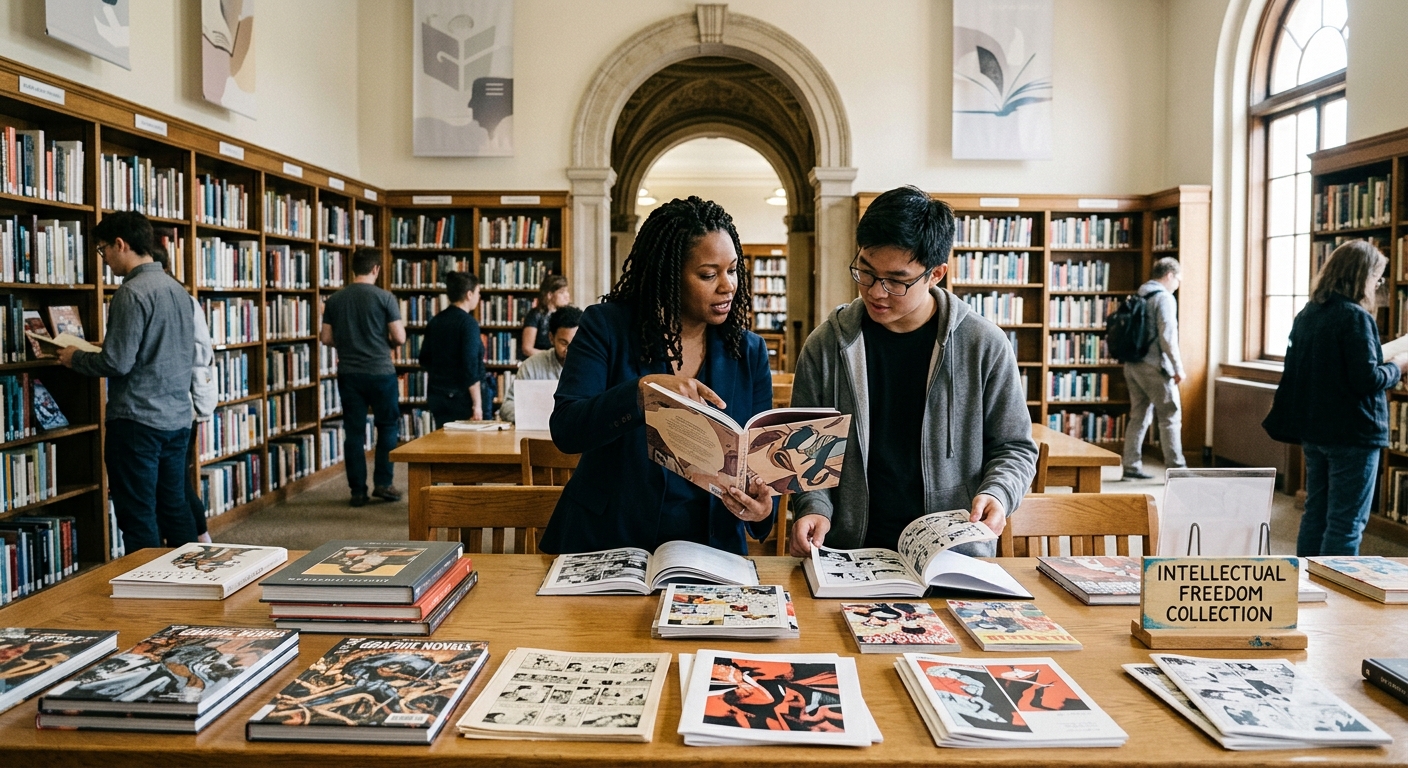
Visual Storytelling as a Gateway to Complex Discourse
The landscape of education is continuously evolving, moving beyond the traditional confines of text-heavy textbooks to embrace multidimensional teaching tools. Among the most potent of these resources is the graphic novel. Far from being mere entertainment or supplementary reading, visual storytelling has emerged as a crucial medium for exploring complex, nuanced, and often difficult societal discourses. By weaving together evocative illustrations and compelling dialogue, sequential art provides a unique gateway for students to grapple with the realities of systemic inequality, historical trauma, and diverse cultural identities.
Bringing graphic novels into the academic fold validates a medium that natively engages youth while tackling rigorous themes. Traditional historical texts can sometimes inadvertently sanitize the past, reducing monumental human struggles to abstract dates and statistics. In contrast, graphic narratives plunge the reader into the visceral experiences of individuals who lived through these eras. This medium possesses a unique capacity to bridge the gap between historical detachment and emotional engagement. As educators strive to cultivate empathy in an increasingly polarized world, the integration of illustrated narratives into curricula is vital. However, this very power has also made visual narratives the focal point of intense ideological battles regarding intellectual freedom.
The Cognitive Science Behind Sequential Art
The pedagogical efficacy of graphic narratives is deeply rooted in cognitive science. Human brains are inherently wired to process visual information rapidly and efficiently a phenomenon often referred to as the pictorial superiority effect. Dual-coding theory posits that the brain uses distinct pathways for processing verbal and non-verbal information simultaneously. Activating both channels creates multiple mental representations, making complex historical concepts easier to retrieve. When students are presented with text alone, their retention rates can be relatively low. However, when text is paired with relevant, striking imagery, cognitive recall and comprehension soar.
This synthesis of image and text acts as a powerful scaffold for learning, particularly for reluctant readers. By lowering the affective filter the emotional anxiety that can impede learning graphic novels make formidable subjects accessible. Furthermore, visual narratives excel at portraying the subtleties of human experience that might require pages of exposition in a traditional prose format. According to pedagogical research, including insights from Stanford University’s integration of graphic novels in global history courses, visual formats allow students to rapidly comprehend subtle themes such as diaspora, displacement, and cultural adaptation . History professor Tom Mullaney noted that graphic novels act as an “accelerant” for critical thinking, enabling students to undergo profound perspective shifts rapidly .
Through panel composition, color theory, and facial expressions, artists convey tone and subtext. This requires the reader to engage in active decoding, filling in the blanks between panels “closure” which deeply entrenches the educational material into their long-term memory.
Navigating Marginalized Histories Through Illustrated Narratives
One of the most transformative aspects of visual storytelling in the classroom is its ability to center marginalized voices. Teaching the histories of people of color, the LGBTQ+ community, and other historically oppressed groups requires a delicate balance of honesty and sensitivity. Graphic novels excel in this arena by providing both “windows” and “mirrors” for the student body. For students belonging to marginalized communities, seeing their ancestors visually represented offers a powerful mirror, validating their identities. For students from majority backgrounds, these narratives serve as a window into lived experiences dramatically different from their own, fostering a profound, internalized empathy that abstract data simply cannot achieve.
Consider the pedagogical difference between reading a textbook summary of historical injustice and reading a graphic memoir illustrating the cramped quarters, harsh landscapes, and profound emotional isolation of those affected. The visual narrative inherently captures intersectionality showing how race, class, and gender compound the characters’ struggles. Similarly, when exploring civil rights movements, sequential art can visually contrast the peaceful dignity of protesters with the visceral hostility of systemic oppression. Graphic storytelling strips away the sterile academic distance, forcing the reader to lock eyes with the subjects of history, thereby transforming passive consumption into active, emotional bearing-of-witness. It cultivates a classroom environment where vulnerability is honored, and historical trauma is treated with the gravity it deserves rather than summarized in a passing paragraph. This emotional anchoring makes historical lessons permanent fixtures in a student’s worldview.
The Growing Tide of Censorship in Educational Spaces
Paradoxically, the attributes that make graphic novels such effective educational tools their emotional resonance and accessibility have also made them prime targets for a surging wave of censorship. Across the United States, school libraries and classrooms are facing an unprecedented assault on intellectual freedom, driven largely by coordinated political efforts. Data released by the American Library Association (ALA) paints a stark picture of this restrictive climate. In 2025, the ALA documented challenges against 4,235 unique titles, marking one of the highest levels of attempted censorship since the organization began tracking these statistics .
Alarmingly, the nature of these challenges has shifted. The ALA reports that 92% of the book challenges in 2025 were initiated by organized pressure groups, government officials, or political decision-makers, rather than individual parents expressing concern over their child’s reading material . The mechanics of modern book banning have evolved into nationalized lists of targeted books distributed through social media networks. These mass-challenge tactics overwhelm library review committees and create a chilling effect, leading to preemptive self-censorship.
The targets of these bans are highly specific. Approximately 40% of the challenged materials represent the lived experiences of LGBTQ+ individuals and people of color . Similarly, PEN America documented 6,870 instances of book bans in public schools during the 2024-2025 academic year, highlighting a systematic campaign to erase narratives that challenge a homogenized view of American history and identity . By framing diverse graphic novels as “inappropriate,” pressure groups obscure their true objective: the systematic erasure of complex, multifaceted narratives.
Commonly Challenged Themes vs. Educational Value
| Thematic Focus | Common Censorship Justification | Genuine Pedagogical Value |
|---|---|---|
| Systemic Racism & Civil Rights | Accusations of promoting division or causing student discomfort. | Fosters critical analysis of historical inequalities and promotes civic engagement and empathy. |
| LGBTQ+ Identities | Claims of being inappropriate for minors or violating community standards. | Provides crucial representation for queer youth, reducing isolation and building inclusive classroom cultures. |
| Historical Trauma (e.g., Holocaust, Slavery) | Deemed “too violent” or “emotionally distressing” for younger readers. | Ensures historical accuracy, honors victims’ memories, and teaches the consequences of unchecked prejudice. |
First Amendment Implications in the Classroom
The rampant removal of visual narratives and diverse literature from educational settings is not merely an educational setback; it is a profound constitutional issue. The First Amendment of the United States Constitution protects not only the right to speak but also the right to receive information and ideas. When public school boards remove books from library shelves based on ideological or political disagreements, they are treading on dangerous legal ground.
The U.S. Supreme Court addressed this exact tension in the landmark 1982 case, Island Trees School District v. Pico. The Court ruled that local school boards may not remove books from school library shelves simply because they dislike the ideas contained within those books . The plurality opinion emphasized that school libraries serve as crucial environments for voluntary inquiry, and that students’ First Amendment rights are directly implicated when administrators attempt to establish an ideological orthodoxy by banning literature .
Despite this precedent, the current wave of censorship attempts to circumvent constitutional protections by framing challenges around “age-appropriateness,” even when the materials possess significant literary, artistic, and political value. Removing a graphic novel because a political group objects to its portrayal of marginalized communities is an unconstitutional viewpoint-based restriction. Defending the presence of these books is a defense of the foundational democratic principle that a free society thrives on the robust and unimpeded exchange of diverse ideas.
Strategies for Educators Integrating Controversial Materials
For educators, navigating the current climate requires courage, preparation, and strategic pedagogical planning. Introducing graphic novels that tackle race, history, and gender identity must be done thoughtfully to maximize educational impact while minimizing the risk of administrative or community backlash.
- Align with Curriculum Standards: Clearly articulate how a chosen graphic novel fulfills specific state or national learning standards. Documenting the academic rationale provides a strong defense against claims of arbitrary selection.
- Proactive Communication: Establish transparent communication channels with parents and guardians before the curriculum begins. Providing an overview of the educational goals, the themes covered, and the reasons for utilizing a visual medium can demystify the text and build trust.
- Collaborate with Certified Librarians: School librarians are trained experts in curation and intellectual freedom. Partnering with them ensures that the graphic novels selected are backed by professional reviews and robust pedagogical justifications.
- Establish a Safe Classroom Environment: Before diving into sensitive topics, collaboratively establish ground rules for respectful dialogue. Students must feel secure enough to ask difficult questions, express confusion, and share their perspectives without fear of judgment.
Community Defense Against Ideological Suppression
The fight to keep visually diverse and historically accurate narratives in classrooms cannot be fought by educators alone. It requires robust community defense and an active commitment to intellectual freedom from all stakeholders. Parents play a crucial role in attending school board meetings to counterbalance the vocal minority of organized pressure groups advocating for censorship. By speaking out in support of inclusive curricula and the constitutional right to read, community members can embolden school administrators to stand firm against unreasonable bans.
Furthermore, understanding the bureaucratic processes of the local school district is vital. Community defenders must ensure that formal reconsideration policies are strictly adhered to, preventing administrators from quietly pulling books without due process. Students, too, are powerful advocates. Across the country, student-led anti-censorship groups and “banned book clubs” have emerged as effective tools for resisting ideological suppression. Ultimately, the inclusion of graphic narratives exploring race, history, and identity is not a radical act; it is a fundamental requirement of a comprehensive, modern education.
Frequently Asked Questions (FAQs)
Why are graphic novels particularly vulnerable to book bans?
Graphic novels are frequently targeted because of their visual nature. Censors often pull single images or panels out of context to claim the material is inappropriate, ignoring the broader narrative, historical context, and literary value of the complete work.
How do graphic novels improve literacy in reluctant readers?
The combination of text and sequential art provides context clues that help struggling readers decode complex vocabulary. The visual pacing also breaks down intimidating walls of text, making the reading experience more accessible and engaging, which builds confidence and reading stamina.
What is the First Amendment’s role in school libraries?
The First Amendment protects students’ right to receive information. Supreme Court precedent dictates that public schools cannot ban books from libraries simply because school officials or community members disagree with the political, social, or historical ideas presented in those books.
How can parents support educators facing censorship?
Parents can attend local school board and library meetings to voice their support for intellectual freedom. They can also join local advocacy groups, write letters to administrators praising inclusive curricula, and encourage their children to read widely and critically.
Do graphic novels meet standard academic curriculum requirements?
Yes. Visual storytelling enhances skills such as critical thinking, visual literacy, narrative analysis, and historical comprehension. Many graphic narratives have won prestigious literary awards, such as the Pulitzer Prize, and are explicitly aligned with national educational standards.
References
- How graphic novels can accelerate critical thinking https://news.stanford.edu/2022/02/10/graphic-novels-can-accelerate-critical-thinking/
- American Library Association releases 2025 Most Challenged Books List as National Library Week Begins ‘ https://www.ala.org/news/press-releases/2026/04/american-library-association-releases-2025-most-challenged-books-list
- Book Bans https://pen.org/issue/book-bans/
- What Is Book Banning and Is It Unconstitutional? https://www.freedomforum.org/book-banning-unconstitutional/
Similar Articles








Read full bio of medha deb


