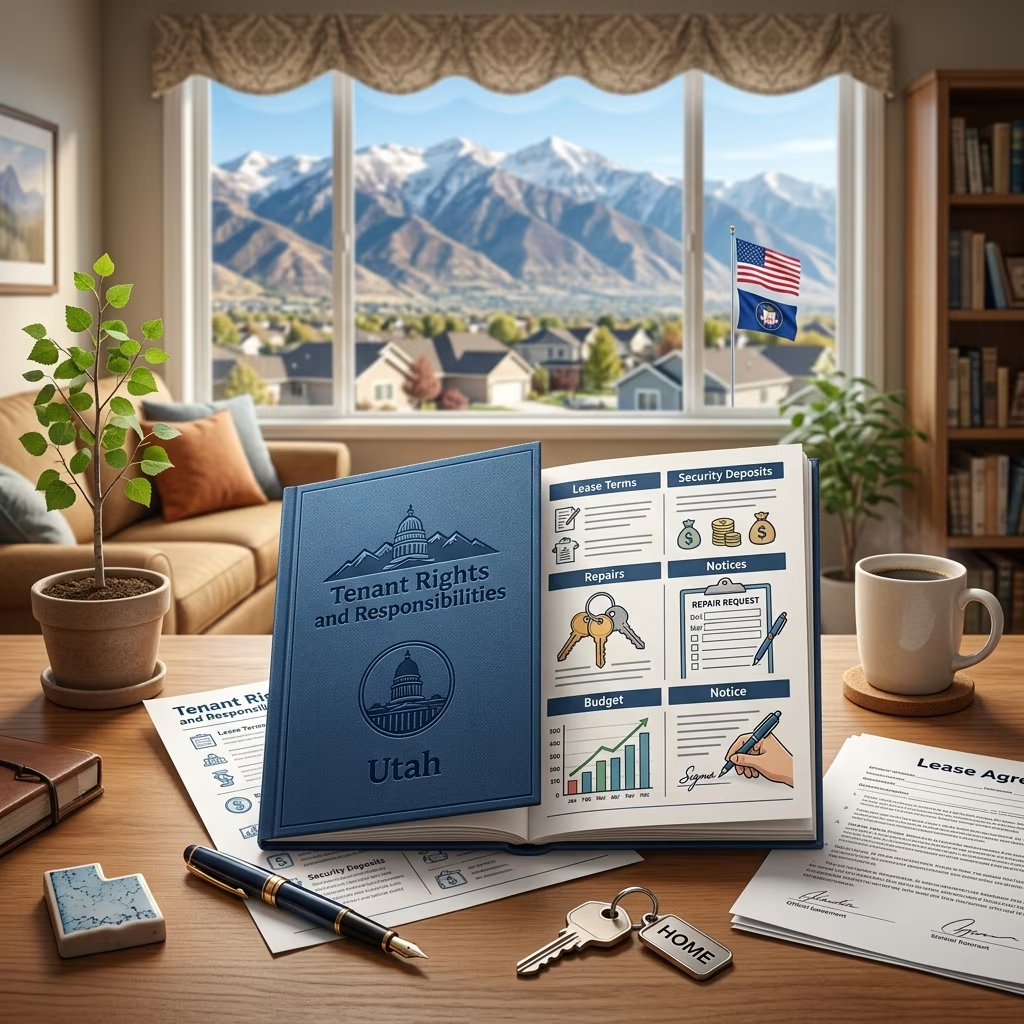
Renting a home or apartment in Utah comes with important legal protections for tenants as well as clear obligations to landlords. Understanding these rules before you sign a lease can help you avoid disputes, protect your money, and maintain safe, stable housing.
This guide explains the most important Utah tenant rights, how state law expects landlords and renters to behave, and what you can do if something goes wrong. It draws from Utah statutes, court resources, and credible legal organizations to give you a practical, plain‑language overview.
1. Basic Legal Framework for Renters in Utah
Utah landlord‑tenant law is mostly based on state statutes and court decisions. These rules apply whether you rent an apartment, single‑family home, or other residential property, and usually apply whether or not you have a written lease.
1.1 Key Utah Laws Affecting Tenants
- Utah Fit Premises Act (Utah Code Title 57, Chapter 22) – sets minimum standards for habitability and landlord maintenance duties.
- Landlord–Tenant statutes in Title 78B and related chapters – cover eviction procedures and remedies in court.
- Federal Fair Housing Act – bans discrimination in housing based on protected characteristics.
Local city ordinances, such as housing codes and inspection rules, can add additional protections or requirements, especially regarding safety and repair standards.
1.2 Who Is Covered?
Most residential renters are covered by Utah landlord–tenant laws, but there can be exceptions, such as:
- Certain short‑term vacation rentals
- Some types of university housing or shelters
- Special housing tied to employment
If your situation is unusual, contact a legal aid provider or attorney to confirm how the law applies to you.
2. Right to Safe, Habitable Housing
One of the most important protections Utah tenants have is the right to live in a safe and sanitary rental unit. The landlord must meet basic health and safety standards before renting and throughout the tenancy.
2.1 Landlord Duties for Habitable Conditions
Under Utah law, a landlord generally must ensure that the rental unit:
- Is structurally safe and weather‑tight
- Complies with applicable building, plumbing, and health codes
- Has working heat, electricity, and hot and cold running water where required
- Provides proper plumbing and sewage disposal
- Is free from dangerous conditions that threaten physical health or safety
These duties apply even if the lease agreement is silent about repairs or maintenance.
2.2 What Counts as a Serious Housing Problem?
Not every inconvenience is a legal violation. However, problems that are typically considered serious include:
- No heat during cold weather or no running water
- Exposed electrical wiring or major electrical failures
- Raw sewage backups or non‑working toilets
- Serious roof leaks, flooding, or mold caused by structural issues
- Broken exterior doors or windows that compromise security
Minor issues, such as cosmetic damage or small cracks, may not be enough to claim the home is uninhabitable, although they can still be addressed through ordinary repair requests.
2.3 Tenant Duties for Care of the Property
Tenants also have responsibilities related to the condition of the home. Generally, tenants must:
- Keep the unit reasonably clean
- Dispose of trash properly
- Use plumbing, electrical, and heating fixtures in a reasonable way
- Avoid damaging the property beyond normal wear and tear
- Report serious dangers or hazards to the landlord promptly
If a tenant’s own actions cause damage or code violations, the tenant can be held responsible for repairs or costs.
3. Repairs: How to Request and Enforce Them
When something serious breaks, the law gives you specific steps to follow. Your success often depends on how well you document problems and how closely you follow notice requirements.
3.1 Documenting Problems and Notifying the Landlord
In most cases you should:
- Take photos or videos of the issue from multiple angles
- Write down when the problem started and how it affects your use of the home
- Contact your landlord as soon as possible, especially for dangerous problems
- Give notice in writing (email, portal, or letter) for non‑emergency repairs and keep a copy
For urgent issues that threaten health or safety, Utah resources indicate that landlords must begin addressing major problems quickly once notified, often within 24 hours for dangerous conditions.
3.2 Options if the Landlord Does Not Fix Serious Problems
If a landlord fails to respond to serious repair requests after proper notice, Utah law and legal aid organizations suggest several possible remedies, depending on the situation:
- Contact local health or building inspectors to document code violations
- Seek a court order requiring repairs or money damages for harm you suffered
- In some cases, terminate the rental agreement after following specific statutory procedures
Utah tenants generally cannot simply stop paying rent because of bad conditions without risking eviction, so you should never withhold rent unless advised by a lawyer about specific legal remedies.
4. Security Deposits and Move‑In Protections
Security deposits are regulated by Utah law and can be a major source of disputes when you move out. You can reduce problems by carefully documenting the unit’s condition at the beginning and end of your tenancy.
4.1 Best Practices When You Move In
To protect your deposit and avoid unfair damage claims, consider the following:
- Request a written move‑in checklist or create your own list of existing damage
- Photograph each room, including walls, floors, appliances, and windows
- Note any stains, dents, broken fixtures, or signs of prior water damage
- Ask the landlord in writing to acknowledge any serious pre‑existing defects
4.2 How Deposits Can Be Used
Under Utah law, a landlord may generally use a security deposit to cover:
- Unpaid rent or late fees allowed by the lease
- Damage beyond normal wear and tear
- Cleaning costs if the unit is left unreasonably dirty
Landlords cannot charge tenants for normal wear, such as small nail holes or minor carpet wear that results from ordinary use.
4.3 Move‑Out Documentation
When you leave, you can strengthen your position regarding any deposit dispute by:
- Cleaning thoroughly and removing all personal property
- Taking dated photos or videos of every room after cleaning
- Returning keys according to the lease and keeping proof of return
- Providing the landlord with a forwarding address in writing
| Stage | What to Document |
|---|---|
| Move‑in | Photos of existing damage, signed checklist, copy of lease, proof of deposit payment. |
| During tenancy | Repair requests, landlord responses, receipts, any code inspection reports. |
| Move‑out | Photos after cleaning, key return, written move‑out notice, forwarding address. |
5. Privacy Rights and Landlord Entry
Utah tenants have a legal interest in privacy and quiet enjoyment of their home. Landlords cannot treat your unit as if they still live there.[10]
5.1 When Landlords May Enter
According to legal summaries of Utah law, landlords generally may enter a rental unit only for limited purposes, such as:[10]
- Making repairs or improvements
- Showing the unit to prospective tenants or buyers
- Conducting inspections allowed by the lease
- Responding to emergencies that threaten health, safety, or property
5.2 Notice Requirements
Utah law typically requires landlords to give reasonable advance notice before entering an occupied unit, and rentals law references commonly describe 24 hours as a standard minimum for non‑emergency entry.[10] Entry should occur at reasonable times, such as normal daytime hours, unless you agree otherwise.[10]
In true emergencies such as active flooding or fire, a landlord may enter without prior notice to protect people and property.
5.3 Dealing With Unauthorized Entry
If a landlord enters without notice when there is no emergency, or repeatedly shows up in ways that interfere with your privacy, you can:
- Document each incident in writing with dates and details
- Send a written request that they follow the legal notice requirements
- Consult legal aid or an attorney about possible remedies
6. Protection Against Housing Discrimination
Both federal and Utah law prohibit discrimination in housing based on certain protected characteristics. Landlords cannot refuse to rent, set different terms, or harass tenants because they belong to a protected group.
6.1 Protected Characteristics
Under federal law and Utah fair housing rules, it is generally illegal to discriminate in housing because of:
- Race or color
- Religion
- Sex
- National origin
- Familial status (for example, having children)
- Disability
Utah resources also recognize protections for sexual orientation, gender identity, and other categories in many housing contexts.
6.2 Examples of Possible Discrimination
The following may be signs of illegal discrimination:
- Refusing to rent to you because you have children
- Charging higher deposits or rent based on your race or religion
- Harassing you or treating you differently because of a disability
- Refusing reasonable accommodations for a disability, such as allowing a service animal in a no‑pet building
6.3 How to File a Discrimination Complaint
Tenants generally have several options to pursue discrimination complaints in Utah:
- File with Utah’s state antidiscrimination agency within the applicable deadline
- File a complaint with the U.S. Department of Housing and Urban Development (HUD) within one year of the alleged discrimination
- In some cases, file a lawsuit in court within the time limit, often up to two years
Because each case is fact‑specific and deadlines are strict, it is wise to speak with a lawyer or legal aid office quickly if you think you have experienced discrimination.
7. Evictions, Notices, and Due Process
Eviction is a formal legal process in Utah. A landlord cannot physically lock you out, shut off utilities, or throw away your belongings without a court order. To remove a tenant, a landlord must follow specific notice and court procedures.
7.1 Common Grounds for Eviction
Landlords in Utah commonly pursue eviction for reasons such as:
- Failure to pay rent on time
- Violating a material term of the lease (for example, unauthorized occupants or pets)
- Criminal activity or dangerous behavior on the property
- Ending a month‑to‑month tenancy after proper notice, even without tenant fault
7.2 Notice Periods
Utah law requires landlords to give written notice before filing an eviction case in court. The length and type of notice depends on the reason for eviction:
- Unpaid rent: commonly a short “pay or vacate” notice, often three days, giving you a final chance to pay before an eviction case is filed.
- Lease violations: written notice to correct the violation or leave, with time frames set by statute or lease.
- No‑cause termination of a month‑to‑month tenancy: advance written notice (often 15 or 30 days) depending on the type of tenancy and any local requirements.
If you do not move out or solve the problem before the notice expires, the landlord may then file an eviction lawsuit in court; only a court judgment can lawfully remove you from the property.
7.3 Your Rights During an Eviction Case
If you are served with court papers for eviction, you have rights, including:
- The right to receive notice of the court case and hearing
- The right to respond in writing by the deadline stated in the papers
- The right to attend the hearing, present evidence, and tell your side of the story
- The right to be represented by a lawyer, although the court does not appoint one in most civil cases
Utah’s court system and legal aid organizations provide self‑help materials and, in some areas, limited free or low‑cost legal assistance to tenants facing eviction.
8. Practical Tips to Protect Yourself as a Utah Tenant
Laws alone cannot prevent every problem, but good habits and documentation can make a major difference in disputes with landlords or roommates.
8.1 Smart Practices With Rent and Payments
- Read the entire lease before signing, and keep a copy in a safe place.
- Pay rent on time and by traceable methods (check, money order, or electronic payment).
- If you pay in cash, always get a signed receipt and keep it.
- Do not skip rent, even if repairs are overdue; seek legal advice instead.
8.2 Communication and Record‑Keeping
- Keep copies of all written communication with your landlord.
- After any important in‑person conversation, follow up with an email summarizing what was discussed.
- Organize your records: lease, payment proofs, repair requests, inspection reports, and notices.
8.3 When to Seek Legal Help
Consider contacting a lawyer, legal aid office, or court self‑help center if you:
- Receive an eviction notice or court papers
- Face serious, unaddressed health and safety problems
- Believe you have been discriminated against in housing
- Are dealing with large security deposit disputes
Utah‑based legal resources, including Utah Legal Services and court‑sponsored guides, can often provide information or limited representation for qualifying tenants.
9. Frequently Asked Questions About Utah Tenant Rights
9.1 Can I stop paying rent if my landlord will not make repairs?
No. Utah tenants generally must continue paying rent even if conditions are bad. Legal aid and city housing resources warn that withholding rent can lead to eviction, and judges will usually require some rent payment even when conditions are poor. Instead, document the problems, give proper written notice, contact inspectors if necessary, and seek legal advice about safe remedies.
9.2 How much notice does my landlord have to give before entering my apartment?
Utah law expects landlords to give reasonable advance notice and to enter at reasonable times, except in emergencies. Legal references commonly describe 24 hours’ notice as a typical minimum standard for non‑emergency entry.[10]
9.3 What should I do if I think I am being discriminated against?
Document every incident, including dates, statements, and copies of any written communication. Then contact Utah’s antidiscrimination agency or HUD to ask about filing a fair housing complaint, and consider speaking with a lawyer. Utah renter resources identify deadlines that may require you to act within months of the discriminatory event.
9.4 Can my landlord evict me without going to court?
No. A landlord must first give you proper written notice and, if you do not move or correct the problem, file an eviction lawsuit. Only a court can issue an order that allows a sheriff or constable to remove you from the property; “self‑help” evictions such as lockouts or utility shutoffs are not permitted.
9.5 Where can I find free or low‑cost legal help in Utah?
Utah Legal Services and other legal aid programs provide housing help to eligible tenants, and the Utah State Courts maintain a directory of free and low‑cost legal resources, including self‑help forms and guides for landlord‑tenant cases.
References
- Utah Code § 57-22-4: Owner Duties — Residential Rental Units — Utah State Legislature. 2024-01-01. https://le.utah.gov/xcode/Title57/Chapter22/57-22-S4.html
- Bad Housing — Utah Legal Services. 2023-05-01. https://www.utahlegalservices.org/node/7/bad-housing
- Free and Low-Cost Legal Resources in Utah: Housing and Landlord/Tenant — Brigham Young University Law Library / Utah State Courts. 2022-11-15. https://guides.law.byu.edu/c.php?g=602326&p=4196073
- While You’re Renting — Salt Lake City Housing Stability Division. 2023-03-20. https://www.slc.gov/housingstability/while-youre-renting/
- Utah Renter Rights — Utah Renter Rights Project. 2023-08-01. https://utrenterrights.com/
- Overview of Landlord-Tenant Laws in Utah — Nolo. 2024-02-10. https://www.nolo.com/landlord-tenant/landlord-tenant-laws-utah.html
- Utah Tenant-Landlord Rental Laws & Rights for 2026 — Hemlane. 2024-04-05. https://www.hemlane.com/resources/utah-tenant-landlord-law/