Marriage to a U.S. citizen or lawful permanent resident is one of the most common paths to obtaining a green card. Because this route can be abused, U.S. immigration authorities devote considerable resources to detecting and punishing marriage fraud. This guide explains what green card marriage fraud is, how the government investigates suspected sham marriages, what penalties may apply, and how genuine couples can protect themselves.
What Is Green Card Marriage Fraud?
Under U.S. immigration law, marriage fraud occurs when a couple enters into or uses a marriage primarily to obtain an immigration benefit, rather than to establish a real life together as spouses. In other words, the marriage is a legal façade designed to circumvent immigration rules.
Federal law makes it a felony to knowingly enter into a marriage for the purpose of evading immigration laws, and this is often referred to as a sham marriage. Immigration agencies and prosecutors use this concept when deciding whether a case should result in denial of immigration benefits, removal (deportation), or criminal charges.
Key Elements of a Fraudulent Marriage
- The marriage was entered into for the primary purpose of gaining an immigration benefit, such as permanent residence.
- There is little or no intent to build a shared life as spouses (for example, no plans to live together or share finances).
- There may be compensation or other benefits provided to the U.S. spouse in exchange for agreeing to marry.
- False statements or documents are used in immigration filings, interviews, or related proceedings.
Legally Invalid Marriages and Fraud
A marriage can also be considered fraudulent if it is not legally valid under the law of the place where it occurred. Examples include bigamous marriages, marriages that violate age or consent requirements, or marriages not properly registered. Applying for a green card based on an invalid marriage is treated as a form of fraud or misrepresentation, even if the couple had a genuine relationship.
Why Marriage-Based Green Card Cases Face Extra Scrutiny
Because marriage can provide a relatively direct path to permanent residence, Congress and federal agencies have built additional safeguards into marriage-based immigration cases. These safeguards are intended both to deter fraud and to catch sham marriages when they occur.
Conditional Residence and the Two-Year Rule
If a marriage is less than two years old at the time a foreign spouse becomes a permanent resident, the spouse generally receives conditional residence valid for two years. Before the end of that period, the couple must file a joint petition to remove conditions. As part of that process, they must prove that:
- The marriage was legally valid.
- The marriage has not been terminated, except by death.
- The marriage was not entered into for the purpose of securing immigration benefits.
If the marriage ends or the couple cannot show it was genuine, the foreign spouse may face termination of status and removal proceedings, unless an available waiver applies.
Documentary Evidence Required in Marriage Cases
U.S. Citizenship and Immigration Services (USCIS) and consular officers require extensive documentation in marriage-based petitions to verify that the relationship is bona fide. Typical evidence includes:
- Joint leases or mortgage statements showing a common residence.
- Utility bills in both names at the same address.
- Joint bank accounts, credit cards, or loan documents.
- Tax returns filed as married filing jointly.
- Insurance policies listing each spouse as beneficiary.
- Birth certificates of children born to the marriage.
- Photographs documenting the relationship over time.
- Affidavits from friends and family describing the couple’s relationship.
These materials help authorities determine whether the couple shares their lives and finances in the way married partners typically do.
How USCIS and Other Agencies Detect Marriage Fraud
U.S. immigration authorities use a combination of document review, interviews, data checks, and targeted investigations to identify possible sham marriages. Their objective is to separate genuine relationships from those created solely for immigration benefits.
The Role of Interviews
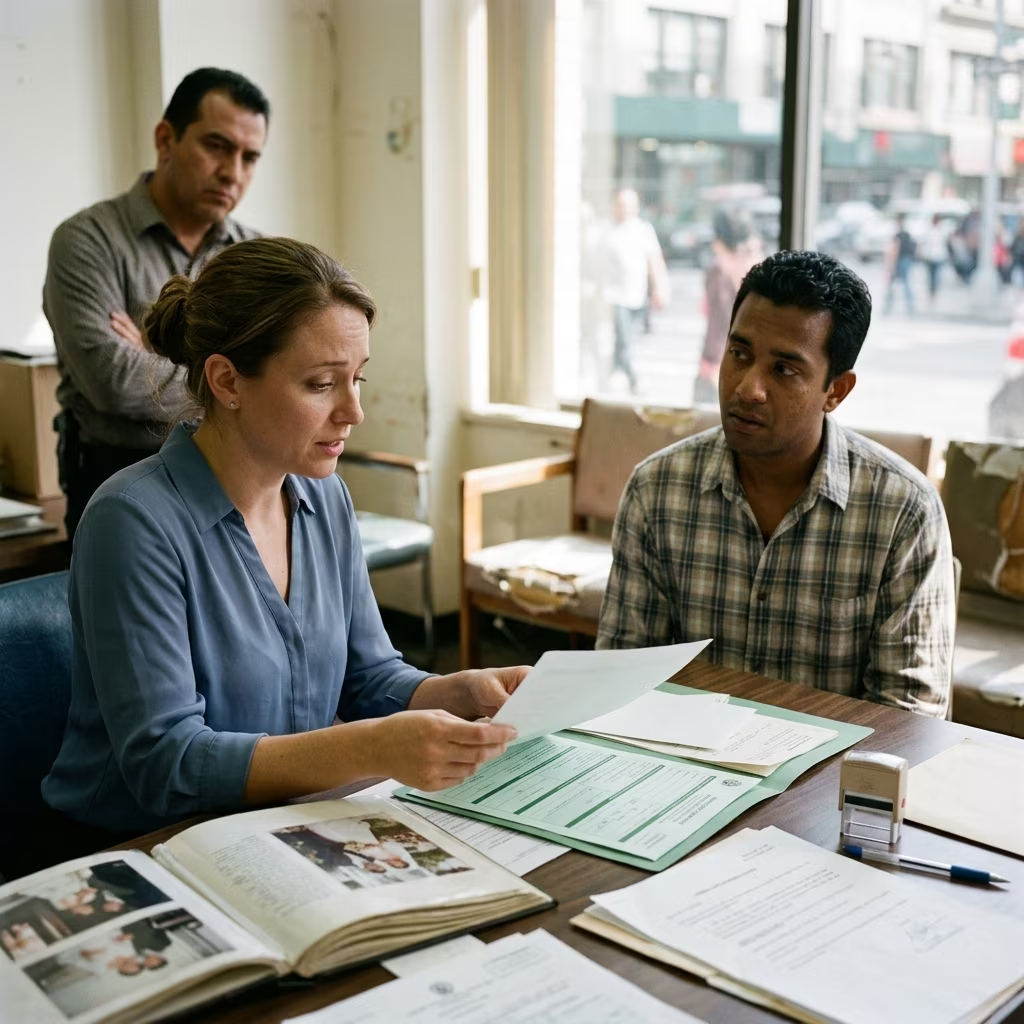
Marriage-based green card cases usually involve at least one detailed interview. A consular officer or USCIS officer typically meets with the foreign national and the U.S. spouse to assess the credibility of their relationship.
- Questions often cover how the couple met, significant dates, daily routines, and family ties.
- The officer may ask each spouse similar questions separately and compare answers.
- In cases of suspected fraud, officers may conduct a more intense interview or schedule a second, so-called “Stokes” interview where inconsistencies are examined in detail.
Although the government does not usually follow couples around or conduct constant surveillance, it can pursue deeper investigation when clear red flags exist.
Red Flags That Can Trigger Fraud Allegations
While no single factor proves fraud, certain patterns frequently draw attention from USCIS officers and immigration investigators:
- Little or no shared residence, or unconvincing explanations for living apart.
- Lack of joint finances, such as separate bank accounts and no evidence of financial interdependence.
- Payment arrangements or gifts in exchange for marriage, documented in texts, contracts, or bank transfers.
- Inconsistent or rehearsed interview answers that suggest coaching or a superficial knowledge of each other’s lives.
- Sparse, staged, or obviously artificial photographs.
- Rapid marriage after a short acquaintance, particularly when combined with other warning signs.
USCIS must rely on substantial and probative evidence to formally allege marriage fraud; mere speculation is not enough. However, strong red flags can lead to requests for more evidence, delayed processing, or referrals for investigation.
Legal Consequences of Green Card Marriage Fraud
Marriage fraud can result in serious immigration and criminal penalties for both the foreign national and the U.S. spouse. Consequences vary based on the facts, the level of involvement, and whether prosecutors pursue criminal charges in addition to administrative action.
Immigration Penalties
- Denial of petitions or applications: USCIS can deny a marriage-based petition if it determines the relationship is not bona fide.
- Removal (deportation): A foreign national who obtains or attempts to obtain status through fraud may be placed in removal proceedings. Marriage fraud can be a basis for deportation.
- Permanent ineligibility for future benefits: Applicants found to have engaged in marriage fraud are unlikely to receive a future green card, even based on a different marriage or another category.
- Loss of conditional or permanent residence: If a green card was granted and later found to be based on fraud, DHS may seek to terminate status and remove the individual.
Criminal Penalties
In addition to immigration consequences, federal criminal law authorizes significant penalties for marriage fraud. Under the marriage fraud statute, individuals who knowingly enter into a marriage to evade immigration laws may face:
- Up to five years of imprisonment.
- Monetary fines that can reach $250,000 in serious cases.
- Both imprisonment and fines, depending on the court’s judgment.
These penalties may apply not only to the foreign national but also to U.S. citizens or lawful permanent residents who participate in or facilitate the fraud.
Impact on the U.S. Spouse
U.S. citizens and permanent residents who engage in fraud can face consequences beyond criminal penalties. If the U.S. spouse is a permanent resident rather than a citizen, involvement in marriage fraud could itself become a basis for removal. At a minimum, it can lead to serious immigration complications in future filings.
Evidence Used to Prove a Bona Fide Marriage
Because the burden is on the applicant to show that a marriage is genuine, thoughtful preparation of evidence is critical. Couples should be ready to document the history of their relationship, their ongoing life together, and their financial and emotional interdependence.
Common Types of Supporting Evidence
| Category of Evidence | Examples | What It Shows |
|---|---|---|
| Shared Residence | Joint lease, mortgage, utility bills showing both names | Couple lives together as spouses. |
| Financial Interdependence | Joint bank accounts, credit cards, loan agreements, joint tax returns | Integrated finances and mutual support. |
| Family and Social Ties | Photos with family, invitations, affidavits from friends and relatives | Public recognition of the marriage. |
| Communication and History | Call logs, travel itineraries, messages, proof of visits | Ongoing relationship over time. |
| Children | Birth certificates listing both spouses as parents | Evidence of a family unit. |
Burden of Proof in Fraud Allegations
If USCIS alleges that a marriage is fraudulent, the foreign national may need to show that the relationship was, in fact, genuine. In some contexts, the law creates a presumption that a marriage ending within two years of conditional residence is suspect, and the foreign spouse must demonstrate that the marriage was not entered into to circumvent immigration laws.
Legal standards are complex, and the specific burden of proof can vary depending on the stage of the case (for example, petition adjudication versus removal proceedings). Consulting an experienced immigration attorney is essential when facing a fraud allegation.
Waivers and Limited Relief in Fraud-Related Cases
Although marriage fraud is treated seriously, certain provisions of U.S. immigration law allow limited relief in specific circumstances. One such provision is a discretionary waiver for some forms of fraud or misrepresentation.
Fraud or Misrepresentation Waivers
Under certain sections of the Immigration and Nationality Act, USCIS can waive removal or inadmissibility when an individual was inadmissible at the time of entry or adjustment due to fraud or misrepresentation of a material fact. These waivers are typically available only when specific requirements are met, such as showing hardship to a qualifying relative and demonstrating that the individual merits favorable discretion.
Importantly, a waiver does not excuse intentional participation in a sham marriage. It is more often used in cases involving misstatements or errors that do not rise to the level of deliberate marriage fraud.
Protecting Yourself When Your Marriage Is Genuine
Many couples understandably worry that their authentic relationship might be misunderstood, especially if they lack traditional evidence or have unusual circumstances. A proactive approach can help reduce the risk of a fraud allegation.
Practical Tips for Genuine Couples
- Maintain thorough records of your shared life, including housing, finances, travel, and communication.
- Document explanations for atypical situations, such as living apart temporarily due to work, study, or family obligations.
- Be honest in all forms and interviews; inconsistencies and false statements can look worse than limited evidence.
- Prepare for interviews by discussing your history and daily life together, but avoid rehearsed or memorized responses.
- Seek legal counsel if you receive a request for evidence, notice of intent to deny, or other indication that USCIS questions your marriage.
Frequently Asked Questions About Green Card Marriage Fraud
Is a short courtship before marriage automatically considered fraud?
No. A brief courtship is a potential red flag, but it does not by itself prove fraud. USCIS looks at the totality of the circumstances, including evidence of a genuine relationship and the couple’s behavior after marriage.
Can living apart during the immigration process cause problems?
Living apart can raise questions, especially without strong evidence of ongoing communication and commitment. Couples in this situation should be prepared to show why they are apart and how they maintain their relationship despite physical distance.
What happens if USCIS believes we committed marriage fraud?
USCIS may deny the petition, refer the case for removal proceedings, or share information with law enforcement. In serious cases, the matter can lead to federal criminal investigation and charges.
Can I ever get another green card if I was found to have committed marriage fraud?
In most circumstances, a finding of marriage fraud severely limits, or effectively destroys, the possibility of obtaining future permanent residence through marriage or other categories. Immigration authorities treat prior fraud very seriously.
Do U.S. citizens face consequences for participating in sham marriages?
Yes. U.S. citizens and lawful permanent residents involved in marriage fraud can face criminal charges, fines, and potential immigration consequences. Permanent residents may even be deported if their conduct meets removal criteria.
References
- Immigration Marriage Fraud — MyAttorney USA. 2019-03-12. https://myattorneyusa.com/immigration-blog/immigration-to-the-usa/marriage-fraud
- What Is Marriage Fraud Under U.S. Immigration Law? — Nolo. 2023-05-10. https://www.nolo.com/legal-encyclopedia/free-books/fiance-marriage-visa-book/chapter1-6.html
- Marriage Fraud Allegations and Green Card Processing — The Shihab Firm. 2022-08-01. https://www.shihabimmigrationfirm.com/family-based-immigration/marriage-fraud/
- Ten Red Flags of a Sham Marriage — CLINIC (Catholic Legal Immigration Network, Inc.). 2020-06-15. https://www.cliniclegal.org/resources/ten-red-flags-sham-marriage
- TOP STORY: ICE leading nationwide campaign to stop marriage fraud — U.S. Immigration and Customs Enforcement (ICE). 2018-04-13. https://www.ice.gov/news/releases/top-story-ice-leading-nationwide-campaign-stop-marriage-fraud
- USCIS Assists in Marriage Fraud Conspiracy Investigation Resulting in 11 Indictments — U.S. Citizenship and Immigration Services (USCIS). 2019-06-20. https://www.uscis.gov/newsroom/news-releases/uscis-assists-in-marriage-fraud-conspiracy-investigation-resulting-in-11-indictments
- What is green card marriage fraud? — Vickerstaff Law Office, PSC. 2026-02-08. https://www.vickerstafflaw.com/blog/2026/02/what-is-green-card-marriage-fraud/