
Understanding Employment Visa Sponsorship in the U.S.
A practical guide for employers and foreign workers on how U.S. employment visa sponsorship works, from eligibility to obligations and common pitfalls.
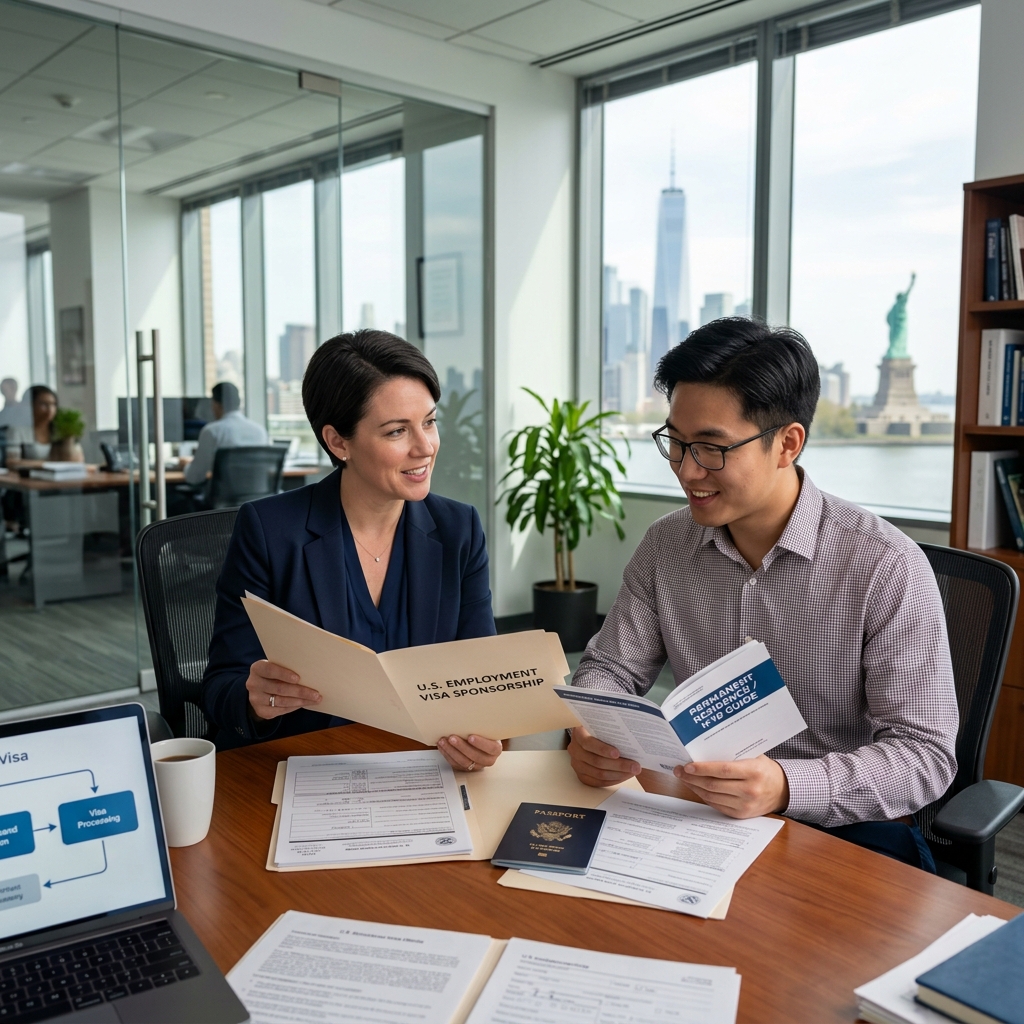
Employment visa sponsorship is the backbone of how many foreign professionals legally work and live in the United States. In simple terms, sponsorship means a U.S. employer formally asks the government to allow a foreign national to work for them and accepts specific legal and financial responsibilities in the process. This guide explains how sponsorship works, what employers and workers must do, and the risks and protections involved.
What Does Employment Visa Sponsorship Mean?
In U.S. immigration law, employment visa sponsorship occurs when a U.S. employer supports a foreign worker’s application for a temporary work visa or a permanent immigrant visa (a green card). The employer usually files official petitions, provides documentation about the job and the worker, and confirms that it will comply with immigration and labor rules.
Key elements of sponsorship include:
- Formal petition to the government – Typically filed with U.S. Citizenship and Immigration Services (USCIS), requesting permission for the worker to be employed in the United States.
- Evidence of a genuine job offer – The employer must show there is a real, qualifying position with defined duties and salary.
- Verification of worker qualifications – Degrees, licenses, and experience must match visa and job requirements.
- Compliance with labor market rules – For many visa types, the employer must prove there are not enough qualified U.S. workers for the position.
Some sponsorships are for nonimmigrant (temporary) status, such as H-1B or L-1 visas, while others are for immigrant status, where the goal is permanent residence through an employment-based green card.
Who Can Sponsor an Employment Visa?
Not every U.S. company or organization is eligible or prepared to sponsor foreign workers. However, most lawful businesses with legitimate operations in the United States can sponsor if they meet the specific requirements of the visa category.
| Potential Sponsor Type | Examples | Typical Conditions |
|---|---|---|
| Private Employers | Tech companies, manufacturers, consulting firms | Must have lawful business operations and ability to pay offered wage |
| Educational Institutions | Universities, colleges, research institutes | Often sponsor for teaching or research roles that require specialized expertise |
| Nonprofit Organizations | Charities, hospitals, NGOs | Must show genuine need for the role and capacity to employ the worker |
| Government Agencies | Federal, state, or local agencies | Can sponsor in limited circumstances; often subject to special rules |
In addition to employers, U.S. citizens and permanent residents may sponsor relatives for immigrant visas. However, this article focuses on employment-based sponsorship rather than family-based immigration.
Common Employment-Based Sponsorship Paths
There are many types of work visas and employment-based green card categories. Each has specific eligibility rules, but most sponsorships fall into two broad groups.
Temporary (Nonimmigrant) Work Visas
Temporary work visas allow foreign nationals to work in the U.S. for a limited period if a U.S. employer petitions for them. Examples include:
- Specialty occupation workers – Positions requiring at least a bachelor’s degree in a specific field.
- Intracompany transferees – Managers, executives, or specialized employees transferring within multinational companies.
- Seasonal or short-term workers – In industries like tourism, agriculture, or construction.
For most temporary visas, the employer submits Form I-129, Petition for a Nonimmigrant Worker, to USCIS. Once approved, the worker either applies for a visa at a U.S. consulate abroad or, if already in the U.S., applies to change or extend status.
Permanent (Immigrant) Employment-Based Visas
Employment-based immigrant visas lead to a green card and the right to live and work in the U.S. permanently. These are divided into preference categories (EB-1, EB-2, EB-3, etc.), and often require a job offer and a sponsoring employer.
For most categories, the sponsoring employer must file Form I-140, Immigrant Petition for Alien Worker, with USCIS. After approval, the worker either completes consular processing abroad or files for adjustment of status in the U.S., when a visa number is available.
The Employer’s Role: Core Responsibilities
Employers that choose to sponsor a worker undertake significant obligations. These obligations vary by visa type, but certain themes appear repeatedly.
- Confirm job details and salary – The job must be real and meet minimum wage or prevailing wage rules under U.S. labor laws.
- Assure ability to pay – For immigrant petitions, employers generally must show they can pay the proposed wage from the time the petition is filed.
- Pay required fees – Filing fees and, in some cases, legal fees are typically borne by the employer, especially in situations where regulations prohibit passing certain costs to the worker.
- Maintain proper records – Employers must keep documentation supporting their petitions and comply with inspection or audit requirements.
- Honour working conditions – Sponsored workers should receive the agreed salary, benefits, and position, and should not be treated less favorably than comparable U.S. workers.
Failure to comply can result in denial of petitions, government investigations, civil penalties, or even criminal liability in serious cases.
Labor Certification and the U.S. Labor Market
For many permanent employment-based cases, particularly for professional and skilled workers, employers must secure a labor certification from the U.S. Department of Labor (DOL) before filing an immigrant petition. This process, often called PERM, is designed to protect U.S. workers.
Labor certification generally requires employers to:
- Define the job’s duties, minimum requirements, and work location.
- Conduct recruitment to test the U.S. labor market, following detailed DOL rules.
- Document all recruitment steps and responses from applicants.
- Show that no qualified, available, willing U.S. worker applied for the position.
Once the DOL approves the certification, the employer files Form I-140 with USCIS, attaching the certification as proof that hiring the foreign worker will not harm U.S. workers’ wages and working conditions.
Step-by-Step: How Employment Sponsorship Typically Works
Procedures differ by visa category, but most employment-based sponsorships follow a similar structure.
1. Determine the Appropriate Visa or Category
The employer and worker first identify the best visa type based on:
- Nature of the job (temporary vs. permanent, level of skill required)
- Worker’s education, experience, and immigration history
- Business needs, such as long-term staffing and timelines
Choosing the wrong category can delay or derail the process, so many employers consult immigration counsel at this stage.
2. Check Eligibility and Labor Certification Requirements
The employer then confirms that both the job and the worker meet the rules for the selected category. For immigrant visas, this often includes evaluating whether labor certification is required, and if so, preparing the recruitment and filing through the DOL’s systems.
3. File the Petition with USCIS
After gathering evidence, the employer submits the appropriate petition to USCIS:
- Form I-129 for temporary workers.
- Form I-140 for immigrant workers.
The petition must include:
- Signed forms and correct filing fees
- Company documents (such as tax returns or financial statements) showing ability to pay
- Worker’s qualifications (degrees, licenses, resumes)
- Job offer letters and detailed descriptions of duties
- Labor certification, when required
4. USCIS Review and Decision
USCIS reviews the petition, may issue a Request for Evidence (RFE) if additional information is needed, and eventually approves or denies the case. Standard processing can take months, but in many employment-based categories, employers can pay for premium processing, which offers faster decisions for an additional fee.
5. Consular Processing or Adjustment of Status
Once the petition is approved, the worker typically:
- Applies at a U.S. embassy or consulate abroad for a visa, if outside the United States.
- Files for adjustment of status with USCIS, if already in the U.S. and eligible, to become a permanent resident.
Consular processing for immigrant visas involves the National Visa Center (NVC), completion of online forms, submission of civil documents, and a visa interview. Workers must also undergo a medical exam and demonstrate financial support sufficient to avoid becoming a public charge.
6. Beginning Employment and Maintaining Status
The worker can generally start or continue employment only after securing the necessary visa or work authorization. Both the employer and the worker must then comply with all conditions, such as working in the approved role, respecting authorized period of stay, and reporting major changes when required.
Rights and Risks for Sponsored Workers
Foreign workers with employment sponsorship gain important rights, including lawful authorization to work, protection under federal and state labor laws, and in many cases a pathway to permanent residence. However, sponsorship also creates vulnerabilities and responsibilities.
Worker Rights
- Legal work authorization – The ability to work for the sponsoring employer in the approved position.
- Protection from discrimination – Sponsored workers are generally protected by the same anti-discrimination laws that protect U.S. workers.
- Access to wage and hour protections – Minimum wage, overtime, and workplace safety rules typically apply.
Worker Obligations and Risks
- Maintaining lawful status – Workers must comply fully with visa conditions, including remaining in approved employment and respecting travel and stay limits.
- Dependence on the sponsor – Many workers cannot freely change jobs without new sponsorship and filings.
- Consequences of termination – Losing the job may trigger loss of status after a short grace period, requiring departure or a change of status.
Because of these risks, sponsored workers should understand their status documents, know when their authorization expires, and consult qualified professionals if facing job loss or major workplace changes.
When Employers Should Consider Sponsorship
Not every hiring situation warrants visa sponsorship. Employers should carefully weigh the costs, commitments, and benefits.
Situations where sponsorship may make sense include:
- Roles requiring specialized education or experience that are hard to fill locally
- Positions in industries with chronic skill shortages
- Needed transfers of executives or specialists within multinational organizations
- Long-term staffing needs where the employer wants to retain key international talent
Before sponsoring, employers should evaluate legal fees, government costs, internal administrative effort, and the potential impact on workforce planning.
Practical Tips for Employers and Foreign Workers
Tips for Employers
- Start planning early; immigration timelines often exceed regular hiring cycles.
- Document the business need for the foreign hire and maintain clear job descriptions.
- Work closely with experienced immigration counsel, particularly for complex categories or large-scale hiring.
- Educate HR and hiring managers about sponsorship obligations and realistic timelines.
Tips for Prospective Foreign Workers
- Learn the basics of common visa options relevant to your field.
- Ask potential employers early whether they sponsor visas and under what conditions.
- Keep copies of all immigration documents and maintain a clear record of employment history.
- Seek guidance from qualified immigration professionals before making major decisions, such as changing employers or traveling abroad.
FAQs: Employment Visa Sponsorship
Is visa sponsorship the same as a job offer?
No. A job offer is one part of sponsorship, but sponsorship also requires the employer to file official immigration petitions, pay fees, and accept legal responsibilities.
Can small businesses sponsor employment visas?
Yes, if they can show they are legitimate, operating businesses and meet visa-specific requirements such as the ability to pay the offered wage. There is no fixed minimum size, but financial and documentation demands may be more challenging for very small employers.
How long does employment-based sponsorship take?
Timing varies widely. Temporary visa petitions can be processed in weeks to months, especially with premium processing. Employment-based immigrant sponsorship, including labor certification and consular processing, can take many months or years depending on category and visa availability.
Can a sponsored worker change employers?
In many cases, changing employers requires new sponsorship and new filings. For nonimmigrant visas, the new employer usually must file a petition before the worker can lawfully start work. For immigrant visas, some categories permit portability under specific rules once certain milestones are reached.
Is family sponsorship different from employment sponsorship?
Yes. Family sponsorship involves U.S. citizens or permanent residents petitioning for relatives, often using forms such as I-130 and I-864. Employment sponsorship is based on a job offer and an employer’s petition, using forms like I-129 or I-140.
References
- Immigrant visa to work in the U.S. — USAGov. 2024-02-01. https://www.usa.gov/immigrant-work-visa
- Employment-Based Immigrant Visas — U.S. Department of State, Bureau of Consular Affairs. 2023-11-15. https://travel.state.gov/content/travel/en/us-visas/immigrate/employment-based-immigrant-visas.html
- Working in the United States — U.S. Citizenship and Immigration Services (USCIS). 2024-03-05. https://www.uscis.gov/working-in-the-united-states
- Immigrant visa to work in the U.S. — USAGov. 2024-02-01. https://www.usa.gov/immigrant-work-visa
- Visa Sponsorship, Explained — Boundless Immigration. 2023-06-20. https://www.boundless.com/immigration-resources/visa-sponsorship-explained
- Visa sponsorship: How it works in the U.S. — Lighthouse. 2023-09-10. https://www.lighthousehq.com/blog/visa-sponsorship
- What Is a Visa Sponsorship? — Rippling Glossary. 2023-05-01. https://www.rippling.com/glossary/visa-sponsorship
Similar Articles








Read full bio of medha deb




