
Understanding Unfair Labor Union Practices
A clear guide to recognizing, preventing, and responding to unfair labor union conduct under U.S. labor law.
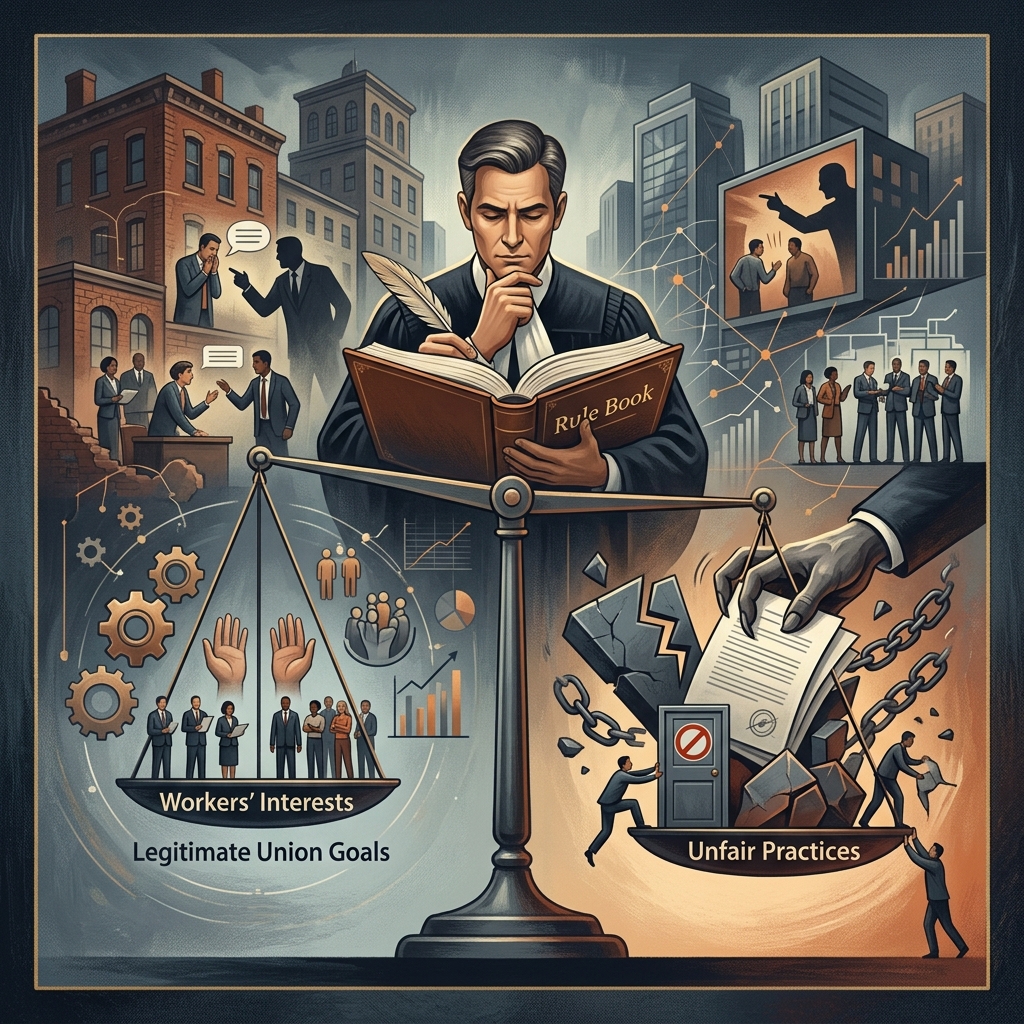
Labor unions play an important role in protecting workers, negotiating fair wages, and improving workplace conditions. However, unions themselves are also bound by the law. When a union oversteps or abuses its authority, it can commit what U.S. labor law calls unfair labor practices. These violations can harm workers, employers, and the integrity of collective bargaining.
This article explains what unfair labor union practices are, how they differ from employer violations, which types of conduct are prohibited, and what remedies and enforcement options exist under federal law, particularly the National Labor Relations Act (NLRA).
Legal Background: How Unfair Labor Practices Are Defined
Under the NLRA, both employers and labor organizations must respect the rights of employees to organize, bargain collectively, engage in concerted activities, or refrain from such activity. When either side interferes with these rights or ignores legal duties, it may commit an unfair labor practice.
For unions, unfair labor practices primarily involve conduct that:
- Restrains or coerces employees in exercising their rights to support or oppose unionization.
- Improperly pressures employers to discriminate against workers because of union activity or non‑activity.
- Refuses to bargain in good faith with an employer over mandatory subjects of bargaining.
- Imposes unreasonable or excessive requirements for union membership or dues.
These rules are enforced at the federal level by the National Labor Relations Board (NLRB)
Employee Rights at the Center of Union Regulation
To understand unfair union conduct, it helps to start with the rights employees are guaranteed. Section 7 of the NLRA gives workers the right to self‑organization, to form, join, or assist labor organizations, to bargain collectively through chosen representatives, to engage in other concerted activities, and to refrain from these activities.
These rights include, for example:
- The right to join or support a union, or to choose not to join.
- The right to attend union meetings or distribute union materials during non‑work time in non‑work areas.
- The right to engage in collective discussions about wages, hours, or working conditions.
- The right to decline union membership, where permitted, or to advocate decertification if allowed under law.
Unions may advocate strongly for membership and collective action, but they cannot use threats, coercion, or discriminatory treatment to override these individual rights.
Common Types of Unfair Labor Union Practices
Labor unions can commit unfair labor practices in several ways. Below are key categories recognized under U.S. labor law.
1. Coercing or Restricting Employee Choices
Unions cannot restrain or coerce employees in the exercise of their rights to support, join, or refrain from union activities. Examples of coercive conduct include:
- Threatening employees who choose not to join the union or who criticize union leadership.
- Intimidating workers into signing union authorization cards or voting a certain way.
- Retaliating against members who oppose strike action or question union strategy.
While unions may campaign, persuade, and organize, the line is crossed when pressure becomes threats or reprisals that discourage free choice.
2. Inducing Employer Discrimination
It is unlawful for a union to cause or attempt to cause an employer to discriminate against an employee based on union membership, support, or opposition. This includes:
- Demanding that the employer fire, demote, or refuse to hire a worker because the person is not a union member.
- Pressuring the employer to favor union supporters over non‑supporters in promotions or assignments.
- Urging discipline or discharge of employees who refuse to participate in union activities.
Employer discrimination linked to union status is itself an unfair labor practice, and unions may be liable when they try to orchestrate or encourage it.
3. Refusing to Bargain in Good Faith
Once workers choose a union as their representative, both the employer and union must meet at reasonable times and bargain in good faith over wages, hours, and other mandatory subjects. It is an unfair labor practice for either party to refuse to bargain collectively.
For unions, this can include:
- Refusing to meet with the employer at reasonable times without valid justification.
- Insisting on irrelevant or unlawful conditions as a prerequisite to negotiations.
- Walking away from bargaining or deliberately stalling to avoid reaching any agreement.
Good‑faith bargaining does not require either side to make concessions, but it does require sincere effort to reach a contract.
4. Improper Dues or Membership Requirements
Unions may lawfully collect dues and establish membership rules, but those rules must be consistent with statutory protections. Excessive dues, discriminatory fees, or unreasonable barriers to membership can be considered unfair labor practices, especially when they effectively punish certain employees.
Examples of problematic conduct include:
- Charging substantially higher dues to employees who have criticized the union.
- Using dues or fees as a way to deter employees from exercising their rights to refrain from union activity where such rights are protected by law.
- Refusing membership solely because a worker previously opposed unionization, while still requiring that same worker to pay fees.
5. Interference with Decertification or Alternative Representation
Employees have the right, under specific procedures, to seek decertification of a union or choose a new representative. Unions may not unlawfully interfere with these efforts through intimidation or retaliation.
Interference might include:
- Harassing workers who sign or circulate decertification petitions.
- Threatening members with loss of union support or benefits if they consider a different representative.
- Coordinating pressure campaigns that make it unsafe for employees to express disagreement.
Union Misconduct Compared to Employer Unfair Labor Practices
Unfair practices are not limited to unions; employers frequently face allegations as well. Understanding the difference helps workers and managers identify who may have violated the law.
| Aspect | Employer Unfair Labor Practices | Union Unfair Labor Practices |
|---|---|---|
| Key rights affected | Employee right to organize, join or assist unions, engage in concerted activity, or refrain. | Employee right to join, support, oppose, or leave union; right to fair representation and non‑coerced choice. |
| Typical violations | Threatening or firing union supporters, promising benefits to discourage union support, spying on union activity, refusing to bargain in good faith. | Coercing employees to join or remain in union, causing employer discrimination, refusing to bargain in good faith, imposing unreasonable dues or membership rules. |
| Enforcement body | National Labor Relations Board (NLRB). | National Labor Relations Board (NLRB). |
| Common remedies | Cease‑and‑desist orders, reinstatement, back pay, posting notices, bargaining orders. | Cease‑and‑desist orders, changes to union practices, fair representation requirements, and other remedial directives. |
How Unfair Labor Union Practices Are Enforced
The primary enforcement mechanism for unfair labor practices is the NLRB’s charge and adjudication process. Workers, employers, and unions themselves can file charges when they believe a union has violated the NLRA.
Typical steps include:
- Filing a charge: A written charge is submitted to an NLRB regional office, identifying the union conduct alleged to be unlawful.
- Investigation: The NLRB investigates by interviewing witnesses, reviewing documents, and assessing whether the facts support the complaint.
- Determination: If the NLRB finds merit, it may issue a complaint and hold a hearing before an administrative law judge.
- Decision and remedy: The judge or Board may order remedies, which can include ceasing unlawful activity, revising policies, and measures to restore employee rights.
In some cases, federal courts may become involved to enforce NLRB orders or address related issues, but the Board is the central authority for unfair labor practice adjudication.
Possible Remedies for Victims of Union Misconduct
Remedies focus on restoring the status quo and protecting statutory rights rather than punishing unions. When unfair labor union practices are proven, the NLRB may order actions such as:
- Cease‑and‑desist orders requiring the union to stop specific unlawful behavior.
- Posting notices informing employees of their rights and the union’s obligations.
- Changes to internal union rules that were found to be coercive or discriminatory.
- Fair representation measures ensuring the union treats all members and covered employees without unlawful bias.
Where union misconduct has contributed to employer discrimination, remedies can include reinstatement of affected employees, back pay, and restoration of lost benefits ordered against the employer, even though the union’s actions triggered the violation.
Recognizing Warning Signs of Unfair Union Behavior
Both workers and employers benefit from being able to spot potential unfair practices early. Warning signs may include:
- Union representatives hinting that employees will lose support or protection if they disagree with union leadership.
- Pressure to sign union cards quickly without time to ask questions or seek advice.
- Attempts to use employer discipline or job assignments to punish non‑supporters.
- Persistent refusal to meet with the employer about wages, hours, or safety issues despite requests for bargaining.
- Dues or fees that are clearly targeted at particular employees because of their views.
When these signs appear, documenting conversations and keeping copies of relevant materials can be crucial for later investigations.
Practical Steps for Workers and Employers
Individuals and organizations confronted with possible unfair union practices should take careful, measured steps to protect their rights while maintaining constructive relationships whenever possible.
For Employees
- Learn your rights under the NLRA, including the freedom to support or oppose unionization without coercion.
- Keep written records of incidents, including dates, names, and statements made by union representatives.
- Consult with knowledgeable advisors, such as employment attorneys or legal clinics, before taking formal action.
- File a timely charge with the NLRB if union conduct appears to violate your rights.
For Employers
- Recognize that both employer and union actions can be scrutinized in unfair labor practice cases; ensure your own policies comply with the NLRA.
- Document any requests, refusals, or unreasonable delays by the union in bargaining.
- Avoid retaliatory actions against employees; retaliation for filing charges or testifying is itself an unfair labor practice.
- Seek legal counsel before responding to problematic union behavior, especially if discipline or changes in working conditions are at issue.
FAQs: Unfair Labor Union Practices
Are unions allowed to pressure employees to join?
Unions may actively encourage employees to join and can explain the benefits of membership. However, they cannot threaten, coerce, or retaliate against employees who decline to join or who criticize union decisions. Such coercion can be an unfair labor practice.
Can a union force an employer to fire a non‑member?
No. A union may not lawfully cause or attempt to cause an employer to discriminate against an employee because of union membership or non‑membership. Pressuring an employer to fire or discipline someone for their union stance can be an unfair labor practice.
What does “refusal to bargain in good faith” mean for a union?
It means failing to meet with the employer at reasonable times, declining to discuss mandatory topics such as wages or hours, or engaging in tactics designed only to delay or block negotiations without genuine effort to reach agreement. Both unions and employers must bargain in good faith once a union is duly chosen.
How do I file a charge about union misconduct?
You can file a charge with a regional office of the NLRB. The charge should state the specific union actions, dates, and how those actions violate your rights. The Board will investigate and decide whether to proceed with a complaint.
Do unfair labor practices only occur in unionized workplaces?
Unfair labor practices often arise where union activity is present, but they can also involve organizing campaigns in non‑union workplaces. Actions that interfere with employee rights to organize, support, or oppose unions can be unlawful even before a union is formally recognized.
References
- Employer/Union Rights and Obligations — National Labor Relations Board. 2024-01-01. https://www.nlrb.gov/about-nlrb/rights-we-protect/your-rights/employer-union-rights-and-obligations
- Interfering with Employee Rights (Section 7 & 8(a)(1)) — National Labor Relations Board. 2024-01-01. https://www.nlrb.gov/about-nlrb/rights-we-protect/the-law/interfering-with-employee-rights-section-7-8a1
- Unfair Labor Practices (ULPs) — Legal Information Institute, Cornell Law School. 2023-01-01. https://www.law.cornell.edu/wex/unfair_labor_practices_(ulps)
- Unfair Labor Practices Under the Law — Justia. 2023-06-01. https://www.justia.com/employment/unions/unfair-labor-practices/
- Unfair Labor Practices — Berry & Berry, PLLC. 2022-05-01. https://www.berrylegal.com/practice-areas/federal-employment/unfair-labor-practices/
- Employee Rights Under the NLRA — U.S. Department of Labor. 2023-03-01. https://beta.dol.gov/policy-regulations/unions-collective-bargaining/what-union/employee-rights-nlra
- Participating in Union Activities — UFCW Local 1500. 2022-09-01. https://www.ufcw1500.org/your-rights/participating-in-union-activities/
Similar Articles








Read full bio of medha deb




