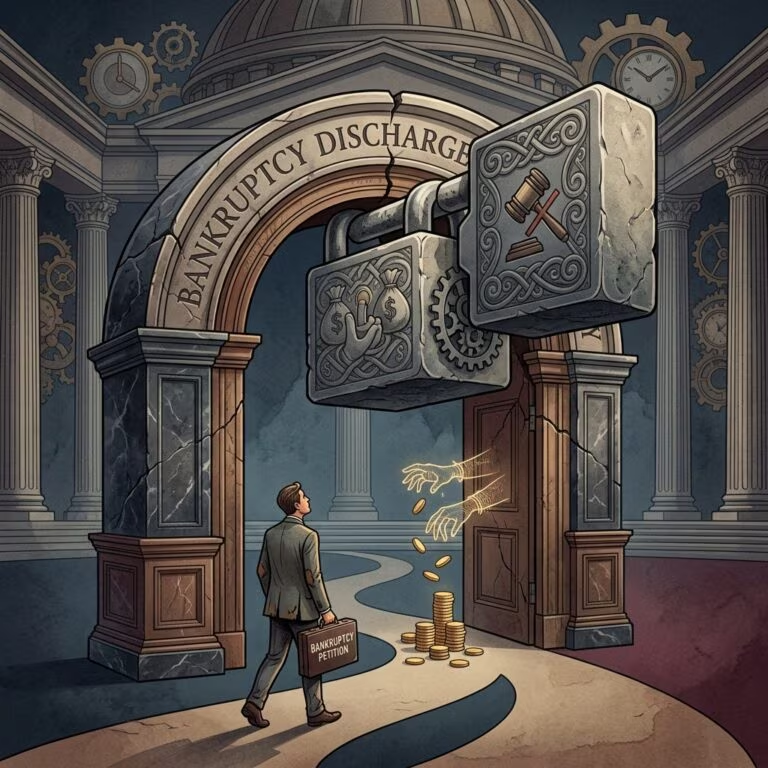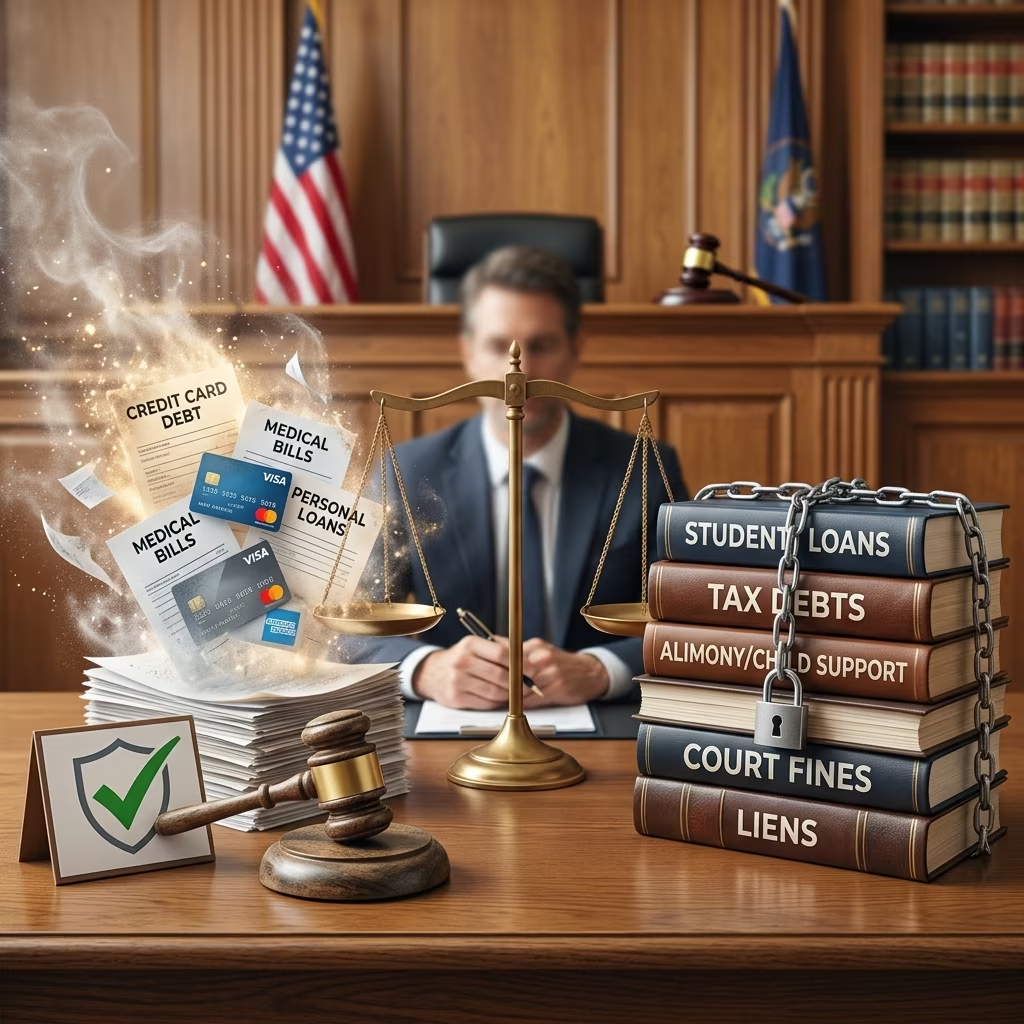
Bankruptcy is designed to give honest but overwhelmed borrowers a fresh financial start by eliminating or restructuring certain debts. To use that protection effectively, it is critical to understand which obligations are wiped out, which remain, and how the type of bankruptcy you file affects the outcome.
Understanding the Bankruptcy Discharge
A bankruptcy discharge is a formal order from the bankruptcy court that permanently releases you from personal liability for specific debts. Once a discharge is entered:
- You are no longer legally required to pay discharged debts.
- Creditors and debt collectors must stop all collection efforts on those debts, including lawsuits, phone calls, and letters.
The discharge is usually the key milestone people think of when they say they have “completed” bankruptcy. However, it does not apply to every debt, and it does not always remove liens on collateral, such as mortgages or car loans.
Secured vs. Unsecured Debts: Why It Matters
To understand what gets discharged, it helps to distinguish between secured and unsecured debts.
- Unsecured debts are not tied to any specific property. Common examples include credit cards, medical bills, and personal loans.
- Secured debts are backed by collateral, such as a car in an auto loan or a house in a mortgage. The lender can enforce a lien against the property if you do not pay.
Bankruptcy discharge eliminates your personal liability to pay a debt, but it usually does not remove valid liens. This means:
- If you surrender the collateral (for example, let the lender repossess the car), your remaining personal obligation on that loan can typically be discharged.
- If you keep the collateral, you generally must keep paying under the loan contract or negotiate different terms.
Debts Commonly Discharged in Consumer Bankruptcy
Most consumer bankruptcies are filed under Chapter 7 or Chapter 13 of the U.S. Bankruptcy Code. Many everyday debts are eligible for discharge in both chapters, subject to the facts of your case and any objections from creditors.
Typical Unsecured Debts That Can Be Eliminated
Common unsecured debts that are often discharged include:
- Credit card balances and store charge accounts
- Medical bills and hospital charges
- Personal loans, including loans from friends and family
- Unpaid utility bills (electric, gas, phone, internet)
- Attorney fees and many contractual obligations
- Civil court judgments for money damages (unless based on fraud or willful injury, which can make them nondischargeable)
- Back rent owed to a landlord (though the landlord can still evict you for nonpayment)
These types of debts frequently represent the bulk of what individuals are struggling to pay. A discharge in Chapter 7 often wipes out these obligations within a few months of filing, while Chapter 13 normally discharges what remains unpaid after you complete a multi-year repayment plan.
Selected Tax Debts and Penalties
Tax obligations are treated differently and can be complex. Some older income tax debts and certain tax penalties may be dischargeable if strict conditions are met, including how old the tax is and when the return was filed.
As a general pattern (with many exceptions):
- Chapter 7 can discharge personal liability for certain income tax debts older than three years, if returns were timely filed and there is no fraud.
- Chapter 13 can discharge tax debts that were paid through the plan plus some older tax debts, again subject to timing and filing rules.
- Trust fund taxes and certain other priority tax obligations are typically not dischargeable.
Because tax discharge rules are technical and missteps can be costly, you should consult a bankruptcy or tax professional to evaluate which of your specific tax debts are eligible.
Debts That Are Never (or Rarely) Discharged
Federal law identifies several categories of debts that are nondischargeable in bankruptcy or only dischargeable in rare circumstances.
Family Support and Domestic Obligations
- Child support owed under a court order or agreement
- Alimony or spousal support
- Other domestic support obligations, including some property settlements in divorce
These debts are treated as a high priority and cannot be eliminated in Chapter 7 or Chapter 13. If you file Chapter 13, they must be included in your plan and fully paid.
Most Student Loans
Federal and private student loans are normally not discharged in bankruptcy. To wipe out student loan debt, you generally must bring a separate lawsuit (called an adversary proceeding) within the bankruptcy and prove that repayment would impose an undue hardship, a demanding legal standard.
Debts Arising from Wrongful Conduct
- Debts for personal injury or death caused by operating a vehicle while intoxicated.
- Debts arising from fraud, theft, or embezzlement.
- Court-ordered criminal fines, penalties, or restitution.
- Debts for willful and malicious injury to another person or their property, if a creditor successfully challenges discharge.
Even when a debt might normally be dischargeable, creditors can ask the court to declare it nondischargeable if it resulted from fraud or intentional harm, and they can prove those allegations.
Additional Common Nondischargeable Debts
- Most recent tax debts, including many income, payroll, and trust fund taxes.
- Certain debts arising from tax-advantaged retirement plans.
- Condominium or cooperative association fees that come due after filing.
- Debts not listed in your bankruptcy schedules, unless the creditor had actual notice of your case.
Special Rules for Chapter 7 and Chapter 13 Discharges
While many discharge rules apply in both chapters, there are important distinctions between Chapter 7 liquidation and Chapter 13 wage-earner repayment plans.
| Feature | Chapter 7 Bankruptcy | Chapter 13 Bankruptcy |
|---|---|---|
| Basic approach | Liquidation of non-exempt assets; fast discharge of eligible debts. | 3–5 year repayment plan; discharge of remaining eligible balances after completion. |
| Timing of discharge | Usually a few months after case filing for individuals. | After all plan payments are made and the court grants discharge. |
| Secured debts | Discharge personal liability but liens often survive; surrender vs. keep-and-pay choices. | Plan can cure arrears and restructure payments; some remaining secured debt may survive discharge. |
| Tax debts | Can discharge certain older income taxes under strict rules. | Can discharge some tax debts paid through plan and certain older taxes. |
| Extra dischargeable categories | More limited set of debts compared to Chapter 13 when it comes to certain misconduct-based claims. | Some debts for fraud, fiduciary misconduct, or willful injury are dischargeable unless the court finds otherwise. |
Practical Effects of a Discharge on Your Daily Life
When your bankruptcy discharge is entered, the legal consequences are substantial:
- Collection stops: Creditors and debt collectors must stop trying to collect discharged debts forever.
- Credit report changes: Discharged debts are typically reported with a zero balance and noted as discharged in bankruptcy. The bankruptcy itself remains on your credit report for up to 10 years for Chapter 7 and usually 7 years for Chapter 13.
- Insolvency register updates: In some jurisdictions, your name is removed from public insolvency registers within a set period after discharge.
- New assets: Property you acquire after discharge is generally yours and cannot be taken by the bankruptcy trustee, with limited exceptions.
Although the discharge provides powerful relief, you may still face nondischargeable obligations such as child support, certain taxes, or student loans. Planning for these surviving debts is an essential part of your overall strategy.
Strategic Considerations Before Filing Bankruptcy
Because not all debts can be eliminated, consider the mix of your debt before deciding whether to file and which chapter to use.
- If most of your debt is credit cards, medical bills, or personal loans, a discharge may dramatically lighten your burden.
- If your main obligations involve recent taxes, student loans, or child support, bankruptcy may help with structure and temporary protection from collection, but it will not automatically erase these debts.
- If you own a home or car with significant equity, you need to understand how exemptions and liens will be handled in your case.
A knowledgeable attorney can analyze your debt profile, assets, and income to recommend the chapter and timing that maximizes your benefit while minimizing risk.
Frequently Asked Questions
1. Does bankruptcy erase all of my debts?
No. Bankruptcy eliminates only those debts that are dischargeable and included in your case. Obligations such as child support, most student loans, many recent tax debts, criminal fines, and debts based on fraud or intentional harm usually survive the discharge.
2. Can debt collectors still contact me after my discharge?
They cannot legally try to collect on discharged debts. The discharge order permanently bars collection actions on those obligations, and continuing to pursue them can violate federal law.
3. What happens to my mortgage or car loan in bankruptcy?
Bankruptcy can discharge your personal liability on a mortgage or auto loan, but the lender’s lien against the property often remains. If you surrender the property, any deficiency balance can usually be discharged. If you want to keep the property, you generally must keep paying or reach a different agreement with the lender.
4. Are income taxes ever dischargeable?
Yes, some older income tax debts can be discharged if they meet strict age and filing requirements, and there was no fraud or evasion. Many recent or priority tax obligations, and trust fund taxes, are not dischargeable.
5. How do I know exactly which of my debts were discharged?
The court issues a general discharge order rather than a line-by-line list of debts. Any debt that is legally dischargeable and properly listed in your case is typically eliminated unless a creditor successfully challenges it. Nondischargeable debts, like child support or most student loans, remain your responsibility unless the court enters a specific order to the contrary.
6. Do businesses receive a discharge?
In Chapter 7, only individual debtors receive a discharge; partnerships and corporations do not. Businesses are generally liquidated and their assets used to pay creditors, without a discharge of remaining obligations.
When to Seek Professional Advice
Because the discharge rules can be nuanced and highly dependent on your specific circumstances, it is wise to consult:
- A bankruptcy attorney for detailed analysis of your debts, assets, and chapter options.
- A tax professional if your situation involves complex tax liabilities.
- Credible nonprofit credit counseling agencies if you are exploring bankruptcy alternatives or are required to complete pre-filing counseling.
Professional advice can help you avoid mistakes such as failing to list a creditor, misunderstandings about what will survive the discharge, or choosing the wrong chapter for your goals.
References
- Chapter 7 – Bankruptcy Basics — United States Courts. 2024-01-01. https://www.uscourts.gov/court-programs/bankruptcy/bankruptcy-basics/chapter-7-bankruptcy-basics
- Bankruptcy Discharge — Legal Information Institute, Cornell Law School. 2023-05-15. https://www.law.cornell.edu/wex/bankruptcy_discharge
- Bankruptcy Frequently Asked Questions — Internal Revenue Service. 2023-09-01. https://www.irs.gov/businesses/small-businesses-self-employed/bankruptcy-frequently-asked-questions
- Can a debt collector try to collect on a debt that was discharged in bankruptcy? — Consumer Financial Protection Bureau. 2022-11-01. https://www.consumerfinance.gov/ask-cfpb/can-a-debt-collector-try-to-collect-on-a-debt-that-was-discharged-in-bankruptcy-en-1425/
- Discharge from bankruptcy — Citizens Advice. 2022-08-10. https://www.citizensadvice.org.uk/debt-and-money/debt-solutions/bankruptcy/after-you-go-bankrupt/discharge-from-bankruptcy/
- Debts that cannot be eliminated by bankruptcy — Maryland People’s Law Library. 2023-04-01. https://www.peoples-law.org/debts-cannot-be-eliminated-bankruptcy
- What Is a Bankruptcy Discharge? — Experian. 2023-06-05. https://www.experian.com/blogs/ask-experian/what-is-a-bankruptcy-discharge/