
Last Will And Testament In Utah: 7 Estate Plan Tips For 2025
Learn how Utah wills work, from legal requirements and signing rules to holographic wills, probate, and updating your estate plan effectively.
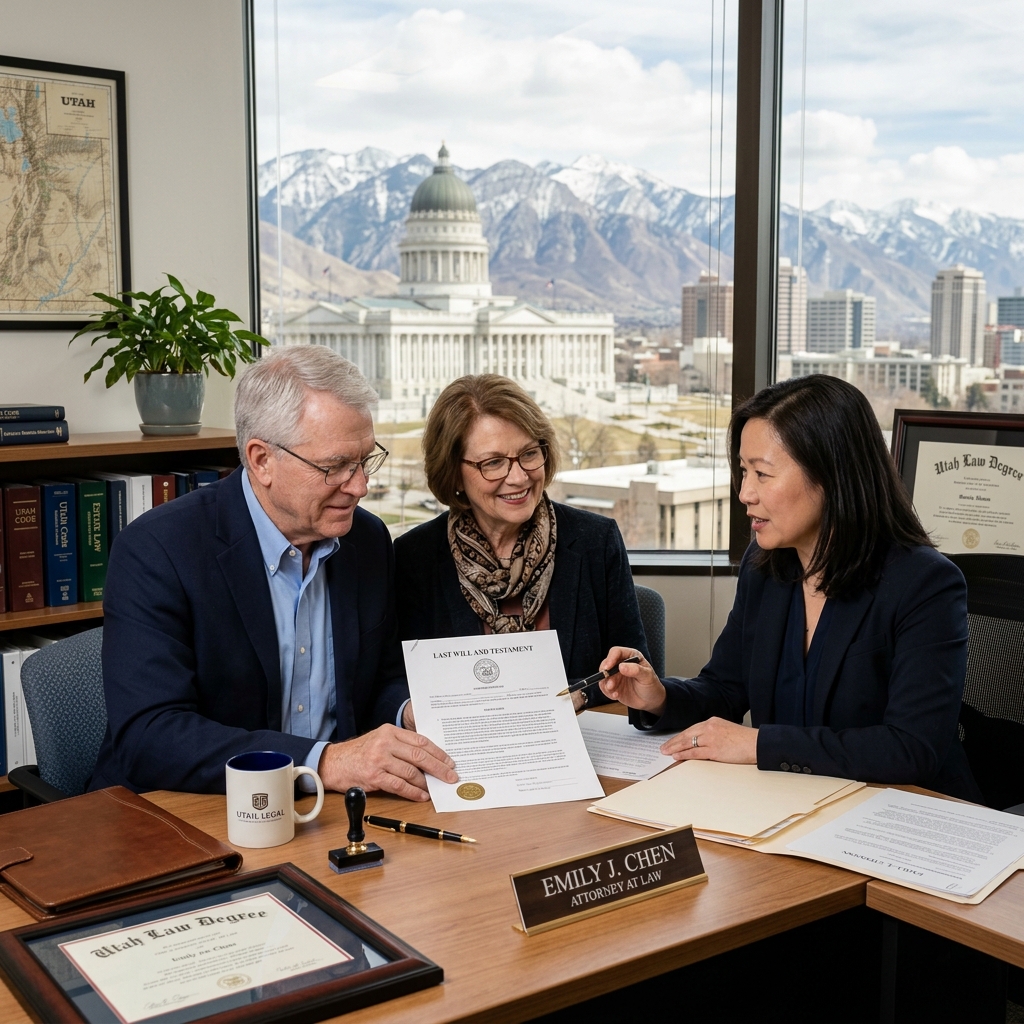
Creating a last will and testament in Utah allows you to decide who receives your property, who manages your estate, and who cares for your minor children if you die. Utah law sets clear requirements for a valid will, recognizes handwritten (holographic) wills, and provides procedures that can make probate faster and easier. This guide explains those rules in plain language and offers practical tips to help you build a reliable estate plan.
Why Having a Will Matters in Utah
When someone dies without a will, Utah’s intestacy laws determine who inherits their property. These rules follow a preset order of relatives and may not match your personal wishes. A properly drafted will lets you:
- Choose beneficiaries for your real estate, savings, investments, and personal belongings.
- Appoint a personal representative (executor) to administer your estate and handle paperwork with the court.
- Name a guardian for minor children so the court knows whom you trust to raise them.
- Reduce the risk of family conflict by providing clear, written instructions.
For Utah homeowners and parents, a will is often the foundation of an effective estate plan.
Who Can Make a Valid Will in Utah?
Utah law specifies who is legally allowed to make a will (often called the testator). Under the Utah Uniform Probate Code:
- The testator must be 18 years of age or older.
- The testator must have testamentary capacity at the time the will is signed, meaning they understand:
- They are making a document that distributes their property at death.
- The general nature and value of their assets.
- Who their close family members and possible heirs are.
- The will must be made voluntarily, without fraud, duress, or undue influence.
Capacity and free choice are essential. If someone is pressured, misled, or mentally unable to understand what they are signing, the will can later be challenged in court.
Core Legal Requirements for a Utah Will
Most wills in Utah are typed documents prepared by the testator or an attorney. To be valid, a typical written will must meet the following statutory requirements under Utah Code § 75-2-502:
- Written document on paper (not audio or video).
- Signature of the testator or another person signing in the testator’s conscious presence and at the testator’s direction.
- Signatures of at least two witnesses, each signing within a reasonable time after observing the testator sign or acknowledge the will.
The witnesses do not need to sign at the exact same moment, but both must sign the same document and must know they are witnessing a will. While Utah does allow witnesses who may inherit under the will, many practitioners recommend using disinterested witnesses (people who are not beneficiaries) to reduce claims of improper influence.
Utah Will Requirements at a Glance
| Requirement | Utah Rule |
|---|---|
| Minimum age | 18 years or older. |
| Mental capacity | Must understand nature of will, property, and heirs. |
| Form | Must be in writing; typed or handwritten. |
| Testator signature | Signed by testator or someone acting at testator’s direction. |
| Witnesses (typed will) | At least two witnesses, signing within a reasonable time after witnessing or acknowledging. |
| Witnesses (holographic will) | Not required if handwritten and meeting statutory conditions. |
Typed Wills vs. Holographic (Handwritten) Wills
Utah is one of several states that recognizes holographic wills, which are handwritten wills that can be valid even without witnesses. Each type of will has distinct requirements and risks.
Typed (Formal) Wills
A typed will is the most common format, especially when prepared with legal assistance. In Utah, a typed will must:
- Be written or printed on paper.
- Be signed by the testator (or by another person at the testator’s direction and in their presence).
- Include the signatures of at least two witnesses, as described above.
Typed wills typically provide clearer structure and language, reducing ambiguity and making probate more straightforward.
Holographic Wills
A holographic will is a document that the testator writes by hand. Utah law permits a holographic will that does not satisfy all formal witness requirements, provided that:
- The testator signs the document.
- The material portions of the will (the key provisions describing gifts and intentions) are in the testator’s handwriting.
Witnesses are not required for a holographic will, but these documents can be more vulnerable to disputes over interpretation, authenticity, or completeness. Courts may need additional evidence to confirm that the writing was intended as a will and that it reflects the testator’s final wishes.
Self-Proving Wills and Notarization
Utah law does not require notarization for a will to be valid. However, the state allows wills to be made self-proving, which can significantly streamline probate.
Under Utah Code, a will is self-proved if:
- The testator acknowledges the will before a notary or authorized officer.
- The witnesses sign affidavits affirming that they saw the testator sign (or acknowledge) the will and that the testator appeared to have capacity.
These affidavits are typically attached to the will at the time of signing. A self-proving will allows the probate court to accept the document without requiring the witnesses to testify later, saving time and reducing complications for the personal representative.
What Happens if You Die Without a Will?
If you die without a valid will, your estate is distributed under Utah’s intestate succession statutes. In general:
- Your spouse and children are first in line to inherit.
- If there is no surviving spouse or children, more distant relatives such as grandchildren, parents, siblings, and other family members may inherit according to a statutory order.
- If no qualifying relatives can be found, the estate may eventually pass to the state.
Intestacy rules do not account for non-relatives, charitable wishes, or personal preferences. A will ensures that your assets go where you intend, rather than following default statutory priorities.
Wills, Trusts, and Probate in Utah
A will is only one tool in Utah estate planning. Many people also use trusts, beneficiary designations, and jointly owned property. Understanding how these pieces fit together is key to designing an efficient plan.
Probate Basics
In Utah, a will generally must be submitted to the district court for probate before the personal representative can act. Probate is the legal process of:
- Validating the will.
- Appointing the personal representative.
- Identifying and valuing assets.
- Paying valid debts, taxes, and expenses.
- Distributing remaining property to beneficiaries.
The length and complexity of probate depend on factors such as estate size, the clarity of the will, and whether any disputes arise.
How Wills Compare to Trusts
Utah recognizes a wide range of trusts, which can complement or sometimes reduce reliance on a will. A will:
- Transfers assets at death, often through probate.
- Is public once filed, meaning probate records are generally accessible.
- Provides straightforward instructions, usually resulting in outright distributions to heirs.
By contrast, a trust:
- Can avoid probate if assets are properly titled in the trust.
- Keeps distribution details private because trusts are typically not filed with the court.
- Allows more flexible or conditional distributions, such as staggered payments or age-based milestones.
Some Utah residents use a pour-over will, which directs any assets not already in a trust at death into that trust through probate. This ensures that overlooked assets are still captured by the trust’s terms.
Changing, Revoking, or Replacing a Utah Will
Life events often require updates to your estate plan. Utah law allows most people to revoke or change their wills at any time, unless they have signed a contract agreeing not to do so.
Common Methods of Revocation
Under Utah’s probate code, a will can typically be revoked by:
- Executing a new will that expressly revokes prior wills or clearly replaces their terms.
- Performing a “revocatory act” on the will, such as burning, tearing, canceling, or destroying it with the intent to revoke.
Minor updates can sometimes be made through a codicil, which is a separate document that amends specific provisions of the existing will. Codicils must meet the same execution requirements as a will.
Contracts Not to Revoke
Utah law addresses agreements relating to wills under provisions like § 75-2-514. A contract to make a will, not revoke a will, or die intestate can generally be proven only by:
- Specific language in a will stating the material terms of the contract.
- An express reference in a will to the contract, plus additional written evidence of its terms.
- A separate written agreement signed by the decedent.
Because these arrangements can be complex and affect your ability to change your estate plan later, professional guidance is usually recommended.
Practical Tips for Drafting a Utah Will
Whether you use a lawyer or a self-help form, you can improve the clarity and effectiveness of your will by following these practical guidelines inspired by Utah estate planning practices.
- Define family relationships clearly – Specify spouses, children from previous relationships, stepchildren, and other important relatives to avoid confusion.
- Name a capable personal representative – Choose someone organized and trustworthy to manage debts, taxes, and distributions.
- Make specific gifts – Identify key assets (such as a home, business interest, or heirlooms) and the beneficiaries who should receive them.
- Include a “residuary” clause – Provide instructions for any property not specifically mentioned so there is a clear default rule.
- Be precise – Use full legal names, detailed asset descriptions, and unambiguous language to reduce the chance of disputes.
- Coordinate with beneficiary designations – Make sure your will does not conflict with beneficiaries listed on life insurance, retirement plans, and payable-on-death accounts.
- Review after major life changes – Revisit your will after marriage, divorce, the birth or adoption of children, major purchases, or significant shifts in finances.
At minimum, many Utah attorneys recommend having a professional review your will to confirm that it complies with state law and aligns with your broader estate planning goals.
Utah Wills FAQs
Is an electronic or digital will valid in Utah?
Utah law primarily requires wills to be in writing on paper, signed and properly witnessed, or to qualify as a holographic will. Audio or video recordings alone do not satisfy the formal requirements. While some states have enacted broader electronic will statutes, you should confirm the current Utah rules or consult counsel before relying on a purely digital format.
Do witnesses to a Utah will have to be neutral?
Utah law permits interested witnesses (people who may inherit under the will) to serve, but this can raise questions about undue influence. To reduce challenges, many practitioners prefer witnesses who are not beneficiaries and who have no stake in the outcome.
Does a will need to be filed with the court during my lifetime?
No. Utah wills are generally kept with the testator, their lawyer, or a secure location such as a safe deposit box. The will is only filed with the appropriate Utah district court after the testator’s death, when the personal representative or another interested party initiates probate.
Can a handwritten note be treated as a will?
Possibly, if it meets Utah’s requirements for a holographic will. The note would need to be signed by you, and the material portions (the parts that distribute property or express testamentary intent) must be in your handwriting. However, informal notes often omit important details or create ambiguity, so a more formal document is usually safer.
When should I consider a trust instead of relying only on a will?
Trusts can be especially helpful for larger or more complex estates, blended families, or situations where you want to avoid probate or control how and when beneficiaries receive assets. A will remains important even with a trust, but many Utah homeowners use both tools together—a trust to hold major assets and a pour-over will to catch property not placed in the trust during life.
References
- Making a Will in Utah — Nolo. 2025-01-01. https://www.nolo.com/legal-encyclopedia/utah-make-will-32053.html
- Last Will and Testament Utah — Cutler Riley Law. 2024-06-01. https://cutlerriley.com/last-will-and-testament-utah
- Utah Code Title 75, Chapter 2, Part 5 (Wills) — Utah State Legislature. 2018-01-01. https://le.utah.gov/xcode/Title75/Chapter2/C75-2-P5_1800010118000101.pdf
- Wills Lawyer in Utah — Independence Law Firm. 2023-09-01. https://www.independencelawfirm.com/wills
- Wills vs. Trusts: What Works Best for Utah Homeowners? — Pearson Butler. 2025-06-01. https://www.pearsonbutler.com/blog/2025/june/wills-vs-trusts-what-works-best-for-utah-homeown/
- Salt Lake City Wills Lawyers — 4 Utah Law. 2022-03-01. https://4utahlaw.com/services/wills/
- Provisions to Include in Your Will — AGS Law. 2023-05-01. https://www.agslawfirm.com/provisions-to-include-in-your-will/
Similar Articles








Read full bio of medha deb


