
Drug Testing Rules for California Government Workers
Understanding when and how California government agencies may test employees for drugs, and what legal protections and limits apply.
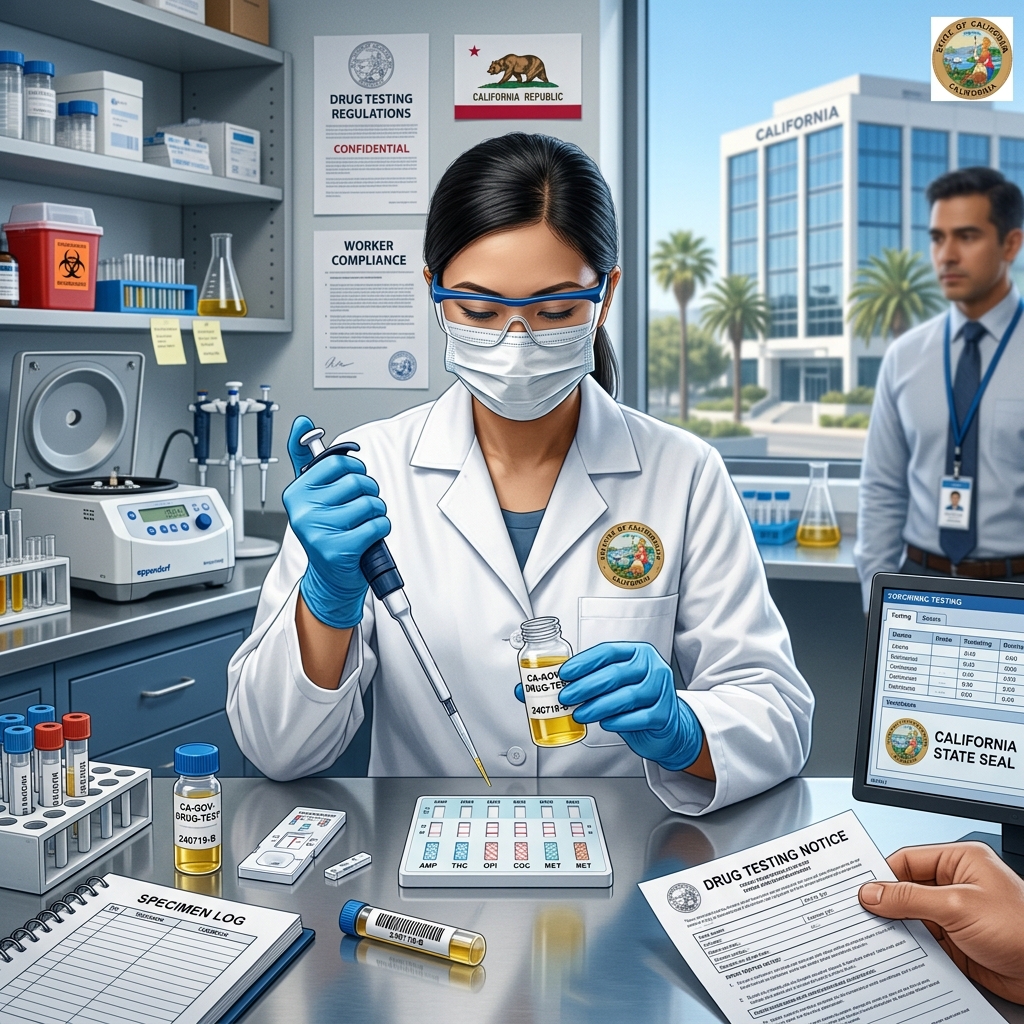
California government employees are subject to workplace drug and alcohol policies that balance public safety, employee privacy, and anti-discrimination protections. These policies are shaped by state regulations, federal requirements, and recent changes to cannabis laws that limit how employers may test and discipline workers for off-duty marijuana use.
Understanding when testing is allowed, what kinds of tests can be used, and what rights employees have is essential for both public agencies and workers. This guide explains the main rules that apply to California government employees, focusing on lawful testing practices, special rules for safety-sensitive positions, and protections related to recreational cannabis.
Foundations of Drug Testing in the California Public Sector
Government employers must maintain a safe and reliable workforce, especially in roles that involve public safety, transportation, or sensitive information. At the same time, they must respect constitutional privacy rights and comply with California’s strong employment protections. As a result, drug testing of government employees is generally:
- Targeted rather than broad, focusing on specific circumstances such as reasonable suspicion or safety-sensitive duties.
- Regulated by a mix of state rules, agency manuals, and federal laws for certain jobs.
- Limited in relation to cannabis use, particularly off-duty, due to new statutory protections that took effect in 2024.
For California state employees, the California Department of Human Resources (CalHR) maintains a Controlled Substance Abuse Testing and Treatment program, which many agencies rely on to structure lawful testing practices and referrals to treatment when needed.
Key Legal Sources Governing Testing
Several legal frameworks interact in the public employment context. The most important include:
- CalHR Controlled Substance Abuse Testing and Treatment Program for state employees, which prohibits working while under the influence and outlines when testing may occur.
- California regulations on reasonable suspicion testing, which require specific observations before testing can be ordered.
- California Government Code section 12954 and Assembly Bill (AB) 2188, which protect employees and applicants from discrimination based on off-duty cannabis use and drug tests that detect only nonpsychoactive cannabis metabolites.
- Federal regulations for certain roles, such as commercial drivers and positions requiring security clearances, which may mandate pre-employment, random, and post-incident testing.
Together, these rules create a system in which drug testing is allowed, but carefully limited, particularly when it could affect employee privacy or punish lawful, off-duty behavior.
Situations When Government Employees May Be Tested
Not all government employees are tested, and California does not require universal testing of public workers. Instead, testing generally occurs in specific, clearly defined situations.
Pre-Employment and Pre-Assignment Testing
Agencies may require drug tests before hiring or before assigning employees to certain safety-sensitive roles, especially when federal law requires testing or when employees will operate commercial vehicles or perform sensitive duties. These tests aim to ensure that individuals in high-risk positions start work free from illegal substances or impairment.
Where cannabis is concerned, pre-employment testing in California must now comply with AB 2188. Traditional urine tests that detect only nonpsychoactive cannabis metabolites (which reflect past use, not current impairment) generally cannot be used as a basis for refusing to hire or for taking other adverse actions against applicants.
Reasonable Suspicion Testing
One of the most common grounds for testing in the public sector is reasonable suspicion. Under California regulations, an employee may be tested when there is a reasonable suspicion that they have engaged in drug or alcohol use or appear impaired at work. To meet this standard, an agency must rely on:
- Specific, contemporaneous, and articulable observations of the employee’s appearance, behavior, speech, or body odors.
- Observable phenomena, such as direct observation of use, possession, or physical symptoms of being under the influence.
- Patterns of abnormal conduct or erratic behavior that suggest impairment.
- Objective information, such as an arrest or conviction for a drug-related offense, or credible third-party reports that are independently corroborated.
- Evidence that the employee tampered with a previous drug test.
Testing cannot be based on conjecture, intuition, or unverified reports. Regulations also require that a manager or designated official who is not the immediate supervisor and not the person who made the initial observation review the facts and confirm in writing that reasonable suspicion exists before testing occurs.
Random Testing in Safety-Sensitive Roles
California generally disfavors random drug testing, especially for regular employees without a specific safety rationale. For many workplaces, random testing without reasonable suspicion is prohibited. However, government agencies may conduct random testing in limited circumstances, particularly when public safety is at stake and when federal rules require it.
Examples include:
- State employees who operate commercial vehicles subject to federal Department of Transportation rules.
- Employees in certain high-risk public safety positions covered by federal or state regulations.
In these cases, random testing must follow the relevant regulations and typically must be carried out using certified laboratories.
Post-Incident or Post-Accident Testing
Government employers may also order drug or alcohol tests following workplace incidents, such as accidents involving vehicles, injuries, or significant property damage, especially where impairment might have contributed. While the specific rules can vary by agency, the general goal is to determine whether substance use played a role in the incident and to comply with safety and reporting obligations.
Cannabis Protections and Limits for Government Employees
California has recently expanded protections for workers who use cannabis off duty. As of January 1, 2024, employers—including many public employers—may not discriminate against applicants or employees based on off-duty, off-site cannabis use or drug tests that detect only nonpsychoactive cannabis metabolites.
AB 2188 and Government Code Section 12954
Under AB 2188, codified in Government Code section 12954:
- Employers cannot use test results showing only nonpsychoactive cannabis metabolites as a basis for discipline, termination, or refusal to hire.
- Traditional urine tests that primarily detect these metabolites are no longer suitable for adverse employment decisions related to marijuana.
- Employers may continue to test for psychoactive THC, which indicates potential current impairment, and may act based on such results.
- Employers may use impairment-based tools that measure cognitive or psychomotor performance against an employee’s baseline to assess whether the person is currently impaired.
These protections apply to most private employers and many public employers, but some positions are excluded. Workers in building and construction trades and positions that require federal background investigations or security clearances may still be subject to traditional testing and stricter rules.
On-Duty Cannabis Use and Impairment
Even with these protections, government employees are not allowed to use or be impaired by cannabis while at work. Agencies may continue to maintain drug-free workplace policies and prohibit:
- Possessing or using cannabis on the job.
- Reporting to work or remaining on duty while impaired by marijuana or other controlled substances.
If an impairment-focused test or THC-based screening shows that an employee is under the influence during working hours, the employer may take appropriate corrective or disciplinary action in line with agency policy and applicable law.
Types of Tests Commonly Used
Government employers can use several types of tests, but they must select methods consistent with state and federal rules, and, for cannabis, with the new limitation on nonpsychoactive metabolite testing. Typical testing methods include:
- Urine tests (increasingly restricted for cannabis, because they mainly detect nonpsychoactive metabolites).
- Blood tests, which can sometimes provide information about recent use and impairment.
- Saliva or oral fluid tests, which may detect recent use and are being explored as alternatives consistent with the newer cannabis laws.
- Breathalyzer tests, commonly used for alcohol and generally tied to reasonable suspicion or incident investigations.
- Impairment assessments, such as digital tools that evaluate cognitive and psychomotor performance relative to a baseline score for each employee.
California law typically requires that drug testing be performed by certified laboratories, especially for formal employment decisions and in compliance programs.
Employee Rights and Employer Responsibilities
Government employees have rights related to how and when they are tested, and agencies have obligations to follow lawful procedures.
Notice and Policy Transparency
Employers should communicate their drug and alcohol policies clearly, usually in employee handbooks, collective bargaining agreements, or agency manuals. For many types of testing, employees must receive notice in advance, particularly for pre-employment screening and ongoing compliance programs. Transparency helps ensure that employees understand:
- Which positions are subject to testing.
- What circumstances can trigger a test (pre-employment, reasonable suspicion, random testing in safety-sensitive roles, post-incident, etc.).
- Which substances are screened and the methods used.
Procedural Safeguards
Regulations impose safeguards to reduce the risk of arbitrary or unfair testing. For instance, in the context of reasonable suspicion, agencies must document specific observed behaviors and obtain written approval from a designated official before ordering a test. Use of certified laboratories and standardized testing procedures also helps ensure reliability and fairness.
Response to Positive Tests
When an employee tests positive, possible responses include:
- Referral to treatment programs, particularly under the CalHR CSATT program, which provides access to drug and alcohol treatment services.
- Temporary removal from duty in safety-sensitive roles until fitness for duty can be reassessed.
- Disciplinary action, where permitted by law and agency policy, especially for on-duty impairment or violation of workplace rules.
Under California workers’ compensation rules, if an injured employee has a positive drug test, an employer typically must show that the employee was intoxicated at the time of injury and that impairment caused the injury in order to deny benefits. This reinforces the importance of focusing on impairment rather than mere past use.
Special Considerations for Federally Regulated Positions
Some government jobs in California are governed by federal drug testing requirements. Examples include:
- Commercial drivers subject to Department of Transportation regulations.
- Positions tied to federal security clearances or background investigation requirements.
- Roles funded by federal grants that mandate specific drug testing protocols.
In these cases, federal rules may allow or require testing practices—such as random drug testing—that would otherwise be more limited under California law. AB 2188 specifically exempts certain federally regulated positions from its protections against metabolite-based cannabis testing. Government employees in these roles should review both agency policies and the relevant federal regulations to understand their obligations and rights.
Comparison: Private vs. Public Employee Testing
| Aspect | Private Sector Employees | Government Employees |
|---|---|---|
| Random Testing | Generally prohibited for regular employees without safety rationale; allowed in limited safety-sensitive settings. | Similarly limited, but may be required in federally regulated public safety and transportation roles. |
| Reasonable Suspicion | Allowed with specific, documented observations of possible impairment. | Allowed under detailed regulations, with written concurrence by designated officials. |
| Cannabis Protections | AB 2188 applies broadly; off-duty use and nonpsychoactive metabolite tests cannot be basis for discrimination. | Many public employers must follow the same rules, with exceptions for certain safety-sensitive and federally regulated positions. |
| Program Structure | Employer-designed policies must comply with California law and anti-discrimination rules. | Often guided by statewide programs like CalHR’s CSATT and agency-specific regulations. |
Frequently Asked Questions
Can a California government employee be randomly tested for drugs?
Random testing is generally limited to safety-sensitive positions and roles governed by federal regulations, such as commercial drivers or certain public safety jobs. For most regular government employees, random testing without reasonable suspicion is not permitted under California law.
Are government employees protected if they use cannabis off duty?
Many government employees are protected by AB 2188 and Government Code section 12954, which prevent employers from taking adverse action based solely on off-duty cannabis use or drug tests that detect only nonpsychoactive metabolites. However, employees in certain construction, building trades, or federally regulated positions may be exempt from these protections.
What must an agency show before ordering a reasonable suspicion test?
The agency must document specific, contemporaneous observations of the employee’s appearance, behavior, speech, or body odors indicating possible impairment. A designated official who is not the immediate supervisor and not the initial observer must review the evidence and concur in writing that reasonable suspicion exists before testing proceeds.
Can a positive drug test automatically deny a government worker’s compensation claim?
No. To deny workers’ compensation based on a positive test, the employer usually must show that the employee was intoxicated at the time of the injury and that impairment caused the injury. A mere positive result, especially for substances like cannabis that may remain detectable long after use, is not enough on its own.
Do government agencies have to provide treatment options to employees who test positive?
While specific obligations vary, California’s CSATT program offers state agencies access to treatment referral services for employees who test positive. Many public employers incorporate treatment or rehabilitation options into their policies, particularly for non-safety-sensitive positions and where the goal is to support recovery rather than impose immediate termination.
References
- California Protects Employees Who Use Recreational Cannabis and Limits Drug Tests — McGuireWoods LLP. 2023-06-28. https://www.mcguirewoods.com/client-resources/alerts/2023/6/california-protects-employees-who-use-recreational-cannabis-and-limits-drug-tests/
- Workplace Drug Testing Laws in California — Health Street. 2024-01-01 (approx. last updated). https://www.health-street.net/state-laws/california-drug-testing-compliance/
- New Rules For California Employers Testing for Marijuana Use Are Approaching Fast — CDF Labor Law LLP. 2023-08-01 (approx. publication). https://www.cdflaborlaw.com/blog/new-rules-for-california-employers-testing-for-marijuana-use-are-approaching-fast
- 3201 – Controlled Substance Abuse Testing and Treatment Program — California Department of Human Resources (CalHR). 2015-04-10 (approx. last updated). https://hrmanual.calhr.ca.gov/Home/ManualItem/1/3201
- Cal. Code Regs. Tit. 15, § 8205 – Reasonable Suspicion Testing — Legal Information Institute, Cornell Law School. 2013-01-01 (regulation text). https://www.law.cornell.edu/regulations/california/15-CCR-8205
- Employee Drug & Alcohol Testing in California — Study.com. 2022-09-01 (approx. publication). https://study.com/academy/lesson/video/employee-drug-alcohol-testing-in-california.html
- 2024 Drug Testing Laws: Updates in CA & WA — DISA Global Solutions. 2023-12-01 (approx. publication). https://disa.com/news/2024-drug-testing-laws-updates-in-ca-wa/
Similar Articles








Read full bio of medha deb




