Understanding Texas Sexual Assault Laws
A clear, practical guide to how Texas defines sexual assault, consent, penalties, and rights for adults and children.
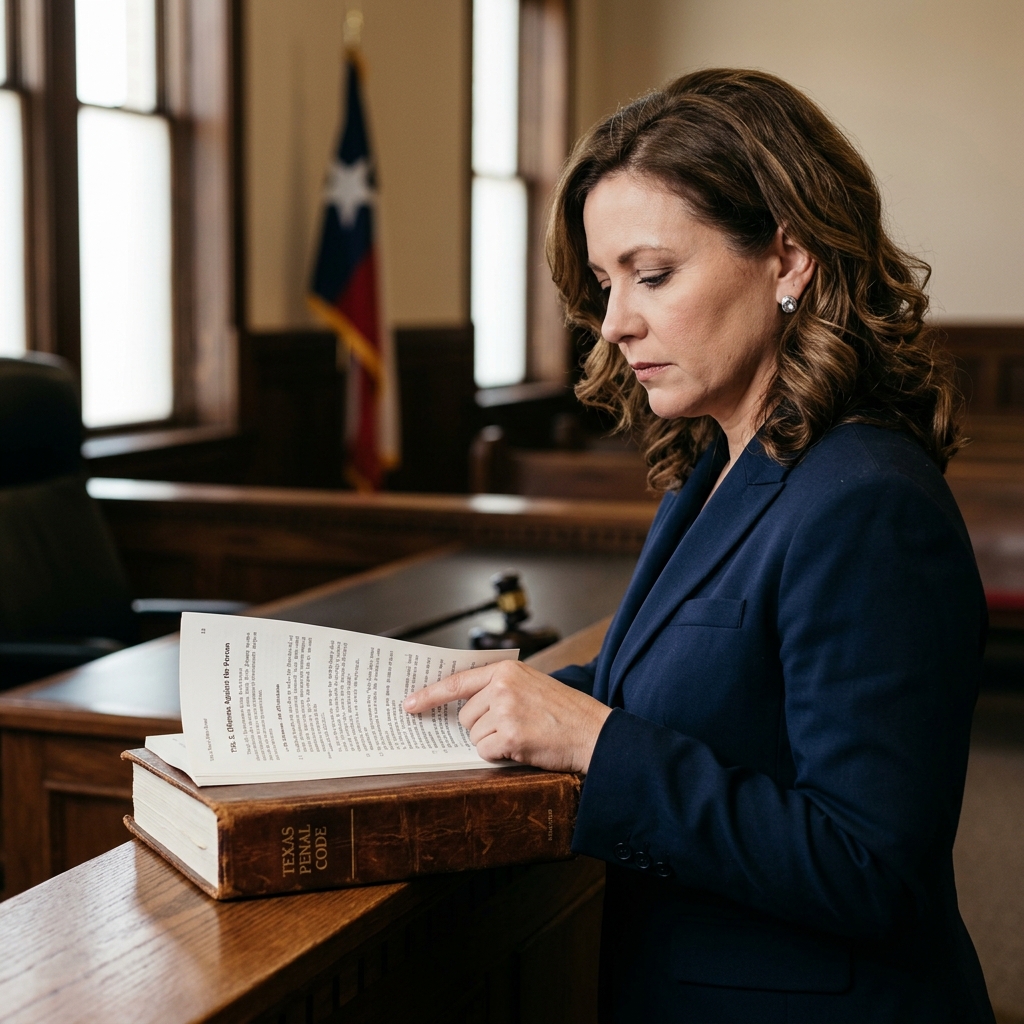
Texas has detailed laws governing sexual assault that define what conduct is illegal, how consent is interpreted, and what penalties can apply. These rules are primarily found in Texas Penal Code §22.011, which covers sexual assault involving both adults and children. This guide explains the core concepts in plain language so that victims, accused individuals, families, and advocates can better understand how the law works.
1. Legal Foundation: Where Texas Sexual Assault Law Comes From
The main statute defining sexual assault in Texas is Penal Code §22.011, a section of Texas criminal law that sets out both the elements of the offense and the applicable penalties. The statute is periodically updated by the legislature, including recent changes to how consent is defined and how impairment or intoxication affect consent.
Key features of the statute include:
- Separate rules for sexual assault involving adults and children.
- A detailed list of situations in which an encounter is legally considered “without consent”.
- Penalty classifications that specify whether the crime is a second-degree or first-degree felony, and when other enhancements apply.
Because the statute is technical and uses legal terms of art, consulting the official text or a licensed attorney is essential when facing a criminal investigation or trying to understand a specific case.
2. What Counts as Sexual Assault Under Texas Law
Texas law focuses on specific kinds of sexual conduct, combined with the absence of consent or involvement of a child. Under Penal Code §22.011(a), a person commits sexual assault when they intentionally or knowingly engage in certain sexual acts with another person (adult or child) under circumstances the law prohibits.
2.1 Sexual Acts Involving Adults
For adults, the core elements of sexual assault generally involve penetration or sexual contact without consent. The statute lists several prohibited acts, including:



Understanding Crime Indexes in Modern Criminal Justice >

- Causing penetration of another person’s anus or sexual organ by any means, without that person’s consent.
- Causing penetration of another person’s mouth with the actor’s sexual organ, without that person’s consent.
- Causing another person’s sexual organ, without that person’s consent, to contact or penetrate the mouth, anus, or sexual organ of another person (including the actor).
These definitions are intentionally broad. They cover situations in which a victim is forced, threatened, manipulated, or otherwise made to participate in sexual activity against their will.
2.2 Sexual Assault Involving Children
The law treats sexual conduct with children very differently. Under §22.011(a)(2), sexual assault of a child typically does not depend on whether the child appeared to consent, because minors do not have the legal capacity to consent to sexual activity with adults in most circumstances.
For the purposes of sexual assault, a child is defined as a person younger than 17 years old. The statute prohibits acts such as:
- Penetration of a child’s anus or sexual organ by any means.
- Penetration of a child’s mouth by the sexual organ of the actor.
- Causing a child’s sexual organ or anus to contact or penetrate the mouth, anus, or sexual organ of another person (including the actor).
- Causing a child’s mouth to contact the anus or sexual organ of another person.
In these child-related cases, consent is not a defense, and it does not matter whether the actor knew the child’s age at the time of the offense.
3. How Texas Law Defines Consent
Understanding the concept of consent is crucial in adult sexual assault cases. Texas law recently refined its approach to consent by referencing a general definition in the Penal Code and adding provisions related to intoxication and impairment.
3.1 General Idea of Consent
At a basic level, consent is a freely given agreement to participate in sexual activity. A person must have the mental and physical ability to make that decision, understand what they are agreeing to, and have a meaningful chance to refuse or withdraw consent.
Consent cannot exist when:
- The other person is compelled by physical force, violence, or coercion.
- The actor threatens to cause harm or uses threats to obtain compliance.
- The victim is unconscious, asleep, or otherwise unaware that the sexual activity is occurring.
3.2 Intoxication and Impairment
Recent legislative changes in Texas introduced an explicit impairment standard, clarifying that sexual activity is without consent when the actor knows the other person is intoxicated or impaired to the point of being incapable of consenting. This update replaced older language that focused on so-called “date rape” scenarios and aligns the law more closely with modern understandings of incapacitation.
In practice, this means:
- If the actor knows the other person is so impaired by alcohol, drugs, or another condition that they cannot appreciate the nature of the act or make a voluntary decision, consent does not exist.
- Cases where a victim was drugged or heavily intoxicated may be treated as nonconsensual even if they did not verbally resist.
3.3 Other Situations Where Consent Is Legally Absent
Texas law also specifies additional circumstances in which sexual activity is legally considered to be without consent. These can include situations where:
- The actor exerts power or authority, such as a public servant misusing their position, or a mental health provider exploiting a patient in the course of treatment.
- The victim is coerced by threats involving criminal charges, custody, or other forms of pressure.
- The victim is unaware that the sexual assault is happening and the actor knows this.
These provisions are designed to address scenarios where a power imbalance or deception undermines true, voluntary consent.
4. Penalties and Felony Classifications
Sexual assault offenses in Texas are generally treated as felonies, reflecting their seriousness and long-term impact. The severity of the penalty depends on the circumstances of the offense and the relationship between the parties.
4.1 Standard Penalties
By default, sexual assault under §22.011 is classified as a second-degree felony. According to Texas sentencing ranges:
- Second-degree felony: 2 to 20 years’ imprisonment and a possible fine up to $10,000.
These penalties apply in many adult sexual assault cases that do not involve additional aggravating factors or special relationships.
4.2 Enhanced Penalties and First-Degree Felonies
Some sexual assaults are treated more severely and classified as first-degree felonies when certain conditions are met. For example:
- If the victim is a person whom the defendant is legally prohibited from marrying, or is related to the defendant in a way that makes sexual intercourse illegal under other Texas statutes, the offense may be a first-degree felony.
- Aggravated sexual assaults involving additional harm, use of a deadly weapon, or certain vulnerable victims can also be punished at higher ranges.
First-degree felony penalties typically range from 5 to 99 years in prison and a fine up to $10,000.
4.3 Sex Offender Registration and Collateral Consequences
Convictions for sexual assault frequently require sex offender registration, often for life. Being required to register as a sex offender can limit where a person may live, work, or visit, and can affect housing, employment, and social relationships.
Because sexual assault is a felony, a conviction may also result in long-term loss of certain civil rights, such as the right to own firearms, serve on a jury, or hold public office. These collateral consequences make it critical for defendants to understand the stakes of their case.
5. Special Rules for Sexual Assault of Children
When the victim is a child, Texas law applies multiple layers of protection. Sexual assault of a child is treated as a particularly serious offense, with limited defenses available and potentially higher penalties.
5.1 Age and Capacity
The statute defines a child for sexual assault purposes as a person younger than 17. Sexual contact or penetration with a child under that age is generally prohibited, and the law does not allow consent to be used as a defense.
There are narrow exceptions and affirmative defenses, such as situations involving relatively close age differences or certain medical procedures, but these are strictly limited and highly fact-specific.
5.2 Medical Care Exception
Texas Penal Code §22.011 includes a defense for conduct that consists of legitimate medical care for a child, provided it does not involve direct sexual contact between the child’s sexual organs or anus and the mouth, anus, or sexual organ of the actor or another person. This provision recognizes that some medical procedures may involve intimate examinations but are not intended as sexual contact.
6. Comparing Adult and Child Sexual Assault Cases
| Aspect | Adult Sexual Assault | Child Sexual Assault |
|---|---|---|
| Age of victim | Generally 17 or older | Under 17 years old |
| Role of consent | Central issue; must be freely given and informed | Consent not a defense; minor lacks legal capacity in most cases |
| Key statute subsection | §22.011(a)(1) | §22.011(a)(2) |
| Typical classification | Second-degree felony, with possible enhancement | Serious felony; may be aggravated with higher penalties |
| Knowledge of age | Not usually a primary element | Offense applies regardless of whether actor knew child’s age |
7. Practical Implications for Victims and Defendants
Texas sexual assault law has important practical consequences for both victims and people accused of the offense. While this article cannot substitute for legal advice, it highlights some key considerations.
7.1 For Victims
- Sexual conduct may be illegal even if there was no physical violence, especially when intoxication, impairment, or lack of awareness are involved.
- Victims do not need to have verbally resisted in every situation for the law to recognize the encounter as nonconsensual.
- Reporting options include contacting law enforcement, medical professionals, and victim advocacy organizations; many resources exist to provide confidential support.
7.2 For Accused Individuals
- Because sexual assault is a serious felony, anyone under investigation or charged should seek assistance from a qualified criminal defense lawyer familiar with Texas sex crime law.
- Cases often hinge on complex questions of consent, impairment, and credibility. Legal counsel can help interpret the statute, evaluate evidence, and protect constitutional rights.
- There may be issues of mistaken identity, false accusations, or misunderstandings that require thorough investigation and legal analysis.
8. Frequently Asked Questions About Texas Sexual Assault Law
8.1 Is sexual assault always a felony in Texas?
Under Texas Penal Code §22.011, sexual assault is generally classified as a felony, most commonly a second-degree felony. Certain circumstances can elevate the offense to a first-degree felony. Other related sex crimes may have different classifications, but sexual assault itself is not a misdemeanor.
8.2 Can a minor legally consent to sex in Texas?
In sexual assault cases involving adults and children, a person under 17 is typically treated as a child, and consent is not a valid defense in most situations. There are narrow exceptions involving close-in-age relationships and specific contexts, but they are limited and require careful legal analysis based on the exact facts and statutes.
8.3 Does intoxication automatically make sex illegal?
Not every sexual encounter involving alcohol or drugs is illegal. However, under recent changes to Texas law, the encounter is considered without consent if the actor knows the other person is intoxicated or impaired to the point that they are incapable of consenting. The key issue is severe impairment combined with the actor’s knowledge of that condition.
8.4 What should someone do if they are accused of sexual assault?
Anyone accused of sexual assault in Texas should avoid discussing the case with law enforcement or others without legal counsel, and should contact an experienced criminal defense attorney as soon as possible. Sexual assault cases can involve complex evidence, and early legal representation is crucial to protecting rights and preparing a defense.
8.5 Where can I find the official text of the law?
The official text of Texas Penal Code §22.011 is available through the Texas Legislature’s online statutes and through reputable legal publishers. These sources provide the most current wording of the law and any recent amendments.
9. Why Staying Informed About the Law Matters
Texas sexual assault laws shape how the criminal justice system responds to allegations of sexual violence and exploitation. For victims, understanding the law can help clarify what conduct is illegal and what protections exist. For accused individuals, knowledge of the statute and penalties underscores the seriousness of the charges and the importance of qualified legal representation.
Because the law evolves over time, especially regarding consent and impairment, it is important to rely on up-to-date sources and professional guidance. Checking the current version of the statute and consulting a legal professional can help ensure that decisions are based on accurate, current information.
References
- Texas Penal Code §22.011 – Sexual Assault — Texas Legislature. 2025-01-01. https://statutes.capitol.texas.gov/GetStatute.aspx?Code=PE&Value=22.011
- The Texas Sexual Assault Law | Penal Code §22.011 — Saputo Law Firm. 2025-06-01. https://saputo.law/criminal-law/texas/sexual-assault/
- Sex Crimes: Definitions and Penalties in Texas — RAINN. 2024-03-01. https://apps.rainn.org/policy/policy-crime-definitions.cfm?group=3&state=Texas
- PENAL § 22.011. Sexual Assault – Texas – Codes — FindLaw. 2024-01-01. https://codes.findlaw.com/tx/penal-code/penal-sect-22-011/
- Sex Crimes: Texas — Sexual Assault, Indecency With a Child — RAINN Policy Database. 2024-03-01. https://apps.rainn.org/policy/policy-crime-definitions.cfm?group=3&state=Texas
- Sexual Assault of a Child / Statutory Rape Defense — Dunham & Jones Attorneys. 2023-05-01. https://www.dunhamlaw.com/tx/sex-crimes-lawyers/crimes-against-children-in-texas/sexual-assault-of-a-child/
- Texas law named after sexual assault survivor redefines consent — NBC News. 2023-09-15. https://www.youtube.com/watch?v=YbrCjOEBeaM
Similar Articles







Read full bio of Sneha Tete