
Understanding Wraparound Mortgages in Real Estate
Explore how wraparound mortgages work, when they’re used, and the legal and financial risks for buyers and sellers.
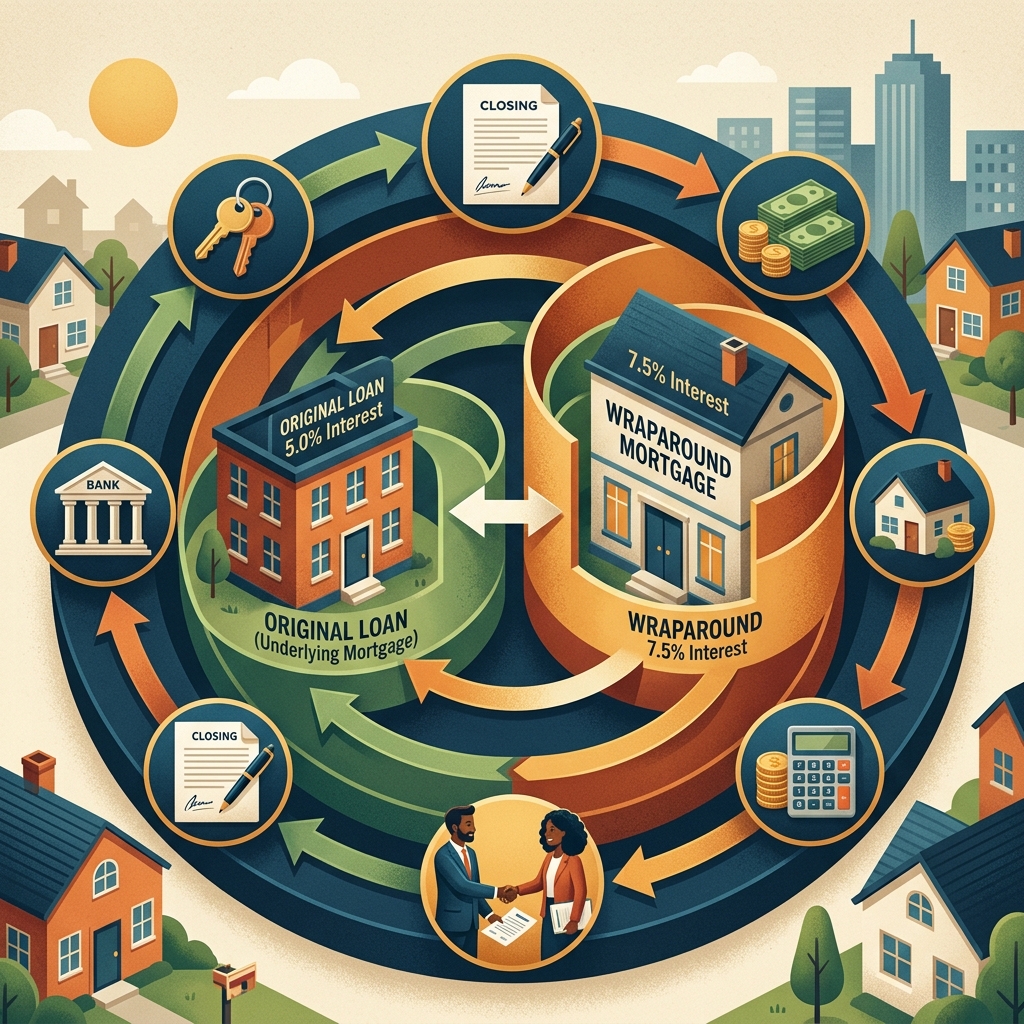
Wraparound mortgages are a specialized form of seller financing that allow a property seller to keep an existing home loan while creating a new mortgage for the buyer that “wraps” around the original debt. They can open doors for buyers who struggle to qualify for traditional bank financing, but they also introduce unique risks and legal complications for both sides of the transaction.
This guide explains what wraparound mortgages are, how they work in practice, why people use them, and the major financial and legal issues you should understand before entering into one.
What Is a Wraparound Mortgage?
A wraparound mortgage (often called a “wrap” or “wrap-around loan”) is a type of secondary financing used in an owner-financed real estate deal. Instead of the buyer obtaining a new first mortgage from a bank, the seller issues a new loan that includes:
- The seller’s remaining balance on their existing mortgage
- Any additional amount needed to reach the agreed purchase price
The buyer makes monthly payments to the seller, and the seller continues paying their original lender using those funds. The new loan “wraps” around the older one because it sits behind it and covers the full amount owed for the purchase.
Key Features
- Seller acts as lender: The seller provides financing instead of a bank or mortgage company.
- Existing mortgage stays in place: The seller’s current mortgage is not paid off at closing; it remains active.
- Junior lien position: The wraparound mortgage is typically a secondary or junior lien behind the original mortgage.
- Single payment from buyer: The buyer pays the seller one monthly amount, and the seller pays their lender.
- Interest rate spread: Sellers often charge a higher rate on the wrap than they pay on the original loan, keeping the difference as profit.
How a Wraparound Mortgage Works Step by Step
Although the paperwork can vary, most wraparound transactions follow a similar structure.
1. Existing Mortgage Remains
The seller already has a first mortgage on the property. Instead of paying it off, they keep that loan in place with the same lender, interest rate, and repayment schedule.
2. Purchase Agreement and Financing Terms
The buyer and seller agree on a purchase price and decide that financing will be provided by the seller using a wraparound mortgage.
- They negotiate the down payment.
- They set the interest rate and loan term for the new wrap loan.
- They determine how the buyer’s monthly payment will be calculated.
3. Creation of the Wraparound Note
The buyer signs a promissory note and mortgage (or deed of trust) in favor of the seller for the wraparound amount. That amount equals:
| Component | Description |
|---|---|
| Underlying balance | Unpaid principal on the seller’s existing first mortgage. |
| Additional financing | Extra amount needed so the total matches the agreed purchase price, minus the buyer’s down payment. |
| Total wrap loan | Combined amount the buyer owes the seller under the new mortgage. |
4. Transfer of Property Interest
Depending on state law and the contract structure, the buyer may receive legal title at closing or hold an equitable interest while the seller retains legal title until the wrap loan is paid off. This detail is critical for understanding the buyer’s rights and protection in case of default.
5. Payment Flow
After closing:
- The buyer pays the seller each month according to the wrap loan terms.
- The seller is supposed to use those funds to pay their original lender.
- If the seller pays on time, the underlying mortgage stays current and the buyer’s interest in the property remains secure.
Often, the wrap loan carries a higher interest rate than the underlying mortgage, allowing the seller to earn a spread on the financing.
Why Buyers and Sellers Use Wraparound Mortgages
Potential Benefits for Buyers
- Access to financing: Buyers who do not qualify for conventional loans, or face higher borrowing costs, may still purchase a home using seller financing.
- Streamlined approval: The seller, not a bank, decides whether to extend credit, sometimes based on more flexible criteria.
- Possibly lower upfront costs: Closing costs can be different, and in some cases lower, than those associated with a conventional mortgage.
- Negotiable terms: Interest rate, repayment schedule, and balloon payments can be customized between buyer and seller.
Potential Benefits for Sellers
- Expanded buyer pool: Sellers can attract buyers who would otherwise be unable to secure financing.
- Interest income: By charging a rate higher than their own mortgage rate, sellers can earn extra interest over time.
- Possible higher sale price: In some markets, offering financing may justify a stronger asking price because the financing itself has value.
- Ongoing cash flow: Monthly payments from the buyer create a stream of income, rather than a one-time lump sum at closing.
Major Risks and Drawbacks
Despite the potential advantages, wraparound mortgages carry serious risks. Understanding these hazards is essential.
Risks for Buyers
- Seller default risk: If the seller accepts payments from the buyer but fails to pay the underlying lender, that lender can foreclose, even if the buyer has never missed a payment.
- Due-on-sale clause: Many conventional mortgages contain a clause allowing the lender to demand full repayment if the property is sold or transferred. A wrap transaction can trigger this clause and cause the loan to be called due.
- Junior lien position: The wrap loan is typically behind the original mortgage, meaning the first lender has priority in foreclosure and repayment.
- Title issues: In some arrangements, buyers do not receive legal title immediately, leaving them with a weaker position if disputes arise.
- Higher interest rate: Buyers often pay more interest than they would with a prime conventional mortgage.
Risks for Sellers
- Ongoing liability: The seller remains personally obligated on the original mortgage and is responsible for those payments regardless of whether the buyer pays on time.
- Complex servicing: Managing incoming payments from the buyer and outgoing payments to the lender introduces administrative complexity.
- Legal compliance: Depending on jurisdiction, seller-financing may require specific disclosures, licensing, or adherence to consumer protection laws.
- Foreclosure and repossession costs: If the buyer stops paying, the seller may need to foreclose or otherwise reclaim the property, which can be expensive and time-consuming.
Legal and Regulatory Considerations
Wraparound mortgages intersect with multiple areas of law, including real estate, consumer finance, and contract law. Requirements vary by state, but several recurring issues appear in many jurisdictions.
Due-on-Sale Clauses
Standard mortgage contracts often contain a due-on-sale clause allowing the lender to accelerate the loan and require full payoff when the property is transferred. Because a wraparound mortgage involves a change in ownership or beneficial interest, this clause may be triggered, creating a significant risk that the underlying loan could suddenly become due.
Disclosure and Licensing Requirements
Some states require sellers who provide financing to comply with specific statutes governing residential mortgage lending, disclosure of terms, and cancellation rights. These rules aim to protect buyers from unfair or deceptive arrangements and may impose penalties for non-compliance.
Title and Lien Priority
The underlying lender generally holds the first lien on the property, and the wraparound mortgage is a junior lien secured by the same real estate. If foreclosure occurs, the first lien holder is paid before any junior lien holders. This priority structure is central to understanding the risk balance in a wrap.
Foreclosure Rights
If the buyer fails to make payments under the wrap loan, the seller typically has the right to foreclose or otherwise terminate the buyer’s interest in the property. The exact procedure and timeline depend on state law and the documents used (for example, mortgage vs. deed of trust vs. contract for deed).
When a Wraparound Mortgage Might Be Appropriate
Wraparound mortgages are not common in mainstream residential lending, but they can be used in specific contexts.
- Buyers with credit challenges: Individuals who cannot meet conventional underwriting standards may rely on seller financing to purchase a home.
- High-rate environment: If the seller has an older mortgage at a lower rate, structuring a wrap may allow them to profit from the rate difference.
- Unique properties: Homes that are difficult to appraise or finance through standard channels may be sold using creative financing structures.
- Investment strategies: Some investors use wraps as part of broader strategies involving cash flow generation or portfolio building, though this approach is complex and carries heightened risk.
Practical Safeguards for Buyers and Sellers
Because wraps are complex and risk-bearing, both parties should adopt safeguards to reduce the chance of harmful outcomes.
Best Practices for Buyers
- Review underlying loan documents: Understand interest rate, remaining term, balance, due-on-sale clause, and any default history.
- Use escrow or third-party servicing: Instead of paying the seller directly, buyers can pay a neutral servicer who forwards payments to the original lender first, reducing seller default risk.
- Confirm title status: Work with a real estate attorney or title company to verify liens, ownership, and how title will be held after closing.
- Seek legal counsel: A lawyer familiar with local real estate law can explain consequences and negotiate protective contract terms.
Best Practices for Sellers
- Screen buyer creditworthiness: Even though underwriting is informal, sellers should still assess income, credit, and ability to pay.
- Comply with applicable regulations: Sellers should understand any licensing, disclosure, and consumer protection requirements for providing financing.
- Document all terms clearly: Interest rate, payment schedule, late fees, default procedures, and rights to cure should be spelled out in writing.
- Consider professional servicing: Using a loan servicer can streamline payment handling and record-keeping.
Comparison: Wraparound vs. Traditional Mortgage
| Feature | Wraparound Mortgage | Traditional Bank Mortgage |
|---|---|---|
| Lender | Property seller acts as lender. | Bank, credit union, or mortgage company. |
| Underlying loan | Existing mortgage remains and is wrapped by a new loan. | Typically a single new first mortgage is issued. |
| Qualification | Based on seller’s criteria; may be more flexible for some buyers. | Based on institutional underwriting standards. |
| Lien position | Wrap loan usually in junior position behind original mortgage. | New mortgage usually in first position. |
| Risk of due-on-sale | Elevated; sale or transfer can trigger acceleration of underlying loan. | Not applicable in standard purchase transactions where existing loans are paid off. |
Frequently Asked Questions (FAQs)
Is a wraparound mortgage the same as seller financing?
A wraparound mortgage is a type of seller financing, but not all seller-financed deals use wraps. In a wrap, the seller keeps an existing mortgage and issues a new junior loan to the buyer that covers both the old balance and additional financing. Other forms of seller financing might involve creating a single new first mortgage or using a contract for deed without an underlying loan.
Can any seller offer a wraparound mortgage?
Not necessarily. A seller’s ability to offer a wrap depends on the terms of their existing mortgage, state law, and any licensing or disclosure rules that apply to seller-financed transactions. Due-on-sale clauses and regulatory requirements can limit or complicate the use of wraps.
What happens if the seller stops paying the original lender?
If the seller defaults on the underlying mortgage, the first lender can initiate foreclosure even if the buyer has paid the seller on time. This risk is one of the most serious concerns for buyers in wrap transactions, which is why escrowed or third-party servicing arrangements are often recommended.
Do buyers build equity with a wraparound mortgage?
Yes. As the buyer makes payments on the wrap loan, they typically reduce principal over time and build equity, assuming the agreement transfers ownership or provides a path to full title. However, equity could be wiped out if the underlying lender forecloses or if the contract is structured in a way that limits the buyer’s rights.
Are wraparound mortgages common?
Wraparound mortgages are relatively uncommon in mainstream residential markets and are generally considered a niche financing strategy used in specific circumstances where traditional financing is unavailable or unattractive. Their complexity and risk profile contribute to limited use.
Should I use a wraparound mortgage to buy a home?
Whether a wrap is appropriate depends on your financial situation, local market conditions, and legal environment. Because wraps involve substantial risk, buyers should consult both a real estate attorney and a qualified financial professional before entering into such an arrangement.
References
- What Is A Wraparound Mortgage? — Bankrate. 2024-04-08. https://www.bankrate.com/mortgages/what-is-a-wraparound-mortgage/
- Wrap-Around Loan: What It Is, How It Works, Example — Investopedia. 2024-03-06. https://www.investopedia.com/terms/w/wrap-around-loan.asp
- Wraparound Mortgage: What It Means for Home Buyers in 2026 — AmeriSave Mortgage. 2026-01-10. https://www.amerisave.com/glossary/wraparound-mortgage-what-it-means-for-home-buyers-in
- Wraparound mortgages explained: Everything you need to know — Rocket Mortgage. 2023-11-15. https://www.rocketmortgage.com/learn/wrap-around-mortgage
- Wrap Deal in Real Estate: How It Works — Daughtrey Law Firm. 2025-01-24. https://daughtreylaw.com/2025/01/24/wrap-deal-in-real-estate-how-it-works/
- What Are Wraparound Mortgages In Texas? — Sheehan Law PLLC. 2023-09-12. https://www.farrensheehanlaw.com/real-estate-wraparound-mortgages/
Similar Articles








Read full bio of Sneha Tete




