Skateboarding has evolved from a niche hobby into a widely used form of recreation and short-distance transportation. As more people ride in city streets, on campuses, and in suburban neighborhoods, questions about the legal status of skateboarding have become increasingly important. Although there is no single nationwide law that governs skateboarding, a patchwork of state statutes, municipal ordinances, campus regulations, and park rules collectively shape what riders can and cannot do.
This article explains how skateboarding is regulated in the United States, what safety requirements commonly apply, how traffic rules affect riders, and what penalties may result from violating local laws. It also highlights key differences between places that encourage skateboarding and those that strictly restrict it, and provides practical guidance on staying both safe and legally compliant.
How Skateboarding is Legally Classified
There is no single nationwide definition of a “skateboard” in U.S. law. Instead, state legislatures and local governments decide how to classify skateboards within their traffic and public safety codes. In many jurisdictions, the rules are found in provisions dealing with pedestrians, wheeled recreational devices, or non-motorized vehicles.
Common Legal Categories
Depending on where you ride, a skateboard might be treated as:
- Pedestrian equipment — In some towns, skaters are legally treated as pedestrians when riding on sidewalks or crosswalks, meaning they must follow pedestrian right-of-way rules and crossing requirements.
- Human-powered vehicle — Other jurisdictions treat skateboards similarly to bicycles, especially when used on the roadway or in bike lanes. This classification typically triggers obligations to obey traffic signals, stop signs, and yield rules.
- Recreational device — In certain codes, skateboards are grouped with devices like inline skates, scooters, or non-motorized recreational equipment. The rules may focus less on traffic behavior and more on where and when riding is permitted.
Because each city and county can adopt its own definitions, skaters cannot rely on the assumption that the law treats them the same way everywhere. Reading local ordinances is essential, especially when riding in unfamiliar areas.
Where to Find Applicable Rules
Skateboarding regulations are typically published within one or more of the following legal sources:
- State traffic codes and vehicle laws
- Municipal ordinances dealing with traffic, public safety, and nuisance behavior
- Campus or institution policy manuals for universities, schools, and private facilities
- Rules specific to parks, plazas, or recreation areas
Public digital code libraries and state legislative websites often make these rules accessible online, but some campus and facility rules may be posted only locally or on institutional websites.
Typical Restrictions on Where and When You Can Ride
Location-based restrictions are among the most common features of skateboarding law. Governments and institutions often balance the popularity of skateboarding against concerns about injuries, property damage, and conflicts with pedestrians or drivers.
Sidewalks, Streets, and Bike Lanes
| Location | Typical Legal Treatment | Examples of Rules |
|---|---|---|
| Sidewalks | Often allowed but may be restricted in business districts or crowded areas. | Some towns prohibit riding on sidewalks in downtown zones; others require skaters to yield to pedestrians and keep speeds low. |
| Streets / Roadways | Frequently regulated as traffic use; may be limited to crossings only in small towns. | Local codes may forbid riding along streets except when crossing, or require riders to stay as far right as practicable and obey traffic signals. |
| Bike lanes | In many cities, skateboards are allowed in bike lanes as a form of human-powered transportation. | Some traffic rules instruct skaters to use designated bike/skate lanes or stay to the right if no lane exists. |
Certain places, such as university campuses, may permit skateboarding on specific paths but explicitly ban riding on steps, rails, benches, and similar structures to protect building finishes and prevent falls.
Time-of-Day and Event-Based Limits
Time-related restrictions are used to address noise, visibility, and crowding. Local laws may:
- Prohibit skateboarding late at night in residential areas due to noise concerns.
- Limit riding in certain plazas or downtown zones during business hours or special events.
- Restrict or regulate nighttime skating when visibility is poor, even if reflectors or lights are used.
Time-of-day rules are often combined with safety expectations, such as wearing reflective gear or avoiding high-speed downhill riding after dark.
Safety Equipment and Helmet Requirements
Because skateboarding involves moving quickly over hard surfaces, falls and collisions are relatively common. Public safety authorities often respond by mandating or strongly encouraging protective gear, especially helmets.
Helmet Laws
Helmet rules vary widely but share several recurring patterns:
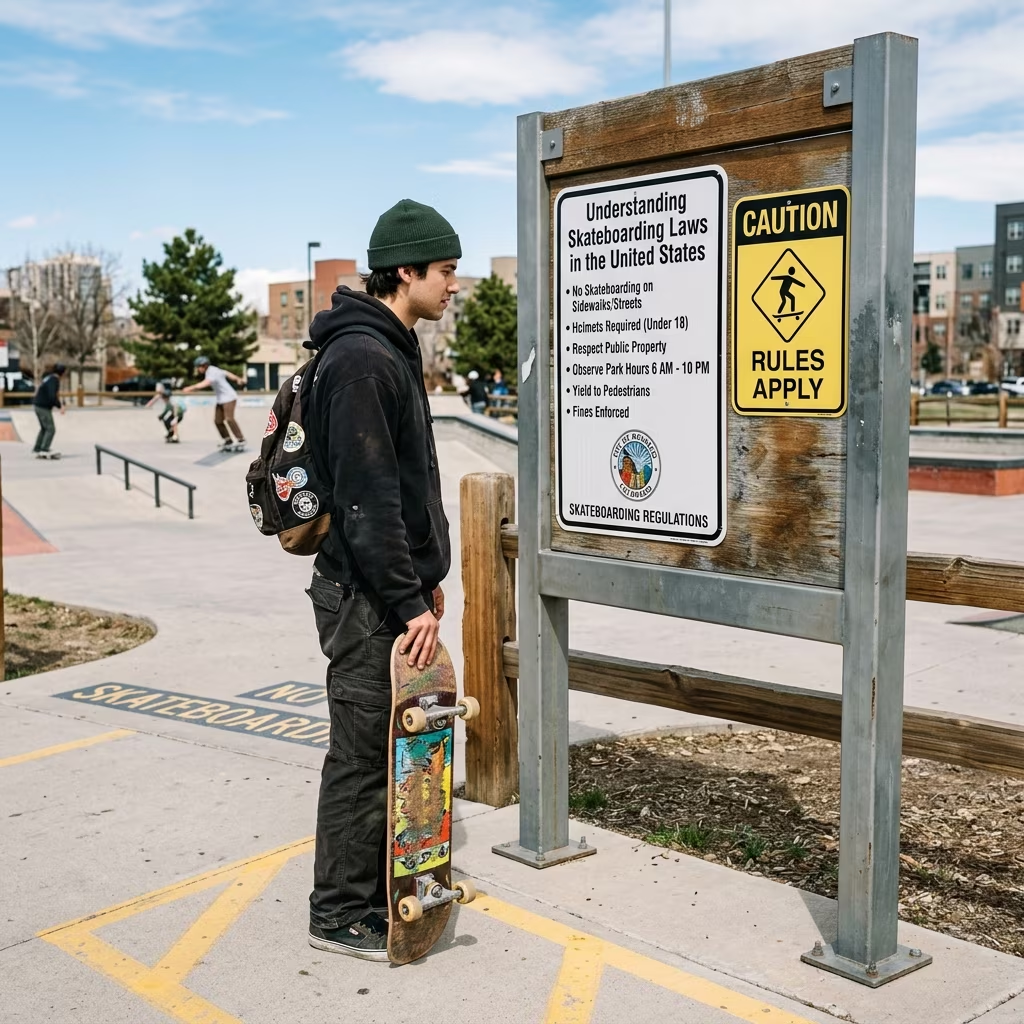
- Age-based mandates — Many jurisdictions require riders under a certain age (often 16 or 18) to wear helmets when skateboarding on public streets, bike paths, or parks.
- Location-specific requirements — Official skate parks and facilities frequently require helmets and other gear as a condition of use, either by ordinance or facility policy.
- Recommended for all riders — Even where helmets are not legally mandated for adults, safety authorities consistently advise wearing one to reduce the risk of head injury.
In most places, compliant helmets must meet current U.S. safety standards, typically those established by organizations such as the U.S. Consumer Product Safety Commission for bicycle and multi-sport helmets.
Other Protective Gear
Law and policy also emphasize additional safety equipment, including:
- Knee pads and elbow pads designed for skateboarding
- Wrist guards to help prevent fractures
- Bright or reflective clothing to improve visibility, especially on campuses and near vehicle traffic
- Reflective stickers or small lights on boards or backpacks in low-light conditions
While many of these items are recommended rather than legally required, failure to use them can contribute to injuries and may be considered negligent behavior in civil lawsuits after an accident.
Traffic Rules Skateboarders Are Expected to Follow
In jurisdictions that treat skateboards similarly to bicycles or other vehicles, riders are expected to obey fundamental rules of the road. These rules aim to reduce conflicts with drivers and pedestrians and to make skater behavior more predictable.
Core Traffic Obligations
Common legal expectations include:
- Stopping at signals and signs — Riders must stop at red lights and stop signs instead of rolling through intersections.
- Observing right-of-way rules — Skaters must yield to pedestrians at marked and unmarked crosswalks and obey right-of-way at intersections.
- Riding in the proper part of the roadway — When allowed on the street, skateboarders may be instructed to stay as far to the right side as safely possible, similar to bicycles.
- Speed and control — Some ordinances prohibit excessive speed, downhill racing, or other behaviors that could endanger other road users.
Violating these rules can lead to traffic citations, especially when skaters cause near-misses or actual collisions with vehicles or pedestrians.
Reckless and Prohibited Behaviors
Certain risky actions are specifically addressed by law or policy, such as:
- Hitching rides by holding onto moving cars, buses, trucks, or bicycles
- Performing stunts in crowded pedestrian areas or on building structures, benches, and rails
- Riding while impaired by alcohol or drugs
- Skating on roadways with heavy traffic or high posted speed limits
These behaviors may be treated as reckless or negligent, and in serious cases, can result in criminal charges rather than simple traffic infractions.
Penalties for Violating Skateboarding Laws
Consequences for breaking skateboarding regulations range from minor warnings to criminal charges, depending on the severity of the conduct and any resulting harm. Most enforcement actions are handled as low-level infractions, but laws allow for stronger responses when necessary.
Typical Enforcement Measures
Authorities responding to skateboarding violations may use:
- Verbal or written warnings — Common for first-time or minor violations, especially when the rider promptly complies with instructions.
- Fines and citations — Traffic tickets or municipal citations can be issued for ignoring posted rules, riding in prohibited zones, or failing to obey traffic laws.
- Impoundment of equipment — Some institutions and municipalities allow officers to temporarily impound skateboards used in violation of rules, often for a limited period.
- Escalated sanctions — Repeat offenders may face more serious consequences, including trespass warnings or, in rare cases, arrest when they refuse to comply with lawful orders or engage in dangerous behavior.
For example, campus regulations may authorize police or designated officials to confiscate skates or boards for several days and to order violators to leave university property if they continue breaking rules.
Civil and Criminal Liability After an Accident
When skateboarding leads to injury or property damage, legal consequences can extend beyond ordinary traffic enforcement. In many states, people who voluntarily participate in activities such as skateboarding assume certain inherent risks, which can limit government liability for injuries occurring on public property.
However, skaters themselves can face:
- Civil lawsuits for negligence if they injure pedestrians, damage vehicles, or harm property while riding recklessly.
- Criminal charges in severe cases, such as causing serious injury through clearly dangerous stunts or ignoring police orders.
The details of liability law vary by state, so anyone involved in a serious incident should consult local statutes or legal counsel.
Local Examples of Skateboarding Regulation
Because skateboarding rules are highly localized, it is useful to look at examples from specific jurisdictions to understand how ordinances can differ.
Small-Town Restrictions on Streets and Sidewalks
In some smaller municipalities, ordinances heavily restrict street skating to reduce conflicts with vehicles. For instance, one Midwestern town prohibits residents from riding skateboards or roller skates on any street except when crossing it, and instructs skaters to follow the same rules that apply to pedestrians crossing roadways.
Such rules effectively confine most skateboarding to sidewalks or private property, while still allowing riders to cross streets safely under pedestrian law.
University Campus Rules
University campuses often permit skateboarding as a practical way to move between buildings but impose strict limits to protect facilities and pedestrians. One example is a large state university that allows skateboarding on designated pathways and bike lanes but bans riding on buildings, steps, benches, landscape walls, and handrails.
Campus regulations there emphasize:
- Yielding the right-of-way to pedestrians and vehicles at all times
- Maintaining cautious speeds and avoiding crowded areas
- Using bright or reflective clothing for visibility
- Staying out of all interior building spaces with skateboards or skates
Authorized staff and campus police can order violators to stop skating, leave certain areas, or surrender their equipment temporarily, with escalated consequences for repeat violations.
State-Level Risk and Liability Provisions
Some states address skateboarding in broader recreational risk statutes. For example, Florida law includes skateboarding among activities for which government entities have limited liability when people participate voluntarily on public property, recognizing that the activity carries inherent risk.
These provisions do not exempt skaters from compliance with local rules, but they clarify when injured riders can or cannot hold public entities responsible.
Practical Tips for Staying Legal and Safe
Given the complexity and locality of skateboarding regulation, riders benefit from combining legal awareness with everyday safety practices. The following strategies help reduce both legal and injury risks.
Before You Ride
- Check local ordinances — Look up city or campus rules on official websites or posted signs before riding in unfamiliar areas.
- Inspect your board — Examine trucks, wheels, bearings, and deck integrity to prevent mechanical failures.
- Assess the terrain — Identify cracks, debris, steep slopes, and traffic patterns that could create hazards.
- Wear appropriate gear — Use a properly fitted helmet and other protective equipment, even when not legally required.
While You Are Skating
- Obey traffic signals and crosswalk rules when riding near or on streets.
- Avoid hitching rides behind vehicles or performing stunts in crowded or restricted areas.
- Stay visible by using reflective gear and avoiding blind spots near cars and trucks.
- Do not skate under the influence of alcohol or drugs, which impairs judgment and reaction time.
Respect Property and Public Spaces
Legal restrictions are often driven by concerns about property damage and conflicts with other users of public spaces. To maintain access to popular spots, riders should:
- Avoid grinding or riding on architectural features, benches, and handrails where prohibited.
- Keep noise levels reasonable at night and near residences.
- Follow posted rules at skate parks, campuses, and shopping centers.
- Leave areas when asked to do so by authorized officials or security personnel.
Frequently Asked Questions
Do skateboarders have to follow the same rules as drivers?
In many jurisdictions, skateboarders must follow core traffic rules similar to drivers and cyclists when using roadways, including stopping at red lights and stop signs, yielding the right-of-way properly, and riding in the correct portion of the roadway. However, specific obligations depend on how the local law classifies skateboards.
Can I legally skate on the street?
Whether street skating is allowed depends on local ordinances. Some towns prohibit riding along streets except when crossing, while others permit skateboarding in traffic lanes or bike lanes under certain conditions. Always check your city or county code before riding in the roadway.
Are helmets required for adult skateboarders?
Helmet mandates are often limited to minors, but some skate parks or municipalities require helmets for all users on certain public facilities. Even where not legally required, wearing a helmet is strongly recommended to reduce head injury risk.
Can police confiscate my skateboard?
Yes, in some jurisdictions and on certain campuses, officers or authorized officials may temporarily impound skateboards used in violation of rules or involved in unsafe behavior, particularly for repeat offenders. Boards may also be taken as evidence if they are connected to a crime.
What happens if I injure someone while skateboarding?
If a skateboarder negligently injures another person or damages property, they may be subject to civil liability and, in serious cases, criminal charges. Liability rules vary by state, so legal advice may be needed after a significant incident.
References
- Skateboarding Laws — FindLaw. 2023-06-01. https://www.findlaw.com/traffic/traffic-tickets/skateboarding-laws.html
- Do Skateboarders Have to Obey the Rules of the Road? — SQ Attorneys. 2022-11-10. https://sqattorneys.com/do-skateboarders-have-to-obey-the-rules-of-the-road/
- Skateboard Regulations — Kansas State University Parking Services. 2023-02-15. https://www.k-state.edu/parking/services/micromobility/skateboardreg.html
- The 2025 Florida Statutes — Section 316.0085 — Florida Legislature, Online Sunshine. 2025-01-01. https://www.leg.state.fl.us/Statutes/index.cfm?App_mode=Display_Statute&URL=0300-0399/0316/Sections/0316.0085.html
- § 70.18 Skateboarding and Roller Skating on Sidewalks — Town of Thorntown Code of Ordinances. 2020-08-01. https://codelibrary.amlegal.com/codes/thorntown/latest/thorntown_in/0-0-0-1624
- Legal Rules for Skateboarders — SurferToday. 2023-05-20. https://www.surfertoday.com/skateboarding/legal-rules-for-skateboarders