
Understanding Preliminary Alcohol Screening (PAS) Devices
Learn how police use PAS devices at roadside stops, what they measure, and how preliminary breath tests affect DUI investigations.
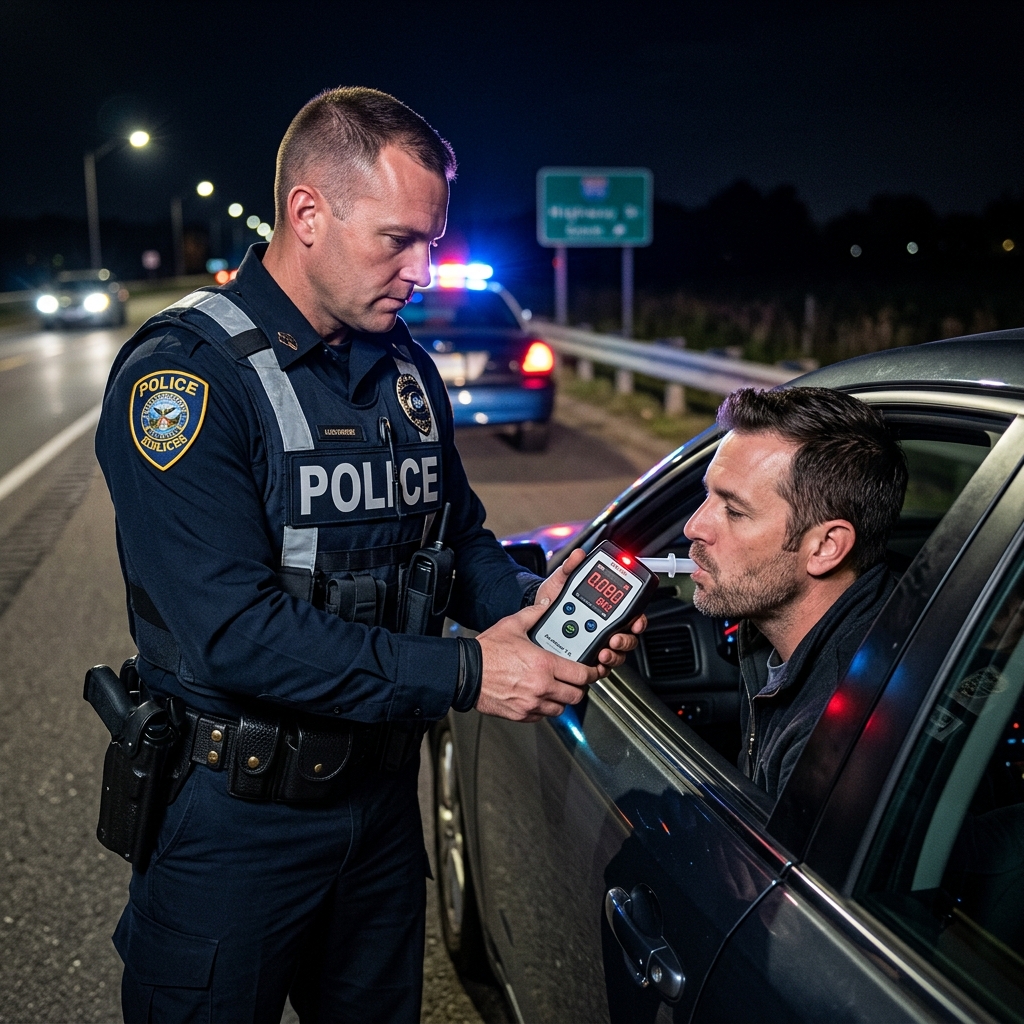
Police officers frequently rely on preliminary alcohol screening (PAS) devices during traffic stops to quickly estimate a driver’s blood alcohol concentration (BAC) and decide whether further investigation or an arrest is warranted. These handheld breath-testing tools are designed for rapid, on‑scene screening rather than for producing evidence that will be used directly at trial. Knowing what a PAS device is, how it operates, and the limits of its reliability can help you understand what happens during a suspected drunk‑driving stop and why officers may ask you to blow into a small machine at the roadside.
What Is a PAS Device?
A PAS device is a portable breath analyzer used by law enforcement during drunk‑driving investigations to estimate the amount of alcohol in a person’s breath, which is then converted into an approximate BAC reading. Unlike larger, stationary breath test instruments located at police stations, PAS devices are built for use in the field and emphasize speed and convenience over evidentiary precision.
Key characteristics of PAS devices include:
- A small, handheld form factor that can be carried by officers during routine patrols.
- A mouthpiece or tube into which the driver provides a breath sample.
- A digital display showing an estimated BAC value within seconds.
- Battery power and internal sensors, often fuel cell technology, to detect alcohol in breath.
These devices are sometimes casually referred to as “portable breathalyzers,” but they are distinct from the larger, more strictly regulated breath test machines whose results are usually relied on in court to prove a DUI charge.
How PAS Devices Differ from Stationary Breath Test Machines
Both PAS devices and stationary breath test machines measure alcohol in exhaled breath and report a BAC estimate, but they serve different legal and practical purposes. The table below outlines major differences.
| Feature | PAS Device (Preliminary Test) | Stationary Breath Test (Evidentiary Test) |
|---|---|---|
| Primary purpose | Screening in the field; helps determine probable cause for arrest. | Providing legally admissible BAC evidence after arrest. |
| Location | Roadside, DUI checkpoint, or field investigation. | Police station, mobile testing unit, or controlled environment. |
| Accuracy standards | Less rigorous; often not treated as fully reliable in court. | Subject to strict calibration and procedural standards for evidence. |
| Typical legal use | Supports an officer’s decision to arrest but usually not used as the sole proof of guilt. | Forms part of the prosecution’s evidence to show BAC above the legal limit. |
| Timing | Before or at the moment of arrest, during initial investigation. | After arrest, often following a mandatory chemical test requirement. |
Because PAS devices are primarily investigative tools, many states limit or exclude their results from use at trial, relying instead on more carefully controlled breath or blood tests for evidentiary purposes.
How a PAS Test Works at the Roadside
When an officer suspects impairment, a PAS test is typically offered or requested during the traffic stop. Although procedures vary, the basic steps commonly include:
- Observation period: The officer may ask questions, observe your behavior, and sometimes perform field sobriety tests before deciding to use a PAS device.
- Mouthpiece placement: A clean, disposable mouthpiece or tube is attached to the device to receive a breath sample.
- Breath sample: You are instructed to blow steadily into the mouthpiece so the device can capture a sufficient amount of breath.
- Instant reading: Within seconds, the PAS device displays an estimated BAC value on its screen.
- Officer’s decision: The officer combines the PAS result with observations (speech, coordination, driving behavior) and other tests to decide whether to arrest you for suspected DUI.
It is important to understand that a positive PAS result—that is, a reading above 0.00—does not automatically mean you will be convicted of DUI. Instead, it mainly serves to support the officer’s decision that further testing or an arrest is justified.
The Role of PAS Devices in Establishing Probable Cause
In the context of DUI law, probable cause is the legal threshold that must be met before an officer can make an arrest. A PAS device is one of several tools officers may use to reach that threshold. Courts and statutes in many jurisdictions recognize these devices as appropriate investigative aids but not as definitive proof of intoxication.
Officers often consider the following factors together:
- Driving behavior, such as swerving, speeding, or failing to obey traffic signals.
- Physical signs of impairment, including red or watery eyes, odor of alcohol, or slurred speech.
- Performance on standardized field sobriety tests (e.g., walk‑and‑turn, one‑leg stand).
- PAS test results indicating the presence and approximate level of alcohol.
When these factors together suggest that a driver is under the influence, the officer may decide that probable cause exists and proceed with an arrest and further chemical testing. In some states, a PAS reading alone is explicitly described in case law or statute as insufficient for conviction, reinforcing its role as an investigative rather than evidentiary tool.
Accuracy and Limitations of PAS Devices
While PAS devices are useful, they are generally considered less accurate than stationary breath test instruments or blood tests. Several factors can affect the reliability of PAS readings:
- Calibration and maintenance: Devices must be calibrated regularly; if schedules are not followed, readings may drift or become unreliable.
- Environmental conditions: Wind, temperature, and other environmental factors at the roadside can influence the sample and sensor performance.
- Operator technique: Inadequate breath volume, improper use, or failure to follow procedures can skew results.
- Physiological variations: Mouth alcohol (from recent drinking, mouthwash, or regurgitation) may temporarily elevate readings that do not reflect deep‑lung alcohol concentration.
Because of these limitations, many jurisdictions restrict the use of PAS results in court and rely instead on more controlled evidentiary tests for determining BAC. For example, law enforcement agencies often calibrate evidentiary breath instruments on a strict schedule and follow standardized observation periods before testing, steps that might not always be applied to PAS devices in the same way.
Legal Treatment of PAS Results
The legal significance of PAS results varies by state, but common patterns appear in statutes and case law:
- Limited admissibility: In many jurisdictions, PAS results are not admissible at trial to prove the defendant’s BAC or guilt, although they may be discussed in hearings on probable cause or suppression.
- Investigative value: Courts often describe PAS tests as “screening” or “investigative” tools that help officers decide whether to arrest but are not alone sufficient for conviction.
- Presumptions and rebuttal: Some states allow a presumption that properly operated PAS devices are accurate, but defendants can challenge that presumption by pointing to maintenance records, environmental factors, or operator errors.
- Interaction with implied consent laws: When an evidentiary test is required after arrest, refusal may carry penalties such as license suspension, separate from any PAS test issues.
If you face DUI charges, an attorney may scrutinize the procedures used with the PAS device, maintenance logs, and officer training, particularly if prosecutors rely heavily on preliminary test information to support their case.
Typical Use Scenarios for PAS Devices
PAS devices can appear in a variety of law‑enforcement settings. Common scenarios include:
- Routine traffic stop: An officer pulls a driver over for a traffic violation, notices possible signs of impairment, and uses a PAS device as part of the initial investigation.
- DUI checkpoint: At a sobriety checkpoint, officers may ask selected drivers to provide breath samples with PAS devices if they detect an odor of alcohol or observe other indicators.
- Post‑accident investigation: When a collision occurs and alcohol use is suspected, a PAS test may be conducted at the scene while medical personnel and investigators respond.
- Probation or underage monitoring: In some states, PAS devices are used more frequently to monitor drivers on DUI probation or underage drivers, who are subject to lower allowable BAC limits.
In each situation, the PAS device serves as a quick method to detect alcohol and estimate its level, but the decision to arrest and ultimately prosecute will rely on a broader set of evidence.
Your Rights and Choices Regarding PAS Testing
Whether you must submit to a PAS test depends on your jurisdiction, age, and legal status (for example, whether you are on DUI probation). Many states treat PAS testing differently from the mandatory evidentiary tests required after a lawful arrest under implied consent laws.
Important points often include:
- Voluntary nature for some drivers: In several jurisdictions, adult drivers not on DUI probation may decline a PAS test before arrest without facing immediate license consequences, although they remain subject to implied consent obligations if later arrested.
- Stricter rules for underage or probationary drivers: Refusing a PAS test can carry specific penalties when you are under the legal drinking age or on DUI probation, because these groups are often subject to zero‑tolerance or lower BAC thresholds.
- Post‑arrest chemical tests: After arrest, implied consent laws typically require a breath or blood test with an evidentiary instrument; refusal may result in license suspension and other sanctions even if you are ultimately acquitted of DUI.
Because these rules can be complex and vary by state, anyone charged with DUI should consider speaking to a qualified attorney who can explain how PAS testing interacts with local laws and what impact any refusal or test result may have.
Practical Tips for Drivers Confronted with a PAS Device
While this article cannot offer legal advice, understanding how PAS devices function can help you respond more calmly and knowledgeably if an officer presents one during a stop. General practical considerations include:
- Remain polite and avoid confrontational behavior, as officers will consider your demeanor in their assessment.
- Listen carefully to the officer’s instructions regarding the breath sample; inadequate blowing can lead to incomplete or suspect results.
- Be aware that a PAS test is only one element of the investigation and that officers also rely on observation and standardized field sobriety tests.
- Understand that declining or accepting a PAS test may have different legal consequences depending on your age, probation status, and jurisdiction.
- If you are later arrested and charged, promptly consult an attorney to discuss how the PAS test and subsequent evidentiary tests were conducted.
Frequently Asked Questions About PAS Devices
Are PAS devices the same as Breathalyzers?
Both PAS devices and Breathalyzer‑type instruments measure alcohol in breath, but PAS devices are smaller, handheld tools used primarily in the field for screening, while larger Breathalyzer or evidentiary machines are kept in controlled environments to produce results that are more likely to be used as evidence in court.
Can PAS results be used to convict me of DUI?
In many states, PAS results alone are not admissible at trial to prove guilt and are treated as preliminary estimates rather than definitive evidence. Prosecutors typically rely on evidentiary breath tests, blood tests, and officer testimony to establish a DUI offense.
Do I have to take a PAS test?
Requirements vary. Adult drivers not on DUI probation may, in some jurisdictions, decline a PAS test before arrest without immediate administrative penalties, while underage drivers or those subject to specific probation terms may face consequences for refusal. After a lawful arrest, however, implied consent laws usually require a breath or blood test with an evidentiary device.
How accurate are PAS devices?
PAS devices can reliably detect the presence of alcohol and approximate BAC, but they are generally considered less accurate than evidentiary breath or blood tests and may be affected by calibration, operator technique, and environmental conditions.
Can I challenge PAS results in court?
Yes. Defense attorneys often examine PAS device maintenance records, calibration logs, and the officer’s training and procedures when challenging how preliminary test information was used. In some states, presumptions of accuracy are rebuttable, meaning they can be overturned with sufficient evidence of error or misuse.
References
- Chapter 7, Preliminary Alcohol Screening Device — California Highway Patrol. 2017-01-01. https://www.chp.ca.gov/siteassets/policy/hpm/hpm-70.4/hpm-70.4-ch-7.pdf
- What Is a Preliminary Alcohol Screening (PAS) Device? — FindLaw. 2023-06-01. https://www.findlaw.com/dui/arrests/what-is-a-pas-device.html
- What role can a PAS device have in a drunk driving case? — Dearborn Law Office. 2024-01-15. https://www.dearbornlawoffice.com/blog/2024/01/what-role-can-a-pas-device-have-in-a-drunk-driving-case/
- 2 types of alcohol screening devices — Drennan Law Firm. 2024-02-10. https://www.drennanlawfirm1.com/blog/2024/02/2-types-of-alcohol-screening-devices/
- What is a Preliminary Alcohol Screening (PAS) Device — DMV Defenders. 2023-03-20. https://www.dmv-defenders.com/what-is-a-preliminary-alcohol-screening-pas-device/
- PAS Test vs. Evidentiary Breath Test: What You Need to Know If You Are Pulled Over — Kern County DUI. 2025-01-12. https://www.kerncountydui.com/blog/2025/january/pas-test-vs-evidentiary-breath-test-what-you-nee/
- Alco Sensor IV Preliminary Alcohol Screening Device (PAS) — San Francisco DUI Defense. 2019-04-01. https://www.sanfranciscoduidefense.com/dui-defense/preliminary-alcohol-screening/alco-sensor-iv-preliminary-alcohol-screening-dev/
Similar Articles








Read full bio of Sneha Tete




