Police officers in Colorado are granted significant authority to investigate crime, detain suspects, and keep communities safe. At the same time, state and federal law strictly limit how that authority can be used. When officers violate those limits and infringe on a person’s constitutional or civil rights, their actions can amount to police misconduct, giving victims the right to seek accountability through complaints, lawsuits, and sometimes criminal prosecution.
This guide explains how Colorado law defines police misconduct, the rights residents retain during interactions with law enforcement, the types of claims commonly brought against officers, and the practical steps you can take if you believe your rights were violated.
Core Rights During Encounters With Colorado Police
Even when you are stopped, searched, or arrested by police in Colorado, you retain fundamental rights protected by the United States Constitution and the Colorado Constitution. These rights set the legal boundaries for officer conduct.
- Freedom from unreasonable seizures: The Fourth Amendment and Article II, Section 7 of the Colorado Constitution protect you from unreasonable searches and seizures, including excessive force.
- Due process protections: The Fourteenth Amendment and parallel state provisions require fair treatment of pretrial detainees, ensuring they are not subjected to punishment without legal process.
- Protection from cruel and unusual punishment: Incarcerated prisoners are protected under the Eighth Amendment and Article II, Section 20 from excessive physical force and abusive treatment.
- Equal protection from discrimination: Federal civil rights laws prohibit law enforcement agencies that receive federal funding from discriminating based on race, color, national origin, sex, or religion.
- Right to remain silent: You generally have the right not to answer questions that may incriminate you, and officers may not coerce confessions through threats, violence, or deception.
When officers cross these boundaries—for example, by using unnecessary violence, arresting someone without legal cause, or targeting a person because of race—their conduct may give rise to a police misconduct claim.
What Counts as Police Misconduct in Colorado?
Police misconduct is a broad term that includes any unlawful or inappropriate action taken by an officer in the course of official duties that violates a person’s rights. It can occur during an investigatory stop, an arrest, transport to jail, or inside detention facilities.
Common categories of misconduct include:
- False or unlawful arrest: Taking someone into custody without a warrant or without probable cause—a reasonable belief, based on facts, that the person committed a crime.
- Unlawful detention or false imprisonment: Holding a person in jail or otherwise restricting their freedom of movement without lawful justification.
- Unlawful search or seizure: Searching a person, vehicle, or home without a warrant, probable cause, or a recognized legal exception, or seizing property without lawful authority.
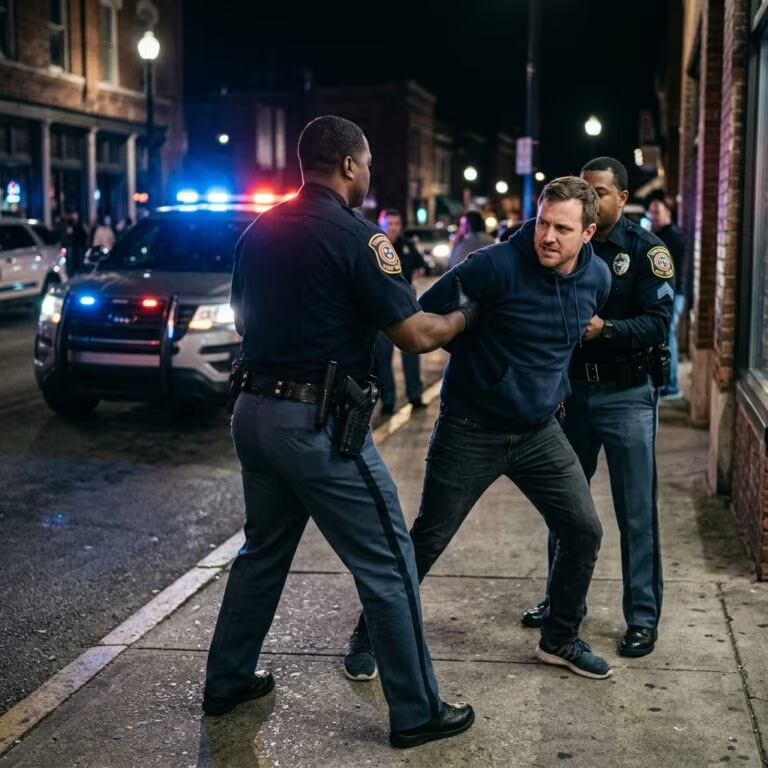
- Excessive force (police brutality): Using more physical force than is reasonably necessary under the circumstances, including beatings, improper use of weapons, or dangerous restraints.
- Coercive or dishonest interrogation: Threatening harm, using torture, or employing fraudulent tactics to force a confession or statements.
- Sexual misconduct or abuse of authority: Using official power to demand sexual favors, commit sexual assault, or exchange leniency for sexual conduct.
- Malicious prosecution: Initiating or pursuing criminal charges with little or no evidence, primarily to harass or intimidate someone.
- Discriminatory policing: Targeting individuals for stops, searches, arrests, or harsher treatment because of race, color, national origin, sex, or religion.
Not every unpleasant or unfair interaction with police rises to the level of legally actionable misconduct. The key question is whether the officer’s conduct violated a specific constitutional or statutory right and whether the facts support that violation under established legal standards.
Excessive Force: When Does Police Violence Become Unlawful?
Excessive force is one of the most frequently litigated forms of police misconduct in Colorado. Both federal and state law make it clear that officers may only use force that is objectively reasonable in light of the situation they face.
Courts consider several factors in deciding whether force was excessive:
- The severity of the suspected offense
- Whether the person posed an immediate threat to officers or others
- Whether the person was resisting, fleeing, or already restrained
- The type and amount of force used compared to the need for force
- Availability of less harmful alternatives
For example, using a baton or stun gun on a non‑threatening, handcuffed suspect may be deemed excessive, whereas tackling a fleeing armed suspect might be reasonable. These cases are highly fact‑specific, and expert testimony about proper police practices is often crucial.
| Scenario | Likely Legal View of Force |
|---|---|
| Officer pushes a non‑resisting person to the ground during a minor traffic stop. | May be considered excessive if there was no safety threat and lesser force would suffice. |
| Officer tackles a suspect believed to be armed and fleeing a serious crime scene. | More likely to be viewed as reasonable, depending on actual risk and alternatives. |
| Officer continues striking a suspect after they have been restrained and stopped resisting. | Strongly suggests excessive force and potential civil rights violation. |
Colorado Oversight of Law Enforcement Misconduct
Colorado has created several mechanisms to detect, investigate, and sanction police misconduct. These work alongside federal oversight by the U.S. Department of Justice.
Mandatory Reporting and Internal Investigations
Recent legislation in Colorado requires law enforcement agencies to investigate allegations of misconduct they receive about officers. Furthermore, if a peace officer learns of possible misconduct by another officer, they are legally required to report it to the employing agency, and failure to report can be charged as a criminal offense.
Key features of these measures include:
- Agencies must open investigations into credible misconduct allegations.
- Officers who become aware of misconduct must report it and face penalties for silence.
- Individuals who file allegations may have a private right of action if agencies fail to investigate, reinforcing accountability.
Colorado POST Certification and Disqualification
The Colorado Peace Officer Standards and Training (POST) Board regulates officer certification. Certain misconduct can lead to revocation of an officer’s certification, effectively barring them from serving as a peace officer in the state.
Disqualifying incidents include knowingly making materially false statements on official criminal justice records, under oath, or during internal or administrative investigations. Agencies are required to report disqualifying incidents to POST, and the Board must revoke certification when those standards are met.
Federal Oversight by the Department of Justice
In addition to state processes, the U.S. Department of Justice enforces several federal laws addressing police misconduct. These laws cover both individual actions and patterns or practices of misconduct within agencies.
- Criminal statutes can be used to prosecute officers who willfully deprive people of protected rights, including through excessive force or sexual assault.
- Civil statutes, such as 34 U.S.C. § 12601, allow DOJ to bring lawsuits against agencies that engage in systemic unconstitutional practices, potentially resulting in court‑ordered reforms.
- Anti‑discrimination laws prohibit discriminatory policing and can lead to enforcement actions if agencies treat people differently based on race, color, national origin, sex, or religion.
Civil Lawsuits for Police Misconduct in Colorado
Victims of police misconduct in Colorado have the option to file civil lawsuits seeking monetary compensation and sometimes changes to police practices. The right legal path depends on whether the officer is a state or local official or a federal officer.
Section 1983 and State Civil Rights Claims
When misconduct is committed by state or local officers, victims frequently bring claims under 42 U.S.C. § 1983, a federal civil rights statute. Colorado law also provides additional remedies in certain excessive force cases.
To succeed, plaintiffs generally must show:
- The defendant was a peace officer acting under color of law—using official power or authority.
- The officer seized the plaintiff, such as through arrest, detention, or physical restraint.
- In making that seizure, the officer used force or engaged in conduct that was objectively unreasonable or infringed a protected right.
The statute of limitations for many civil rights suits in Colorado is two years from the date the claim accrues, often the date of the incident. Missing this deadline can permanently bar the claim.
Bivens Actions Against Federal Officers
When misconduct involves federal law enforcement, victims may file a Bivens lawsuit, named after a leading U.S. Supreme Court case. These suits operate similarly to Section 1983 actions but apply to federal actors instead of state or local officials.
Possible Remedies in Civil Court
If a civil rights lawsuit is successful, courts may award several types of relief:
- Compensatory damages: To reimburse victims for medical expenses, lost wages, emotional distress, and other measurable harms.
- Punitive damages: In some cases, to punish officers or agencies for particularly egregious misconduct and deter similar behavior in the future.
- Presumed damages: Sometimes available to compensate for the loss of liberty itself, even if direct financial harm is limited.
- Injunctive relief: Court orders requiring departments to change policies, retrain officers, or remove offenders from duty.
How to Report Police Misconduct in Colorado
Not every misconduct case leads directly to a lawsuit. Many begin with administrative or internal complaints. Colorado residents have several options for reporting alleged misconduct.
Filing Complaints With Police Departments
You can file a formal complaint with the police department or sheriff’s office that employs the officer. Complaints typically include a written description of the incident, date, time, location, names of involved officers, and any available evidence such as photographs or witness contact information.
Potential outcomes of an internal complaint include:
- Reprimands or written warnings
- Mandatory retraining or reassignment
- Suspension without pay
- Termination of employment
- Referral to criminal investigators when appropriate
Under recent Colorado legislation, agencies are obligated to investigate credible allegations, and officers themselves must report observed misconduct. If investigations are neglected, some complainants may pursue a private action under state law.
Reporting Possible Criminal Conduct
When alleged misconduct involves potential crimes—such as assault, sexual assault, theft, or falsifying official records—victims or witnesses can file a police report or contact the appropriate prosecuting authority. In serious cases, district attorneys or state and federal prosecutors may choose to bring criminal charges.
Complaints to Federal Authorities
Individuals who believe their rights were violated can also submit complaints to the U.S. Department of Justice, especially when misconduct appears systemic or involves discrimination. DOJ reviews such complaints and may open investigations or lawsuits against agencies that engage in repeated civil rights violations.
Practical Steps for Individuals After a Misconduct Incident
If you think you have experienced police misconduct in Colorado, early actions can strongly affect your ability to pursue remedies.
- Document everything promptly: Write down details of the encounter as soon as possible, including the officers’ names or badge numbers, patrol car numbers, exact location, and a timeline of events.
- Preserve evidence: Save photographs, videos, medical records, damaged property, and clothing. Ask witnesses for contact information.
- Seek medical care: If you suffered injuries, obtain medical attention and keep a record of diagnoses, treatment, and costs.
- Consult a civil rights attorney: A lawyer familiar with police misconduct cases can evaluate whether your rights were violated, explain deadlines, and discuss complaint or lawsuit options.
- Be mindful of deadlines: The two‑year limitation period for many civil rights claims makes it risky to delay legal consultation.
Frequently Asked Questions About Police Misconduct in Colorado
1. Is every bad interaction with a police officer considered misconduct?
No. Police misconduct typically involves a legal violation—such as an unlawful arrest, excessive force, or discrimination—rather than minor rudeness or poor communication. An attorney can help evaluate whether an officer’s behavior crossed a legal line.
2. Can I sue both the officer and the department?
In many cases, yes. Section 1983 suits can be brought against individual officers and, under certain conditions, against municipalities or agencies when official policies or customs contribute to the violation. Separate state law claims may also apply.
3. What if I was charged with a crime after the incident?
Criminal charges do not automatically prevent a civil rights lawsuit. However, the outcome of the criminal case can affect the civil matter. It is important to speak with counsel about how to coordinate defense strategies and potential misconduct claims.
4. Can undocumented residents file misconduct complaints?
Yes. Constitutional protections against excessive force, unlawful searches, and discrimination apply to all persons in the United States, not just citizens. Immigration status does not erase civil rights.
5. Do officers lose their job automatically if misconduct is proven?
Not necessarily. Consequences can range from retraining or reprimands to suspension, termination, loss of POST certification, or criminal prosecution, depending on the severity and nature of the misconduct.
References
- What Constitutes Police Misconduct in a Colorado Arrest? — DeGolia Law. 2023-01-10. https://www.degolialaw.com/what-constitutes-police-misconduct-in-a-colorado-arrest/
- HB24-1460 Law Enforcement Misconduct — Colorado General Assembly. 2024-05-10. https://leg.colorado.gov/bills/hb24-1460
- Police Misconduct Laws in Colorado — FindLaw. 2022-08-15. https://www.findlaw.com/state/colorado-law/police-misconduct-laws-in-colorado.html
- Disqualifying Incidents — Colorado Peace Officer Standards and Training (POST). 2019-08-02. https://post.colorado.gov/certification/disqualifying-incidents
- Police Misconduct in Colorado – How to Bring a Lawsuit — Clawson & Kling, LLC. 2023-06-01. https://cldg.legal/civil-rights/police-misconduct/
- Excessive Force in Colorado — Rights & Liberties Law Firm. 2022-11-20. https://rightsandlibertieslawfirm.com/excessive-force/
- Addressing Police Misconduct Laws Enforced By The Department Of Justice — U.S. Department of Justice, Civil Rights Division. 2021-12-15. https://www.justice.gov/crt/addressing-police-misconduct-laws-enforced-department-justice