
Understanding Paternity Law in Washington State
Learn how paternity is established, challenged, and enforced in Washington, and what legal rights and responsibilities flow from parentage.
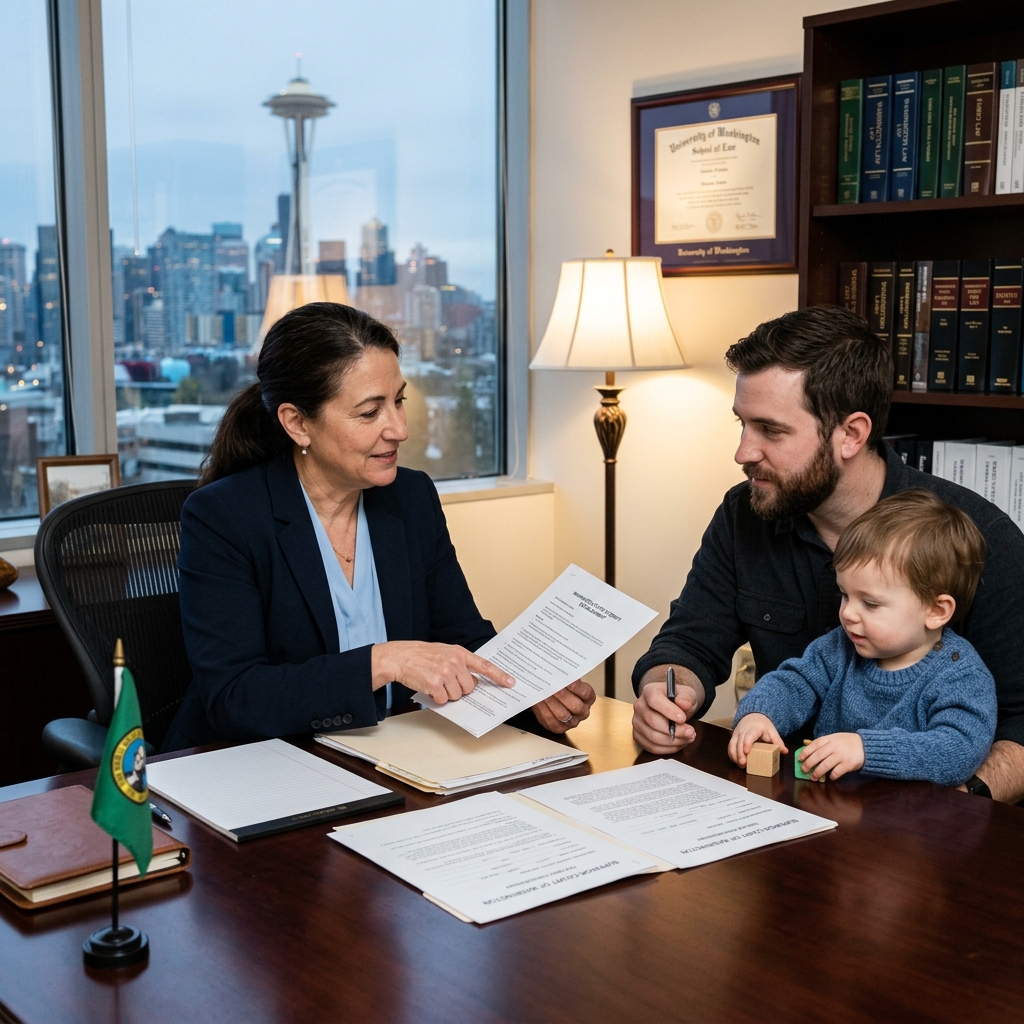
Paternity law in Washington State governs the legal relationship between a father and child, affecting everything from child support and custody to the child’s inheritance rights and access to benefits. Establishing or challenging paternity can be straightforward in some situations and highly complex in others, especially when multiple adults may claim or deny parentage.
This article offers a clear overview of how Washington defines parentage, how paternity can be created or disproved, and what parents should expect when using voluntary forms or the court system. It is designed for both mothers and fathers, married and unmarried, who need to understand the legal framework that shapes their rights and responsibilities.
Parentage vs. Paternity: Key Legal Concepts
Washington law uses the term parentage to describe the legal relationship between any parent and child, and paternity more specifically for the relationship between a father and child. Understanding the distinction helps clarify which rules apply to which parent.
- Parentage: The legal recognition of a person as the child’s parent, regardless of gender.
- Paternity: The legal recognition of a man as the child’s father.
- Legal parent: A person with recognized rights (such as custody and decision-making) and duties (including child support) toward the child.
The person who gives birth automatically has a legal parent-child relationship under Washington law. Others must establish parentage or paternity through marriage presumptions, formal acknowledgments, or court orders.
How Legal Fatherhood Is Presumed in Washington
Washington relies on presumptions to identify the father without requiring immediate court involvement. These presumptions simplify matters when families are intact but can be challenged when circumstances are more complex.
- Marriage presumption: A man married to the person who gives birth is presumed to be the legal father of a child born during the marriage or within a defined period after it ends. This presumption places his name on the birth certificate without extra paperwork.
- Presumed parent after birth: If the parents are married when the child is born, the spouse is treated as a legal parent based on that marital status.
- Challenging the presumption: Either the presumed father, the birth parent, or a biological father may seek to rebut the presumption in court, often using DNA evidence.
Presumptions provide an initial legal framework but are not absolute. Courts can alter legal fatherhood when credible evidence suggests a different biological or legal parent is more appropriate.
Voluntary Acknowledgment of Parentage
For unmarried parents or situations where the father is not automatically presumed, Washington offers a Voluntary Acknowledgment of Parentage process. This is often the easiest way to establish legal paternity without filing a lawsuit.
What the Acknowledgment Does
When properly completed and filed, the acknowledgment:
- Creates a legal parent-child relationship between the father and the child.
- Allows the father’s name to be placed on or added to the birth certificate.
- Serves as a basis for future orders involving custody, visitation, and support.
Basic Requirements
To use this voluntary process, Washington generally requires:
- Both parents to agree that the man is the biological father.
- No other person already established as the legal father, or, if there is, completion of additional forms to deny that prior parentage.
- Signatures of both parents, often in front of a notary, and filing with the Washington State Department of Health.
Parents can typically obtain the acknowledgment form from hospitals, local health departments, child support offices, or state court resources. This paperwork is essential because simply listing a name on the birth certificate without a valid legal basis may be challenged later in court.
Court-Based Parentage and Paternity Actions
When parents disagree about who the father is, or when a voluntary form is not possible or appropriate, a court action may be used to establish or contest paternity.
Starting a Court Case
A parentage or paternity case is typically started by filing a petition in the child’s county of residence. Several parties may have standing to file, including:
- The child’s birth parent.
- A man claiming to be the biological father.
- The child, in some circumstances, often through a representative.
- The state, particularly when child support or public benefits are involved.
Once filed, the court may order genetic testing, evaluate evidence, and ultimately issue a parentage order that legally identifies the father and may address support, custody, and visitation.
DNA Testing and Its Role in Paternity Cases
Genetic testing is a powerful tool for resolving disputes about biological fatherhood, but it does not, by itself, create legal paternity.
Accuracy and Process
- DNA tests used in paternity cases offer very high accuracy in confirming or excluding biological relationships.
- Testing may be done voluntarily or ordered by the court when parentage is disputed.
- Results must be presented in court as part of the evidence; the judge then uses them to decide whether to issue a parentage order.
Legal Effect of Test Results
A DNA test showing high probability of fatherhood strongly supports, but does not automatically trigger, legal recognition. The court must formally establish paternity through an order, which then leads to updated birth records and enforceable rights and responsibilities.
Voluntary vs. Involuntary Establishment
Washington distinguishes between voluntary and involuntary ways to establish paternity, each with different procedures and implications.
| Aspect | Voluntary Establishment | Involuntary (Court) Establishment |
|---|---|---|
| How it begins | Parents sign a Voluntary Acknowledgment of Parentage form. | Someone files a petition to establish parentage in court. |
| Need for DNA testing | Not required if both parents agree. | Often ordered if parentage is disputed. |
| Time and complexity | Usually faster and simpler; no trial. | Can involve hearings, evidence, and potentially a trial. |
| Use cases | Unmarried parents who agree on fatherhood. | Disagreements about paternity, alleged fraud, or conflicting presumptions. |
Rights and Responsibilities After Paternity Is Established
Once parentage or paternity is legally established, both parents and the child gain significant rights, and the parents assume enforceable obligations.
Legal Rights of Fathers
- Custody and visitation: Fathers can request residential time, shared custody, or scheduled visitation through parenting plans.
- Decision-making authority: Fathers may seek a role in major decisions affecting the child’s education, health care, and religious upbringing.
- Participation in court processes: Established fathers can be heard in later legal proceedings involving relocation, modification of parenting plans, or other major changes.
Responsibilities of Parents
- Child support: The legal father may be ordered to pay child support according to Washington’s child support schedule.
- Medical support: Courts may require coverage of medical insurance or contribution to health-related expenses.
- Compliance with orders: Parents must follow parenting plans and support orders; failure to do so can result in enforcement actions.
For the child, established paternity can secure access to financial support, inheritance rights, Social Security or veterans’ benefits, and a clearer sense of identity and family history.
Challenging or Disestablishing Paternity
In some cases, a man who has been treated as the legal father may later learn he is not biologically related, or another man may claim to be the biological father. Washington allows parties to challenge or disestablish paternity under specific conditions and time frames.
- Presumed or acknowledged fathers can seek to disestablish paternity if credible evidence shows they are not the biological parent.
- Biological fathers may contest existing presumptions or acknowledgments if they were initially excluded from the legal record.
- Fraud, duress, or mistake can justify revisiting paternity determinations, but such challenges usually must be brought within a limited period, commonly within about two years of the child’s birth or the acknowledgment.
Because disestablishing paternity can significantly affect a child’s stability, support, and emotional well-being, courts carefully weigh the evidence and consider statutory deadlines and the child’s best interests.
Special Issues for Unmarried Parents
Unmarried parents face particular challenges because there is no automatic marital presumption of fatherhood.
Unmarried Fathers’ Path to Recognition
- Signing a valid Voluntary Acknowledgment of Parentage is often the simplest route.
- Where there is disagreement, the alleged father can file a court petition and seek DNA testing.
- Once recognized, the father gains the ability to request custody, visitation, and a say in important decisions.
Common Misunderstandings
- Being listed on a birth certificate does not always guarantee fully established legal rights if proper procedures were not followed.
- A DNA test alone does not confer legal status; a court order or valid acknowledgment is still needed.
- Mothers and fathers both have the ability to initiate paternity cases, not only mothers.
Practical Steps for Washington Parents
Parents in Washington who need to address paternity should consider a structured approach that protects both legal interests and the child’s well-being.
Suggested Step-by-Step Approach
- Clarify goals: Determine whether you seek to establish paternity, challenge an existing presumption, or obtain related orders for support or custody.
- Gather documents: Collect any birth records, prior acknowledgments, court orders, and communication relevant to parentage.
- Explore voluntary options: If all parties agree, consider executing a Voluntary Acknowledgment of Parentage.
- Consult trustworthy resources: Review official guidance from Washington courts, county agencies, or Washington Law Help to understand procedures and forms.
- Seek legal advice as needed: For contested cases or complex situations, consult a family law attorney or court facilitator.
Frequently Asked Questions About Paternity in Washington
Is there a deadline for establishing paternity in Washington?
Washington generally does not impose a strict statute of limitations on establishing paternity, meaning it can often be addressed even after the child becomes an adult. However, certain challenges to existing presumptions or acknowledgments must be brought within defined time frames, frequently around two years from the birth or initial acknowledgment.
Can a father gain rights without going to court?
Yes. If both parents agree on biological fatherhood and no other legal father is already recognized, a Voluntary Acknowledgment of Parentage can be signed and filed with the Department of Health, creating legal paternity without court proceedings.
Does a DNA test automatically make someone the legal father?
No. A DNA test is important evidence and strongly influences court decisions, but legal paternity requires either a valid acknowledgment filed with the state or a court order formally establishing parentage.
What if the birth parent was married to someone else when the child was born?
If the birth parent was married to another person at the time of birth, that spouse is often presumed to be the legal parent. In such situations, the presumed parent may need to sign additional forms, and court involvement may be required to recognize a different biological father.
Why is establishing paternity important for the child?
Legal paternity can give the child access to financial support, health insurance, inheritance, and potential public benefits, and it helps ensure that both parents may share in the child’s upbringing and decision-making.
References
- Paternity Cases — King County Prosecuting Attorney’s Office. 2024-01-01. https://kingcounty.gov/en/dept/pao/courts-jails-legal-system/child-support-paternity-parentage/paternity-cases
- Parentage Guide — Washington Law Help. 2023-06-01. https://www.washingtonlawhelp.org/en/parentage-guide
- The Importance of Establishing Paternity in Washington State — Everett Divorce Attorney. 2022-05-10. https://everettdivorceattorney.com/the-importance-of-establishing-paternity-in-washington-state/
- Dispelling 7 Common Myths About Paternity in Washington State — Seattle Divorce Services. 2023-03-15. https://seattledivorceservices.com/dispelling-7-common-myths-about-paternity-in-washington-state/
- How Long Does a Father Have to Establish Paternity in Washington State? — The Jackman Law Firm. 2022-09-20. https://www.jackmanfirm.com/father-paternity-timeline-washington-state/
- Establishing Parentage — Pierce County Superior Court. 2023-11-01. https://www.piercecountywa.gov/7783/Establishing-Parentage
Similar Articles








Read full bio of Sneha Tete


