
Michigan Auto Theft Laws: 11 Key Penalties And How To Respond
A practical guide to Michigan auto theft crimes, penalties, and legal options for drivers, owners, and defendants.
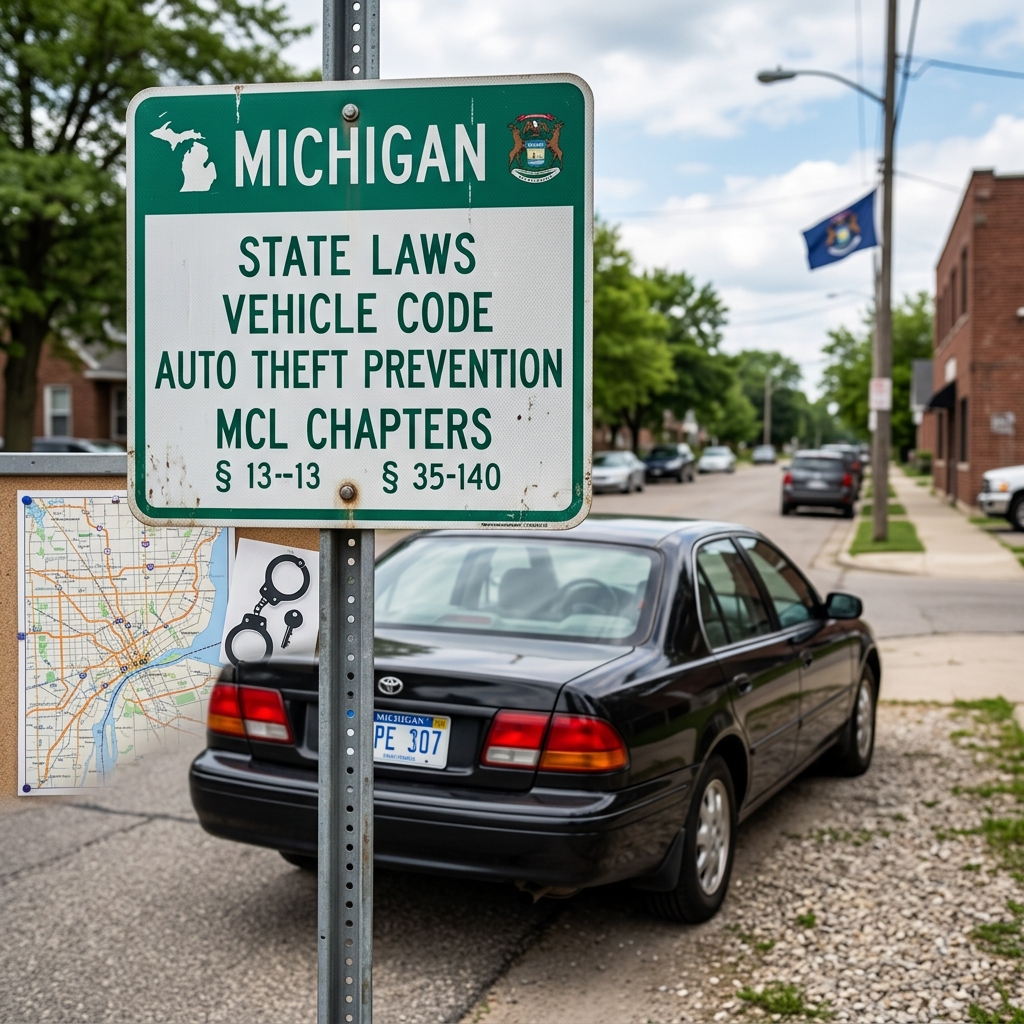
Michigan treats crimes involving motor vehicles very seriously. Auto theft in this state is not a single offense but a group of different crimes, ranging from felony auto theft and carjacking to joyriding and stealing vehicle parts. Each carries distinct penalties, and even conduct that seems minor to a defendant can result in harsh consequences under state law.
This guide explains how Michigan law defines auto-related theft offenses, how they are punished, and what practical steps vehicle owners and accused individuals should consider. It is informational only and does not replace advice from a licensed Michigan attorney.
1. How Michigan Law Classifies Auto-Related Crimes
Michigan does not have a single statute simply titled “auto theft.” Instead, vehicle-related property crimes are spread across several provisions of the Michigan Penal Code and related statutes. These provisions cover both the taking of a vehicle and the taking of property from or associated with a vehicle.
- Unlawful driving away of an automobile (UDAA) – Felony car theft involving taking and driving a vehicle without authority.
- Use of a vehicle without intent to steal (joyriding) – Unauthorized use or taking of a motor vehicle without intent to permanently deprive the owner.
- Theft of vehicle parts and breaking into a motor vehicle – Offenses focused on stealing wheels, tires, airbags, catalytic converters, electronics, and other components or breaking into a vehicle to steal property.
- Possessing or dealing in stolen vehicles – Crimes involving buying, receiving, possessing, or concealing vehicles known or believed to be stolen.
- Carjacking and related violent offenses – Stealing a vehicle with the use or threat of force against a person (the detailed statute is separate from property-only offenses).
- Failure to return rental vehicles – Treated under broader property statutes that vary penalties according to the value of the vehicle.
Understanding which statute applies in a given case is crucial, because the label attached to the charge (felony vs. misdemeanor, violent vs. non-violent) strongly influences both potential punishment and collateral consequences.
2. Felony Auto Theft: Unlawful Driving Away of an Automobile (UDAA)
The core auto theft offense in Michigan is commonly known as Unlawful Driving Away of an Automobile (UDAA). It addresses taking possession of and driving away another person’s motor vehicle without permission.
2.1 Legal Definition
Under Michigan law, UDAA covers situations where a person:
- Willfully and without authority takes possession of a motor vehicle belonging to another; and
- Drives or takes the vehicle away, or assists in or is a party to that conduct.
The statute does not require proof that the vehicle was permanently kept or sold; the act of unauthorized taking and driving is enough for a felony charge.
2.2 Penalties for UDAA
UDAA is a felony offense in Michigan. A conviction can lead to:
- Up to 5 years imprisonment in state prison.
- Potential fines (often up to approximately $1,500, depending on related provisions and court practice).
- Probation, restitution, and other court-ordered conditions in addition to incarceration.
Because UDAA is a felony, it carries long-term consequences such as difficulties in obtaining employment, housing, professional licenses, and in some cases loss of firearm rights under state and federal law.
2.3 Parties and Accomplices
Michigan courts can apply UDAA not only to the person who physically drives away the vehicle, but also to anyone who assists in or is a party to the unauthorized taking. This broad wording allows prosecutors to charge:
- Drivers who take the vehicle;
- Passengers who help facilitate the theft;
- Individuals who arrange or encourage the crime or help conceal the vehicle afterward.
As a result, people who may not consider themselves “thieves” can nonetheless face felony charges if they join in the plan or knowingly benefit from the theft.
3. Joyriding: Unauthorized Use Without Intent to Steal
Not every unauthorized use of a vehicle is treated as full-fledged auto theft. Michigan recognizes a separate offense often referred to as joyriding, formally described as using a motor vehicle without authority but without intent to steal.
3.1 Statutory Basis
Michigan Compiled Laws (MCL) 750.414 makes it a crime to:
- Take or use a motor vehicle without authority, and
- Do so without the intent to steal the vehicle, or
- Be a party to such unauthorized taking or using.
This section targets conduct such as borrowing a car without consent, using a vehicle for a short-term purpose, or taking it for a ride with the intention of returning it.
3.2 Penalties for Joyriding
MCL 750.414 sets out the following punishment scheme:
- General offense: Up to 2 years imprisonment or a fine of up to $1,500.
- First offense (at court’s discretion): Punishment may be reduced to up to 3 months in jail or a fine of up to $500.
Although the statute labels the offense as a misdemeanor, the maximum two-year term is more severe than many standard misdemeanors, and a conviction still constitutes a significant criminal record.
3.3 Employment and Authorized Use Exception
MCL 750.414 includes an important exception for certain employees. The law does not apply to people who:
- Are employed by the vehicle owner or another person, and
- By the nature of their employment, have responsibility for or authority to drive the vehicle.
Even in those circumstances, unauthorized driving is exempt only when it occurs without the owner’s knowledge or consent. This exception is designed to avoid criminalizing ordinary movements of vehicles by employees within the scope of their job.
4. Theft of Vehicle Parts and Breaking Into Motor Vehicles
Auto-related crime in Michigan also extends to stealing parts or property from vehicles. The state recognizes that modern cars may be targeted for high-value components such as catalytic converters, airbags, wheels, and electronic systems.
4.1 Larceny of Vehicle Parts (MCL 750.356a)
Under MCL 750.356a, a person commits a felony if they steal or unlawfully remove certain parts or devices from a motor vehicle, house trailer, trailer, or semitrailer.
Covered items include, among others:
- Wheels and tires;
- Airbags and catalytic converters;
- Radios, stereos, clocks, telephones;
- Computers and other electronic devices in or on the vehicle.
For this type of larceny, the statute provides a general felony penalty of up to 5 years imprisonment and a fine of up to $10,000, or both.
4.2 Entering or Breaking Into Vehicles to Steal Property
The same section also addresses entering or breaking into a vehicle to steal property from it. Penalties depend on the value of the property taken and any prior convictions.
| Property Value | Classification | Maximum Jail/Prison Term | Maximum Fine |
|---|---|---|---|
| Less than $200 | Misdemeanor | Up to 93 days | Up to $500 or 3x value (whichever greater) |
| $200 to less than higher thresholds (with conditions) | Higher-grade misdemeanor or felony | Varies by prior convictions and statutory subsections | Varies by statute and property value |
| $20,000 or more, or multiple prior convictions | Felony | Up to several years in prison | Substantial fines tied to property value and prior record |
Additionally, if the offender breaks, tears, cuts, or otherwise damages any part of the vehicle while committing the theft, the offense becomes a felony punishable by up to 5 years imprisonment and fines up to $10,000, regardless of property value.
5. Possessing or Dealing in Stolen Vehicles
Michigan law targets not only the person who steals a vehicle but also those who handle it afterward. A separate offense exists for buying, receiving, possessing, concealing, or aiding in concealing a stolen motor vehicle, when the person knows or has reason to know the vehicle is stolen, embezzled, or converted.
This conduct may be charged as a felony, with penalties that can reach:
- Up to 5 years in prison for a basic offense; and
- Up to 10 years for more serious or repeat offenses, depending on prior convictions and statutory levels.
These laws allow Michigan authorities to prosecute members of organized theft rings, chop-shop operators, and others who profit from stolen vehicles even if they do not personally steal them.
6. Carjacking and Other High-Severity Vehicle Crimes
At the most serious end of the spectrum is carjacking—stealing a vehicle accompanied by the use or threat of force against a person. Though it is distinct from property-only auto theft statutes, carjacking is often discussed in the same context because it involves unlawful control over a vehicle.
Under Michigan law, carjacking is a felony that can carry a potential life sentence when force or violence is used or threatened to take a vehicle from another person. This classification reflects the combination of property harm and risk to human safety.
Other related high-level offenses include:
- Using tools or devices specifically for defeating vehicle security systems, which in some circumstances may be treated as a felony with multi-year penalties.
- Organized schemes to steal and export vehicles, often prosecuted under conspiracy or racketeering statutes.
7. Failure to Return Rental Vehicles
Michigan law also covers situations where a person lawfully rents or borrows a vehicle but then fails to return it as agreed. These cases are typically charged under property statutes that set penalties by the value of the vehicle.
According to Michigan criminal defense commentary, approximate penalty ranges can include:
- For vehicles valued over $20,000: Possible felony with up to 10 years imprisonment and substantial fines.
- For vehicles valued between $1,000 and $20,000: Felony punishable by up to 5 years imprisonment and lower, but still significant, fines.
The exact statute and penalties applied in any specific case depend on the facts and the prosecutor’s charging decisions.
8. Civil, Administrative, and Preventive Aspects
Auto theft in Michigan is not only a criminal law issue. It has civil, insurance, and community safety dimensions.
8.1 Insurance and Restitution
Auto theft typically triggers insurance claims and, in criminal cases, restitution orders requiring defendants to reimburse victims for financial losses. Restitution can cover vehicle value, parts, and damage related to the theft or unauthorized use.
8.2 Michigan Automobile Theft Prevention Authority (ATPA)
The state has created the Automobile Theft Prevention Authority (ATPA) to coordinate efforts to reduce vehicle theft. Established under Public Act 174 of 1992, ATPA funds projects focused on prevention, law enforcement, and public awareness.
ATPA’s work includes:
- Grant programs for local law enforcement and community initiatives;
- Data collection and analysis on auto theft trends;
- Public reporting mechanisms, such as a dedicated telephone line for tips on auto theft crimes.
9. Practical Tips for Vehicle Owners in Michigan
While legal penalties aim to deter auto theft, individuals can take practical steps to reduce risk.
- Secure your vehicle: Always lock doors, close windows, and avoid leaving keys inside.
- Protect valuable parts: Park in well-lit areas and consider anti-theft devices for high-target components like catalytic converters.
- Track documentation: Keep titles and registrations secure; avoid leaving sensitive papers in the car.
- Report promptly: If your vehicle or key parts are stolen, report the crime as soon as possible to law enforcement and your insurer.
- Be cautious with lending: Clearly document permission and conditions when letting others drive your car to avoid disputes about unauthorized use.
10. What to Do If You Are Accused of Auto Theft
Auto theft-related charges in Michigan can have life-altering consequences. If you are under investigation or have been charged, several steps are critical:
- Seek legal counsel immediately: Consult a criminal defense attorney with experience in Michigan vehicle crimes. Felony charges such as UDAA, possession of stolen vehicles, and carjacking demand prompt professional representation.
- Do not make unadvised statements: Speaking to police or others about the incident without legal guidance can unintentionally damage your defense.
- Preserve evidence: Maintain any records, messages, rental agreements, or employment documents that may show authorized use or lack of criminal intent.
- Consider intent: In some cases, the difference between joyriding and felony auto theft can hinge on whether prosecutors can prove intent to steal. Evidence of planned return, permission, or misunderstanding may be important.
- Understand collateral consequences: Beyond jail or prison, auto theft convictions can affect employment, immigration status, professional licenses, and driving privileges.
Every case is unique, and outcomes depend on the evidence, prior record, and negotiation between defense counsel and prosecutors.
11. Frequently Asked Questions About Michigan Auto Theft Laws
Is joyriding always treated less seriously than auto theft?
Joyriding under MCL 750.414 is generally punished less severely than felony auto theft because it does not require intent to steal the vehicle. However, the maximum penalty of two years in custody still makes it a serious offense, and circumstances such as damage to the vehicle or repeat offending can increase practical consequences.
Can passengers be charged with auto theft in Michigan?
Yes. Michigan statutes allow prosecution of anyone who assists in or is a party to the unauthorized taking or driving away of a vehicle. Passengers may be charged if they knowingly participate in or encourage the theft, even if they do not personally drive.
Is stealing parts from a car treated differently than stealing the car itself?
Stealing vehicle parts is covered by MCL 750.356a and can be a felony with penalties up to five years and substantial fines. While the elements differ from UDAA, both are serious property crimes under Michigan law, and parts theft can lead to similar felony-level consequences.
What role does vehicle value play in auto theft-related charges?
Vehicle value is especially important for offenses like failure to return rental cars and theft of property from vehicles. Statutes sometimes scale penalties by the value of the property, with higher-value vehicles or parts resulting in longer potential prison terms and greater fines.
Where can I report suspected auto theft activity in Michigan?
Suspected auto theft should be reported to local law enforcement. In addition, Michigan’s Automobile Theft Prevention Authority supports tip lines and other reporting mechanisms to help combat vehicle theft statewide.
References
- Michigan Compiled Laws 750.414 – Motor vehicle; use without authority but without intent to steal — Michigan Legislature. 2019-01-01. https://www.legislature.mi.gov/Laws/MCL?objectName=mcl-750-414
- Michigan Compiled Laws 750.356a – Larceny by stealing from a motor vehicle — Michigan Legislature. 2019-01-01. https://www.legislature.mi.gov/Laws/MCL?objectName=mcl-750-356a
- 750.413 Motor vehicle; taking possession and driving away — Grabel & Associates (summary of Michigan law). 2023-06-01. https://www.grabellaw.com/750-413-motor-vehicle-taking-possession-and-driving-away.html
- Auto Theft – Michigan Auto Defense Lawyer — Grabel & Associates. 2023-06-01. https://www.grabellaw.com/auto-theft.html
- Michigan Car Theft Lawyers – Auto Theft and Carjacking — AttorneyWebsite.com. 2022-09-15. https://www.attorneywebsite.com/michigan-felony/michigan-car-theft-lawyer/
- Automobile Theft Prevention Authority (ATPA) — Michigan State Police. 2024-01-10. https://www.michigan.gov/msp/divisions/grantscommunityservices/atpa
- Michigan lawmakers pass bill aiming to reduce car theft — WXYZ-TV Detroit (YouTube). 2023-10-21. https://www.youtube.com/watch?v=fmVybp0wMZ0
Similar Articles








Read full bio of medha deb




