
Understanding Criminal Contempt of Court
Learn what criminal contempt of court is, how it works, and what rights and risks are involved when someone defies a judge’s authority.
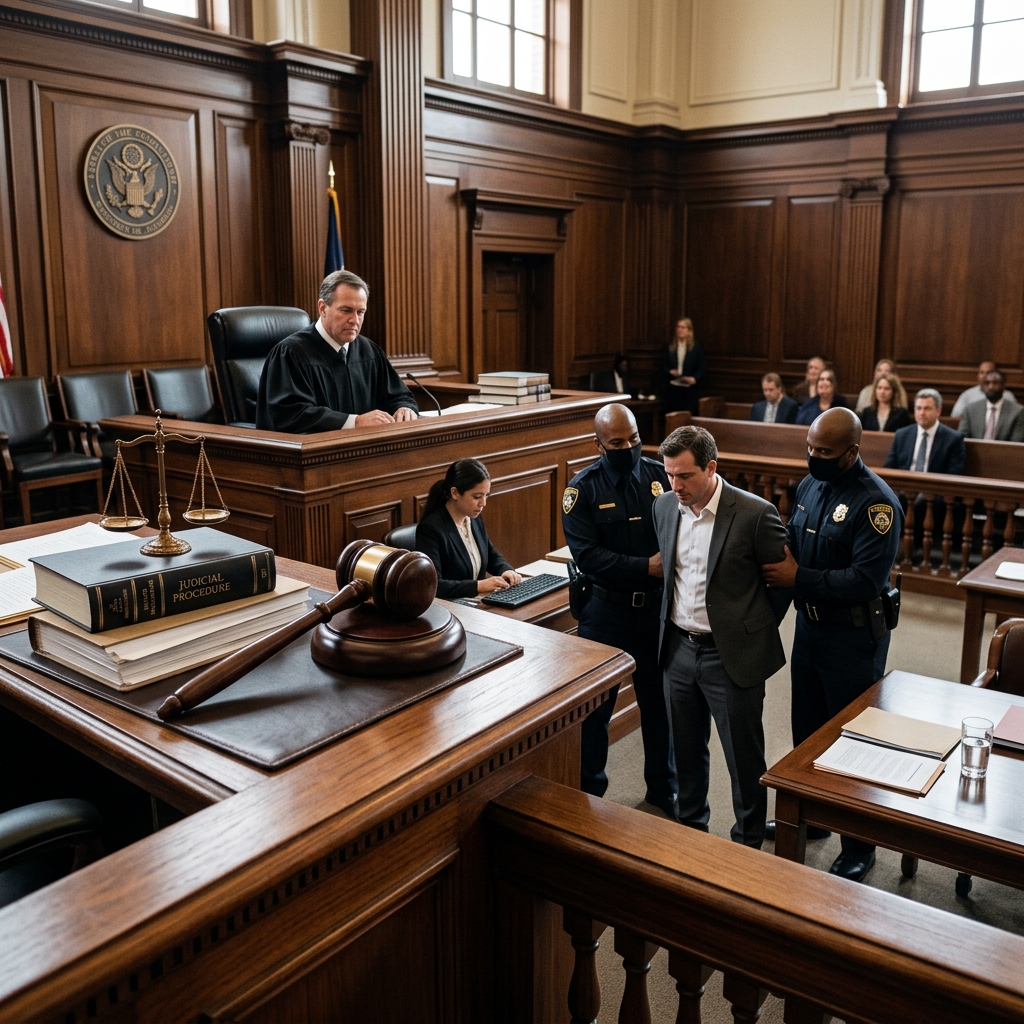
Criminal contempt of court is a powerful tool judges use to protect the integrity and authority of the judicial system. It allows a court to punish conduct that disobeys court orders, disrupts proceedings, or undermines respect for the law.
Despite its importance, criminal contempt can be confusing because it looks like a regular crime in some ways, but it also grows directly out of a judge’s inherent power to control the courtroom. This guide explains what criminal contempt is, how it differs from civil contempt, when it can be used, and what rights an accused person has.
Contempt of Court: The Big Picture
At the broadest level, contempt of court means conduct that disobeys or shows disrespect toward a court, or interferes with the court’s ability to do its job fairly and efficiently.
Courts typically distinguish between two main categories:
- Civil contempt – usually used to pressure someone to obey a court order, such as paying support or turning over documents.
- Criminal contempt – used to punish past misconduct that defied the court’s authority or disrupted the administration of justice.
Although both fall under the broad label of “contempt,” their purposes, procedures, and outcomes are quite different.
What Makes Contempt Criminal?
Criminal contempt focuses on punishing a completed act of defiance or disruption rather than forcing someone to comply going forward. If the court’s main goal is to punish, not to coerce future compliance, the proceeding is generally treated as criminal.
Common hallmarks of criminal contempt include:
- A focus on past conduct that cannot be undone (for example, yelling insults at the judge or refusing to answer questions in violation of a lawful order).
- A fixed jail term or fine that does not change even if the person later apologizes or obeys.
- Procedural protections similar to those in criminal prosecutions, like proof beyond a reasonable doubt and, in many situations, the right to counsel and possibly a jury trial.
Elements of Criminal Contempt
Specific requirements vary by jurisdiction, but criminal contempt generally involves:
- A valid, lawful court order or proceeding (or the court’s authority more broadly).
- Notice or knowledge of what the court required or prohibited.
- Willful disobedience, misbehavior, or interference with the court’s authority or process.
- Proof beyond a reasonable doubt in many jurisdictions, because the sanction is punitive and may involve a criminal conviction or imprisonment.
Direct vs. Indirect Criminal Contempt
Criminal contempt is also divided into direct and indirect forms, depending on where and how the conduct occurs.
| Type of Criminal Contempt | Where It Occurs | Procedural Features | Typical Examples |
|---|---|---|---|
| Direct criminal contempt | In the judge’s presence, usually in open court | May be handled quickly (sometimes “summary” punishment) because the judge personally witnesses the conduct. | Shouting at the judge, refusing to stop talking after being ordered to, or physically disrupting a hearing. |
| Indirect criminal contempt | Outside the court’s immediate presence | Requires a separate proceeding with notice, time to prepare, and the opportunity to be heard; often resembles a criminal trial. | Ignoring a written court order, disobeying an injunction, or tampering with jurors outside the courtroom. |
Because indirect contempt does not happen in front of the judge, stricter procedural safeguards are usually required, such as written charges and the chance to present evidence and call witnesses.
Civil vs. Criminal Contempt: Why the Distinction Matters
The difference between civil and criminal contempt is not just academic. It affects the person’s rights, the burden of proof, and the length and nature of the sanction.
| Feature | Civil Contempt | Criminal Contempt |
|---|---|---|
| Main purpose | Coerce compliance with a court order; remedy harm. | Punish completed misconduct and uphold the court’s authority. |
| Typical sanction | Fine or jail that ends when the person complies (“keys to the jail in their pocket”). | Fixed jail term and/or fine with a set end date. |
| Burden of proof | Often preponderance of the evidence (more likely than not), depending on state law. | Frequently beyond a reasonable doubt, similar to criminal prosecutions. |
| Who initiates | Often a private party seeking enforcement. | Typically the state or the court itself, acting to protect public justice. |
| Right to jury | Less common; depends on the nature and length of sanctions. | More likely where the penalty is serious; some statutes explicitly provide a jury right in indirect penal contempt. |
Because sanctions in criminal contempt can include jail and may carry the stigma of a criminal conviction, courts treat these cases with heightened constitutional sensitivity.
Sources of Criminal Contempt Power
The authority to punish criminal contempt comes from both statutes and the inherent power of courts to protect the judicial process.
- Federal courts are authorized by law to punish a limited list of contemptuous acts, including misbehavior in the court’s presence and disobedience of lawful orders.
- Federal statutory contempt also covers willful disobedience of certain orders when the conduct is a separate criminal offense; penalties are capped (for example, fines to the United States generally cannot exceed a specified amount and jail is limited to a maximum term).
- States have their own statutes and court rules specifying what conduct qualifies as contempt and what punishments are available, often distinguishing between summary punishment in open court and other forms that require fuller procedures.
Procedural Protections in Criminal Contempt
Because criminal contempt may result in imprisonment and resembles a criminal prosecution, many of the same constitutional protections apply.
Key Safeguards
- Notice of the charges: The accused must be told what conduct is alleged to be contemptuous, often in writing for indirect contempt.
- Time to prepare a defense: Courts generally must give a reasonable opportunity to gather evidence and consult with counsel, except in narrow, truly summary situations.
- Right to counsel: When the risk of jail is present, many jurisdictions require that the accused be offered or appointed a lawyer, especially if they cannot afford one.
- Standard of proof: Guilt often must be shown beyond a reasonable doubt, reflecting the punitive nature of the proceeding.
- Right to a jury in serious cases: If the potential punishment is significant, or when required by statute, the accused may be entitled to a jury trial.
Legal commentators have cautioned that, without these protections, criminal contempt can become a tool for swift punishment without adequate process, putting liberty at risk.
Typical Penalties for Criminal Contempt
Penalties depend on the jurisdiction and whether the conduct is federal or state contempt. However, several patterns appear in statutes and court practices.
- Short jail terms: Many statutes cap individual contempt sentences at a relatively brief period, such as days or a few months, especially for summary contempt.
- Fines: Courts often may impose fines up to a statutory maximum, sometimes specifying different limits for contempt committed in open court versus other contexts.
- Combination of fines and jail: Some laws allow a combination of imprisonment and fines, and in a few systems the court may also formally censure the person.
- Probation or suspended sentences: Judges sometimes suspend a contempt sentence and place the person on conditions tailored to deter future misconduct.
In several jurisdictions, the same conduct cannot be punished twice as both civil and criminal contempt, and sentences for criminal contempt may not count toward a person’s prior record level for other crimes, although the contempt is still treated as a criminal conviction for double jeopardy purposes.
Common Situations Leading to Criminal Contempt
While facts vary, certain kinds of behavior frequently give rise to criminal contempt charges.
- Disruption in the courtroom – repeated interruptions, yelling, or refusal to follow a judge’s direct instructions during proceedings.
- Disobeying court orders – ignoring a restraining order, injunction, or other written command when the purpose of sanction is punishment rather than coercion.
- Improper contact with jurors – attempts to influence, threaten, or communicate with jurors outside proper channels.
- Publishing false or dangerous material about a case – in some jurisdictions, intentionally publishing grossly inaccurate reports that threaten the fairness of proceedings can be criminal contempt.
- Officer misconduct – misbehavior or noncompliance by court officers, such as clerks or sheriffs, that undermines judicial orders.
Strategic Considerations and Defenses
Someone charged with criminal contempt should approach the matter as seriously as any criminal accusation. A defense strategy may include factual, legal, and constitutional arguments.
Possible Defenses
- Lack of willfulness: If the conduct was accidental, based on misunderstanding, or outside the person’s control, the “willful” element may be missing.
- Invalid or unclear order: A person generally cannot be punished for violating an order that was vague, illegal, or beyond the court’s authority.
- Insufficient notice or process: In indirect contempt, failing to provide written notice, adequate time to prepare, or a fair hearing can be grounds to challenge the contempt finding.
- First Amendment and other constitutional rights: In some cases involving speech or publications, free-speech protections may limit the court’s contempt powers.
Because rules differ by jurisdiction, working with a knowledgeable criminal or appellate attorney is often crucial when contempt charges arise.
Practical Tips for Avoiding Criminal Contempt
Most people will never face a criminal contempt proceeding. Those who interact with the court system, however, can reduce their risk by following some practical guidelines.
- Read orders carefully and ask clarifying questions through your attorney if anything is unclear.
- Respect courtroom rules, including dress codes, speaking only when allowed, and turning off electronic devices.
- Follow deadlines and instructions given by the judge or court staff.
- Avoid contact with jurors outside formal settings, and never discuss a case with them on your own.
- Communicate through counsel whenever possible, rather than directly challenging a judge’s ruling in open court.
FAQs About Criminal Contempt of Court
Is criminal contempt a crime like any other offense?
In many jurisdictions, a conviction for criminal contempt is treated as a criminal conviction, even though it arises from the court’s inherent powers rather than a traditional criminal statute. However, contempt often has its own penalty provisions and may not always be counted the same way as other offenses for sentencing or prior record purposes.
Can I be jailed immediately for something I say in court?
For direct contempt that occurs in the judge’s presence, some courts allow “summary” punishment when behavior seriously disrupts proceedings, meaning the judge may impose a sanction quickly to restore order. Even then, appellate courts expect judges to use this power sparingly and only for clear, serious misconduct.
Do I have the right to a lawyer in a criminal contempt case?
When imprisonment is a realistic possibility, many courts recognize a right to counsel, and some states explicitly require notice, time to obtain a lawyer, and, in certain cases, appointment of counsel for those who cannot afford one.
Can I get a jury trial for criminal contempt?
That depends on the jurisdiction and on how serious the potential punishment is. Some statutes expressly provide a right to a jury trial in indirect penal contempt cases, and constitutional law may require a jury for “serious” contempt sentences that exceed a certain length of imprisonment.
Can the same behavior be punished as both civil and criminal contempt?
Many systems bar punishing the same act twice as both civil and criminal contempt, especially when the sanctions are truly punitive in nature. Courts may have to choose one form of contempt for a particular act and avoid stacking overlapping penalties.
What should I do if I am accused of criminal contempt?
Because your liberty and reputation are at stake, you should treat the accusation seriously: read any notice carefully, avoid further confrontational behavior, preserve documents and evidence, and contact a qualified attorney immediately. An attorney can help you understand whether the proceeding is civil or criminal, what penalties you might face, and what defenses you may have.
References
- Criminal Contempt — UNC School of Government (NC PRO). 2023-03-01. https://ncpro.sog.unc.edu/manual/204-2
- Understanding the Differences between Civil and Criminal Contempt — Gill Family Law. 2020-07-15. https://www.gillfamlaw.com/blog/kzfjo271h1qyq6liredimwjhywgpv4
- Civil vs. Criminal Contempt: Understanding the Critical Differences and Legal Consequences — GJ Chavez & Associates. 2021-09-10. https://gjchavezlaw.com/blog/civil-vs-criminal-contempt-understanding-the-critical-differences-and-legal-consequences/
- 18 U.S. Code § 402 – Contempts constituting crimes — Legal Information Institute, Cornell Law School. 2012-01-03. https://www.law.cornell.edu/uscode/text/18/402
- Chapter 41, Title 42 – Judiciary and Judicial Procedure — Pennsylvania General Assembly. 2019-11-27. https://www.palegis.us/statutes/consolidated/view-statute?txtType=HTM&ttl=42&div=0&chpt=41
- Indirect Contempt – A Primer — Oklahoma Bar Association. 2017-12-01. https://www.okbar.org/barjournal/dec2017/obj8833houts/
- 752. General Definition of Contempt — U.S. Department of Justice, Justice Manual. 2018-02-01. https://www.justice.gov/archives/jm/criminal-resource-manual-752-general-definition-contempt
- Criminal Contempt in Maine: Constitutionally Protected or Neglected? — Maine Law Review. 1982-01-01. https://digitalcommons.mainelaw.maine.edu/mlr/vol34/iss2/11/
Similar Articles








Read full bio of medha deb




