
Georgia Marriage Laws: Complete Guide To Licenses And Ceremonies
A practical guide to eligibility, licenses, ceremonies, and legal rules for getting married in Georgia.
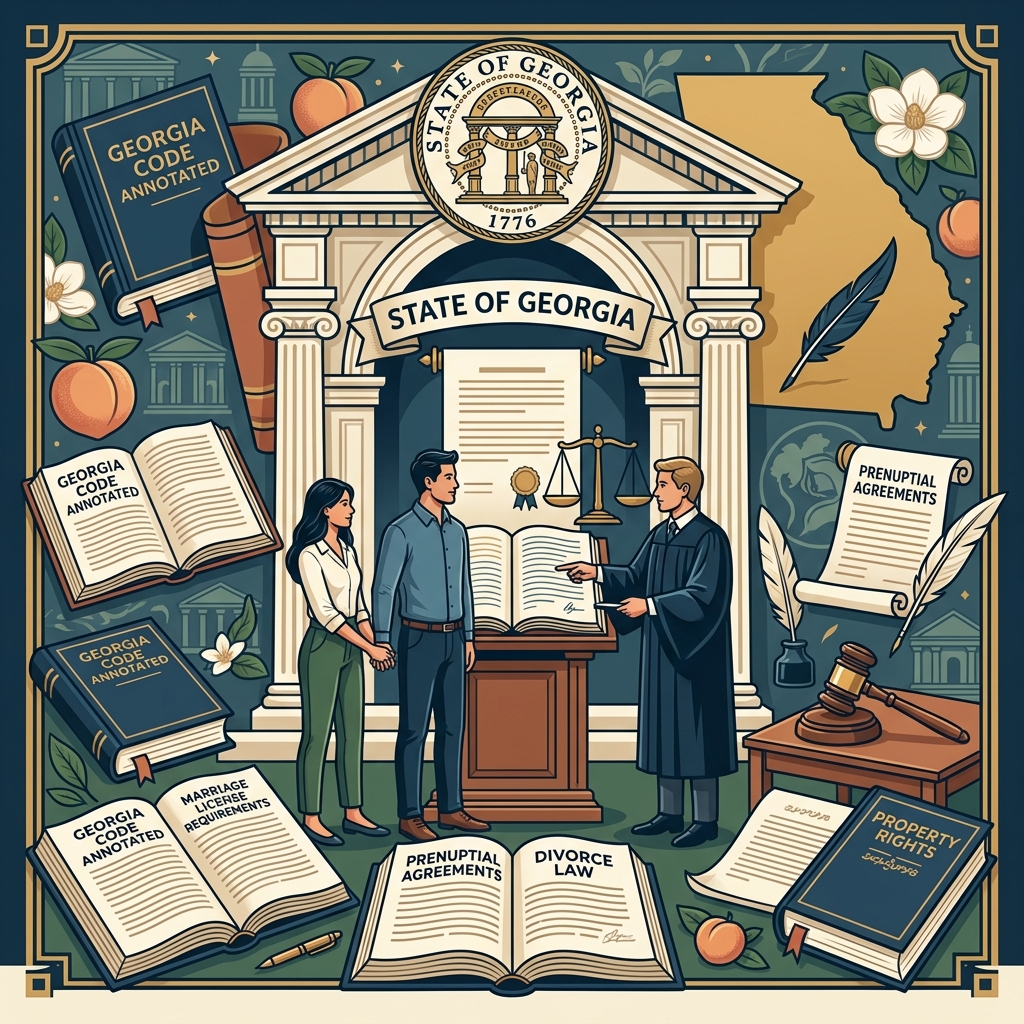
Planning a wedding in Georgia involves more than choosing a venue and sending invitations. To have a marriage that is legally recognized by the state, couples must meet specific eligibility rules, follow the correct license procedures, and ensure their ceremony is conducted and recorded according to Georgia law. This guide explains those requirements in plain language so you can approach your wedding with confidence.
Big Picture: What Makes a Marriage Legally Valid in Georgia?
Georgia treats marriage as both a personal relationship and a legal contract. For a marriage to be valid, state law requires three core elements:
- Parties able to contract – both individuals must have the legal capacity to enter into a marriage contract (for example, being of sufficient age and sound mind, and not already married to someone else).
- Actual agreement to marry – there must be a present, mutual agreement to become spouses, not merely a promise to marry in the future.
- Consummation according to law – the marriage must be completed using legally recognized steps, which for modern marriages in Georgia generally means obtaining a license and having a lawful ceremony performed by an authorized officiant.
If any one of these elements is missing, a marriage can be declared invalid or may never have come into existence legally, even if the couple considers themselves married.
Who Is Allowed to Marry in Georgia?
Not everyone is eligible to marry under Georgia law. The state imposes several limits designed to protect vulnerable people and prevent conflicts with existing legal relationships.
Age and Capacity Requirements
Georgia sets a minimum age and mental capacity threshold for marriage. To get married in Georgia, you generally must:
- Be at least 18 years old to marry without special conditions.
- Be of sound mind, meaning you are mentally able to understand the nature of marriage and make a voluntary decision to enter into it.
- Have no living spouse from a prior undissolved marriage. You cannot marry again until your previous marriage has been legally terminated by divorce or annulment.
Georgia law recognizes a narrow exception for some 17-year-olds, but only if they meet strict emancipation requirements and other conditions set by statute and local probate courts. The aim of these rules is to ensure that individuals entering marriage can legally consent and are not already bound by another marital contract.
Restrictions Based on Family Relationship
Georgia prohibits marriage between close relatives, both to protect family members and to avoid genetic and social issues associated with incestuous unions. You cannot marry anyone who is closely related to you in specific ways, such as your:
- Parent or grandparent
- Child or stepchild
- Brother or sister
- Aunt, uncle, niece, or nephew
These prohibitions apply whether the relation arises by blood or, in certain cases, by marriage. If a relationship falls within the prohibited degrees of kinship, any attempted marriage will be void.
Marital Status Restrictions
Georgia does not allow someone to marry if they are already married to another person. In legal terms, a married person lacks the capacity to enter a second marriage contract, because the first remains in force until dissolved by divorce or annulment. Entering into a second marriage without properly ending the first can lead to serious consequences, including criminal charges for bigamy and the invalidation of the later marriage.
Georgia Marriage Licenses: How to Apply and What to Expect
A marriage license is the official authorization from the state that allows you to marry. In Georgia, the license is issued by probate courts and must be obtained before the ceremony takes place.
Where and How to Apply
Couples must apply in person at a county probate court. The rules differ slightly depending on whether either person lives in Georgia:
- If at least one applicant is a Georgia resident, the couple can apply for a marriage license in any county probate court in the state.
- If neither applicant is a Georgia resident, they must apply in the county where the wedding ceremony will take place.
Both parties must be physically present to apply. You cannot apply by proxy or have someone else submit the application on your behalf.
Required Identification and Documentation
When you appear at the probate court to request a license, you will be asked to provide documentation to prove key facts such as age, identity, and prior marital status. Typical requirements include:
- Proof of age and identity, such as a driver’s license, passport, military ID, or certified birth certificate.
- Proof of divorce or the death of a prior spouse, if you have been married before, so the court can confirm that no earlier marriage is still legally in effect.
- A method of payment for the license fee, which varies by county and may be reduced if you have completed approved premarital counseling.
Foreign citizens generally must present valid passports and may need certified translations of documents into English, depending on local court rules.
Waiting Periods and License Validity
Georgia law does not impose a statewide waiting period between obtaining a marriage license and holding the ceremony, so couples can often marry the same day they receive their license. However, licenses are not blank checks that last forever. Many Georgia licenses are valid only for a limited period, such as six months, and the ceremony must occur within that timeframe for the marriage to be legally recognized.
| Topic | Rule |
|---|---|
| Issuing authority | County probate courts issue marriage licenses. |
| Applicant presence | Both parties must appear in person to apply. |
| Residency rule | Residents may apply in any county; non-residents must apply in the county of the ceremony. |
| Minimum age | Generally 18; narrow exceptions exist for some 17-year-olds. |
| Waiting period | No statewide waiting period; license validity is time-limited. |
Marriage Ceremonies and Officiants in Georgia
Once you have a marriage license, you must complete a legally valid ceremony to make the marriage official. Georgia law gives couples flexibility in choosing who performs the ceremony and how it is conducted, but certain minimum requirements must be met.
Authorized Officiants
Georgia allows both civil and religious officiants to solemnize marriages. Common authorized officiants include:
- Judges, including retired judges
- Magistrates and city recorders
- Ministers and other recognized religious officials
The officiant must be legally qualified under state law and typically must be at least 18 years old. Religious officiants do not need to belong to a specific denomination, but they must still follow basic legal requirements when conducting the ceremony.
Elements of a Valid Ceremony
While the style of the ceremony can be personalized to reflect the couple’s beliefs and preferences, Georgia law expects certain core elements to be present:
- Each person clearly and voluntarily expresses their consent to marry, often by answering “I do” or similar words when asked by the officiant.
- The officiant makes a clear declaration that the couple is married, such as stating “I now pronounce you married.”
- Both spouses and the officiant are physically present throughout the ceremony; Georgia does not recognize marriage by proxy.
- At least two witnesses attend and are able to sign the marriage license after the ceremony, according to typical practice.
A ceremony that omits these legal essentials may not create a valid marriage, even if the couple follows other cultural or religious traditions.
Returning the License After the Ceremony
The legal process does not end when the couple says their vows. The officiant must:
- Properly complete the marriage license with the required information and signatures.
- Return the signed license to the issuing probate court, usually within 30 days of the ceremony.
Once the court records the license, the state will issue an official marriage certificate, typically mailed to the couple within about 30 days. This certificate serves as proof of marriage for name changes, tax filings, immigration processes, and other legal purposes.
Common-Law Marriage and Historical Context
Historically, Georgia recognized common-law marriages—unions formed without a formal ceremony or license, based on mutual agreement and cohabitation. Under older legal principles, a common-law marriage required:
- Parties able to contract
- An actual agreement to be husband and wife
- Consummation by living together in Georgia as spouses
All three elements needed to exist simultaneously for the relationship to be treated as a legal marriage. Although modern law no longer allows new common-law marriages to be formed in Georgia, earlier relationships that met these criteria before the cutoff date can still be recognized for certain legal purposes, such as inheritance or benefits disputes.
Legal Rights and Responsibilities of Married Couples
Marriage significantly changes the legal status of a couple. In Georgia, unmarried partners generally do not receive special legal rights simply by living together, but married spouses do. Some of the legal implications of marriage include:
- Property and inheritance rights – spouses may have rights to share marital property and to inherit from each other under state law if one dies without a will.
- Support obligations – marriage can create responsibilities for financial support during the relationship and, in some cases, after divorce.
- Decision-making authority – spouses often have priority in making medical decisions if one partner becomes incapacitated and has not designated another decision-maker.
- Tax and benefit consequences – married status may affect state and federal taxes, insurance, pensions, and social security benefits.
Because these rights and obligations can have long-term consequences, couples are encouraged to understand how marriage interacts with their finances, estate plans, and family responsibilities before tying the knot.
Frequently Asked Questions About Georgia Marriage Laws
Do we have to live in Georgia to get married there?
No. Georgia does not require either person to be a resident for the marriage to be valid. However, if neither partner lives in Georgia, the couple must apply for the marriage license in the county where the ceremony will be held.
Can we get married the same day we get our license?
In many cases, yes. Georgia law does not impose a statewide waiting period between license issuance and the ceremony, so couples can often marry immediately after obtaining the license, provided it is still within the license’s validity period.
Is a religious ceremony required?
No. Couples can choose between religious and civil ceremonies. Both are valid as long as the officiant is authorized by Georgia law and the ceremony includes the essential elements of consent and declaration of marriage.
Can an online-ordained minister perform a wedding in Georgia?
Georgia generally allows ministers and religious officials to perform weddings, including those ordained online, as long as they meet legal age and other basic requirements, and the ceremony complies with state rules for consent and documentation.
What happens if the officiant forgets to return the license?
If the license is not returned to the probate court, the marriage may not be properly recorded, which can cause issues when you need a marriage certificate. Couples should follow up with the officiant and the court to ensure the license is filed. In serious cases, additional legal steps may be needed to correct the record.
Are there special rules for previously divorced individuals?
Yes. If you were married before, you must show proof that your previous marriage ended, typically by presenting a divorce decree or death certificate for your former spouse. The probate court uses this documentation to verify that you are legally free to marry again.
Practical Tips for a Legally Smooth Georgia Wedding
While most couples focus on the celebration, paying attention to legal details can prevent problems later. Consider the following practical steps:
- Check eligibility early – confirm that both partners meet age, capacity, and relationship requirements under Georgia law.
- Research the appropriate probate court – based on residency and ceremony location, decide where you will apply for the license.
- Prepare required documents – gather identification, divorce or death records, and payment ahead of time.
- Select an authorized officiant – verify that your chosen officiant is legally permitted to perform weddings in Georgia.
- Plan for witnesses – arrange for at least two adults to attend the ceremony and sign the license.
- Confirm license filing – after the ceremony, follow up to ensure the officiant has returned the license to the court and that you receive your marriage certificate.
By treating the legal side of your wedding with the same care as the personal and ceremonial aspects, you can be confident that your marriage will be recognized and enforceable under Georgia law.
References
- Apply for a Marriage License — Georgia.gov. 2023-05-10. https://georgia.gov/apply-marriage-license
- Georgia Code § 19-3-1: Prerequisites to Valid Marriage — Justia / Official Code of Georgia. 2020-01-01. https://law.justia.com/codes/georgia/2020/title-19/chapter-3/article-1/section-19-3-1/
- What Should I Know About Marriage? — GeorgiaLegalAid.org. 2021-07-15. https://www.georgialegalaid.org/resource/what-should-i-know-about-marriage-1
- Georgia Marriage Laws — DocDraft Legal Guides. 2026-01-02. https://www.docdraft.ai/legal-guides/getting-married/georgia
- Marriage Licenses — Fulton County Probate Court. 2023-03-20. https://www.fultonprobatega.org/195/Marriage-Licenses
- Georgia Wedding Laws — Universal Life Church Ministries. 2022-09-01. https://www.ulc.org/wedding-laws/georgia
Similar Articles








Read full bio of Sneha Tete


