
Alimony In Georgia: Essential Guide To Eligibility And Types
Learn how Georgia courts define, award, modify, and terminate alimony so you can better navigate spousal support issues in divorce.
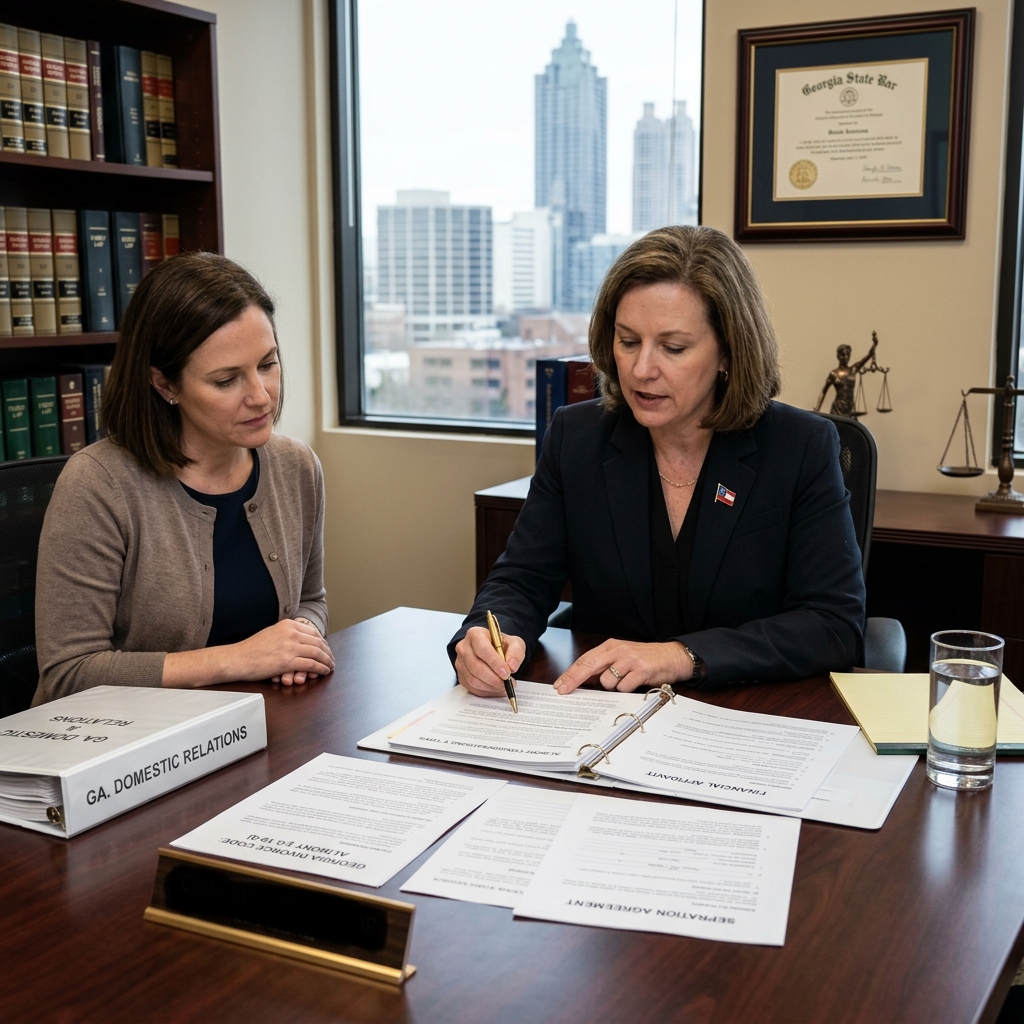
Alimony, often called spousal support, is one of the most confusing issues people face in a Georgia divorce. Under Georgia law, alimony is not automatic and is only awarded when specific legal and factual conditions are met. This guide explains how Georgia defines alimony, when it is available, what types of support courts can award, and how alimony can be changed or terminated over time.
Core Legal Definition of Alimony in Georgia
The Georgia Code defines alimony as an allowance from one spouse’s estate for the support of the other spouse while the couple is living separately. In plain terms, alimony is money one spouse pays to the other to help cover living expenses after separation or divorce.
- Purpose: Provide financial support to a spouse who has a demonstrated need.
- Source: Paid out of the paying spouse’s income or assets.
- Duration: Can be temporary (during the case) or longer-term after the divorce.
Georgia law makes clear that alimony is discretionary: courts are authorized, but not required, to award alimony based on the facts of each case.
When Alimony Is Legally Allowed — and When It Is Barred
Georgia is unusual compared to some states because fault, particularly adultery or desertion, can completely bar a spouse from receiving alimony. The statute requires the court to examine why the marriage ended whenever alimony is requested.
Situations Where Alimony Is Prohibited
Under Georgia Code § 19-6-1, a spouse may not receive alimony if the court finds, by a preponderance of the evidence, that the separation was caused by that spouse’s:
- Adultery (having a sexual relationship outside the marriage).
- Desertion (wrongful abandonment of the marital home).
“Preponderance of the evidence” means the judge must be persuaded it is more likely than not that adultery or desertion caused the breakup. If that standard is met, the requesting spouse loses the right to alimony entirely.
Cases Where Alimony May Be Awarded
In all other divorce situations, Georgia courts may award alimony based on two core questions:
- Does the requesting spouse have a financial need for support?
- Does the other spouse have the ability to pay that support from income or assets?
Both need and ability must be present for alimony to be ordered. Even when those conditions exist, the judge still has broad discretion and may decide that alimony is unnecessary or inappropriate in the circumstances.
Types of Alimony Available in Georgia
Georgia law recognizes temporary and permanent alimony in the statute. Family law practitioners also commonly describe alimony using practical labels such as rehabilitative and lump-sum support.
| Type of Alimony | When It Is Used | Key Features |
|---|---|---|
| Temporary alimony | While the divorce or separation case is pending. | Helps the lower-earning spouse cover living and legal expenses until the case is resolved. |
| Rehabilitative alimony | After divorce, for a limited time. | Supports a spouse while they gain education, training, or work experience to become self-supporting. |
| Permanent alimony | Long-term marriages where a spouse cannot reasonably become self-supporting. | Ongoing support, now rare and usually reserved for serious health, age, or disability issues. |
| Lump-sum alimony | As part of final settlement or court order. | Paid in a single payment or fixed number of installments; often functions like a property-based award. |
Temporary Alimony
Temporary alimony is meant to stabilize finances during the divorce process. Courts may order one spouse to pay support so the other can pay rent, utilities, and other basic expenses until a final decree is entered. This type of alimony usually ends when the divorce is finalized, at which point the court either replaces it with a new order or terminates support altogether.
Rehabilitative and Permanent Support
Rehabilitative alimony is now the most common form of post-divorce support in Georgia. Judges use it to give a spouse a defined period to:
- Finish a degree or training program.
- Re-enter the workforce after time spent as a full-time caregiver.
- Build sufficient job experience to earn a living wage.
Permanent alimony is rare and tends to be considered only when the marriage was long-term and the supported spouse is unlikely ever to become self-supporting due to age, disability, or chronic health conditions.
Lump-Sum Alimony
Georgia courts may approve or order alimony in a single lump-sum payment, or in a series of fixed payments, instead of monthly ongoing support. Lump-sum alimony is often negotiated as part of the overall divorce settlement, particularly when:
- The parties want to avoid long-term financial entanglement.
- The paying spouse has sufficient assets to make a one-time payment.
- The spouses prefer certainty over future modifications.
Key Factors Georgia Courts Consider When Awarding Alimony
Georgia law directs judges to consider both financial and non-financial aspects of the marriage when deciding whether to award alimony and in what amount. There is no fixed formula, so each case is evaluated individually.
Financial Considerations
Common financial factors include:
- Income of each spouse: Wages, bonuses, and other regular earnings.
- Assets and debts: Savings, investments, real estate, and outstanding obligations.
- Standard of living during marriage: The lifestyle the couple maintained together.
- Earning capacity: Education, job skills, work history, and realistic job opportunities.
- Length of the marriage: Long-term marriages are more likely to generate alimony claims.
Judges compare the requesting spouse’s budget against their actual income and assets to determine the scale of need, then weigh that against the other spouse’s financial ability.
Personal and Conduct-Based Factors
In addition to money, courts may consider personal circumstances and marital conduct.
- Age and health of each spouse: Medical conditions or age-related limitations that affect work.
- Contributions to the marriage: Including child care, homemaking, or supporting the other spouse’s career.
- Conduct of the parties: How spouses treated each other during the marriage.
- Fault in the breakup: Particularly adultery or desertion, which may bar or reduce alimony.
Georgia’s statute explicitly allows courts to consider each spouse’s conduct toward the other when deciding whether to grant alimony and in what amount.
How to Request Alimony in a Georgia Divorce
Alimony must be formally requested during the divorce case. If a spouse fails to ask for alimony before the divorce is final, they generally cannot come back later and request support.
Ways Alimony Can Be Established
Alimony can arise in three main ways:
- By agreement: The spouses negotiate an alimony arrangement and ask the court to approve it as part of the divorce decree.
- By court order after a contested hearing: If the parties cannot agree, the judge decides whether alimony is appropriate and sets the amount and duration.
- As part of temporary orders: During the case, the court may grant temporary alimony to maintain stability until trial or settlement.
The spouse seeking alimony bears the responsibility to present evidence showing both need and the other spouse’s ability to pay.
Duration and Termination of Alimony
Alimony orders in Georgia are not always permanent. The duration depends on the type of support and the circumstances of the case.
Common End Points for Alimony
Under Georgia law and typical court practice, alimony usually ends when one of the following occurs:
- Remarriage of the recipient: Ongoing alimony normally stops when the supported spouse remarries.
- Death of either party: Periodic alimony payments end if either spouse dies.
- Cohabitation with a new partner: Courts may terminate or reduce alimony if the recipient enters a long-term, marriage-like relationship.
- Expiration date reached: For rehabilitative or time-limited alimony, payments stop at the date set in the court order.
Temporary alimony automatically ends when the divorce is finalized, unless the court explicitly extends support into a post-divorce order.
Changing Alimony: Modification in Georgia
Georgia allows modification of most periodic alimony awards when there is a significant change in circumstances, but lump-sum alimony and many property-like arrangements are typically not modifiable.
Grounds for Modification
Either spouse can request a change if they can show major new facts, such as:
- Loss of job or substantial income reduction by the paying spouse.
- Retirement that seriously lowers the paying spouse’s income.
- Recipient spouse obtaining well-paying employment or improved financial status.
- Major health changes that affect either spouse’s earning ability or expenses.
The court reviews updated financial information and decides whether to reduce, increase, or terminate alimony. Parties must file a formal petition; changes do not occur automatically.
Practical Tips for Spouses Facing Alimony Issues
Alimony decisions in Georgia are fact-intensive and can significantly impact both spouses’ financial futures. Consider the following practical steps:
- Document your finances: Collect pay stubs, tax returns, bank statements, and monthly expense records.
- Understand fault implications: If adultery or desertion is alleged, be prepared for those issues to affect alimony eligibility.
- Consider negotiation: Many couples resolve alimony through settlement, which can offer more control and predictability than trial.
- Think long-term: Evaluate how an alimony arrangement will interact with property division, child support, and your future budget.
- Seek legal advice: Because Georgia law is discretionary and fact-specific, individualized legal guidance is often essential.
Frequently Asked Questions about Georgia Alimony
Is alimony guaranteed in every Georgia divorce?
No. Georgia does not treat alimony as a right. Courts only award alimony when the requesting spouse shows a genuine need and the other spouse has the ability to pay, and when fault rules do not bar support.
Can both husbands and wives request alimony?
Yes. Georgia law allows either spouse to seek alimony, regardless of gender. What matters is financial need and ability to pay, not which spouse filed for divorce or traditional gender roles.
How do judges calculate the amount of alimony?
There is no fixed formula in Georgia. Judges weigh income, assets, debts, living expenses, the standard of living during the marriage, and each spouse’s earning capacity, along with personal and conduct factors.
Can I ask for alimony after the divorce is final?
Generally no. In Georgia, alimony must be requested during the divorce proceedings. If it is not included in the divorce pleadings or settlement, you usually cannot seek it later.
What happens if my ex-spouse stops paying court-ordered alimony?
If a spouse fails to pay alimony ordered by the court, the recipient can file an enforcement action. Possible court responses may include contempt findings, income withholding, or other enforcement tools, depending on the case and local practice.
References
- Georgia Code § 19-6-1, Alimony Defined; When Authorized — State of Georgia / Justia (codified text). 2020-01-01. https://law.justia.com/codes/georgia/2020/title-19/chapter-6/article-1/section-19-6-1/
- 19-6-1. Alimony defined; permanent and temporary — WomensLaw.org (summary of Georgia statute). 2022-06-01. https://www.womenslaw.org/laws/ga/statutes/19-6-1-alimony-defined-permanent-and-temporary
- What should I know about alimony? — GeorgiaLegalAid.org. 2023-05-10. https://www.georgialegalaid.org/resource/what-should-i-know-about-alimony
- What Qualifies a Spouse for Alimony in Georgia? — The Fairell Firm. 2023-04-15. https://www.fairellfirm.com/what-qualifies-a-spouse-for-alimony-in-georgia
- Alimony In GA | Spousal Support Georgia — Stearns Law. 2022-09-01. https://stearns-law.com/family-law/alimony-and-spousal-support/
- Spousal Support Laws Georgia — Georgia Civil Justice Foundation. 2021-03-01. https://gaciviljustice.com/divorce/spousal-support/
Similar Articles








Read full bio of Sneha Tete


