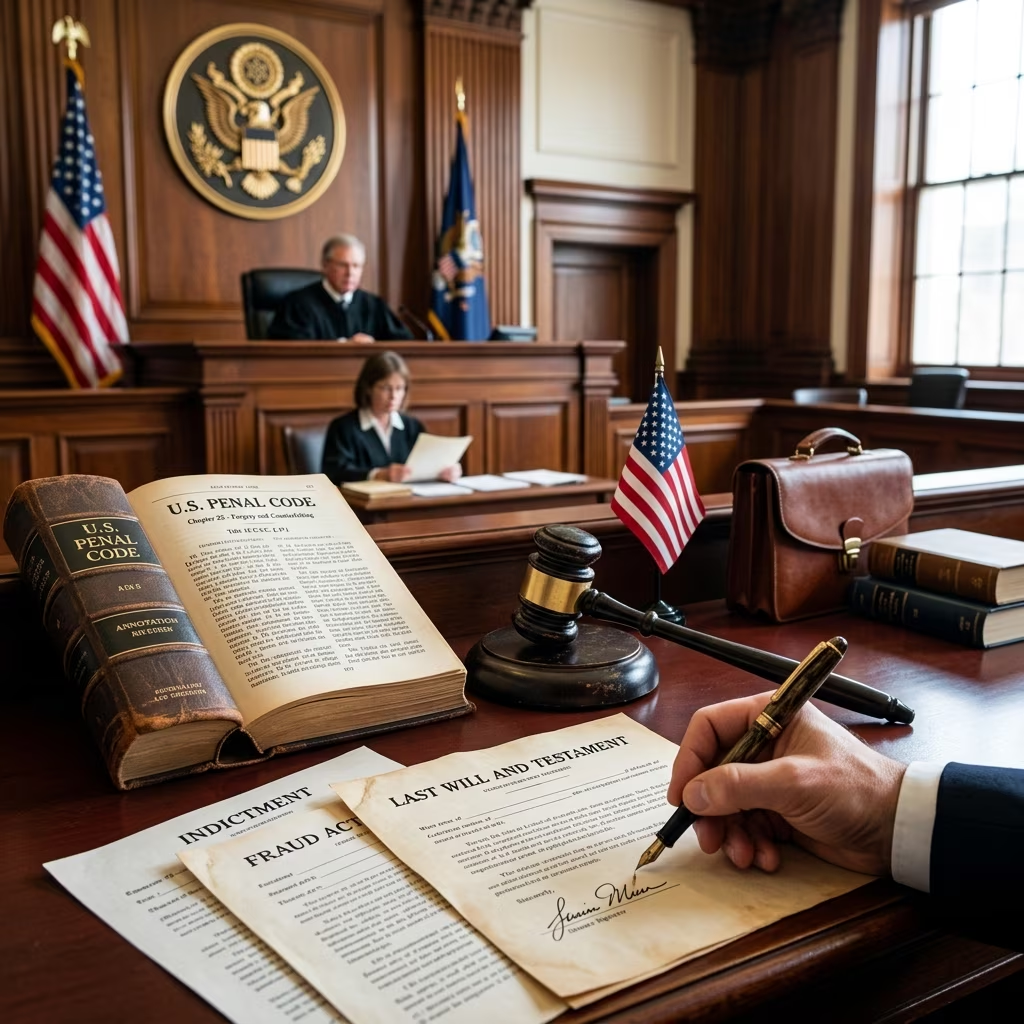
Forgery is one of the most common fraud-related crimes in the United States, but many people misunderstand what it actually covers. It is not limited to signing someone else’s name on a check; forgery can involve a wide range of written instruments, digital records, government securities, and financial documents, and it can be prosecuted under both federal and state law.
This guide explains how forgery is defined, how it differs from counterfeiting, what conduct typically leads to forgery charges, the penalties a person may face, and the defenses that may be available. It is designed for informational and educational purposes and is not a substitute for legal advice from an attorney.
What Is Forgery? Core Legal Concepts
In modern U.S. law, forgery generally refers to the act of creating, altering, or using a false written instrument with the intent to defraud another person, organization, or government.
While exact wording varies by jurisdiction, most definitions share three core elements:
- A written instrument or document — something that records rights, obligations, identity, value, or legal status, such as contracts, checks, deeds, IDs, or digital records.
- False making or material alteration — the document is created, completed, signed, or changed in a way that misrepresents reality.
- Intent to defraud — the person acts with a purpose to deceive another and obtain an unlawful benefit or cause a loss.
Under traditional common law, forgery involved altering a legal instrument with fraudulent intent. Modern statutes broaden that definition to cover a wide variety of records, including digital data and government-issued securities.
Forgery vs. Counterfeiting: How They Differ
Forgery and counterfeiting are closely related, and in many contexts they are prosecuted under the same chapter of federal criminal law. However, the terms are distinct:
| Aspect | Forgery | Counterfeiting |
|---|---|---|
| Primary focus | False or altered written instruments (e.g., checks, contracts, deeds, IDs). | Production or use of fake currency or securities, or imitation branded goods. |
| Typical examples | Signing another person’s name on a check; changing a deed; falsifying a transcript. | Printing fake U.S. bills; creating counterfeit government bonds or digital images of them. |
| Key statute (federal) | Forged government securities, false writings submitted to federal officials, etc. | 18 U.S.C. Chapter 25 provisions on obligations, securities, plates, and counterfeit acts. |
| Intent element | Intent to defraud a person, entity, or government. | Intent to pass counterfeit currency/securities as genuine for financial gain. |
In daily practice, prosecutors may use both concepts in the same case if the conduct involves forged documents and counterfeit securities or currency.
Types of Forgery Recognized in Criminal Law
While state codes and federal statutes use different labels, most legal systems recognize multiple forms of forgery, each focused on a particular type of conduct or document.
1. Making or Altering a Forged Instrument
One core offense is forgery by making or altering an instrument. This occurs when a person creates a false document or changes an existing one so that it appears to be genuine and complete.
- Inventing a fake contract and adding a forged signature.
- Changing the amount on a check or inserting new terms into a signed agreement.
- Editing a digital financial record to show money that was never deposited.
Under many systems, including military law (Article 123 of the Uniform Code of Military Justice) and federal provisions, making or altering a document with fraudulent intent is enough to constitute forgery even if no one has yet relied on the document.
2. Uttering or Using a Forged Instrument
A separate offense often called uttering arises when a person uses, passes, or presents a document they know to be forged.
Examples include:
- Cashing a check knowing the signature on it was forged.
- Submitting a falsified loan application or deed to a bank.
- Presenting an altered government bond or security as genuine to obtain money.
Federal law codifies similar concepts. For instance, one provision recognizes separate crimes for forging federal securities, uttering them, and presenting false writings to U.S. officials in support of claims against the government.
3. Presenting False Writings to Government Agencies
When forged documents are submitted to federal agencies or used to support claims against the United States, federal law takes a particularly strict view. Under 18 U.S.C. provisions, presenting or using a false writing in dealings with the government — such as obtaining benefits, payment, or approval — can be charged separately from forging the document itself.
Conduct in this category often involves:
- False statements or altered documents in benefit applications or reimbursement claims.
- Forged endorsements on federal checks or obligations.
- Fabricated invoices or records submitted to government agencies.
4. Forgery of Government Obligations and Securities
Federal law devotes significant attention to forgery and counterfeiting of government obligations and securities. These include U.S. bonds, Treasury notes, and other official financial instruments.
Relevant statutes make it a crime to:
- Falsely make, forge, counterfeit, or alter any obligation or other security of the United States, with intent to defraud.
- Pass, sell, or deal in such forged or counterfeit obligations knowing they are false.
- Produce or possess plates, stones, or digital images used to create counterfeit obligations.
These offenses can draw severe penalties, including substantial fines and lengthy prison sentences, because they directly compromise the integrity of the national financial system.
Common Examples of Forgery in Everyday Life
Forgery statutes are intentionally broad so they can address many forms of fraudulent conduct. Typical situations that lead to forgery charges include:
- Checks and banking documents
Signing someone else’s name on a check; altering the payee or amount; creating a fake cashier’s check. - Contracts and deeds
Changing terms of a signed lease; inserting forged signatures into property transfer documents; fabricating a lien release. - Identification and official records
Counterfeiting driver’s licenses or passports; altering birth certificates; falsifying an academic transcript. - Digital and data-based instruments
Manipulating computer-stored account records; fabricating electronic payment confirmations; creating false digital certificates. - Government checks and securities
Forging endorsements on federal benefit checks; presenting altered Treasury bonds.
In many states, any written instrument that embodies evidence of value, rights, or identity can potentially be the subject of forgery, including some forms of computer data and digital records.
How Forgery Is Charged: Misdemeanors, Felonies, and Degrees
Whether forgery is charged as a misdemeanor or felony depends largely on the jurisdiction, the type of instrument, the amount of money or value involved, and the defendant’s prior record.
Variations Across State Laws
States structure forgery offenses differently, often using degrees or levels to reflect seriousness. For example, one state may define multiple forgery offenses that range from misdemeanor conduct involving low-value checks to more serious felonies involving large sums, government instruments, or repeated offenses.
Key considerations typically include:
- Value of the fraud — Higher amounts often trigger higher degrees and felony status.
- Nature of the instrument — Forging government documents, securities, or IDs is usually treated more severely than minor personal documents.
- Scope and planning — Organized schemes, multiple forged instruments, or systematic fraud can lead to elevated charges.
Federal Forgery and Counterfeiting Charges
At the federal level, forgery-related offenses involving U.S. obligations and securities fall under Chapter 25 of Title 18 of the U.S. Code.
Relevant provisions include:
- Criminalizing counterfeit acts committed outside the United States that affect U.S. obligations.
- Prohibiting forging, counterfeiting, or altering U.S. obligations or securities.
- Penalizing uttering, dealing in, or possessing counterfeit obligations or related counterfeiting tools.
These offenses can carry significant custodial sentences — some up to 20 years in prison — along with fines and potentially forfeiture of assets used in or derived from the fraudulent activity.
Potential Penalties and Consequences
Penalties for forgery vary widely but commonly include a combination of incarceration, fines, probation, restitution, and lasting collateral consequences.
Criminal Sentences
- Misdemeanor forgery
In some jurisdictions, lower-level forgery (such as small-value checks) may be charged as a misdemeanor, with possible jail terms up to one year and fines. - Felony forgery
More serious offenses — larger amounts, government instruments, or elaborate schemes — can result in multi-year prison sentences. Depending on the statute, sentences may range from several years to 20 years for the most serious federal crimes.
Financial and Civil Consequences
Beyond imprisonment or probation, those convicted of forgery often face:
- Restitution orders to repay victims for financial losses caused by the forgery.
- Fines imposed by the court in addition to restitution.
- Civil lawsuits by individuals or organizations harmed by the forged documents.
Long-Term Collateral Effects
Because forgery is considered a crime of dishonesty, a conviction can have long-lasting effects on a person’s life:
- Difficulty obtaining employment in finance, law, government, or other trust-sensitive positions.
- Challenges in securing professional licenses.
- Potential immigration consequences for non-citizens.
- Damage to personal and business reputation.
Key Elements Prosecutors Must Prove
Regardless of the jurisdiction, forgery prosecutions usually require proof of specific elements beyond a reasonable doubt.
- Existence of a written instrument — There must be a document or record that carries legal significance or value.
- False making or alteration — The instrument must have been created or changed in a way that makes it appear genuine when it is not.
- Knowledge of falsity — The defendant must know that the document is forged or altered.
- Intent to defraud — There must be an intention to deceive and obtain a benefit or cause a loss. In some federal statutes, this element specifically requires intent to defraud the United States.
- Use or possession in some offenses — For uttering or dealing offenses, prosecutors must show the defendant passed, presented, or possessed the forged instrument with the necessary intent.
Defenses Commonly Raised in Forgery Cases
Persons accused of forgery may have legal defenses depending on the facts and the relevant statute. Some frequently raised defenses include:
- Lack of fraudulent intent
If a person did not act with intent to defraud, a key element of forgery may be missing. For example, a misunderstanding about authorization to sign a document may undermine the prosecution’s theory. - Absence of a qualifying instrument
In some jurisdictions, forgery must involve a “written instrument” of a type specified by statute. If the document does not meet the legal definition, the charge may not be sustainable. - Mistaken identity or lack of knowledge
A person may argue they did not know a document was forged when they used or possessed it, especially in uttering cases. - Insufficient evidence
The prosecution must prove each element beyond a reasonable doubt; gaps in evidence or credibility issues with witnesses can form the basis of a defense.
Because forgery law is technical and fact-specific, an experienced criminal defense attorney is generally needed to assess which defenses may apply to a particular case and to navigate both procedural and substantive issues.
Practical Tips to Avoid Forgery-Related Problems
Individuals and businesses can take steps to minimize the risk of being involved in forgery — whether as potential defendants or as victims of fraud.
- Verify signatures and identity on important documents, especially checks, contracts, and property records.
- Use secure document systems, including controlled access to official forms, checks, and certificates.
- Monitor financial accounts regularly for unusual transactions or unauthorized checks.
- Educate employees about forgery risks and internal policies regarding document handling.
- Consult legal counsel promptly if you suspect a document has been forged or altered.
Frequently Asked Questions About Forgery
Is signing someone else’s name always considered forgery?
Not every instance of signing another person’s name is criminal forgery. It becomes forgery when the signature is placed on a document that is legally significant (such as a check or contract) and the signer has no authorization, acts with intent to defraud, and causes the document to appear genuine.
Can digital documents be the subject of forgery?
Yes. Many modern statutes recognize that computer data and electronic records can be “written instruments” if they embody evidence of value, rights, or identity. Altering such data with fraudulent intent can form the basis of forgery charges.
What makes forgery a federal rather than a state offense?
Forgery becomes a federal matter when it involves obligations or securities of the United States, counterfeit acts affecting federal financial instruments, or false writings submitted to federal agencies in support of claims against the government. Those scenarios fall under federal statutes in Title 18, Chapter 25.
Is forgery considered a white collar crime?
Yes. Forgery is typically classified as a white collar offense because it involves deceit rather than physical violence, and often occurs in commercial, financial, or professional settings. Nonetheless, penalties can be severe, including imprisonment and substantial fines.
Should I represent myself if I am charged with forgery?
Self-representation in forgery cases is generally risky due to the technical elements and potential consequences. Consulting an attorney who practices criminal law, and particularly one familiar with fraud and forgery statutes in your jurisdiction, is strongly recommended.
References
- 18 U.S. Code Chapter 25 – Counterfeiting and Forgery — U.S. Congress / Office of the Law Revision Counsel. Accessed 2024-03-01. https://uscode.house.gov/view.xhtml?path=/prelim@title18/part1/chapter25&edition=prelim
- 18 U.S. Code Chapter 25 – LII Overview — Legal Information Institute, Cornell Law School. Accessed 2024-03-01. https://www.law.cornell.edu/uscode/text/18/part-I/chapter-25
- Forgery – Wex Legal Dictionary — Legal Information Institute, Cornell Law School. 2023-05-10. https://www.law.cornell.edu/wex/forgery
- Criminal Resource Manual § 1463: Elements of Offenses — 18 U.S.C. 495 — U.S. Department of Justice. Accessed 2024-03-01. https://www.justice.gov/archives/jm/criminal-resource-manual-1463-elements-offenses-18-usc-495
- New York Forgery Frequently Asked Questions — New York Criminal Defense Lawyer. Accessed 2024-03-01. https://criminaldefense.1800nynylaw.com/faqs/new-york-forgery-frequently-asked-questions/
- Article 123 – Forgery — U.S. Court of Appeals for the Armed Forces Digest of Criminal Law. Accessed 2024-03-01. https://www.armfor.uscourts.gov/digest/IIIA48.htm
- Forgery Overview — Nate Crowley Law Office. Accessed 2024-03-01. https://www.natecrowleylaw.com/practice-areas/federal-criminal-defense/common-federal-crimes/counterfeiting-and-forgery-overview/