
Drug-Related Theft Crimes: Causes, Penalties, And Solutions.
How substance use, theft offenses, and modern criminal justice responses intersect in drug-related property crime cases.
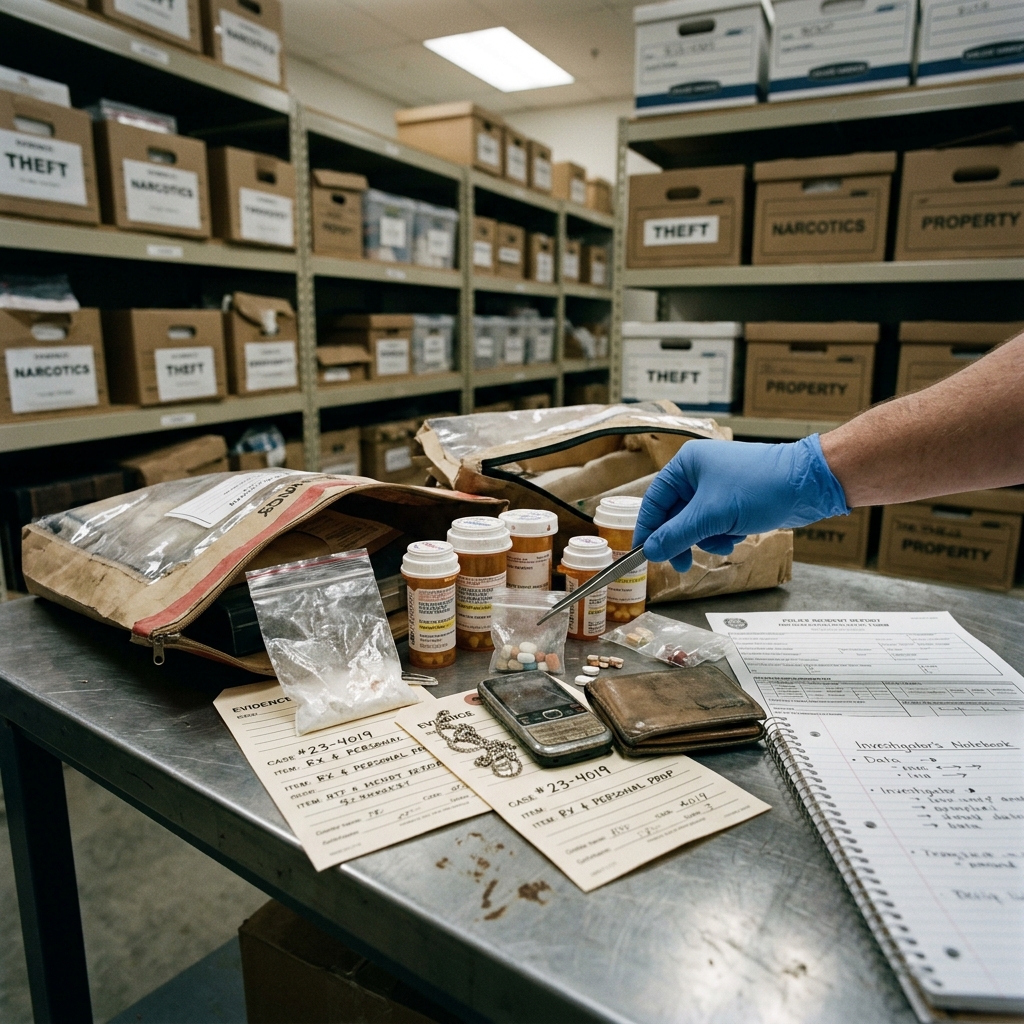
Drug-related theft crimes sit at the intersection of substance use, economic pressure, and criminal law. When people struggle with addiction, the urgent need to obtain drugs or alcohol can drive them toward unlawful ways of getting money or property. In turn, the justice system responds with a mix of punishment, supervision, and treatment, aiming both to protect the public and to reduce reoffending.
This article explains how drug use and theft are connected, outlines common charges and penalties, and describes defenses, sentencing options, and treatment-focused alternatives available in many jurisdictions.
How Drug Use Can Lead to Theft and Other Property Crimes
Researchers and justice agencies have documented a strong association between substance use and acquisitive crime, including burglary, robbery, shoplifting, and other forms of theft. When individuals develop a substance use disorder, several overlapping mechanisms can increase the risk of property offenses.
Key Pathways Linking Addiction and Theft
- Economic pressure to fund a habit: Ongoing use of opioids, stimulants, or other drugs can be expensive. Some individuals commit theft, fraud, or other property crimes to obtain money or goods that can be sold to pay for drugs.
- Impaired judgment and impulse control: Intoxication can affect judgment, risk perception, and self-control, increasing the likelihood of opportunistic theft or other impulsive criminal acts.
- Association with high-risk environments: Regular contact with drug dealers, users, and illegal markets can expose people to criminal opportunities and social norms that tolerate theft and other offenses.
- Escalating offending over time: Longitudinal studies show that individuals who use drugs such as opiates tend to have higher rates of prior sanctioned offending and may experience an increase in crimes after initiating use.
Justice statistics underscore how widespread this connection is. National data from the United States suggest that a large proportion of people in jail or prison have abused drugs or alcohol, and many report committing their offense to obtain money for drugs.
Types of Drug-Related Theft and Economic Crimes
Not every theft involving someone who uses drugs is legally classified as a “drug crime.” Instead, drug-related theft usually refers to property offenses committed in connection with substance use, whether to finance a habit or as part of the wider drug economy.
Use-Related, Economic-Related, and System-Related Crime
| Category | Definition | Examples |
|---|---|---|
| Use-related crime | Offenses committed under the influence of drugs or alcohol, where intoxication contributes to the behavior. | Assault after heavy drinking; impulsive shoplifting while high. |
| Economic-related crime | Crimes committed to finance drug use, including theft and other acquisitive offenses. | Burglaries to steal electronics, shop theft, embezzlement from an employer. |
| System-related crime | Offenses arising from the drug market itself, such as production, distribution, and related violence. | Drug trafficking, weapons offenses in connection with dealing. |
Common Property Offenses Associated with Drug Use
- Shoplifting and petty theft: Taking merchandise or low-value items from stores without paying, often repeatedly, to resell for cash.
- Burglary: Breaking into homes or businesses to steal money, electronics, or other goods that can be converted to cash.
- Robbery: Using or threatening force to take property directly from a person, which may occur when someone under financial pressure targets victims in public spaces.
- Fraud and embezzlement: Misusing an employer’s funds, forging checks, or engaging in other financial schemes to obtain money discreetly.
In many cases, the same individual may be involved in both drug possession or distribution and property offenses, creating a complex pattern of criminal behavior that courts must address.
Legal Elements of Theft and Drug-Related Property Offenses
Although definitions vary by jurisdiction, most theft statutes share several core elements. Understanding these building blocks helps clarify how prosecutors prove drug-related property crimes.
Basic Elements of Theft
- Taking property: The defendant must have taken or exercised control over property belonging to someone else.
- Lack of consent: The owner did not consent to the taking or the manner in which the property was obtained.
- Intent to deprive: The defendant intended to permanently (or significantly) deprive the owner of their property.
- Value of the property: The monetary value can affect whether the offense is treated as a misdemeanor or felony.
When theft is tied to drug use, prosecutors still focus on these standard elements. However, the presence of controlled substances, prior convictions, or concurrent drug charges can influence how the case is charged and sentenced.
Interaction with Drug Crime Statutes
Drug crimes themselves typically fall into categories such as possession, trafficking, and manufacturing, with penalties tied to the type and quantity of controlled substances involved. In some jurisdictions, repeated drug or theft convictions may elevate later offenses or create hybrid charges that combine aspects of both types of crime.
Criminal Penalties and Sentencing Considerations
Penalties for drug-related theft crimes vary significantly, depending on the jurisdiction, the value of the property, the defendant’s history, and whether drugs were possessed, sold, or trafficked at the same time.
Factors That Influence Penalties
- Offense severity: High-value theft, burglary, and robbery are often felonies, carrying potential prison sentences and substantial fines.
- Prior convictions: Repeat offenders, especially those with prior drug or theft convictions, may face enhanced penalties or higher sentencing ranges.
- Use of weapons or violence: If a theft involves threats, weapons, or actual harm, charges may be upgraded and penalties increased.
- Concurrent drug offenses: Being charged with drug possession, trafficking, or manufacturing alongside theft can lead to multiple convictions and cumulative sentences.
At the federal level, sentencing for drug crimes is closely tied to how substances are classified and the quantity involved, with harsher penalties for Schedule I and II drugs and larger amounts. States apply their own schemes, and some have enacted specific statutes that increase penalties for repeat theft or drug-related offenses.
Collateral Consequences Beyond Jail and Fines
A conviction for a drug-related theft crime can have long-term impacts that extend far beyond the courtroom. These collateral consequences often shape a person’s future opportunities and quality of life.
- Employment barriers: Many employers conduct background checks and may be hesitant to hire applicants with theft or drug convictions.
- Housing difficulties: Landlords and public housing authorities may deny applications from individuals with certain criminal records.
- Educational and financial aid issues: Some convictions can affect eligibility for scholarships, financial aid, or professional licenses.
- Family law and custody implications: Substance use and criminal behavior can be relevant in custody disputes or child welfare proceedings.
Because of these consequences, individuals facing charges related to drug and property crime are generally advised to seek legal counsel early and explore options that might reduce long-term harm.
Defenses and Strategies in Drug-Related Theft Cases
Every case is unique, but several common defenses and strategies arise in prosecutions that combine theft and substance use. A defense attorney will examine the facts, evidence, and procedural history to determine which arguments are available.
Challenging the Theft Allegation
- Lack of intent: The defense may argue that the accused did not intend to steal, for example in cases of misunderstanding, mistaken ownership, or belief in having permission.
- Insufficient evidence: If the prosecution cannot prove key elements such as taking, value, or identity beyond a reasonable doubt, the defense may seek an acquittal.
- Mistaken identity or unreliable witnesses: Eyewitness testimony and surveillance footage can be challenged when they are unclear or inconsistent.
Addressing the Role of Substance Use
- Mitigation rather than full defense: Intoxication rarely excuses theft entirely, but evidence of addiction or substance use disorder may be presented as mitigation during sentencing.
- Emphasis on treatment needs: Defense counsel may argue that incarceration alone will not address the underlying addiction and advocate for rehabilitation-focused dispositions.
Other legal issues, such as the lawfulness of searches, the admissibility of statements, or compliance with procedural rules, can also be central to the outcome.
Treatment-Focused Alternatives: Drug Courts and Specialized Programs
Recognizing the link between addiction and crime, many jurisdictions have established drug courts and similar initiatives that aim to treat substance use disorder while reducing reoffending.
What Drug Courts Do
- Target non-violent offenders with substance issues: Participation is often limited to people charged with non-violent offenses who demonstrate a significant connection between their crime and addiction.
- Provide structured treatment and supervision: Participants attend counseling, undergo drug testing, and appear regularly before a judge to monitor progress.
- Offer incentives for compliance: Successful completion can lead to reduced charges, shorter sentences, or, in some cases, dismissal of charges, helping participants avoid long-term consequences.
These programs operate on the premise that addressing substance use disorder directly can reduce future theft and other offenses more effectively than punishment alone. Research indicates that integrating treatment into criminal justice responses can help lower relapse and recidivism rates.
Policy Trends: Balancing Public Safety and Rehabilitation
Lawmakers frequently revise criminal statutes to respond to concerns about homelessness, addiction, and property crime. In some places, recent reforms have increased penalties for repeat theft and certain drug offenses while also expanding access to treatment and diversion.
- Enhanced penalties for repeat offenders: Some laws allow prior theft or drug convictions to elevate subsequent offenses, especially when they involve hard drugs or significant economic harm.
- Aggregation of property value: In certain jurisdictions, multiple lower-value thefts can be combined to reach felony thresholds, particularly when they appear part of a pattern.
- Stronger sanctions for trafficking and violent drug crimes: Legislatures often focus on fentanyl and other potent drugs, imposing harsher penalties for trafficking and offenses involving weapons.
- Support for diversion and treatment initiatives: Alongside tougher sanctions, many policies encourage or fund drug courts, counseling programs, and community-based treatment.
These mixed approaches reflect the dual goals of protecting communities from property losses and violence while recognizing addiction as a chronic health condition that requires long-term treatment.
Frequently Asked Questions About Drug-Related Theft Crimes
Does addiction excuse a theft charge?
No. Courts generally do not treat addiction as a complete legal defense to theft. However, evidence of substance use disorder can be highly relevant to sentencing and may support placement in a treatment-focused program or drug court rather than a purely punitive sentence.
Can a property offense be considered “drug-related” without a separate drug charge?
Yes. Many thefts are economically related to substance use even when no drug is found at the scene. An offense may still be described as drug-related if it was committed to finance a habit or occurred in the context of ongoing addiction.
Is it possible to have charges reduced through treatment programs?
In numerous jurisdictions, individuals who complete drug court or similar rehabilitation programs may receive reduced charges, shorter sentences, or even dismissal of certain counts, depending on local law and the terms of the program.
What should someone do if they are charged with a drug-related theft crime?
They should typically consult an attorney promptly, avoid discussing the case with others without legal advice, and gather information about any available diversion, treatment, or drug court options. Legal counsel can explain the specific statutes and penalties that apply in the relevant jurisdiction.
Are statistics on drug-related crime reliable across all regions?
Large national studies provide useful insights, but exact figures can vary by location, time period, and methodology. Official reports from justice agencies and peer-reviewed research are generally considered the most reliable sources.
References
- Drug Crime Laws — Justia. 2023-01-01. https://www.justia.com/criminal/offenses/drug-crimes/
- Alcohol, Drugs, and Crime — National Council on Alcoholism and Drug Dependence (NCADD). 2015-06-01. https://ncaddnational.org/addiction_articles/alcohol-drugs-and-crime/
- Drug-Related Crime — Bureau of Justice Statistics. 1994-07-01. https://bjs.ojp.gov/content/pub/pdf/DRRC.PDF
- Insights into the Link Between Drug Use and Criminality — Pierce et al., Addiction. 2017-09-01. https://pmc.ncbi.nlm.nih.gov/articles/PMC5608072/
- Legal Issues and Substance Abuse — Ethos Wellness. 2022-03-15. https://ethoswellness.com/legal-issues-and-substance-abuse/
- Understanding the New Laws on Drug and Theft Offenses — Riverside County District Attorney. 2024-12-18. https://rivcoda.org/blog/prop36
Similar Articles








Read full bio of Sneha Tete




