
Understanding Evading a Police Officer Laws
Learn how evading a police officer is defined, charged, and punished, and what legal options exist if you face these serious allegations.
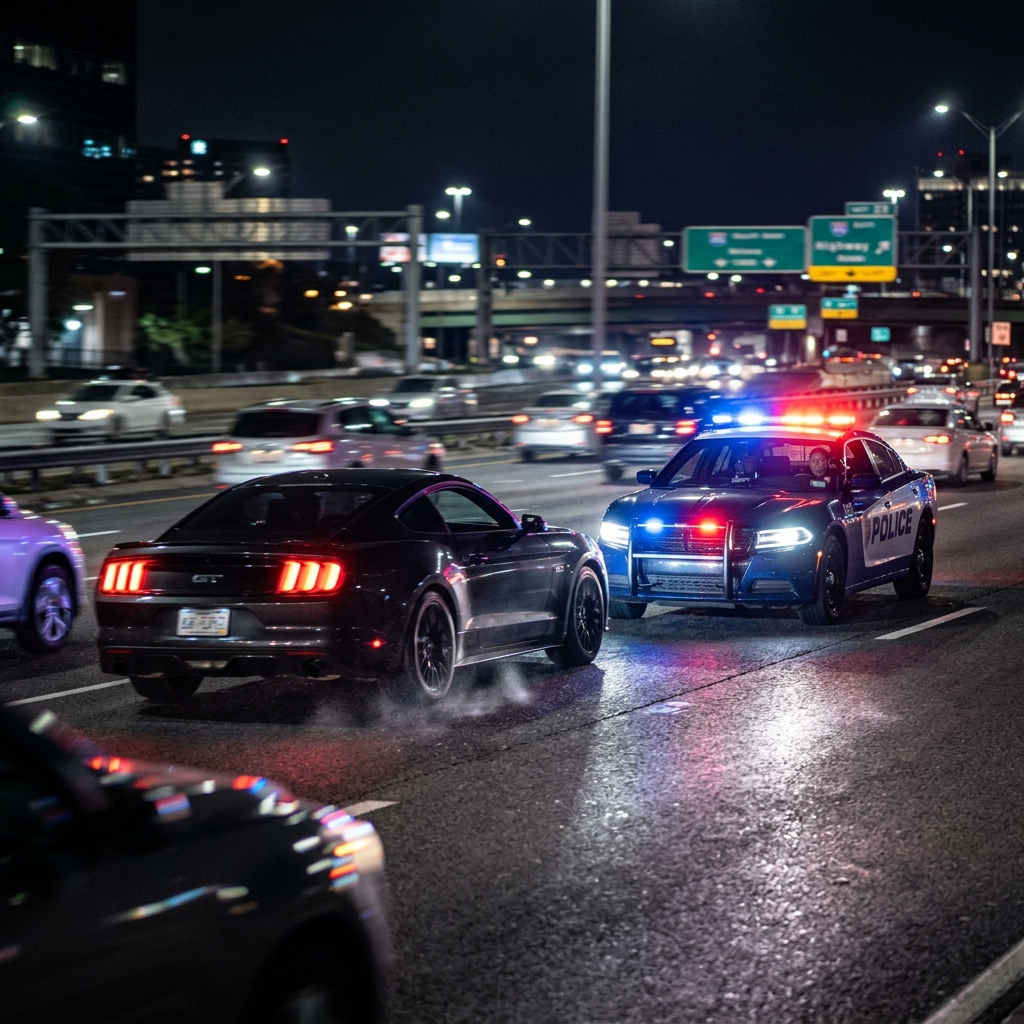
Evading or fleeing from a police officer is treated as a serious criminal offense in every U.S. state. While specific statutes and penalties differ, the core idea is the same: when law enforcement gives a lawful order to stop, continuing to flee or attempting to avoid them can result in criminal charges, often in addition to any underlying traffic or criminal violations.
This article explains how evading a police officer is defined, the typical penalties and collateral consequences, and the main defense strategies that lawyers use. It is designed for drivers and other individuals who want a clearer understanding of the risks and legal implications of failing to stop when ordered by law enforcement.
What Does “Evading a Police Officer” Mean?
Although terminology varies, states commonly use phrases such as evading an officer, fleeing or attempting to elude, or unlawful fleeing a police officer in a motor vehicle to describe this conduct.
In general terms, evading a police officer involves three core elements:
- A law enforcement signal to stop – The officer uses lights, sirens, verbal commands, hand signals, or other clear indications directing a person to stop a vehicle or otherwise submit to their authority.
- Knowledge of the command – The individual knows, or reasonably should know, that the person giving the signal is a police officer and that a stop is being ordered.
- Intentional failure to stop or flight – Instead of complying, the individual continues driving, speeds up, changes direction to avoid the officer, or runs away on foot in order to escape.
Some states focus specifically on fleeing in a motor vehicle, while others also include fleeing on foot or by bicycle, particularly when a clear order to stop has been given.
Common Legal Elements Across States
Even though each jurisdiction writes its own statute, many laws share similar structure and requirements. The following table compares key elements found in several states.
| Key Element | Typical Requirement | Example Jurisdictions |
|---|---|---|
| Officer’s signal to stop | Lights, sirens, or verbal command from a law enforcement officer in a vehicle or on foot. | California, New Jersey, New York |
| Knowledge of officer status | Officer is in a marked vehicle or otherwise visibly identifiable as law enforcement. | California, New York |
| Intentional flight | Knowingly continues driving or running to elude the officer after the signal. | California, New Jersey, Justia overview |
| Use of motor vehicle | Statutes often apply specifically to drivers using a car, motorcycle, or other vehicle. | New York Penal Law §§ 270.25, 270.35 |
| Aggravating conduct | High speed, reckless driving, or causing injury or death can elevate the offense to a felony. | California, New Jersey, New York |
Most statutes draw a clear distinction between failing to stop in a relatively brief, low-risk encounter and an extended high-speed pursuit that threatens public safety.
Misdemeanor vs. Felony Evading Charges
Evading a police officer can be charged as either a misdemeanor or a felony, depending on factors such as risk to others, injuries, and the driver’s conduct.
Misdemeanor Evading
Misdemeanor charges typically arise when the flight is brief and does not create a substantial risk of serious injury or death. For example, a driver who fails to stop immediately, continues for a short distance, but does not drive recklessly may face a misdemeanor rather than a felony.
- Typical jail exposure: Up to about one year in local jail in many jurisdictions.
- Fines: Commonly up to around $1,000, though some states allow higher fines for certain misdemeanors.
- Additional sanctions: Probation, license suspension, mandatory traffic safety programs, and a criminal record.
For instance, California’s basic evading-an-officer law for drivers treats the offense as a misdemeanor carrying up to one year in county jail and a fine of up to $1,000. New York classifies its third-degree unlawful fleeing statute as a Class A misdemeanor, also punishable by up to one year in jail and fines up to $1,000.
Felony Evading
Flight becomes a felony when the driver’s actions significantly increase danger to the public or cause injury or death. Common aggravating factors include:
- Driving at very high speeds far above the posted limit
- Reckless maneuvers such as weaving through traffic, ignoring signals, or driving on sidewalks
- Causing a crash that injures or kills another person, including police officers or bystanders
- Endangering pedestrians or other motorists during the pursuit
Felony penalties are substantially harsher:
- State prison time: Ranges from roughly 1–10 years or more depending on the statute and degree of harm.
- Higher fines: Often several thousand dollars, and in some states tens of thousands of dollars.
- Longer license suspension: Multi-year loss of driving privileges is common.
- Collateral consequences: Serious impact on employment, housing, and immigration status for non-citizens.
As one example, New Jersey treats eluding as a third-degree crime but elevates it to second degree if the flight creates a risk of death or serious injury, with potential prison terms between 3 and 10 years and substantial fines. New York’s first-degree unlawful fleeing law applies when the flight and reckless driving result in a death and is classified as a felony carrying up to 7 years in prison.
Related Consequences Beyond Jail and Fines
Evading a police officer rarely occurs in isolation. It often appears alongside speeding, reckless driving, driving under the influence, or other offenses. As a result, the overall consequences can extend far beyond the criminal sentence.
Driver’s License Suspension and Administrative Penalties
Most states authorize driver’s license suspension or revocation following a conviction for evading or eluding law enforcement. This may be imposed by the court or by the state’s motor vehicle agency through an administrative process.
- Suspension periods often range from several months to multiple years, depending on whether the offense is a misdemeanor or felony.
- Impoundment of the vehicle may also occur, particularly in jurisdictions that target dangerous pursuits with additional sanctions.
- Points on driving record can push insurance premiums significantly higher and may trigger further administrative sanctions.
Financial Costs
Beyond court fines, individuals convicted of evading often face substantial financial burdens.
- Court fees and surcharges
- Increased insurance premiums due to a serious violation on the driving record
- Restitution for property damage or medical expenses if a crash occurred
- Potential civil lawsuits brought by injured parties or property owners
These financial obligations can last long after the criminal case ends, particularly when civil judgments are entered.
Immigration and Employment Impact
For non-citizens, a conviction for fleeing law enforcement can trigger immigration scrutiny, especially when charged as a felony or when injuries are involved. Employers may also view an evading conviction as evidence of poor judgment or disregard for safety, which can affect job prospects in transportation, public safety, and other regulated fields.
Common Defense Strategies
Because evading a police officer requires proof of intentional flight after a clear signal to stop, many defenses focus on challenging these elements.
Challenging Intent
If a defendant did not willfully flee, they may argue lack of intent. Examples include:
- Unawareness of pursuit: The driver genuinely did not realize an officer was signaling them to stop, perhaps due to loud music, heavy traffic, or confusion.
- Confusion about the signal: The signals were ambiguous or could reasonably be interpreted as directed at another vehicle.
- Immediate compliance once aware: The driver stopped promptly upon clearly recognizing the officer’s command, which may support a lesser charge or dismissal.
Mistaken Identity and Evidence Issues
In some cases, law enforcement may misidentify a vehicle or driver, especially during fast-moving pursuits or in low-visibility conditions.
- Mistaken identity: Defense counsel may challenge the accuracy of eyewitness testimony or video evidence to show the accused was not the fleeing driver.
- Insufficient evidence: If dashcam, bodycam, or other recordings do not clearly show a signal to stop or intentional flight, prosecutors may struggle to prove the charge beyond a reasonable doubt.
Emergency or Necessity
Some defendants argue that they continued driving or did not stop immediately because stopping at that moment would have placed them or others in immediate danger.
- A medical emergency requiring rapid travel to a hospital
- Lack of a safe place to pull over on a narrow shoulder or in a high-crime area
- Fear of being rear-ended by another vehicle if stopping abruptly
Courts evaluate these claims carefully, and they do not excuse reckless or prolonged flight. However, they may persuade a court or jury that the person did not intend to evade law enforcement but sought a safer location to stop.
Plea Negotiations and Charge Reductions
Even when the evidence supports the charge, defense counsel may negotiate with prosecutors to reduce penalties.
- Reducing a felony evading charge to a misdemeanor when no injuries occurred
- Agreeing to traffic infractions instead of criminal charges in borderline cases
- Seeking diversion or probation with conditions such as driving education and community service
The viability of these options depends heavily on local statutes, prosecutorial policies, and the particulars of the case.
How Evading Laws Differ by State
While the general concept is consistent nationwide, states impose different structures, degrees, and penalty ranges for evading a police officer.
- California treats basic evading in a vehicle as a misdemeanor with up to one year in county jail and allows more serious reckless evading and injury-causing flight to be charged as felonies with higher prison terms.
- New York uses a tiered system of unlawful fleeing statutes in the third, second, and first degree, escalating from a Class A misdemeanor up to a felony when reckless driving results in death.
- New Jersey defines eluding as a third-degree crime for knowingly fleeing after a signal to stop, which becomes second degree when the flight creates a risk of death or injury, with severe prison and fine ranges.
Other states apply similar frameworks: a basic offense for failure to stop and heightened penalties when a vehicle is used to create substantial danger or cause harm.
Practical Guidance If You Face Evading Charges
Being accused of evading a police officer can be alarming. The following general steps are commonly recommended by criminal defense practitioners and legal aid organizations:
- Do not discuss the details with officers beyond basic identification until you have consulted an attorney, as statements can be used in court.
- Preserve evidence such as dashcam footage, GPS data, and phone records that may show your route, speed, or reasons for not stopping immediately.
- Write down your recollection of events as soon as possible, including where you first saw the officer, when you heard or saw signals, and any safety concerns.
- Consult a qualified criminal defense lawyer who knows local statutes and can explain your options, possible defenses, and realistic outcomes.
- Comply with all future court dates and conditions; failure to appear can lead to additional charges and warrants.
Local law is critical. Penalties, available defenses, and procedural rules vary substantially, so information from one state may not accurately reflect the law in another.
Frequently Asked Questions About Evading a Police Officer
Is briefly continuing to drive before stopping always considered evading?
Not necessarily. Many statutes require proof that the driver intentionally tried to elude the officer. Continuing a short distance to reach a safe place to pull over or failing to notice the signal immediately may be treated differently than accelerating or making evasive maneuvers after a clear order to stop.
Can I be charged with evading if I was on a bicycle or on foot?
Yes, in some jurisdictions evading laws apply even when the person is not in a motor vehicle, particularly if a clear command to stop is given and the individual runs away or rides off to avoid detention. However, many statutes focus specifically on drivers in motor vehicles, so whether a bicycle or on-foot situation qualifies depends on the exact wording of the state law.
Does speeding away from a traffic stop automatically make the charge a felony?
No. Speeding away can support an evading charge, but whether it is a misdemeanor or felony typically depends on the level of danger created, presence of injuries, and additional factors such as reckless driving or collisions.
Will my driver’s license be suspended if I am convicted?
Often yes. Many states impose suspension or revocation of driving privileges following a conviction for evading or eluding law enforcement, particularly when a vehicle is involved. The length of suspension varies and may be longer for felonies or repeat offenses.
How serious is a misdemeanor evading conviction?
Even though it is not a felony, a misdemeanor evading conviction can still mean up to a year in jail, fines, probation, and long-term effects on your criminal record and insurance. For many people, avoiding a conviction or seeking a reduced charge is a high priority.
References
- California Vehicle Code § 2800.1 – Evading an Officer — Kann California Defense Group. 2023-01-10. https://www.kannlawoffice.com/california-vehicle-code-2800-1-evading-an-officer
- Evading a Police Officer – California Vehicle Code 2800.1 VC — Wallin & Klarich. 2022-09-15. https://www.wklaw.com/practice-areas/evading-a-peace-officer-vc-2800-1/
- Evading the Police: Legal Elements, Defenses, & Penalties — Justia. 2021-06-30. https://www.justia.com/criminal/offenses/other-crimes/evading-the-police/
- Defending Against Fleeing the Police Charges — Arora Law Firm. 2023-03-20. https://thearoralawfirm.com/defending-against-fleeing-the-police-charges/
- New York Penal Law § 270.25 – Unlawful Fleeing a Police Officer in a Motor Vehicle in the Third Degree — New York State Senate. 2020-01-01. https://www.nysenate.gov/legislation/laws/PEN/270.25
- New Jersey Eluding Charges (N.J.S.A. 2C:29-2) — New Jersey Criminal Law Attorney. 2022-11-08. https://www.newjerseycriminallawattorney.com/traffic-offenses/eluding-charges/
- NY Penal Law § 270.35: Unlawful Fleeing a Police Officer in a Motor Vehicle in the First Degree — Crotty & Saland PC. 2021-04-12. https://criminaldefense.1800nynylaw.com/new-york-penal-code/new-york-penal-code-270-35-unlawful-fleeing-a-police-officer-in/
- The Consequences of Fleeing from Law Enforcement — Zachary McCready Law. 2023-02-05. https://zacharymccreadylaw.com/blog/the-consequences-of-fleeing-from-law-enforcement/
Similar Articles








Read full bio of Sneha Tete




