The criminal process in the United States is a structured series of steps designed to determine whether a person accused of a crime is legally responsible and, if so, to impose an appropriate consequence. It involves multiple actors, including law enforcement, prosecutors, defense lawyers, judges, juries, and correctional agencies, all operating within constitutional and statutory rules.
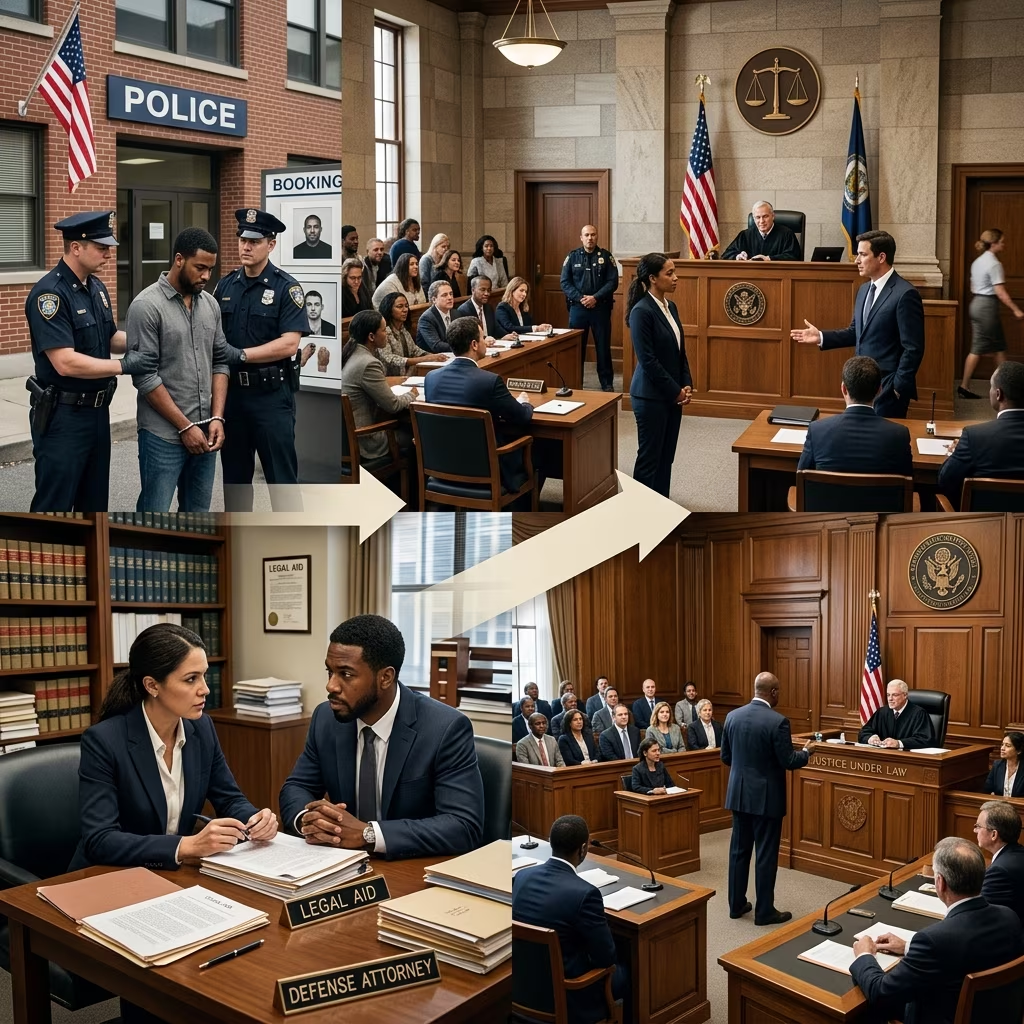
Although specific procedures vary by state and whether the case is handled in state or federal court, most criminal cases follow a common path: investigation, charging, initial court hearings, pretrial procedures, plea bargaining or trial, sentencing, and, where applicable, appeals and corrections.
Key Players and Overall Structure of the Criminal Justice Process
The criminal process is part of the broader criminal justice system, which is commonly described as having three main components: law enforcement, courts, and corrections.
- Law enforcement: Police, sheriffs, and federal agencies investigate crimes, gather evidence, and make arrests.
- Court system: Judges, prosecutors, defense attorneys, and often juries determine guilt or innocence and apply the law to specific cases.
- Corrections: Jails, prisons, probation offices, and community supervision agencies carry out sentences and support rehabilitation and reentry.
These components work together through a standardized sequence of events, sometimes described as a “funnel” because many cases leave the system at various stages through decisions not to charge, dismissals, acquittals, or diversion.
Stage 1: Reporting and Investigation of a Suspected Crime
Most criminal cases begin when a potential offense is brought to the attention of law enforcement. This can occur through a victim report, a witness tip, officer observation, or information from other agencies.
- A victim or witness contacts police to report a crime.
- An officer observes suspicious behavior or a violation, such as impaired driving.
- An investigation results from broader operations, such as undercover work or surveillance.
Once a report is received, officers or detectives typically:
- Secure the scene and ensure public safety.
- Collect physical and digital evidence.
- Interview victims, witnesses, and potential suspects.
- Document findings in reports for prosecutors to review.
If authorities develop probable cause to believe someone committed a crime, they may make an arrest, seek a warrant, or refer the matter for charging without immediate arrest, depending on the seriousness of the offense and applicable law.
Stage 2: Arrest, Booking, and Initial Detention
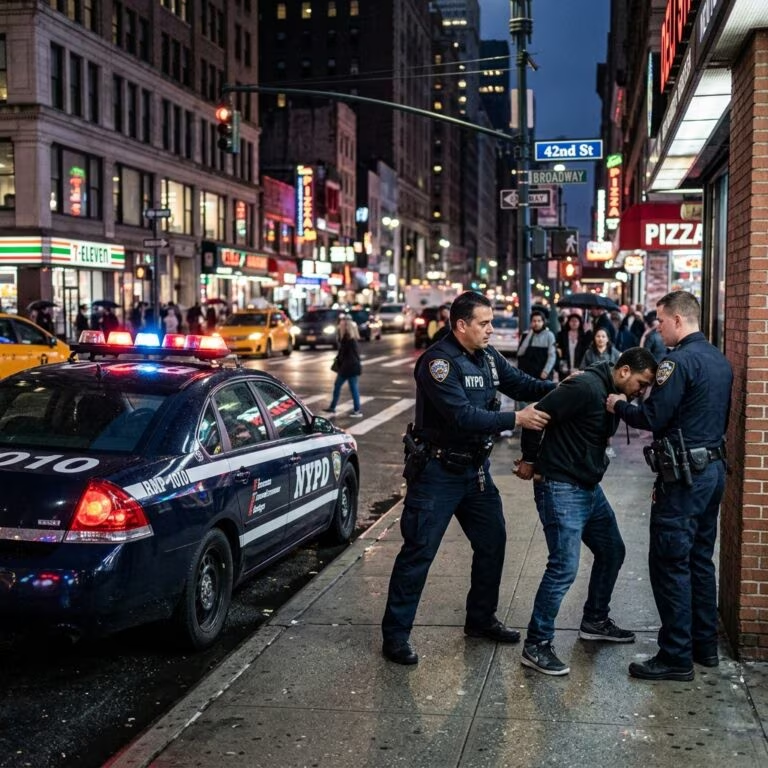
An arrest occurs when an officer takes a person into custody, usually based on probable cause that the person committed an offense. After arrest, the suspect is often transported to a jail or detention facility for booking.
Booking typically includes:
- Recording personal information and alleged offenses.
- Fingerprinting and photographing the suspect.
- Checking for outstanding warrants.
- Performing a basic health and safety screening.
Depending on the jurisdiction and severity of the alleged crime, the accused may be:
- Released with a citation or notice to appear in court at a later date.
- Held in jail until an initial appearance before a judge.
- Eligible for bail, which is financial or other security to guarantee court appearance.
Stage 3: Charging Decisions by Prosecutors
After investigation and arrest, prosecutors review the evidence to decide whether to file formal charges. They assess whether the available information is sufficient to support a reasonable likelihood of conviction and whether prosecution is in the public interest.
Prosecutors may:
- File charges in a complaint, information, or indictment.
- Decline to prosecute, effectively ending the case at that point.
- Request further investigation to strengthen or clarify evidence.
In the federal system and for certain serious state offenses, a grand jury may be used to decide whether there is enough evidence to issue an indictment. The grand jury reviews evidence presented by the government and decides whether there is probable cause to charge the accused.
Stage 4: Initial Appearance and Bail Decisions
After charges are filed, the accused must be brought before a judge or magistrate without unnecessary delay for an initial appearance or similar hearing.
At this stage, the court typically:
- Informs the defendant of the charges and potential penalties.
- Advises the defendant of key rights, including the right to counsel.
- Determines whether there is probable cause to detain the defendant.
- Addresses bail or release conditions, such as supervised release or no-contact orders.
Bail decisions balance public safety, risk of flight, and the presumption of innocence. For minor offenses, the initial appearance may also result in immediate disposition, such as a fine or brief jail term, if the defendant agrees to resolve the case and the law permits.
Stage 5: Preliminary Hearing and Grand Jury Review
In many jurisdictions, serious felony cases include a preliminary hearing. This hearing tests whether the government has enough evidence to continue toward trial.
Key features of a preliminary hearing include:
- The judge assesses whether there is probable cause to believe the defendant committed a specific crime within the court’s jurisdiction.
- Prosecutors may present witnesses and other evidence.
- The defense can cross-examine and challenge the sufficiency of the evidence.
Alternatively, or in addition, some cases are presented to a grand jury, which decides whether to issue an indictment. Once an indictment or information is filed, the case moves to the next major stage.
Stage 6: Arraignment and Entry of a Plea
The arraignment is the formal court proceeding at which the defendant is told the specific charges, provided a copy of the charging document, and asked to enter a plea.
At arraignment:
- The judge ensures the defendant understands the charges and rights.
- The defendant typically enters one of several possible pleas:
- Not guilty – the case continues to trial or further pretrial proceedings.
- Guilty – the court may proceed to sentencing immediately or set a later date.
- Nolo contendere (no contest) – the defendant accepts punishment without formally admitting guilt, where allowed.
If the judge accepts a guilty or no contest plea, there is usually no trial, and the case moves to sentencing. If the defendant pleads not guilty, a trial date is set, and additional pretrial processes begin.
Stage 7: Discovery, Motions, and Pretrial Negotiations
After arraignment and before trial, the parties engage in discovery and pretrial motion practice. Discovery is the process through which each side obtains information from the other to prepare its case.
Typical discovery and pretrial activities include:
- Exchange of police reports, witness statements, and expert analyses.
- Requests for physical, documentary, or digital evidence.
- Motions to suppress evidence, dismiss charges, or limit testimony.
- Negotiations about possible plea agreements.
Pretrial motions can significantly shape the trial by determining what evidence the jury or judge will be allowed to consider. Plea bargaining, where the defendant agrees to plead guilty to some or all charges in return for concessions, resolves many cases without trial.
Stage 8: Trial and Determination of Guilt
If no plea agreement is reached, the case proceeds to trial. A person accused of a serious crime generally has a constitutional right to a jury trial, although the defendant may choose to waive that right and have a judge decide the facts in a bench trial.
Core trial elements include:
- Jury selection (in jury trials), where potential jurors are questioned and selected.
- Opening statements by the prosecution and defense.
- Presentation of evidence and examination of witnesses.
- Closing arguments, summarizing each side’s position.
- Jury instructions from the judge on the law to be applied.
- Deliberation and verdict by the jury, or finding of fact by the judge in a bench trial.
The prosecution bears the burden of proving the defendant’s guilt beyond a reasonable doubt. If the jury or judge finds the defendant not guilty, the defendant is acquitted and the case is ordinarily closed. If the defendant is convicted on any charge, the process moves to sentencing.
Stage 9: Sentencing and Correctional Outcomes
After a conviction or accepted guilty plea, the court must determine an appropriate sentence. Sentencing is guided by statutory ranges, sentencing guidelines, and consideration of aggravating and mitigating circumstances.
Before sentencing, a probation or similar officer may prepare a pre-sentence report that reviews the defendant’s background, criminal history, and the circumstances of the offense.
Sentences can include:
- Incarceration in jail or prison.
- Probation with conditions, such as counseling or community service.
- Fines and restitution to victims.
- Community-based sanctions or treatment programs, particularly for lower-level offenses.
Once a sentence is imposed, correctional agencies are responsible for carrying it out and, in many cases, supporting rehabilitation and eventual reentry into the community.
Stage 10: Appeals and Post-Conviction Review
A defendant who is convicted generally has the right to appeal to a higher court, arguing that legal errors occurred at trial or during pretrial proceedings that may have affected the outcome.
Common grounds for appeal include:
- Improper admission or exclusion of evidence.
- Incorrect jury instructions on the law.
- Insufficient evidence as a matter of law.
- Constitutional violations, such as denial of counsel or due process.
Appellate courts review the record of the lower court proceedings, consider legal arguments from both sides, and may affirm the conviction, reverse it, order a new trial, or modify the sentence.
Comparing Major Stages of the Criminal Process
| Stage | Main Decision-Makers | Primary Purpose |
|---|---|---|
| Investigation | Law enforcement | Gather evidence and determine whether a crime occurred. |
| Charging | Prosecutors | Decide which charges, if any, to file based on available evidence. |
| Initial appearance | Judge or magistrate | Inform defendant of rights and charges; decide on detention and bail. |
| Preliminary hearing / grand jury | Judge or grand jury | Evaluate whether sufficient evidence exists to proceed toward trial. |
| Arraignment | Judge, defendant | Present formal charges and receive defendant’s plea. |
| Trial | Judge and jury (or judge alone) | Determine guilt or innocence under the standard of proof beyond a reasonable doubt. |
| Sentencing | Judge | Impose legal consequences within statutory ranges. |
| Corrections | Correctional agencies | Carry out the sentence and support supervision, rehabilitation, and reentry. |
Practical Tips for Defendants and Families
Understanding the basic stages of the criminal process can help defendants and their families navigate an often intimidating system. While every case is unique, several general strategies can support better outcomes:
- Seek legal counsel early: Contact a qualified defense attorney or public defender as soon as possible.
- Track deadlines and court dates: Missing a hearing can result in additional charges or arrest warrants.
- Preserve evidence and documents: Keep copies of tickets, notices, and any materials related to the case.
- Follow release conditions: Comply with bail terms, no-contact orders, and supervision requirements.
- Ask questions: Courts and counsel can explain procedures, rights, and realistic expectations for the case.
Frequently Asked Questions About the Criminal Process
Does every reported crime lead to an arrest?
No. Many reported incidents do not result in arrest because there may be insufficient evidence, the offense is minor, or legal standards for arrest are not met. Research indicates that most offenses are never fully investigated or processed through the entire system.
What is the difference between state and federal criminal cases?
State cases involve violations of state law and are handled in state courts, while federal cases involve federal statutes and are prosecuted in federal courts. The broad stages—investigation, charging, arraignment, discovery, plea bargaining, trial, and sentencing—are similar, but procedures and penalties can differ.
Can a case end before trial?
Yes. A large portion of criminal cases are resolved before trial, often through plea agreements, dismissals, or diversion programs. Plea bargaining allows the defendant to plead guilty to certain charges in exchange for reduced penalties or dropped counts.
What happens if the defendant cannot afford an attorney?
Indigent defendants in criminal cases are entitled to court-appointed counsel in many circumstances under constitutional principles. Generally, the court will determine financial eligibility and assign a public defender or other appointed lawyer for serious offenses.
Is the victim involved at trial?
Victims are not passive bystanders. They may be called as witnesses and often have rights regarding notification, participation, and restitution, depending on applicable law and victim rights statutes.
References
- A Brief Description of the Federal Criminal Justice Process — Federal Bureau of Investigation (FBI). 2017-03-02. https://www.fbi.gov/how-we-can-help-you/victim-services/a-brief-description-of-the-federal-criminal-justice-process
- Steps in the Federal Criminal Process — U.S. Department of Justice, Office of the U.S. Attorneys. 2015-01-01. https://www.justice.gov/usao/justice-101/steps-federal-criminal-process
- The Justice System — Bureau of Justice Statistics, U.S. Department of Justice. 2023-06-01. https://bjs.ojp.gov/justice-system
- What Is the Criminal Justice System? — University of the Cumberlands. 2023-04-10. https://www.ucumberlands.edu/blog/what-is-the-criminal-justice-system
- Guide to the U.S. Criminal Justice System — CriminalJustice.com. 2022-05-15. https://www.criminaljustice.com/resources/guide-to-us-criminal-justice-system/
- Criminal Justice Process: Definition, Steps & Examples — Study.com. 2021-09-20. https://study.com/academy/lesson/the-us-criminal-justice-process-definition-steps.html
- Steps in the Criminal Justice Process — Franklin County, Washington. 2020-02-01. https://www.franklincountywa.gov/395/Steps-in-the-Ciminal-Justice-Process