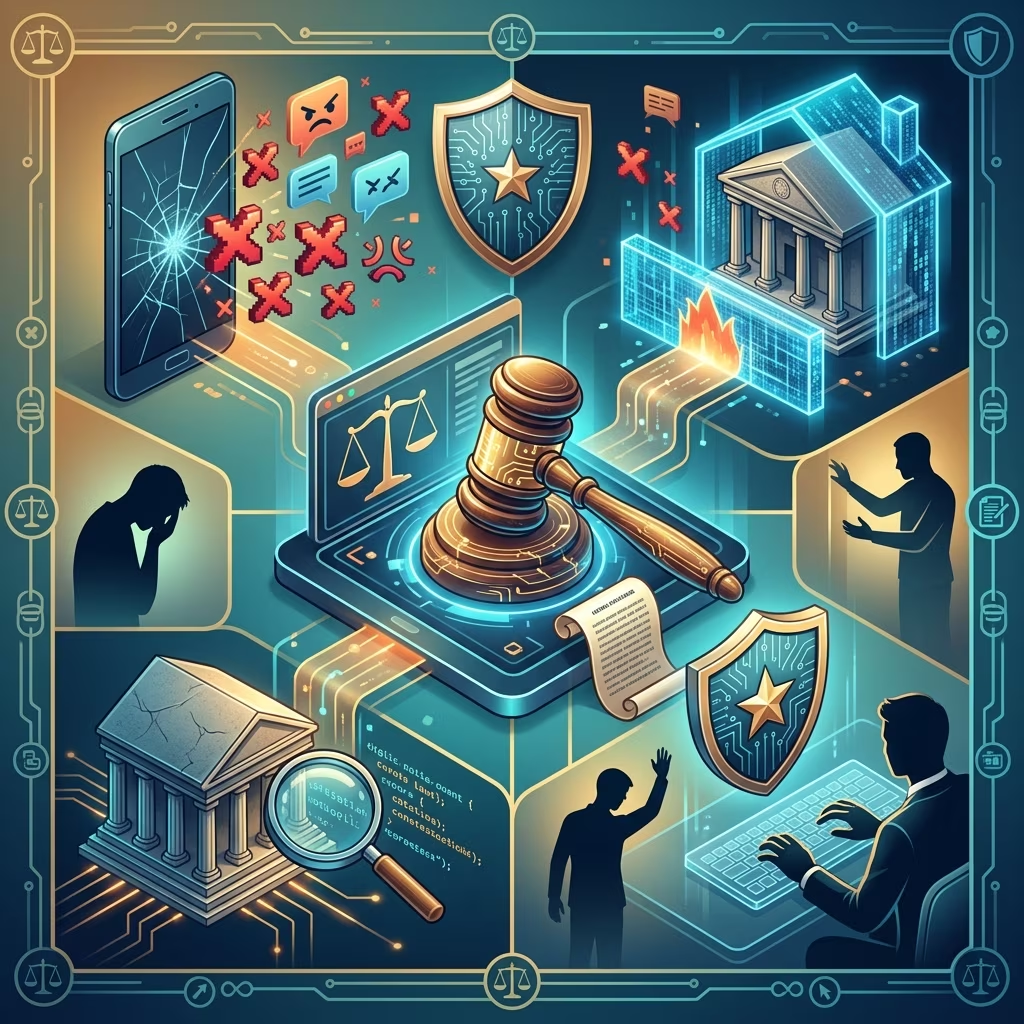
Cyberbullying—harassment, threats, or humiliation carried out through digital devices—has prompted every U.S. state to adopt laws or policies to address bullying, and most now explicitly refer to electronic or online conduct.[10] Although there is still no single federal cyberbullying statute, a layered system of state laws, school regulations, and general criminal and civil rules can apply to these cases.
What Counts as Cyberbullying?
There is no universal legal definition of cyberbullying, and wording differs from state to state. However, most laws focus on harmful electronic communications that target another person, especially children in the school context.[10]
Common elements in state definitions include:
- Use of digital technologies such as social media, text messages, email, or online games to communicate with or about a victim.
- Messages or images intended to intimidate, harass, humiliate, threaten, or cause emotional harm.
- Patterns of conduct that create a hostile environment at school or substantially disrupt the educational process.[10]
- Distribution of explicit or highly personal images meant to embarrass or coerce another person, sometimes overlapping with sexting laws.
Because the exact wording matters, people who believe they are dealing with cyberbullying should review their state’s specific statutory language or school policy to see whether particular behaviors are covered.[10]
No Single Federal Cyberbullying Law
At the federal level, there is currently no dedicated cyberbullying statute that criminalizes online bullying as a distinct offense. Instead, federal involvement generally depends on whether the conduct violates other federal laws or constitutional protections.
Federal authorities may become involved when:
- Cyberbullying targets a person because of a protected characteristic, such as race, national origin, religion, disability, or sex, and interferes with their civil rights.
- The incidents occur at or involve a school that receives federal funding, triggering federal education and anti-discrimination obligations.[10]
- Conduct crosses state lines or involves federal crimes such as interstate threats or certain forms of stalking.
In practice, however, most cyberbullying cases are addressed primarily through state law and local school policies rather than federal prosecution.[10]
How States Regulate Cyberbullying
Every state now has at least one law addressing bullying, and nearly all include electronic communications in some form.[10] States use a mix of criminal statutes, school regulation requirements, and civil remedies to respond to online harassment.
1. School-Focused Bullying Statutes
Most states adopted comprehensive school bullying laws that define bullying, require districts to adopt policies, and mandate procedures for reporting and response.[10]
Common features of these statutes include:[10]
- A definition of bullying that includes repeated or severe conduct causing emotional or physical harm or creating a hostile school environment.
- A specific reference to digital or electronic communication, online posts, or social media activity as potential forms of bullying.
- Requirements that each district adopt and regularly update a written anti-bullying policy.
- Processes for reporting incidents, investigating complaints, and documenting outcomes.[10]
- Provisions protecting students from retaliation for reporting bullying.[10]
These laws do not always create new crimes; instead, they focus on the school’s responsibilities and the educational environment.
2. Criminal Laws That May Apply
Even when a state does not have a statute labeled “cyberbullying,” existing criminal laws often cover serious online abuse. Many states prohibit harassment, stalking, threats, or certain forms of impersonation or image sharing, and those provisions can apply when the behavior occurs online.
Examples of relevant criminal concepts include:
- Harassment and stalking: Repeated unwanted contact, alarming messages, or surveillance that causes fear or substantial distress.
- Threats and intimidation: Communications that threaten physical harm or that a reasonable person would interpret as dangerous.
- Non-consensual image sharing: Posting or forwarding sexual or extremely personal images without consent, sometimes treated under separate exploitation or privacy laws.
- Impersonation or identity misuse: Creating fake accounts or profiles to damage someone’s reputation or facilitate harassment.
Penalties vary by state and by offense. Many cases are handled as misdemeanors, which can involve fines, community service, or up to a year of incarceration; more severe conduct or repeat offenses may lead to felony charges.
3. Civil Remedies and Court Orders
In addition to school discipline and criminal prosecution, victims in some states may ask a court for civil relief. This can include restraining orders, injunctions requiring the bully to stop certain actions, or even lawsuits for damages.
For example, one state law permits minors or their parents to seek an injunction that orders the alleged cyberbully—and sometimes their parents—to stop the behavior and preserve electronic evidence. Violating the order can result in contempt of court, which may carry fines or jail time.
More broadly, victims sometimes rely on existing civil doctrines, such as defamation (for false statements that harm reputation) or intentional infliction of emotional distress (for extreme and outrageous conduct), to pursue damages.
School Responsibilities Under State Law
Because most cyberbullying laws are tied to education, school duties play a central role. State statutes and regulations typically direct schools to adopt policies, train staff, and respond promptly to reports of bullying.[10]
Required Policies and Procedures
According to federal guidance, most state laws now require districts to implement written bullying policies that cover prevention, reporting, and response.[10]
Typical policy requirements include:[10]
- A clear definition of bullying and cyberbullying, including examples of prohibited behaviors.
- Designated staff members responsible for receiving and investigating complaints.
- Timeframes for investigating reports and notifying parents or guardians.
- Protection for students who report bullying, including non-retaliation provisions.
- Procedures for documenting incidents and tracking patterns in school climate.[10]
Disciplinary Powers and Off-Campus Conduct
Many states allow schools to discipline students for cyberbullying even when the conduct occurs off campus or outside school hours, as long as it impacts the school environment. Case law generally permits discipline for off-campus speech that substantially disrupts school operations.[10]
Common school sanctions include:
- Informal measures such as warnings, counseling, or mediation.
- Formal discipline, including detention, loss of privileges, or behavioral contracts.
- Suspension or expulsion for severe, repeated, or dangerous conduct, as authorized by state law.
- Referral to law enforcement where criminal activity is suspected, such as credible threats or explicit image sharing.
Schools must balance student safety with free speech rights, so discipline is usually tied to disruption, threats, or targeted harassment rather than mere offensive opinions.
How Penalties Differ by State
The legal consequences for cyberbullying depend heavily on the state in which the behavior occurs and the specific laws invoked. Some states focus mostly on school sanctions, while others impose criminal penalties or allow extensive civil remedies.
| Type of Response | Typical Features | Possible Consequences |
|---|---|---|
| School discipline | Triggered by violations of school bullying policies or disruption of the school environment.[10] | Warnings, counseling, loss of privileges, suspension, or expulsion, depending on severity. |
| Criminal prosecution | Involves general harassment, stalking, threat, or image-sharing laws applied to digital conduct. | Misdemeanor or, in serious or repeat cases, felony charges; fines, probation, or incarceration. |
| Civil remedies | Victim seeks a court order or damages through civil litigation, sometimes under specific state laws. | Restraining orders or injunctions, monetary damages, and legal obligations to stop the misconduct. |
Because these options often overlap, a single incident can lead to school discipline, a criminal case, and a civil order at the same time, depending on the facts and state law.
Practical Steps for Victims and Families
Legal remedies work best when victims, parents, and schools take practical steps to document and address cyberbullying early. National crime-prevention guidance emphasizes the importance of evidence preservation and proactive communication.
Documenting the Abuse
When cyberbullying occurs, it is crucial to capture and store evidence before messages are deleted or accounts are altered.
- Take screenshots of messages, posts, images, and profiles, including timestamps and usernames.
- Save copies of emails, text messages, and direct messages in an organized folder.
- Keep a written log of incidents, noting dates, platforms used, and any witnesses.
- Do not alter or destroy devices that may contain relevant evidence, especially if a court case is possible.
Stopping Contact and Using Platform Tools
Most social networks, messaging apps, and online services offer basic tools to limit contact with a bully.
- Block or mute offending accounts to prevent further messages or comments.
- Report abusive content through the platform’s reporting interface; many sites have dedicated safety centers or reporting mechanisms.
- Adjust privacy settings to restrict who can view posts, send messages, or tag the victim.
- Avoid responding aggressively or engaging in retaliation, which can complicate school or legal responses.
Working With Schools and Law Enforcement
In school-related cases, staff often have a legal obligation to respond to reports of bullying. State laws and policies typically require that employees take action and follow defined procedures when they learn of possible bullying.[10]
- Notify a teacher, counselor, or administrator as soon as possible, and provide copies of relevant evidence.[10]
- Ask about the school’s formal bullying policy and how investigations and support services are handled.
- If threats, explicit images, or criminal behavior are involved, consider contacting local law enforcement or seeking legal advice.
- In states that allow injunctions or restraining orders for youth cyberbullying, discuss with an attorney whether a court order is appropriate.
Prevention and School Climate
Legal rules alone cannot eliminate cyberbullying. Effective prevention requires education, clear expectations, and a school climate that discourages harassment and encourages students to seek help.
Guidance from national bullying-prevention initiatives highlights several key strategies:[10]
- Integrate digital citizenship and online-respect lessons into curricula, including the consequences of cyberbullying.
- Develop a code of conduct that explicitly covers both in-person and online bullying and harassment.
- Train staff to recognize warning signs of cyberbullying, such as sudden changes in behavior or unexplained school avoidance.[10]
- Encourage peer support programs and bystander intervention, emphasizing that students should report harmful behavior rather than ignore it.[10]
- Engage parents and community organizations in discussions about technology use, privacy, and respectful communication.
When prevention and response are aligned, schools are better able to reduce the incidence of cyberbullying and to support affected students effectively.
Frequently Asked Questions About Cyberbullying Laws
Does every state have a cyberbullying law?
All 50 states have laws addressing bullying in general, and nearly all explicitly cover electronic or online conduct, even if they do not use the word “cyberbullying” in the statutory text.[10]
Is cyberbullying always a crime?
No. Many state laws focus on school policies rather than criminal offenses, and some hurtful online behavior may fall below the threshold of criminal harassment or threats. However, serious or repeated conduct can trigger criminal charges under general harassment, stalking, or threat statutes.
Can schools punish students for cyberbullying that happens off campus?
Often, yes. Many state laws and court decisions allow schools to discipline students for off-campus speech if it substantially disrupts school operations or creates a hostile environment for students on campus.[10]
What should a parent do first if their child is being cyberbullied?
Parents should document the behavior, talk with their child, and contact the school with evidence of the incidents.[10] If there are threats of harm, explicit images, or serious harassment, local law enforcement or a lawyer may need to be involved.
Is there one place to see all state laws?
Several high-quality public resources compile state-by-state summaries of bullying and cyberbullying laws, including official federal guidance and research centers dedicated to cyberbullying.[10] These resources can help families, educators, and policymakers understand and compare state approaches.
References
- Laws, Policies & Regulations — StopBullying.gov (U.S. Department of Health and Human Services). 2023-06-01. https://www.stopbullying.gov/resources/laws
- Federal Cyberbullying Laws in the U.S. — Study.com (summary based on Cyberbullying Research Center data). 2016-01-01. https://study.com/academy/lesson/federal-cyberbullying-laws.html
- Bullying Laws Across America — Cyberbullying Research Center. 2024-01-01. https://cyberbullying.org/bullying-laws
- Massachusetts Law About Bullying and Cyberbullying — Mass.gov. 2022-09-15. https://www.mass.gov/info-details/massachusetts-law-about-bullying-and-cyberbullying
- Cyberbullying Laws & Legislation (Staying Informed) — National Crime Prevention Council. 2010-11-01. https://www.ncpc.org/wp-content/uploads/2017/11/NCPC_Cyberbullying-StayingInformed-LawsAndLegislation.pdf
- Is Cyberbullying Illegal in Your State? — Gaggle. 2019-10-10. https://www.gaggle.net/blog/speaks/is-cyberbullying-illegal-in-your-state
- Cyberbullying Laws by State Guide — McGraw Hill Higher Education Blog. 2026-02-01. https://www.mheducation.com/highered/blog/2026/02/cyberbullying-laws-by-state-guide.html