
Washington Deeds: 4 Deed Types Every Buyer Should Know In 2025
Learn how different deed types work in Washington, what they guarantee, and the steps to properly transfer and record real estate ownership.
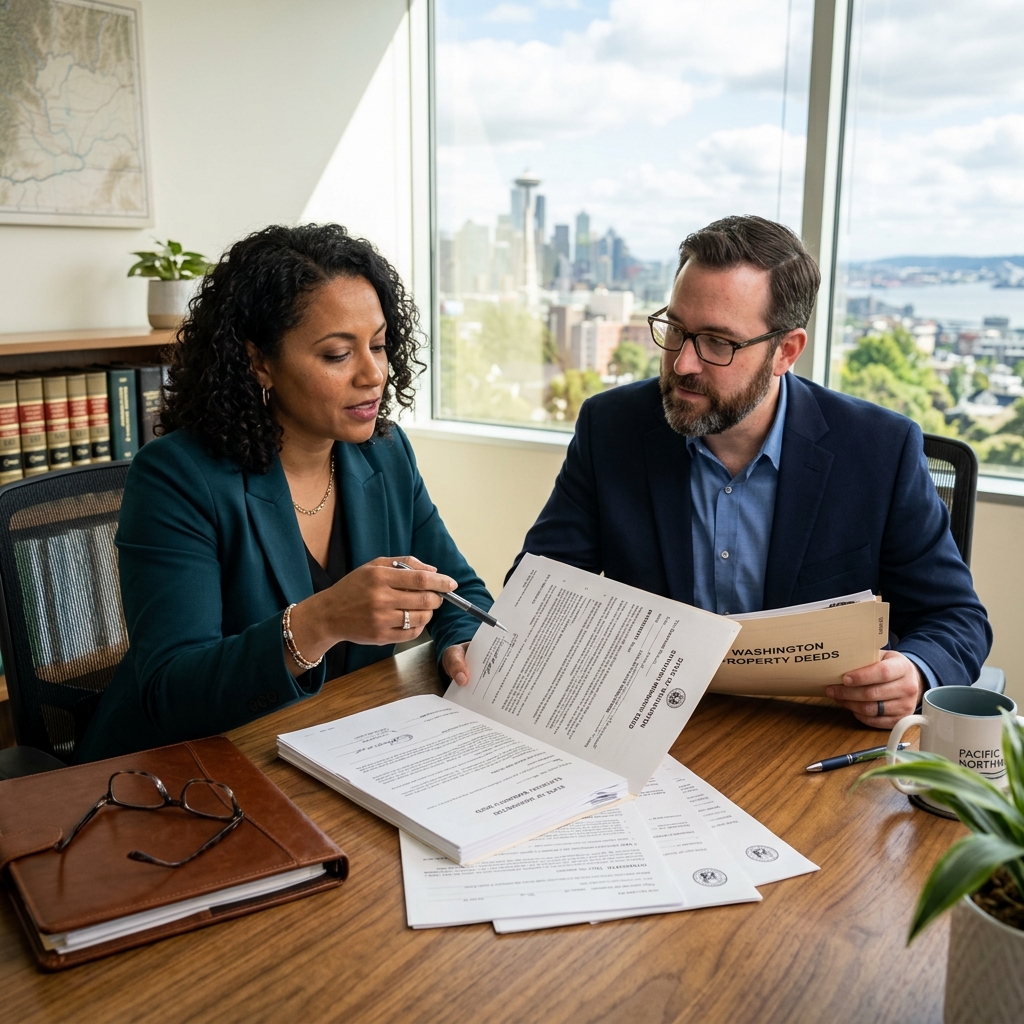
Buying, selling, or gifting real estate in Washington always involves a deed. A deed is the legal document that moves ownership rights from one person to another and creates a public record of who owns a particular piece of property. Because Washington has specific rules about how deeds must be written, signed, and recorded, it is important to understand the major deed types and the basic legal requirements before you transfer any interest in real estate.
Deeds vs. Title: Clarifying the Basics
Although people often use the words “deed” and “title” as if they mean the same thing, they describe different legal concepts.
- Title refers to the legal ownership rights in a property, including the right to use, sell, mortgage, or transfer it.
- Deed is the written instrument that documents a transfer of those ownership rights from one party (the grantor) to another (the grantee).
The deed is evidence of who holds title, but title itself is the underlying bundle of rights. When you convey property in Washington, you use a properly drafted deed to transfer title and then record that deed in the county where the property is located.
Core Legal Requirements for Washington Deeds
Washington law sets minimum requirements that every valid deed must satisfy. These rules are largely found in the Revised Code of Washington (RCW) chapter 64.04 and interpreted by local counties.
At a minimum, a deed in Washington must:
- Be in writing.
- Contain a legally sufficient description of the property; a street address alone is not enough.
- Identify the grantor and the grantee.
- Clearly state that the grantor is transferring an interest in the property (the granting clause).
- Be signed by the grantor.
- Be acknowledged before a notary public or other authorized officer (notarized).
After execution, Washington strongly encourages recording the deed with the county recorder or auditor. Recording puts the world on notice of the new ownership and helps preserve the priority of the new owner’s rights against later claims.
Major Types of Deeds Used in Washington
Washington recognizes many deed forms, but most routine transfers use a small group of standard deed types defined by statute or common practice.
| Deed Type | Level of Protection for Buyer | Main Uses |
|---|---|---|
| Statutory Warranty Deed | Highest; extensive covenants about title and freedom from encumbrances. | Standard arms-length sales between unrelated parties. |
| Bargain and Sale Deed | Moderate; limited covenants usually tied to the seller’s own acts. | Foreclosure sales, transfers by fiduciaries, certain commercial deals. |
| Quitclaim Deed | Minimal; conveys whatever interest the grantor has with no guarantees. | Gifts, family transfers, correcting prior deeds, resolving disputes. |
| Transfer on Death Deed (TODD) | N/A (estate planning tool); transfers at death without probate. | Estate planning to pass property to a beneficiary while avoiding probate. |
Statutory Warranty Deeds: Maximum Buyer Protection
The statutory warranty deed is the Washington equivalent of a full warranty deed and is the most protective option for buyers. It incorporates, by statute, a series of covenants about title that benefit the grantee and often future owners.
Typical warranties embedded in a statutory warranty deed include:
- Rightful ownership – the grantor promises that they own the property and have the authority to convey it.
- Freedom from encumbrances – the property is free of liens or other encumbrances, except any specifically listed on the deed.
- Right to convey – the grantor confirms they have legal capacity and power to transfer the property.
- Quiet enjoyment – the grantee will not be disturbed by third parties holding superior title.
- Defense against claims – the grantor agrees to defend the title if someone else claims ownership.
- Further assurances – the grantor will take additional steps needed to correct title problems that arise.
Because of these broad promises, statutory warranty deeds are commonly used for typical residential and commercial property sales between unrelated parties. They allocate most title risk to the seller and give the buyer a strong basis to challenge undisclosed defects in title.
Bargain and Sale Deeds: Limited Warranties
A bargain and sale deed provides a middle ground between full warranties and no warranties. In Washington, this deed usually implies that the grantor owns the property and has the right to convey, but the covenants are more limited than in a statutory warranty deed.
Typical features of a bargain and sale deed include:
- The grantor states that they own the property and can transfer it.
- The grantor may promise that they have not created new encumbrances, but they do not necessarily guarantee what prior owners may have done.
- The deed often omits the broader warranties of quiet enjoyment and defense of title against all claims.
Because the protections are more limited, bargain and sale deeds are often used in situations where the grantor does not want or cannot reasonably provide full warranties, such as foreclosure sales, transfers by personal representatives of estates, and some lender-related transfers. Buyers accepting a bargain and sale deed typically rely heavily on title insurance to manage risk.
Quitclaim Deeds: No Guarantees of Ownership
A quitclaim deed is the simplest and least protective deed form. The grantor only transfers whatever interest they may have in the property, if any, and does not promise that they actually own the property or that title is free of defects.
Key characteristics include:
- No covenants or warranties about ownership, encumbrances, or title quality.
- Any clouds on title, liens, or disputes remain unless separately resolved.
- Effective for transferring partial interests or clearing claims, but not ideal for arms-length purchases.
In practice, quitclaim deeds in Washington are most often used for:
- Transfers between family members or between co-owners.
- Gifting property.
- Correcting errors in prior deeds (e.g., misspelled names or mistaken legal descriptions).
- Settling boundary disputes or other legal claims where one party is disclaiming any interest.
Because a quitclaim deed offers no protection, buyers who pay market value for property almost always prefer a statutory warranty deed instead.
Transfer on Death Deeds: A Non-Probate Estate Planning Tool
Washington law allows the use of Transfer on Death Deeds (TODDs) as an estate planning mechanism. A TOD deed names a beneficiary who will receive the property when the owner dies, without going through probate.
Important features of TODDs include:
- The deed is considered non-testamentary, meaning it operates outside the will and probate process.
- The owner (transferor) keeps full control of the property during life, including the right to sell, mortgage, or revoke the TOD deed.
- The beneficiary’s interest is a future interest that only becomes effective upon the transferor’s death.
- No consideration (payment) is required for the deed to be valid.
- The TOD deed must be recorded with the county where the property is located before the transferor dies to be effective.
For excise tax purposes, Washington generally does not treat a TODD transfer at death as a taxable sale, unless the transfer satisfies a contractual obligation such as paying a debt. However, the beneficiary typically must file a Real Estate Excise Tax Affidavit after the transfer, even when no tax is due.
Recording Deeds and the Role of County Offices
Once a deed is properly signed and notarized, recording it is the next critical step. Washington counties, through their recorder or auditor offices, maintain public records of property ownership and collect related fees and taxes.
Recording serves several functions:
- Creates an official, public record of the transfer.
- Helps establish priority among competing interests in the property.
- Assists buyers, lenders, and title companies in verifying ownership history.
In many counties, including King County, property owners can search for recorded deeds online through the recorder’s portal, often using the names of the parties or elements of the legal description. For older transactions, copies may be kept in archives rather than in digital form.[10]
Real Estate Excise Tax and Affidavits
Washington imposes a Real Estate Excise Tax (REET) on most transfers of real property interests. This tax is generally due when ownership changes through a sale, and a properly completed excise tax affidavit is required for recording.
Key points about excise tax and affidavits include:
- Arms-length sales usually trigger REET based on the selling price.
- Certain transfers may be exempt or have special rules, such as some non-probate transfers or deeds used to correct title defects.
- The parties must prepare and sign a Real Estate Excise Tax Affidavit that states the consideration paid or the legal basis for any claimed exemption.
- County recorder offices often will not accept a deed for recording unless the accompanying affidavit and tax payment (if any) are provided.
Because excise tax rules include detailed exemptions and rate structures, many owners and buyers consult the county treasurer or a real estate attorney before completing a deed transfer that they believe may be exempt.
Practical Steps for Preparing a Washington Deed
Although deed forms may look straightforward, careful drafting is essential to avoid future disputes. Washington property owners commonly follow these general steps when preparing a deed:
- Choose the correct deed type based on the nature of the transaction (sale vs. gift, family transfer vs. arms-length sale, estate planning vs. immediate transfer).
- Gather a precise legal description from a prior recorded deed or title report. Do not rely solely on a mailing address.
- Identify all parties accurately, including marital status when required.
- Include a clear granting clause that states the interest being conveyed (for example, fee simple, or a specific undivided interest).
- Consider how multiple owners will hold title (such as joint tenancy, community property, or other forms of co-ownership) because this affects future transfers.
- Sign and notarize the deed in compliance with Washington requirements.
- Prepare the Real Estate Excise Tax Affidavit, determine whether tax is due, and coordinate payment with the county.
- Record the deed with the county recorder/auditor where the property is located to ensure the transfer appears in the public record.
Frequently Asked Questions About Washington Deeds
Do I have to record my deed for it to be valid?
Between the grantor and grantee, a properly executed deed can transfer ownership even before recording. However, recording is strongly recommended because it protects the grantee against later claims from third parties and ensures that title companies and lenders recognize the new owner.
Is a street address enough for the legal description?
No. Washington requires a legally accurate description of the property, such as a metes and bounds description, subdivision lot and block, or other accepted legal description. A mailing address alone is not sufficient for a valid deed.
When is a quitclaim deed appropriate?
Quitclaim deeds are usually appropriate when the parties understand that no warranties are being given, such as transfers between family members, adding or removing a co-owner, or resolving a dispute by releasing a possible claim. They are not generally recommended for a buyer paying market value who needs strong title protections.
Can I use a Transfer on Death Deed instead of a will?
A Transfer on Death Deed can be an effective complement to a will, especially when the goal is to pass a specific property directly to a beneficiary without probate. However, it only applies to the covered property and does not replace the broader estate planning functions of a will.
Who collects the Real Estate Excise Tax?
Real Estate Excise Tax is collected at the county level, usually through the recorder or treasurer’s office, at the time of recording or shortly thereafter. The excise tax affidavit filed with the deed documents the transaction value and any claimed exemptions.
References
- Deeds — Clark County Law Library. 2023-05-01. https://clark.wa.gov/law-library/deeds
- Types of Deeds in Washington State — Rocket Lawyer. 2022-11-15. https://www.rocketlawyer.com/real-estate/home-ownership/transfer-property-title/legal-guide/deeds-in-washington-state
- Types of Real Estate Deeds in Washington State — Dickson Frohlich Phillips Burgess. 2021-09-10. https://www.dicksonlegal.com/real-estate-law/types-deeds/
- Decoding Deeds: A Guide to Property Transfers in Washington — Beresford Booth PLLC. 2023-06-20. https://wabusinesslawblog.com/decoding-deeds-a-guide-to-property-transfers-in-washington/
- Transfer on Death Deed in Washington State: What It Is and How It Works — Fennemore. 2024-02-01. https://www.fennemorelaw.com/transfer-on-death-deed-in-washington-state-what-it-is-and-how-it-works/
- Property Documents — King County Archives. 2022-08-05. https://kingcounty.gov/en/dept/executive-services/data-information-services/archives/find-it-in-archives/recorded-documents/property-documents
- Recorder’s Office — King County. 2023-04-10. https://kingcounty.gov/en/dept/executive-services/certificates-permits-licenses/records-licensing/recorders-office
Similar Articles








Read full bio of medha deb


