
OSHA Complaint: 6 Essential Steps Employers Should Take Today
A practical guide for employers handling OSHA complaints quickly, carefully, and lawfully.
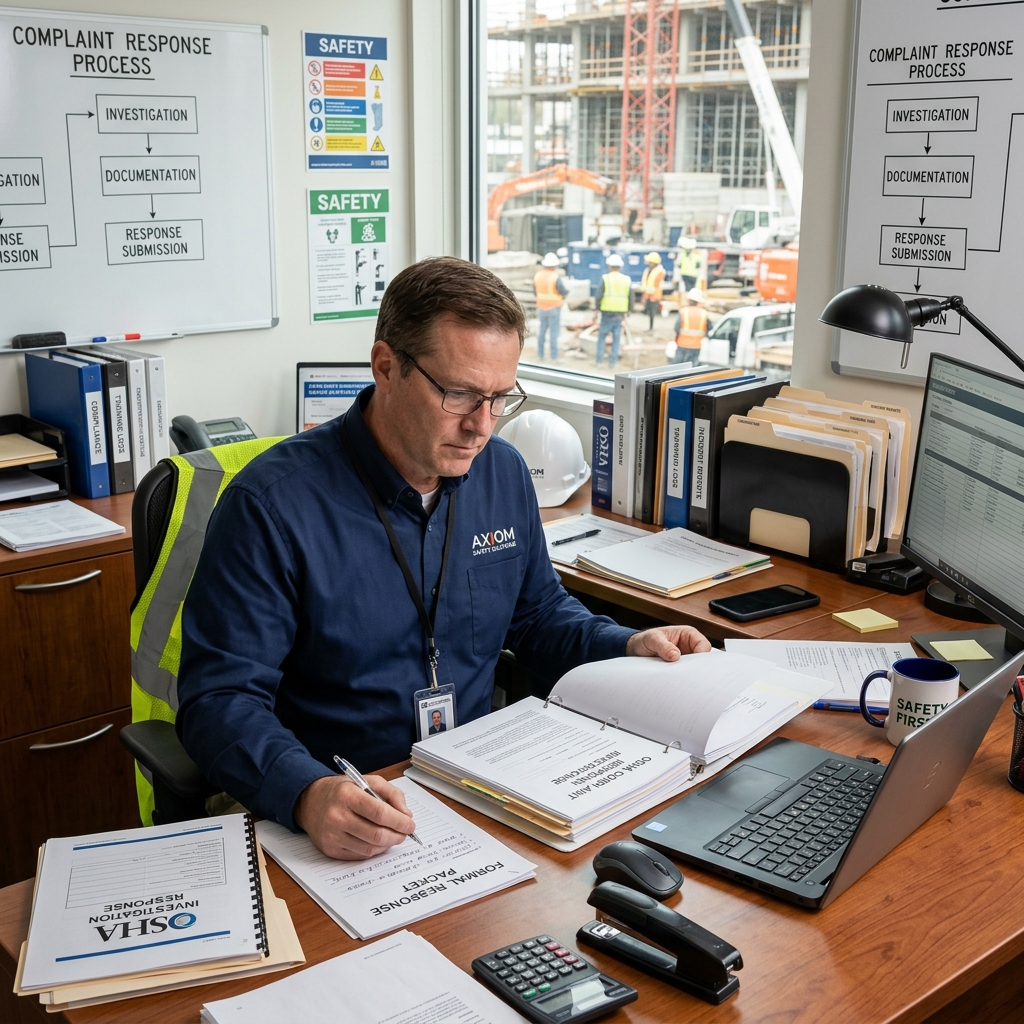
When a workplace safety complaint reaches the Occupational Safety and Health Administration, the employer’s response can shape both the legal outcome and the company’s internal safety culture. A prompt, organized, and factual approach helps show good faith, reduce the chance of an inspection, and correct problems before they become larger risks. Federal OSHA explains that employers are typically notified of a complaint, told the alleged hazards, and asked to provide a response within a short time frame.
This guide explains what employers should do after learning about an OSHA complaint, how to investigate the issue internally, how to prepare a written response, and how to avoid retaliation concerns. It also outlines practical ways to improve safety procedures so the same issue does not return.
Why an OSHA complaint deserves immediate attention
An OSHA complaint is not just a paperwork event. It may signal a real hazard, a breakdown in communication, or a missing safety control. OSHA materials advise employers to begin their investigation without delay and to gather relevant facts, photographs, and supporting records as soon as they receive notice.
Even if management believes the complaint is exaggerated or mistaken, a dismissive response can create unnecessary risk. A serious response helps demonstrate that the company takes worker safety seriously and is willing to verify conditions rather than rely on assumptions.
The first steps after notification
Once a complaint is received, the employer should treat the situation as time-sensitive. In many OSHA complaint-handling situations, the agency requests a written response within five working days. That deadline is short enough that the company should begin gathering facts immediately.
A strong first response usually includes the following actions:
- Assign one person to coordinate the response.
- Preserve all relevant documents and photos.
- Inspect the location named in the complaint.
- Interview employees who work in or near the area.
- Identify any immediate interim controls.
- Start drafting a factual, point-by-point reply.
Designating a single compliance lead, such as an environmental, health, and safety manager or human resources leader, helps prevent confusion and makes sure that internal communication stays consistent.
How to investigate the complaint internally
The internal investigation should be practical, objective, and well documented. OSHA’s guidance encourages employers to conduct a walkthrough inspection, observe conditions, speak with employees, and collect evidence that explains either why the alleged hazard does not exist or what corrective measures are underway.
The investigation should focus on facts, not blame. The goal is to understand what happened, whether the issue is ongoing, and what controls are available to reduce risk. If a machine guard is missing, for example, the employer should examine not only the immediate condition but also whether inspection routines, maintenance procedures, or reporting channels failed earlier in the process.
Useful investigation materials may include:
- Inspection checklists and audit records
- Maintenance logs and repair invoices
- Training records and attendance sheets
- Photographs of the area before and after correction
- Safety policies, operating procedures, and signage
- Injury, illness, or incident reports if applicable
What the written response should cover
A written response to OSHA should be specific, organized, and respectful. OSHA and practitioner guidance both emphasize that the answer should address each allegation rather than provide a vague reassurance that the workplace is safe.
In many cases, the response should explain one of three things:
- The alleged hazard does not exist.
- The hazard existed but has already been corrected.
- The hazard is being corrected and interim protections are in place.
If a condition has been fixed, the employer should say how and when it was corrected and include proof where possible. If the company disputes the complaint, it should explain the basis for that position using records, observations, or photographs. If the problem is real, the response should show what has been done and what remains to be completed.
How to balance speed and accuracy
Fast action matters, but speed should not replace accuracy. A hurried response that lacks detail or contains inconsistent statements can weaken credibility. A careful reply that is grounded in inspection findings, worker interviews, and documented corrective steps is more persuasive.
Employers should avoid defensive language. Statements that sound argumentative or dismissive may distract from the real issue. OSHA generally places greater value on concrete evidence than on generalized assurances, so a clear factual record is more useful than a broad denial.
| Task | Best practice | Why it matters |
|---|---|---|
| Complaint review | Read each allegation carefully | Ensures the response addresses every issue |
| Worksite inspection | Inspect the exact area mentioned | Confirms current conditions |
| Documentation | Save photos, records, and notes | Supports the company’s position |
| Corrective action | Fix hazards quickly | Reduces risk and supports good faith |
Correcting hazards before OSHA arrives
One of the most effective ways to respond to a complaint is to fix any legitimate hazard immediately. OSHA guidance for employers stresses that prompt correction, along with proof of that correction, may help resolve the matter without further escalation.
Corrective action may include repairing equipment, replacing worn parts, improving ventilation, updating procedures, retraining workers, or changing how tasks are assigned. If full correction will take time, interim controls should be used to protect employees until the permanent fix is in place.
When a delay is unavoidable because of cost, equipment lead time, or structural complexity, employers should communicate those reasons clearly and document a realistic plan to abate the hazard.
Communicating with employees during the process
Employees often notice whether management responds calmly and transparently after a safety concern is raised. Clear communication can reduce rumors, preserve trust, and encourage early reporting of future hazards. Guidance from workplace safety sources recommends letting employees know that the issue is being reviewed and that the company is taking the concern seriously.
Communication should be factual and measured. The company does not need to identify who filed the complaint, and it should not attempt to pressure workers into revealing the source. OSHA materials warn that trying to determine the identity of the complainant may be viewed as retaliation or discrimination.
Good employee communication often includes:
- Confirming that the concern was received
- Explaining that an investigation is underway
- Sharing general corrective steps when appropriate
- Encouraging workers to report additional issues
- Reinforcing that retaliation is prohibited
Avoiding retaliation problems
Retaliation is one of the most serious mistakes an employer can make after an OSHA complaint. Any adverse action that appears linked to the employee’s safety complaint can create separate legal exposure and undermine the company’s defense.
Examples of risky conduct include cutting hours, changing assignments without a legitimate reason, threatening discipline, or singling out the employee for unfavorable treatment. The safest approach is to keep employment decisions separate from the complaint process and document neutral reasons for any necessary workplace changes.
Training supervisors is especially important. Front-line managers may be the first people to hear about a complaint, and they should know how to respond without reacting emotionally or assuming bad faith. A calm and consistent process helps prevent unnecessary escalation.
When OSHA asks for more information
In some cases, the agency may seek clarification after the initial response. OSHA’s complaint-handling process allows the agency to follow up by phone, fax, or letter, and employers should be ready to provide more detail if requested.
If OSHA asks for a more thorough explanation, the company should be prepared to provide:
- A summary of the internal investigation
- Names of people interviewed, when appropriate
- Specific corrective actions taken
- Photos, work orders, or vendor documents
- A timeline for any remaining work
Where the complaint seems likely to lead to an inspection, a complete and well supported response can still help show that the employer takes compliance seriously and has made meaningful changes.
Building a stronger prevention system
The best response to an OSHA complaint is a workplace that does not need one in the first place. Employers can lower the chance of recurring complaints by improving internal reporting channels, scheduling regular inspections, and making safety corrections visible to the workforce.
Practical prevention measures include:
- Routine hazard walkthroughs
- Clear reporting procedures for workers
- Prompt maintenance of equipment and guards
- Regular refresher training on safe work practices
- Documentation of corrective actions and follow-up checks
Employers should also review root causes. If a complaint points to a recurring problem, the organization may need to improve supervision, staffing, or communication rather than simply repair one isolated condition.
Frequently asked questions
Do employers always get inspected after a complaint?
No. OSHA may handle some complaints through a phone or written inquiry, and an on-site inspection is generally reserved for situations that meet specific criteria.
How fast must an employer respond?
OSHA materials indicate that employers are often expected to respond within five working days after notification of a complaint.
Should the employer try to find out who complained?
No. OSHA advises against actions that could be viewed as retaliation, including attempts to identify the source of the complaint.
What evidence is most useful?
Photos, inspection notes, repair records, training logs, and written descriptions of corrective measures are often the most helpful forms of support.
What if the complaint is wrong?
If the allegation is inaccurate, the employer should explain why with objective evidence rather than with broad denials. A clear factual record is more persuasive than a simple refusal to agree.
References
- How to Respond when Employees Call OSHA — U.S. Compliance. 2024-01-01. https://www.uscompliance.com/blog/how-to-respond-when-employees-call-osha/
- File a Complaint with Cal/OSHA — California Division of Occupational Safety and Health. 2026-01-01. https://www.dir.ca.gov/dosh/complaint.htm
- Federal OSHA Complaint Handling Process — Occupational Safety and Health Administration. 2026-01-01. https://www.osha.gov/workers/handling
- How to Respond: When Employee Calls OSHA, Refuses to Work — SHRM. 2024-01-01. https://www.shrm.org/topics-tools/news/risk-management/how-to-respond-employee-calls-osha-refuses-to-work
- Responding to OSHA Inquiries on Complaints and Referrals — Occupational Safety and Health Administration. 2024-01-01. https://www.osha.gov/sites/default/files/publications/OSHA4498.pdf
- Thorough Response to OSHA Complaint Letter Can Avoid Later Problems — Parker Poe. 2024-08-01. https://www.parkerpoe.com/news/2024/08/thorough-response-to-osha-complaint-letter-can-avoid
Similar Articles








Read full bio of Sneha Tete




