
Legal Steps to Evict a Tenant in California
A practical, landlord-focused guide to lawfully removing a tenant in California while avoiding costly mistakes and illegal evictions.
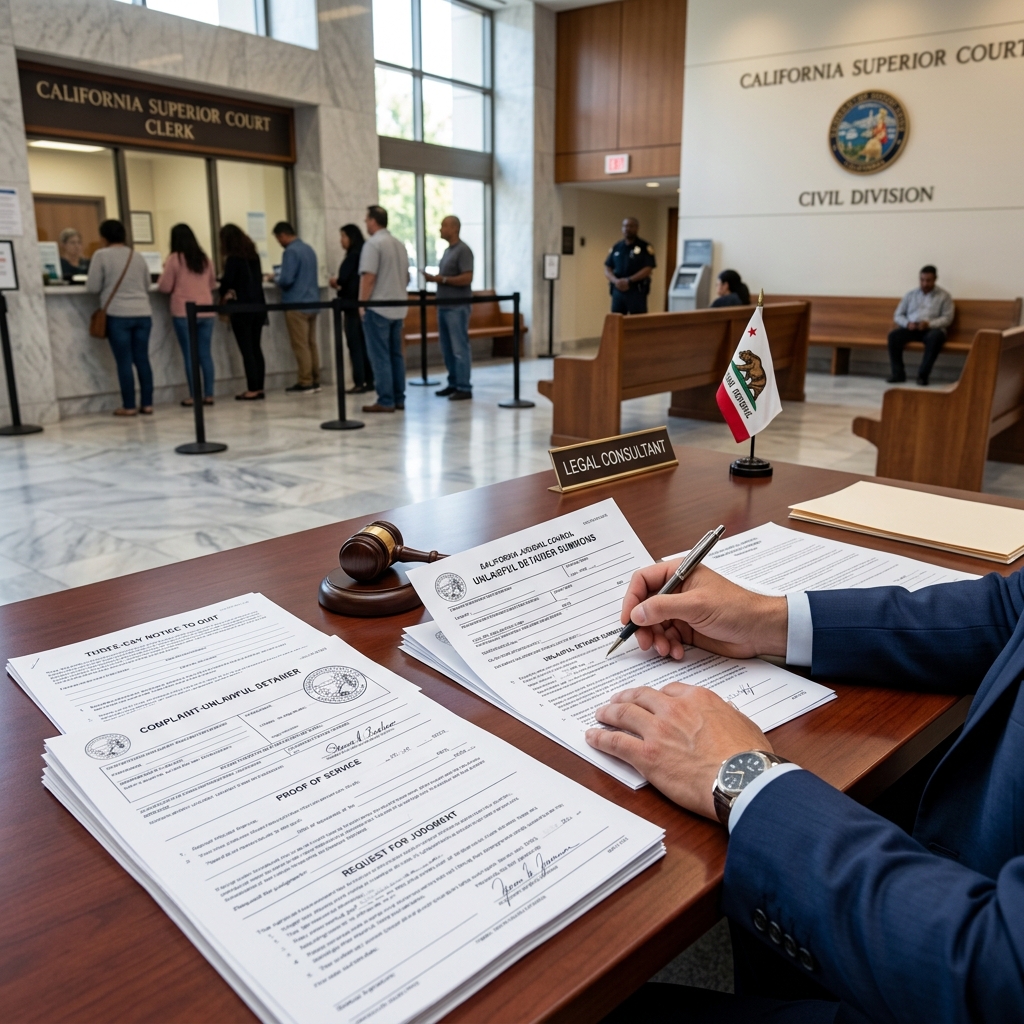
Evicting a tenant in California is a tightly regulated legal process, not just a matter of changing locks or asking someone to leave. To lawfully remove a tenant, a landlord must follow specific procedures, use proper written notices, file an unlawful detainer case in court, and obtain a judgment that authorizes the sheriff to carry out the eviction.
This guide explains the main stages of a lawful eviction in California, highlights common pitfalls, and clarifies what both landlords and tenants can expect during the process.
Core Principles of Eviction Law in California
California law protects tenants from sudden or arbitrary removal and sets strict rules on when and how a landlord may terminate a tenancy.
- Eviction is always a court process: A tenant can only be lawfully evicted after a landlord files a case and a court issues an order allowing the sheriff to remove the tenant if they do not leave voluntarily.
- Written notice is mandatory: Before filing in court, the landlord must serve a written notice telling the tenant what must be done (such as paying rent) or when they must move out.
- Self-help evictions are illegal: Lockouts, utility shutoffs, or removing doors/windows to force a tenant out are prohibited and can expose the landlord to damages and penalties.
- Just cause requirements: For many residential tenancies covered by the Tenant Protection Act, the landlord must have legally recognized “just cause” for eviction.
Understanding these principles is essential to avoid invalid notices, dismissed court cases, or liability for unlawful eviction.
Recognizing Lawful Reasons to Evict a Tenant
Not every conflict between landlord and tenant justifies an eviction. California law distinguishes between “at-fault” and “no-fault” reasons for ending a tenancy, especially under the Tenant Protection Act.
Common At-Fault Grounds
At-fault grounds arise when the tenant has done something that violates the rental agreement or the law. Typical examples include:
- Nonpayment of rent: The tenant fails to pay rent when due or does not pay in full.
- Material lease violation: Substantial breach of an important lease term, such as an unauthorized pet or subtenant, or using the property for prohibited activities.
- Nuisance or property damage: Conduct that significantly disturbs neighbors or causes serious damage to the unit.
- Illegal activity: Criminal activity on the premises, or criminal acts directed at the landlord or agent.
- Refusal of lawful access: Tenant unreasonably refuses to allow the landlord to enter after proper notice for inspection, repairs, or other lawful purposes.
No-Fault Grounds for Ending Tenancy
No-fault grounds relate to the landlord’s plans or legal obligations rather than tenant misconduct. Under state law and many local ordinances, no-fault evictions often require relocation payments or additional protections. Common no-fault reasons include:
- Owner move‑in: Landlord or specified family member intends to move into the unit.
- Substantial rehabilitation: The unit requires major work that cannot be done safely with the tenant in place.
- Demolition or removal from the rental market: Landlord plans to demolish the building or permanently withdraw the unit.
- Compliance with official orders: Government or court orders require the tenant to vacate, such as habitability or safety orders.
Before proceeding, landlords should confirm whether state and local “just cause” or rent control laws apply, as these can limit permissible grounds and impose additional requirements.
Step 1: Choosing and Serving the Right Notice
The eviction process starts with a properly drafted and served written notice. If the notice is defective—for example, wrong time period or unclear reason—the court can dismiss the eviction case.
Types of Notices Used in California
| Type of Notice | Typical Time Period | Primary Use |
|---|---|---|
| Three‑Day Notice to Pay Rent or Quit | 3 days | Nonpayment of rent |
| Three‑Day Notice to Perform Covenant or Quit | 3 days | Curable lease violations (e.g., unauthorized occupants) |
| Three‑Day Notice to Quit | 3 days | Serious violations that cannot be cured, such as major nuisance or illegal activity |
| 30/60/90‑Day Termination Notice | 30–90 days | Ending certain month‑to‑month tenancies, often for no‑fault reasons |
Local ordinances may require longer notice periods or special language, especially for no‑fault and rent controlled tenancies.
Key Elements of a Valid Notice
A legally sufficient notice usually must:
- Be in written form and clearly identify the landlord and tenant.
- State the address of the rental property.
- Describe the reason for the notice (e.g., unpaid rent amount and period).
- Specify the deadline by which the tenant must act (pay, cure, or vacate).
- Explain the required action: pay a stated sum, correct the violation, or move out.
For rent demands, the notice must accurately state the amount due and how the tenant can pay. Errors here can undermine the entire eviction case.
Service of the Notice
Proper service of the notice is just as important as the content. California law permits several methods, including personal delivery, substituted service on an adult at the residence plus mailing, or posting and mailing in certain situations.
Landlords should keep careful records of when and how notice was served, as this will determine deadlines and may be scrutinized in court.
Step 2: Filing an Unlawful Detainer Case
If the tenant does not comply with the notice—by paying, curing the violation, or leaving—within the required time, the landlord’s next step is to file an unlawful detainer (eviction) lawsuit in superior court.
Core Court Documents
To start the case, the landlord typically files:
- Complaint – Unlawful Detainer: Sets out the facts, legal basis for eviction, and requested relief (possession, unpaid rent, costs).
- Summons: Notifies the tenant that they are being sued and must respond by a specific deadline.
- Supporting forms or attachments required by local rules, such as cover sheets or declarations.
Once the court accepts the filing, the landlord must have the Summons and Complaint formally served on the tenant, usually by a non‑party adult or a professional process server.
Tenant’s Time to Respond
After being served, the tenant has a short period—generally about 5 to 10 court days, depending on the circumstances—to file a response with the court.
Common tenant responses include:
- Answer: A formal written response contesting some or all of the landlord’s claims.
- Demurrer or motion: Challenging legal defects in the Complaint or notice.
- Failure to respond: In which case the landlord may seek a default judgment.
Step 3: Trial or Default Judgment
If the tenant files a timely response, the case typically moves toward a trial where both sides can present evidence and arguments. If the tenant does not respond, the landlord may ask the court to enter judgment by default.
Preparing for Trial
A well-prepared landlord will organize:
- Signed rental agreements and any amendments.
- Copies of notices served (pay or quit, perform or quit, termination notices).
- Proof of service of notices and court papers.
- Payment records showing rent owed or paid.
- Photographs, inspection reports, or witness statements documenting violations or damage.
At trial, the judge—or sometimes a jury—decides whether the landlord has proven the legal right to possession and any monetary claims.
Default Judgments
If the tenant does not file any response within the required time, the landlord may request a default judgment. In that situation, the judge can decide the case based on the landlord’s filings alone, without testimony from the tenant.
Courts still require adequate proof of a valid notice, proper service, and legal grounds for eviction. Default is not automatic; it simply means the tenant has forfeited their opportunity to contest.
Step 4: After the Judge’s Decision
The judge’s decision determines whether the tenant must move and whether the landlord is entitled to unpaid rent or other monetary relief.
If the Landlord Wins
When the landlord prevails, the court issues a judgment for possession and may award:
- Writ of possession: The key document authorizing the sheriff to evict the tenant if they do not leave voluntarily.
- Unpaid rent and certain damages, like holdover damages for the time the tenant remained after notice expired.
- Court costs and sometimes attorney’s fees if allowed by the lease and law.
The landlord submits the writ to the sheriff, who will then post a notice at the property explaining that the tenant must vacate within a short period, often five days.
If the Tenant Wins
If the tenant defeats the eviction claim—because of defective notice, lack of just cause, retaliation, or other defenses—the case is dismissed and the tenant is allowed to remain in the unit.
The landlord may be barred from filing a new eviction based on the same defective grounds and may face exposure for wrongful conduct if the case was brought in bad faith.
Step 5: Sheriff’s Eviction and Tenant Belongings
Only the sheriff (or marshal, in some jurisdictions) can physically remove a tenant after a judgment for possession. The landlord cannot personally carry out the eviction by force or by disabling the premises.
Execution of the Writ
After receiving the writ of possession, the sheriff:
- Posts a Notice to Vacate at the unit, giving the tenant a final deadline to move.
- Returns on or after the specified date to remove the tenant if they remain.
- Delivers possession to the landlord, who can then change locks and secure the property.
This phase marks the official, lawful eviction. Any landlord action to remove the tenant before the sheriff completes this process can be considered illegal.
Handling Tenant Property After Eviction
If the tenant leaves personal belongings behind, California law requires landlords to handle them properly. Generally:
- The landlord must store the property for a period and may charge reasonable storage costs.
- Back rent cannot be included in storage fees.
- If property is not claimed, the landlord may sell it at auction or dispose of it; low‑value items can be given away.
Landlords should check current state statutes and local rules for detailed procedures and notice requirements related to abandoned property.
Illegal Eviction Tactics to Avoid
Even when a landlord is frustrated, certain actions are clearly unlawful and can result in penalties, damages, or even criminal liability.
- Lockouts: Changing locks or blocking entry without a court order is illegal.
- Utility shutoffs: Cutting water, electricity, or gas to force a tenant out is prohibited.
- Removing doors or windows: Intentionally making the unit uninhabitable to pressure the tenant to leave is unlawful.
- Harassment: Persistent threats, intimidation, or interference with quiet enjoyment can form the basis of tenant lawsuits.
If a landlord uses these tactics, tenants may file complaints with law enforcement, seek injunctions, and sue for damages in civil court.
Typical Timeline for a California Eviction
While timing can vary, many California evictions take 30 to 45 days or more from service of court papers to actual move‑out, assuming the landlord follows procedures correctly and the court calendar is not unusually backlogged.
Approximate Sequence
- Notice period: 3 days to 30‑90 days, depending on notice type.
- Filing and service of Complaint and Summons: Often within a week after notice expires.
- Tenant response deadline: Roughly 5–10 court days after service.
- Trial scheduling: Frequently set within a few weeks after the landlord requests a court date.
- Post‑judgment eviction: Sheriff usually posts a Notice to Vacate and returns within a few days if necessary.
Delays are common when either party requests continuances, files motions, or negotiates settlement, so landlords should plan for timelines to extend beyond the minimum estimates.
Common Mistakes Landlords Should Avoid
Small errors at the beginning of an eviction case often have large consequences later. Some frequently observed mistakes include:
- Using the wrong notice type for the situation, such as a termination notice instead of a pay‑or‑quit notice for rent nonpayment.
- Incorrect time periods, especially for month‑to‑month terminations in rent‑controlled or just‑cause jurisdictions.
- Miscalculating rent owed or including improper charges in a rent demand notice.
- Defective service of notices or court papers—failing to follow legal methods of delivery.
- Ignoring local ordinances that require additional disclosures, relocation payments, or just‑cause reasons.
- Attempting self‑help eviction rather than waiting for a court judgment and sheriff execution.
Careful drafting, good documentation, and consultation with legal resources or counsel can significantly reduce the risk of dismissal or liability.
FAQs: California Eviction for Landlords
1. Can I evict a tenant without going to court?
No. Under California law, the only lawful way to evict a tenant is to file a case and obtain a court order authorizing the sheriff to remove the tenant if they do not leave voluntarily.
2. How long does a typical eviction take?
Most evictions take at least 30–45 days from the time court papers are served until move‑out, though complex cases or busy courts can extend this timeframe.
3. What happens if the tenant does not respond to the lawsuit?
If the tenant fails to respond by the deadline, the landlord can ask the court for a default judgment. The judge may then decide the case based on the landlord’s filings and issue a writ of possession.
4. Is it legal to change the locks when rent is unpaid?
No. Lockouts, utility shutoffs, or other efforts to force a tenant out without a court order are illegal and can result in liability for the landlord.
5. Do I need a reason to evict a month‑to‑month tenant?
In many parts of California, especially where the Tenant Protection Act and local just‑cause ordinances apply, landlords generally must have legally recognized cause even for month‑to‑month tenancies. No‑fault evictions often require additional steps and relocation assistance.
6. What if the tenant leaves property behind after the sheriff’s eviction?
Landlords must follow legal procedures for storing and disposing of abandoned property, including giving notice and allowing time for retrieval. Reasonable storage fees may be charged, but back rent cannot be included in those costs.
References
- A Summary of California Eviction Process — California State University Long Beach Legal Resource Center. 2022-03-01. https://www.csulb.edu/college-of-business/legal-resource-center/article/a-summary-of-california-eviction-process
- The eviction process for tenants — California Courts Self-Help Guide. 2023-06-15. https://selfhelp.courts.ca.gov/eviction-tenant
- Know Your Rights: Eviction — California Rural Legal Assistance, Inc. 2022-10-10. https://crla.org/get-help/housing/evictions-and-lockouts/know-your-rights-eviction
- The Eviction Process (2025 Update) — California Courts / Debt Collective (video resource). 2025-01-20. https://www.youtube.com/watch?v=RXdhEVueBKo
- Eviction – Consumer & Business — Los Angeles County Department of Consumer and Business Affairs. 2023-04-05. https://dcba.lacounty.gov/portfolio/eviction/
- The eviction process for landlords — California Courts Self-Help Guide. 2023-06-15. https://selfhelp.courts.ca.gov/eviction-landlord
Similar Articles








Read full bio of medha deb


