
After A House Fire: 10 Essential Steps For Full Home Recovery
Practical steps for protecting your safety, property, and claim after a house fire.
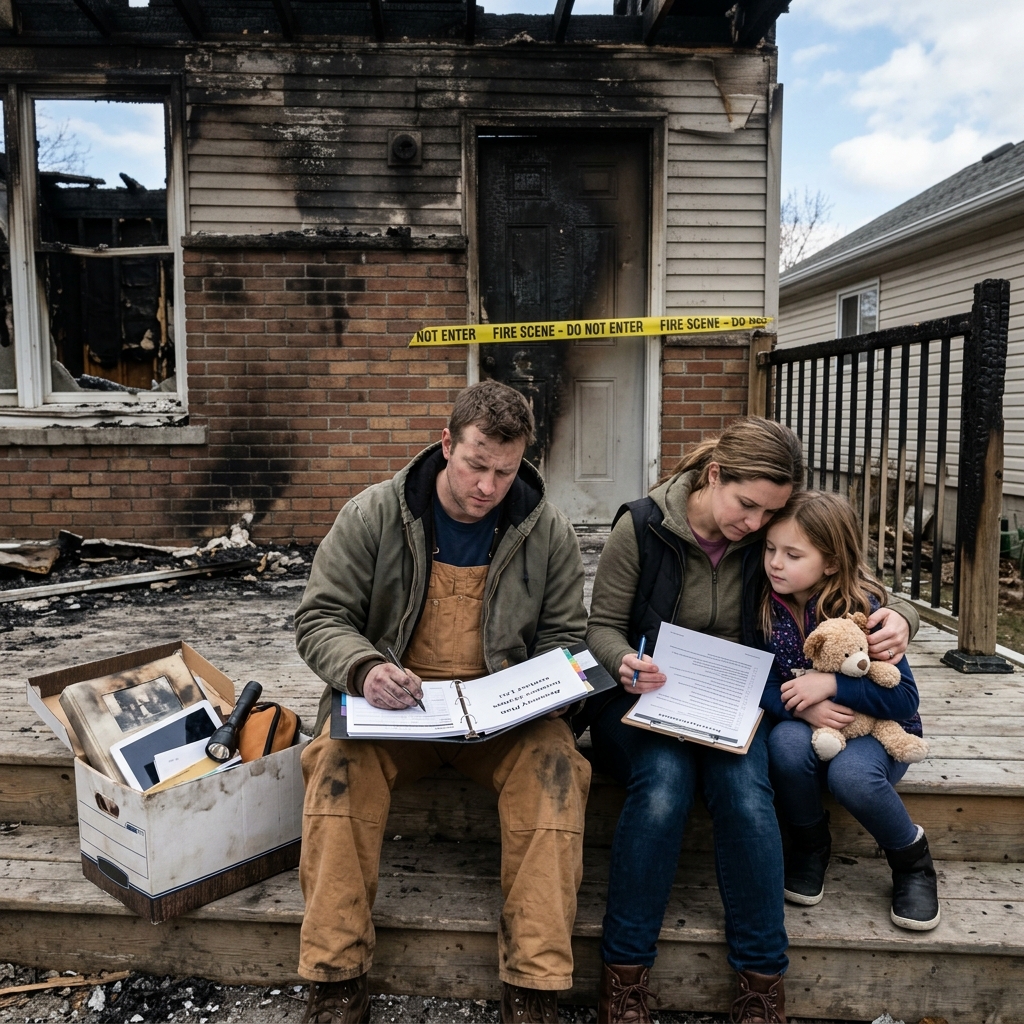
A house fire creates immediate safety risks and leaves many homeowners unsure where to begin. The most effective response is to move in a deliberate order: protect people first, preserve evidence second, and then begin the insurance and recovery process. Fire response guidance from the U.S. Fire Administration, FEMA, and disaster recovery organizations consistently emphasizes staying out of unsafe structures, documenting losses, and contacting insurers and relief agencies quickly.
Make Safety the First Priority
The first step after any fire is to confirm that everyone is accounted for and that the structure is safe to approach. Fire authorities advise not to re-enter a burned home until officials say it is safe, because hidden structural damage, smoke exposure, hot spots, and electrical hazards can remain after the flames are out.
If anyone is injured, call emergency services immediately. Even when injuries seem minor, smoke inhalation and burns may require medical evaluation. If the home has been evacuated, keep family members together and use your emergency contacts list to account for children, older adults, pets, and anyone who may not have been present when the fire started.
- Do not enter the property until the fire department gives clearance.
- Watch for unstable floors, weakened roofs, broken glass, and exposed wiring.
- Keep children and pets away from the property perimeter.
- Seek medical care for smoke exposure, burns, or breathing problems.
Contact the Right Agencies Quickly
Once immediate danger has passed, notify the organizations that control access to information and assistance. The responding fire department can explain when it is safe to return and can provide an official fire report, which is often useful for insurance and other claims. If the fire involved suspected arson, theft, or another crime, a police report may also be necessary.
Your mortgage lender should be informed as well, because lenders have a financial interest in the property and may require updates during the claims process. If you rent the home rather than own it, the landlord or property manager should be notified promptly so the building can be secured and repaired.
- Request the fire report from the local fire department.
- Notify your mortgage company if you own the property.
- Report suspected criminal activity to local law enforcement.
- Tell your landlord, if applicable, as soon as possible.
Secure the Property to Prevent More Damage
After a fire, the property often remains vulnerable to weather, theft, and further deterioration. Disaster recovery guidance commonly recommends boarding up openings, covering damaged roof areas, and taking steps to reduce water intrusion and unauthorized access. In many cases, temporary protection should be arranged within about a day, especially if windows, doors, or roof sections are exposed.
Do not begin permanent repairs before the insurance company has had a chance to inspect the damage unless emergency measures are necessary to prevent additional loss. Temporary protection is different from full restoration, and preserving the scene matters for both insurance and any later legal questions.
- Board up broken windows and damaged doors.
- Cover roof openings with tarps if it is safe to do so.
- Lock the property and limit access to authorized people only.
- Keep receipts for all emergency stabilization work.
Document Everything Before Items Are Removed
Careful documentation is one of the most important parts of the recovery process. Fire recovery sources advise photographing and video recording damaged areas, listing ruined property, and keeping a record of every communication related to the loss. The more complete the record, the easier it is to support an insurance claim or resolve a dispute later.
Start by creating a dedicated folder, digital or physical, for the fire loss. Include the insurance policy, the fire department report, repair estimates, receipts, and notes from every conversation you have with insurers, contractors, or officials. If you have receipts, manuals, warranties, or digital purchase records, collect those too.
- Take wide and close-up photos of every damaged room and exterior area.
- Record videos that show structural damage, soot, and water damage.
- Write down brand names, model numbers, approximate purchase dates, and values for damaged items.
- Save emails, text messages, and call logs with dates and names.
- Keep receipts for hotels, meals, clothing, and emergency repairs.
Understand What Your Insurance May Cover
Many homeowners focus only on rebuilding the structure, but fire losses often include temporary housing, damaged contents, cleanup costs, and extra living expenses. Homeowner policies commonly address dwelling damage, personal property, loss of use, and additional living expenses, although coverage limits and exclusions vary.
When you contact the insurer, ask exactly what the policy covers and what proof is needed for each category of loss. Disaster guidance from FEMA also recommends saving receipts and asking questions about cleaning and restoration services, because some insurers will pay for specialized recovery of clothing, electronics, and household goods.
| Possible Coverage Area | What It May Help Pay For |
|---|---|
| Dwelling coverage | Structural repairs to the home, including walls, roofing, floors, and attached systems |
| Personal property | Furniture, clothing, appliances, and other household items |
| Loss of use / ALE | Hotel stays, meals, and other living costs while the home is uninhabitable |
| Debris removal / cleanup | Removing damaged materials and preparing the property for repair |
Start the Insurance Claim Process Early
Contact the insurer as soon as practical and open the claim without delay. Recovery guidance from multiple fire-disaster resources recommends prompt notice so the adjuster can inspect the site and so the claim file starts with a clear timeline. Ask for the claim number, the adjuster’s name, and a list of the documents required to move forward.
Be precise and factual when describing the loss. Avoid guessing about causes or values if you do not know them yet. If the insurer asks for a sworn inventory or proof of ownership, use your documentation folder to build the response methodically.
- Ask for the claim number and adjuster contact information.
- Confirm what forms or inventories must be submitted.
- Request a written explanation of the next steps.
- Keep a log of every call, email, and meeting.
Look for Temporary Support While You Recover
Fire recovery often requires immediate help with shelter, food, clothing, and basic household needs. FEMA’s after-fire guidance and the U.S. Fire Administration both direct residents to local disaster relief organizations, including the American Red Cross and the Salvation Army, which may be able to help with short-term lodging and essentials. If your policy includes additional living expenses, that coverage may reimburse some of those costs as well.
Preserve every receipt related to displacement. This includes hotel bills, rideshare expenses, restaurant receipts, laundry charges, and purchases of emergency clothing or medications. Those records can support reimbursement and help establish the cost of being forced from your home.
- Contact local disaster relief organizations for shelter and supplies.
- Ask your insurer about additional living expense benefits.
- Keep all receipts for temporary living costs.
- Track mileage and travel costs if you must commute from a temporary location.
Handle Cleanup and Restoration Carefully
Cleanup after a fire is not the time for improvisation. Smoke, soot, and water damage can worsen if surfaces are cleaned incorrectly, and damaged items can lose value if they are discarded too soon. Fire recovery sources caution against disposing of property before it is documented and inspected, unless it poses a safety or sanitation hazard.
Consider using professionals for structural cleaning, odor removal, and restoration of salvageable contents. Specialists may be able to treat belongings such as documents, furniture, electronics, and textiles. If the insurer recommends vendors, ask whether you are required to use them or whether you may choose your own contractor.
- Wait for the insurer’s inspection before discarding damaged items when possible.
- Use professional restoration services for smoke and soot damage.
- Separate items that can be cleaned from items that are total losses.
- Get written estimates before approving major repairs.
Preserve Legal and Financial Rights
In some cases, a fire loss can involve more than a standard insurance claim. If the cause is disputed, if the insurer delays or denies coverage, or if another person may have caused the fire, legal issues can arise. Preserving records from the first day after the incident can make those issues easier to evaluate later.[10]
That means keeping copies of all reports, photos, inventories, repair estimates, and correspondence. It also means avoiding informal verbal agreements that are not reflected in writing. If you suspect arson, theft, faulty wiring from a third party, or a contractor-related failure, the evidence trail may become important for a later claim or dispute.
- Keep every policy document and claim letter.
- Store all photos, videos, and inventories in more than one place.
- Do not rely only on phone conversations; follow up in writing.
- Seek legal advice if coverage is denied or liability is contested.
Plan the Rebuild in Phases
Rebuilding after a fire is usually a phased process rather than a single repair job. First comes safety and stabilization, then damage assessment, then claims handling, and finally reconstruction and replacement of contents. Industry recovery guidance suggests coordinating structural repairs, electrical and plumbing work, and contents restoration in an organized sequence rather than rushing into permanent changes.
Use the rebuild period to review fire-prevention improvements as well. Updated smoke alarms, fire extinguishers, safer storage for flammables, and clearer escape routes can reduce the risk of future loss. If local codes have changed, ask your contractor whether reconstruction must meet new standards.
| Recovery Phase | Main Goal |
|---|---|
| Immediate response | Protect people and confirm the property is safe |
| Damage control | Secure the site and prevent additional loss |
| Claims phase | Document damage and communicate with the insurer |
| Restoration phase | Repair the structure and replace salvageable contents |
Frequently Asked Questions
Should I go back inside right after the fire?
No. Fire officials should confirm that the structure is safe before anyone re-enters the home.
What documents should I gather first?
Start with the insurance policy, the fire report, photos and videos of the damage, receipts, and a written list of damaged property.
Can I throw damaged items away?
Not until they have been photographed and, if possible, inspected by the insurer or an adjuster. Discarding items too early can weaken a claim.
What if I need a hotel or temporary apartment?
Ask the insurer whether your policy includes additional living expenses or loss of use coverage, and keep receipts for every related expense.
When should I talk to a lawyer?
Consider legal advice if the fire appears suspicious, if another party may be responsible, or if the insurer delays, undervalues, or denies the claim.[10]
References
- What to Do Immediately After a House Fire — House Fire Solutions. 2024-01-01. https://www.housefiresolutions.com/resources/steps-after-house-fire
- After the Fire — U.S. Fire Administration, FEMA. 2024-01-01. https://www.usfa.fema.gov/downloads/pdf/publications/fa_46.pdf
- What to Do After a Fire | A Homeowner’s Step-by-Step Guide — Paul Davis. 2024-01-01. https://morris-and-passaic-counties.pauldavis.com/blog/fire-guide/
- What to do After a House Fire: Complete Guide — SERVPRO. 2024-01-01. https://www.servpro.com/resources/fire-damage/what-steps-to-take-after-a-house-fire
- What to do after a house fire: a step-by-step guide — VIU by HUB. 2023-09-01. https://www.viubyhub.com/personal-insurance-blog/2023/09/what-to-do-after-a-house-fire-a-step-by-step-guide
- Before and After a Fire- A Guide You Should Know — Dordick Law. 2025-02-07. https://www.dordicklaw.com/blog/before-and-after-a-fire-a-guide-you-should-know/
- Go Evacuation Guide — Ready for Wildfire. 2024-01-01. https://www.readyforwildfire.org/prepare-for-wildfire/go-evacuation-guide/
Similar Articles








Read full bio of medha deb




