
Marrying A Foreign National: 2025 Legal Checklist For Couples
A practical guide to cross-border marriage rules, paperwork, and recognition.
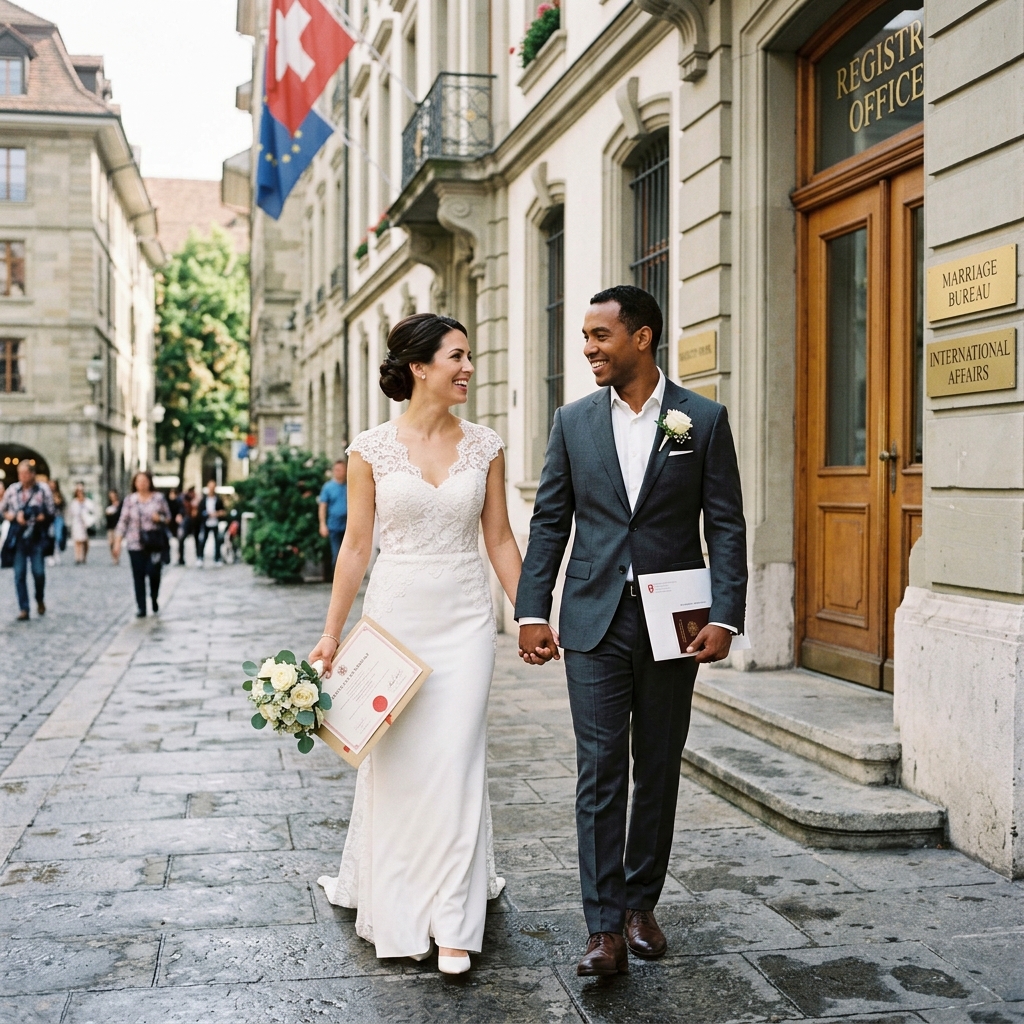
Getting married across borders can be straightforward in some cases and complicated in others. The key issue is not the romance of the ceremony but whether the marriage will be valid where it takes place and recognized where you live afterward. That means checking local marriage rules, gathering the right paperwork, and thinking ahead about immigration and recordkeeping.
This guide explains the main legal steps couples should review before marrying a foreign national or non-citizen. It focuses on practical planning, not the customs of any single country, because marriage requirements can vary widely from place to place.
Start with the law of the place where you will marry
The first question is simple: where will the marriage happen? Every country, and sometimes every local region, has its own rules for who can marry, what documents are required, and which officials may perform the ceremony. A marriage that is valid in one country is usually easiest to prove if it followed that country’s marriage laws from the beginning.
Before making travel plans, confirm the following with the local civil authority, embassy, or official government office:
- Whether one or both spouses must be physically present before the ceremony
- Whether either party must live in the country for a certain period before marrying
- What age limits apply
- Whether parental consent is needed for younger applicants
- Whether a civil ceremony is required or a religious ceremony is enough
- Whether prior marriages must be ended and documented
If you skip this step, you may complete a ceremony that is emotionally meaningful but legally ineffective. The safest approach is to verify the rules before reserving travel, booking vendors, or inviting guests.
Check whether both partners are legally free to marry
Most countries require proof that each person has the legal capacity to marry. In practical terms, that usually means each person must be single, divorced, widowed, or otherwise free from an existing marriage. If either partner has been married before, the law may require official proof that the prior marriage ended.
Common documents include:
- A divorce decree
- A death certificate for a deceased spouse
- An annulment order, if applicable
- An affidavit or sworn statement confirming freedom to marry
Some countries use a certificate of no impediment, certificate of legal capacity, or a similar document. The name changes by country, but the purpose is the same: to show that no legal obstacle prevents the marriage. If the foreign jurisdiction requires a form the home country does not usually issue, applicants may need to work with a consulate or another authorized office to prepare a substitute affidavit.
Expect extra paperwork for passports, translations, and authentication
Marrying across borders often involves paperwork from more than one country. Governments want to see that identity documents are real, civil status records are accurate, and foreign papers are reliable. That is why passports, certified copies, translations, and document authentication often become part of the process.
Depending on the country, you may need:
| Document or requirement | Why it matters |
|---|---|
| Valid passport | Proves identity and nationality |
| Birth certificate | May be needed to verify age and parentage |
| Divorce or death record | Shows prior marriages have ended |
| Certified translation | Allows authorities to read foreign-language documents |
| Authentication or apostille | Helps prove a foreign document is genuine |
Translations usually must be done by a qualified translator, and some governments require a notarized or certified version. Authentication rules also vary. In some situations, a document must be notarized, then certified by a government office, and then accepted abroad. Because the sequence matters, couples should verify the process for each document well in advance.
Understand where the marriage will be recognized afterward
A wedding is not just about the country where it happens. It also matters whether other jurisdictions will recognize it later. That includes your home country, the country where you plan to live, and any place where you may eventually need to prove your marital status.
Recognition usually depends on a basic principle: if the marriage was valid where it was performed and it does not violate a strong public policy rule in another country, it is often recognized elsewhere. Even so, couples should not assume automatic recognition. Some governments pay close attention to age, consent, monogamy, and procedural formalities.
Before the wedding, ask these questions:
- Will the marriage be accepted in the country where we plan to live?
- Will my home country treat the marriage as valid for tax, inheritance, or name-change purposes?
- Do we need to register the marriage after the ceremony?
- Will we receive a certificate that can be used internationally?
These questions matter because a couple may be legally married in one country but still face proof-of-marriage problems later when dealing with banks, schools, immigration offices, or family courts.
Plan carefully if immigration is part of the picture
Many international couples also need to think about visa status. Marriage can affect a spouse’s ability to enter, remain in, or work in a country. But marriage alone does not automatically solve immigration issues. The foreign spouse may still need to apply for a visa, residence permit, or other authorized status.
Important immigration questions include:
- Whether the foreign spouse may travel to the wedding country as a visitor
- Whether marriage changes current visa eligibility
- Whether the couple can apply from inside the country or must file abroad
- Whether proof of a real relationship is required
- How long the process may take after the marriage
Immigration agencies often want strong evidence that the relationship is genuine. That may include photos, shared travel records, correspondence, lease documents, or evidence of financial support. The exact standard depends on the country’s immigration system, so it is wise to review the rules early rather than after the ceremony.
Do not overlook practical family-law issues
International marriage is not only about the wedding itself. It can also affect property rights, inheritance, parentage, and divorce rules later on. Different countries may apply different laws to different parts of married life, which can create unexpected results if the couple does not plan ahead.
Some of the most common long-term issues include:
- How property acquired during marriage will be owned or divided
- Whether one spouse automatically gains rights in the other spouse’s estate
- Which country’s law will apply if the couple separates
- How children’s citizenship or nationality will be determined
If the couple expects to live in more than one country, they should consider whether a prenuptial agreement, a postnuptial agreement, or local legal advice could reduce uncertainty. What works in one legal system may not be enforceable in another, so the documents should be drafted with cross-border issues in mind.
Keep a clear record of the ceremony and registration
After the wedding, the couple should obtain an official marriage certificate from the proper authority. This document is usually the main proof that the marriage occurred and that it was legally recorded. In some countries, a religious ceremony alone is not enough unless a civil registration also takes place.
It is wise to request multiple certified copies of the certificate. You may need them for:
- Immigration applications
- Name changes
- Insurance enrollment
- Tax filings
- Banking and financial records
- School or benefit paperwork
If the certificate is in a foreign language, arrange a certified translation as soon as possible. If another country requires legalized proof of the document, ask whether an apostille or consular legalization is needed. Keeping the marriage record organized makes later administrative tasks much easier.
Common mistakes couples can avoid
Most problems in international marriage arise from avoidable paperwork or timing errors. Couples often focus on the ceremony and leave legal verification until the last minute. That can lead to delays, denied applications, or a wedding that must be repeated in a different form.
Common mistakes include:
- Assuming a marriage valid in one country will automatically be recognized everywhere
- Failing to collect proof that prior marriages have ended
- Ignoring translation and authentication requirements
- Booking travel before confirming residence or waiting-period rules
- Not checking whether immigration status will change after the wedding
A simple checklist and early contact with official sources can prevent most of these issues. The more countries involved, the more important it becomes to verify every step in advance.
Frequently asked questions
Can I marry a foreigner in my home country?
Usually yes, but the foreign partner may need extra documents such as a passport, birth certificate, proof of divorce, and an affidavit showing the person is free to marry. Local rules will control the exact requirements.
Will a marriage performed abroad be valid at home?
Often it will be, if the marriage was legally performed where it took place and the marriage does not violate a strong rule of your home jurisdiction. The safest approach is to confirm recognition before the wedding.
Do we need a lawyer to marry someone from another country?
Not always, but legal advice can be helpful if the couple has immigration concerns, prior marriages, children from earlier relationships, or property in multiple countries.
What if the country where we marry requires documents my country does not issue?
In that situation, a consulate, embassy, or local authority may allow a sworn affidavit or a comparable substitute document. Because requirements vary, ask the destination country what it accepts before you travel.
Should we keep copies of everything?
Yes. Keep copies of passports, translations, certificates, authentication records, and all submission receipts. These documents can be useful for immigration, taxes, benefits, and future proof of marriage.
Final planning checklist
Before you marry a foreign national, review this short checklist:
- Confirm the marriage rules in the country where the ceremony will happen
- Gather proof that both partners are legally free to marry
- Prepare certified translations and document authentication if required
- Check whether the marriage will be recognized where you live afterward
- Review visa or residence issues if the foreign spouse will relocate
- Request certified copies of the final marriage certificate
With the right preparation, marrying across borders can be legally secure as well as personally meaningful. The goal is to make sure the wedding is not only beautiful, but also valid, recognized, and ready to support the couple’s future plans.
References
- Marriage — U.S. Department of State. 2025-xx-xx. https://travel.state.gov/en/international-travel/living-abroad/marriage.html
- Marriage of U.S. Citizen Abroad — U.S. Embassy Luanda. 2025-xx-xx. https://ao.usembassy.gov/services/marriage-of-u-s-citizen-abroad/
- International marriage — Familieretshuset (Agency of Family Law, Denmark). 2025-xx-xx. https://familieretshuset.dk/familieretshuset/en/your-life-situation/your-life-situation/international-marriages/
- Legal considerations for international marriages — Delissen Martens. 2025-xx-xx. https://www.delissenmartens.nl/en/the-latest/international-marriage-legal-considerations-when-love-crosses-borders
- Marriage – Travel.gov — U.S. Department of State. 2025-xx-xx. https://travel.state.gov/en/international-travel/living-abroad/marriage.html
Similar Articles








Read full bio of medha deb


