
D.C. Small Claims Court: 10 Essential Steps To File In 2025.
A practical, step‑by‑step guide to bringing or defending a money‑only case under $10,000 in D.C. Small Claims Court.
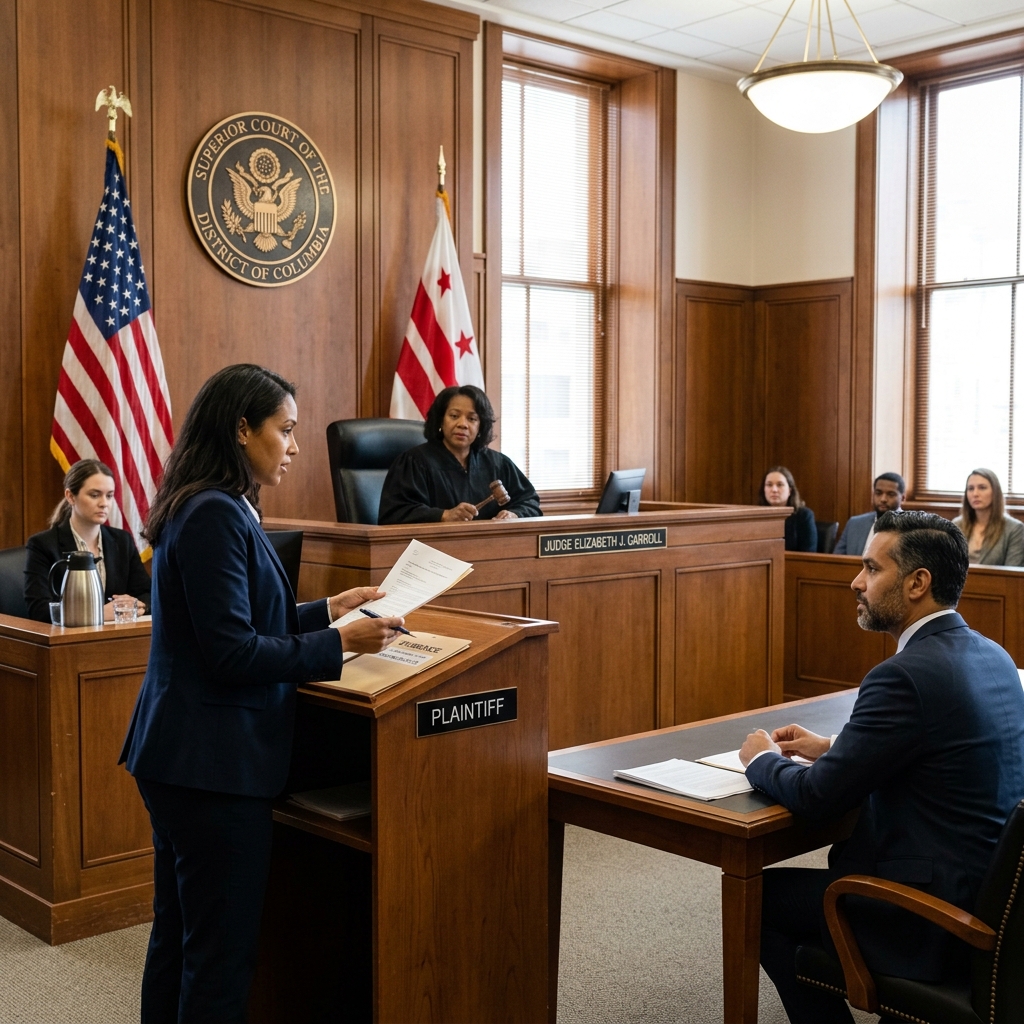
The Small Claims and Conciliation Branch of the Superior Court of the District of Columbia provides a relatively quick and affordable way to resolve many lower-value civil disputes involving money only. It is designed for individuals and businesses who want to handle a case with or without hiring a lawyer, using simplified procedures and shorter hearings.
This guide explains when a dispute belongs in D.C. small claims court, how to start a case, what to expect at each stage, and where to find help if you are unsure how to proceed. It is for informational purposes and is not a substitute for legal advice.
1. What Small Claims Court in D.C. Can and Cannot Do
Before filing, you should confirm that your dispute is the kind of case the small claims branch is allowed to decide. Its authority is set by D.C. law and court rules.
1.1 Dollar limits and type of relief
- Money-only cases: The small claims court can hear civil cases that seek only the recovery of money.
- Maximum amount: The amount in controversy must be $10,000 or less, not counting interest, attorney’s fees, protest fees, or court costs.
- No non-monetary relief: The court cannot order the return of property, force someone to perform a service, or issue injunctions; its judgments are limited to awarding money.
Common examples that may fit within D.C. small claims court include:
- Unpaid personal loans or IOUs
- Unpaid wages or freelance invoices
- Security deposit disputes between tenants and landlords (money only)
- Minor property damage, such as car repair bills within the limit
- Simple breach of contract where your loss does not exceed $10,000
1.2 Limits related to property and jurisdiction
- No claims affecting real estate: Cases that affect ownership or other interests in real property cannot be heard in the small claims branch.
- Transfer of some cases: If a counterclaim or defense in a pending small claims case raises an issue involving real property, the matter must be moved to the Civil Division of the Superior Court.
- Location of the court: Small claims cases are handled in the Superior Court’s Small Claims Branch at 510 4th Street NW, Building B, Room 120, in Washington, D.C.
| Issue | Handled in D.C. Small Claims? |
|---|---|
| Claim for $7,500 in unpaid rent | Yes, money-only and under $10,000 |
| Demand to return a specific car or piece of furniture | No, non-monetary relief not allowed |
| Dispute over who owns a house | No, affects interest in real property |
| Claim for $12,000 for unpaid services | No, exceeds $10,000 limit |
2. Deciding Whether to Use Small Claims Court
Even if your dispute fits the money and subject matter requirements, you should consider whether small claims is the best forum for your case.
2.1 Advantages of the small claims process
- Lower cost: Filing fees are typically lower than in other civil cases, and the procedures are streamlined.
- Faster resolution: Small claims cases are intended to move more quickly than ordinary civil lawsuits.
- More informal hearings: Rules of evidence and procedure are simplified, making it easier for people without lawyers to present their case.
- Self-representation is common: Many plaintiffs and defendants represent themselves, though hiring a lawyer is allowed.
2.2 Limits and tradeoffs
- No comprehensive discovery: The tools available to obtain information from the other side before trial are generally more limited than in regular civil cases.
- Monetary cap: If your realistic damages exceed $10,000, you may decide to file in the Civil Division instead, where higher-value claims are handled.
- Appeal and finality: There are specific deadlines and standards if you want to challenge a small claims judgment. Missing deadlines can make a decision final.
3. Getting Ready to File a Small Claims Case
Good preparation increases your chances of success and helps avoid delays or dismissal.
3.1 Check the statute of limitations
Every type of claim has a deadline, called a statute of limitations. If you miss it, the court cannot hear your case. For many contract and property damage claims in D.C., the limitation period is often three years, although some claims have shorter or longer periods. Because the rules can be complex, you may wish to consult a lawyer or legal aid provider if your issue is older.
3.2 Identify the correct defendant
- Use the full legal name of the person or business you are suing.
- For businesses, include the complete business name (for example, a corporation or LLC) rather than just a trade name.
- Verify addresses using invoices, contracts, checks, or public business registration records.
3.3 Gather your evidence
The burden is on the plaintiff to prove the claim. Start organizing:
- Written contracts, promissory notes, or leases
- Invoices, receipts, and account statements
- Emails, text messages, or letters documenting the agreement or dispute
- Photos, repair estimates, or other proof of damages
- Names and contact information for any witnesses who can testify
4. Forms and Filing Methods in D.C.
To formally start a small claims case in the District of Columbia, you must file specific documents with the court clerk.
4.1 Required forms to start the case
- Statement of Claim: This is the main document that explains who you are suing, how much money you want, and the basic facts of your claim.
- Information Sheet (case information form): This form gathers details for the court’s internal use, such as contact information and case type.
- Attachments: You must attach copies of key documents that support your claim, such as contracts, promissory notes, or other important papers.
The court provides blank forms at the Small Claims Clerk’s Office, and many forms can also be downloaded from the D.C. Courts website.
4.2 Ways to file your documents
According to the D.C. Courts, you can file small claims documents using several methods.[10]
- In person: You can file documents in Room 120, 510 4th Street NW, Building B, Washington, DC 20001 during posted business hours.
- By mail: You may mail your completed forms and payment to the Small Claims Branch Clerk’s Office at the same address.
- Electronic filing (for attorneys): Lawyers are generally required to file documents electronically using the Superior Court’s e-filing system.[10]
- After-hours drop box: Filings may be left in an after-hours filing box located in the Moultrie Courthouse lobby, subject to court rules.
4.3 Filing fees and payment methods
The plaintiff must pay a filing fee when submitting a small claims case. The exact amount can depend on the size of your claim and other factors; fee schedules are available from the court. Common payment options accepted by the court include:
- Cash (when filing in person)
- Certified check or money order payable to the Clerk of the D.C. Superior Court
- Major credit cards (such as Visa, MasterCard, Discover, American Express), consistent with court policy
If the plaintiff wins, the court may include reimbursable filing fees and certain costs in the judgment against the defendant.
5. Serving the Defendant: Notifying the Other Side
After you file your Statement of Claim, you must ensure that each defendant receives a copy of the documents.
5.1 What “service of process” means
The process of formally delivering court papers to the defendant is called service of process. D.C. small claims rules require that the defendant receive proper notice of the lawsuit within a specific time period.
5.2 Timing and methods
- 60-day deadline: The defendant must be served within 60 days of the date the plaintiff filed the case.
- Approved methods: Service may be carried out through legally permitted methods such as personal delivery or other means authorized by the D.C. Superior Court rules.
- Proof of service: After service is completed, someone (often the server) must file a proof of service form with the court to show when and how service was made.
If the defendant is not properly served within the required time, the court may dismiss the case or require you to explain why more time is needed.
6. What Happens After Filing: Court Dates and Resolution
Once the case is filed and served, the court will schedule hearings. The D.C. Superior Court provides schedules and information about small claims proceedings on its website and through public materials.
6.1 The first court appearance
The first date is often an initial hearing or status date. A D.C. Courts video describes what people can expect at their first day in small claims court, including check-in, meeting with the opposing party, and possible mediation.
At early appearances, the court may:
- Confirm that all parties received proper notice
- Encourage negotiation or mediation to see if the matter can be resolved without a trial
- Set deadlines for exchanging evidence
- Schedule a trial date if the case does not settle
6.2 Settlement and voluntary dismissal
Many small claims cases settle before trial. If the parties reach an agreement, they must notify the court so the case can be closed. One way to do this is by filing a document known as a praecipe stating that the case has been resolved or should be dismissed.
6.3 Trial in small claims court
If the case does not settle, it will proceed to a trial before a judge. In D.C. small claims court:
- Each side has an opportunity to tell their story, present documents, and call witnesses.
- The judge may ask questions to clarify facts, particularly when parties are representing themselves.
- The plaintiff must show that it is more likely than not that the defendant owes the claimed amount.
- The defendant can raise defenses, such as arguing that the plaintiff miscalculated damages or failed to prove an essential element of the claim.
After hearing the evidence, the judge will decide whether the plaintiff has proven the case and, if so, how much money to award (up to the $10,000 limit).
7. After the Judgment: Collecting or Challenging the Outcome
The court’s decision does not automatically guarantee payment. You may need to take additional steps depending on whether you won or lost.
7.1 If you win
- Judgment entered: The court enters a money judgment stating how much the defendant owes, including any allowed costs.
- Voluntary payment: In some cases, the defendant pays promptly after judgment.
- Collection tools: If the defendant does not pay, D.C. law allows various enforcement mechanisms in appropriate circumstances, such as wage garnishment or liens, subject to legal protections and procedures.
7.2 If you lose or disagree with the judgment
- Post-judgment motions: There are limited circumstances in which you may ask the court to reconsider or vacate a judgment, usually within strict time limits.
- Appeal rights: In some cases, a party may have the right to appeal to a higher court, again subject to strict deadlines and rules.
Because these procedures can be technical, parties often consult an attorney or legal aid organization if they are considering appeal or post-judgment motions.
8. Practical Tips for Plaintiffs and Defendants
Whether you are bringing the case or defending yourself, a thoughtful approach can make a big difference.
8.1 Tips for plaintiffs
- Make sure the defendant is likely able to pay a judgment before investing time and fees.
- Prepare a clear, concise explanation of what happened, focusing on dates, amounts, and key events.
- Bring multiple copies of all documents for the judge and the other side.
- Arrive early to locate the courtroom and speak with court staff if needed.
- Consider mediation if offered; it may lead to a faster, mutually acceptable solution.
8.2 Tips for defendants
- Read the Statement of Claim carefully to understand what is being requested and why.
- Gather documents and witnesses that support your side, such as proof of payment or communications contradicting the claim.
- Do not ignore court papers; failing to appear can result in a default judgment.
- If you believe the plaintiff owes you money, consult rules about counterclaims and whether they fit within small claims limits.
- Contact a legal resource center or attorney if you need help understanding your options.
9. Where to Get Help in D.C.
Several resources can assist people involved in D.C. small claims cases.
9.1 D.C. Courts information
- The D.C. Courts website provides forms, instructions, hours of operation, and contact information for the Small Claims Branch.
- Information about filing options, including mail, in-person filing, and after-hours boxes, is available from the Civil Division.
9.2 Small Claims Resource Center
The Small Claims Resource Center offers legal and procedural information to plaintiffs and defendants in small claims cases in Washington, D.C. Services typically include:
- Explaining small claims procedures
- Helping people understand court forms
- Providing referrals to legal aid organizations when appropriate
9.3 Legal aid and bar resources
- Local legal services organizations—such as neighborhood legal aid programs—may provide help with consumer, debt, and small claims issues.
- The D.C. Bar also publishes news and updates about small claims operations and schedule changes that can affect when and where you file.
10. Frequently Asked Questions (FAQs)
Q1: Do I need a lawyer in D.C. small claims court?
No. Individuals are allowed to represent themselves, and the process is designed to be accessible to non-lawyers. However, you may hire a lawyer if you wish, and businesses often choose to consult counsel.
Q2: What is the maximum I can sue for in D.C. small claims court?
You can sue for up to $10,000, not including interest, attorney’s fees, protest fees, and court costs.
Q3: Can I ask the court to make someone return my property?
No. The small claims branch only has authority to award money. It cannot order someone to return specific property or perform a service.
Q4: Where is the D.C. small claims court located?
Small claims cases are handled at the Small Claims Branch of the Superior Court at 510 4th Street NW, Building B, Room 120, Washington, DC 20001.
Q5: How long do I have to serve the defendant after filing?
The defendant must receive proper service of the Statement of Claim and attachments within 60 days of the filing date.
Q6: What if we settle before the trial date?
If you settle, you must notify the court so the case can be closed, often by filing a praecipe or similar notice of dismissal. This prevents unnecessary hearings and clarifies that the dispute has been resolved.
References
- District of Columbia Small Claims Courts — FindLaw. 2023-06-01. https://www.findlaw.com/state/dc-law/district-of-columbia-small-claims-courts.html
- How to File a Small Claims Case in the District of Columbia — JD Howlette Law. 2022-10-10. https://www.jdhowlettelaw.com/post/how-to-file-a-small-claims-case-in-the-district-of-columbia
- § 11–1321. Exclusive jurisdiction of small claims. — D.C. Law Library (D.C. Council). 2012-01-01. https://code.dccouncil.gov/us/dc/council/code/sections/11-1321
- Small Claims — District of Columbia Courts, Superior Court Civil Division. 2024-02-15. https://www.dccourts.gov/superior-court/superior-court-divisions/civil-division/small-claims
- Small Claims Resource Center — LawHelp.org DC. 2023-05-20. https://www.lawhelp.org/dc/organization/small-claims-resource-center
- Small Claims — Maryland Courts, District Court Self-Help. 2023-04-01. http://www.mdcourts.gov/legalhelp/smallclaims
- Small Claims Court – DC Superior Court (Video) — District of Columbia Courts (YouTube). 2019-07-17. https://www.youtube.com/watch?v=hFainATgBng
Similar Articles








Read full bio of Sneha Tete


