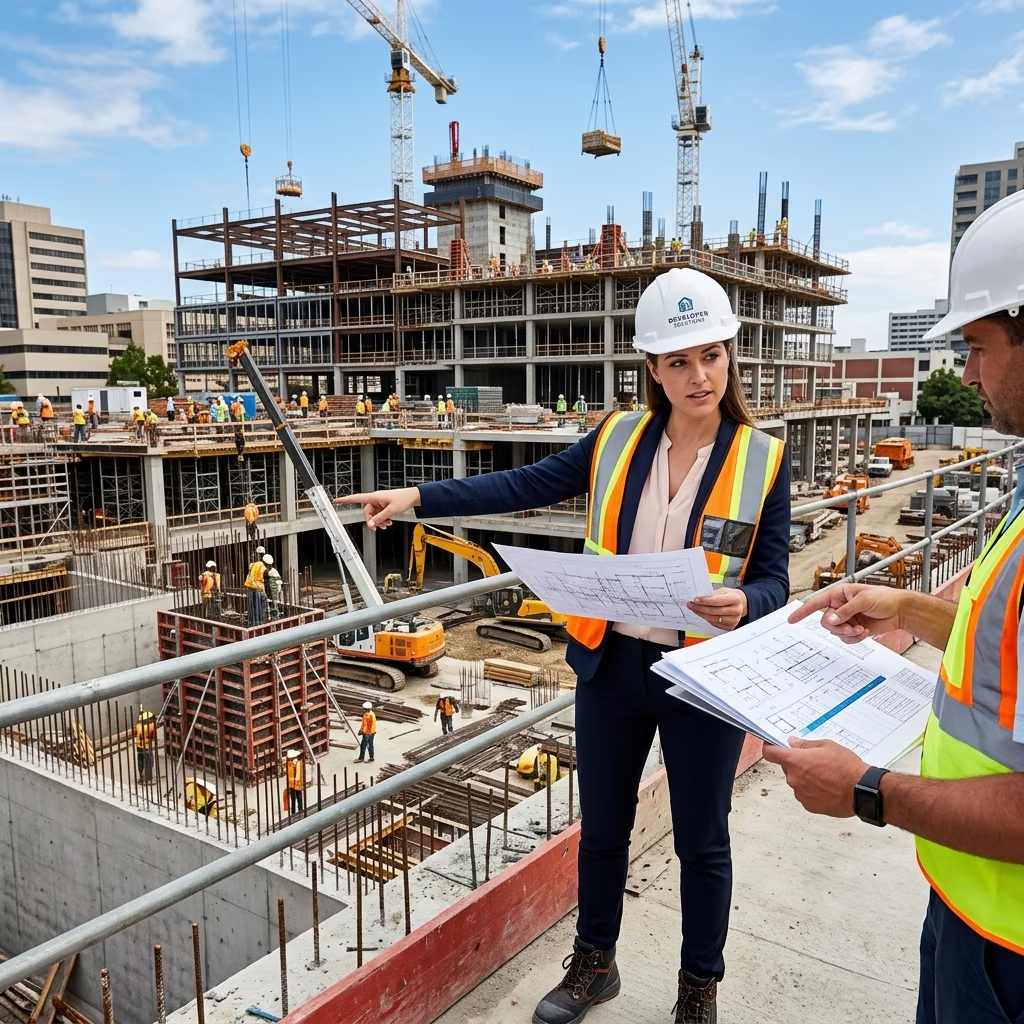
Construction and real estate development projects involve multiple participants, but one role often sits at the center of everything: the construction developer. Whether acting as the project owner, the client’s representative, or a full-service development company, the developer must navigate complex legal duties, financial risks and coordination responsibilities to deliver a completed property that meets contractual, regulatory and market expectations.
This article explains how responsibilities are allocated among developers, owners and contractors, how different contract structures affect those duties, and what buyers and landowners should understand before signing a development agreement. It is written for non-lawyers and does not replace legal advice, but it provides a practical framework for discussing your project with attorneys and other professionals.
The Developer’s Central Role in Construction Projects
A construction developer is typically a management-oriented professional or company that takes a project from early concept through completion and often through initial sale or leasing. In many cases, the developer:
- Identifies and acquires suitable land or works with landowners
- Plans the overall project concept and layout
- Secures financing and manages budgets
- Coordinates designers, engineers and contractors
- Ensures compliance with zoning and building regulations
- Oversees construction and delivery of the finished property
Depending on the deal structure, the developer may be the owner of the project, the owner’s representative, or a separate party with its own contract. Each scenario changes the developer’s legal responsibilities and exposure to risk.
Key Legal Relationships: Developer, Owner and Contractor
To understand responsibilities, it helps to distinguish three core participants:
| Role | Primary Function | Typical Responsibilities |
|---|---|---|
| Developer | Concept, planning and overall management | Land acquisition, permitting, financing, coordination of design and construction, risk management, project delivery |
| Owner | Holds legal title to land and/or finished property | Provides access to site, pays according to contract, issues instructions through designer or representative, may terminate for cause in defined situations |
| Contractor | Executes the physical construction work | Performs construction in accordance with the contract and plans, meets quality and safety standards, complies with codes, seeks timely payment |
In some projects, the developer and owner are the same entity. In others, the developer is hired by the owner to manage everything, or holds a turnkey contract under which the owner has a single point of contact and recourse.
Core Responsibilities of a Construction Developer
Across different project types, several responsibilities consistently fall on the developer. These are both practical management tasks and legal duties that must be clearly documented in written contracts.
1. Project Planning and Feasibility
Before any work begins, the developer must determine whether the project is viable and legally permissible. Typical planning responsibilities include:
- Assessing market demand and potential sales or rental values
- Conducting feasibility studies on construction costs, timelines and projected returns
- Evaluating zoning rules and land-use restrictions
- Coordinating design concepts with architects, engineers and urban planners
If the developer misjudges feasibility or zoning, the project may become impossible or unprofitable. As a result, many contracts require thorough due diligence and may allocate risks of regulatory changes or unforeseen site conditions between the developer and owner.
2. Land Acquisition and Site Preparation
Developers either purchase land themselves or enter agreements with existing landowners. Their responsibilities in this phase commonly include:
- Negotiating land purchase or development rights
- Surveying and assessing the site
- Securing any needed zoning changes or variances
- Planning and installing infrastructure such as roads, drainage and utility connections
When a developer holds a turnkey contract, it may assume legal and financial responsibility for preparing land so that it is buildable, including dealing with local authorities and complying with environmental regulations.
3. Regulatory Compliance and Permitting
Construction is subject to extensive regulation at local, state and national levels. Developers must ensure that all required permits and approvals are obtained before and during construction. Typical compliance duties include:
- Building permit applications and follow-up with public authorities
- Compliance with building codes and safety standards
- Adherence to environmental and land-use regulations
- Coordination with inspectors and government officials
Failure to comply can lead to fines, work stoppages or orders to alter or demolish non-compliant structures. Contracts often specify who bears the risk and cost of regulatory delays or adverse decisions.
4. Financing, Budgeting and Payment Management
Developers are usually responsible for arranging project funding and keeping costs within agreed limits. Financial responsibilities may include:
- Securing loans or investor capital
- Preparing and monitoring project budgets
- Controlling cash flow and payment schedules
- Approving contractor and supplier invoices in line with contract conditions
In some arrangements, the developer funds construction directly and recoups its investment through sale or lease of completed units. In others, the owner provides funding and the developer is paid fees or a share of project profits.
5. Construction Oversight and Quality Control
Although contractors physically build the structures, developers usually retain overarching responsibility for ensuring that construction meets contractual and regulatory standards. Key duties typically include:
- Selecting and hiring qualified contractors and subcontractors
- Coordinating communication among the owner, designer and builders
- Monitoring construction progress and resolving logistical issues
- Ensuring that work complies with plans, specifications and codes
- Managing project timelines and taking corrective action if delays arise
In turnkey contracts, the developer is often directly liable to the client for defects, delays or deviations from the agreed design, while contractors remain liable to the developer under separate contracts.
6. Handover, Warranty and Post-Construction Duties
Responsibilities do not end when the last nail is driven. After completion, developers typically have duties related to:
- Formal handover of the property, including inspections and punch lists
- Rectification of defects discovered during the warranty period
- Providing documentation such as permits, as-built plans and maintenance manuals
- Sometimes, initial property management or coordination with a management company
Local law often sets minimum warranty periods for structural defects or major building components, and contracts may extend these obligations.
How Contract Type Shapes Responsibilities
In addition to the roles of developer, owner and contractor, the type of construction contract significantly influences who must do what, and who bears which risk. Two common structures discussed in legal sources are lump-sum contracts and cost-plus-fee contracts.
Lump-Sum (Fixed-Price) Contracts
Under a lump-sum contract, a contractor agrees to perform specified work for a fixed price. The owner or developer as client typically has the responsibility to:
- Provide access to the site so the contractor can work
- Pay the contractor according to the agreed schedule and conditions
- Issue instructions to the contractor through the designer or designated representative
Most design and technical duties fall to the architect or designer, acting on the client’s behalf. The owner retains certain rights, such as terminating the contract for cause, but often cannot act unilaterally and must follow defined procedures, including obtaining the designer’s input.
Cost-Plus-Fee Contracts
In a cost-plus-fee arrangement, the contractor is reimbursed for actual costs plus an agreed fee or percentage for profit and overhead. The contractor’s duty is to perform the work in accordance with the contract terms, while its primary right is to be paid for costs and the fee.
The owner’s obligations in a cost-plus-fee contract are similar to those in a lump-sum contract:
- Pay for work as defined in the agreement
- Provide necessary information and decisions in a timely manner
- Appoint a new designer if the original designer’s engagement ends
Because the owner bears more cost risk in a cost-plus-fee model, careful documentation and oversight are vital. The developer’s management and reporting duties are especially important for controlling expenses.
Owner and Landholder Responsibilities
When the developer is separate from the landowner, or when a buyer engages a developer to build a home, the owner has specific responsibilities that must be defined in the contract documents.
Common owner duties include:
- Granting site access so work can proceed safely and efficiently
- Making payments according to milestones or other agreed schedules
- Cooperating with design and approval processes by providing information and decisions
- Respecting contract procedures for changes, instructions and termination
Ultimately, the owner’s cooperation is often a condition for the developer and contractor to meet their own obligations. Failure to provide access or payment can itself be a breach of contract, exposing the owner to claims and delays.
Practical Tips for Clarifying Responsibilities
Because misunderstandings about who is responsible for what are a frequent source of disputes, landowners and buyers can reduce risk by taking several practical steps:
- Insist on detailed written contracts that describe roles, duties and rights for all parties
- Define communication channels (for example, owner issues instructions through the designer or developer, not directly to subcontractors)
- Specify decision timelines so design and change approvals do not stall construction
- Clarify termination rights and procedures for both sides, including notice requirements and cure periods
- Address risk allocation explicitly, including unforeseen site conditions, regulatory changes and material price fluctuations
Consulting legal counsel familiar with construction law and local regulations is strongly recommended before signing any development or construction contract, particularly for high-value or complex projects.
Frequently Asked Questions
Who is legally responsible if the building has defects?
Responsibility for defects depends on contract terms and local law. In many jurisdictions, the developer or builder has legal warranty obligations to the buyer for a defined period, and contractors may be liable to the developer for defective work. Owners should review warranty clauses and ask how defect claims will be handled and documented.
Can the owner give instructions directly to the contractor?
Often, the owner must issue instructions through the designer or designated representative rather than directly to the contractor. This helps avoid conflicting directions and ensures that design changes are properly evaluated and recorded. Contracts typically specify the correct communication path and consequences if it is not followed.
What happens if the owner wants to terminate the contract?
Many contracts give the owner a limited right to terminate for cause, such as serious delay or defective work, but require specific procedures: written notice, opportunity to cure, and often involvement of the designer or representative. Termination without following contractual steps can expose the owner to claims for damages.
Are developers and contractors always separate companies?
No. Some firms act both as developer and builder, combining land development and construction under one roof. In those cases, one entity may assume broad responsibility and become the primary contractual partner of the client, especially in turnkey arrangements.
Do construction developers need professional licenses?
In many regions, developers who perform real estate activities such as buying, selling or leasing property on behalf of others must hold a real estate license and comply with related regulations. Licensing requirements are typically set by state or national authorities and may include education, examinations and ongoing compliance.
References
- Construction Developer’s Responsibilities — FindLaw. 2018-06-20. https://www.findlaw.com/realestate/owning-a-home/construction-developer-s-responsibilities.html
- Builder vs. Developer Explained: Who Does What in Real Estate? — Biles Construction LLC. 2023-04-10. https://www.bilesconstruction.com/blog/builder-vs-developer-explained-who-does-what-in-real-estate
- What Is a Construction Developer? (Plus Skills and FAQs) — Indeed Career Guide. 2023-11-15. https://www.indeed.com/career-advice/finding-a-job/what-is-construction-developer
- Developer vs. Construction Company: What’s the Difference — Bauen Mallorca. 2022-09-01. https://bauenmallorca.com/en/developer-vs-construction-company-whats-the-difference-and-why-is-having-both-in-one-hand-the-greatest-advantage/
- Residential Developer Role in Real Estate — Mid Construction. 2023-03-05. https://midconstruction.com/residential-developer-real-estate-development-role/