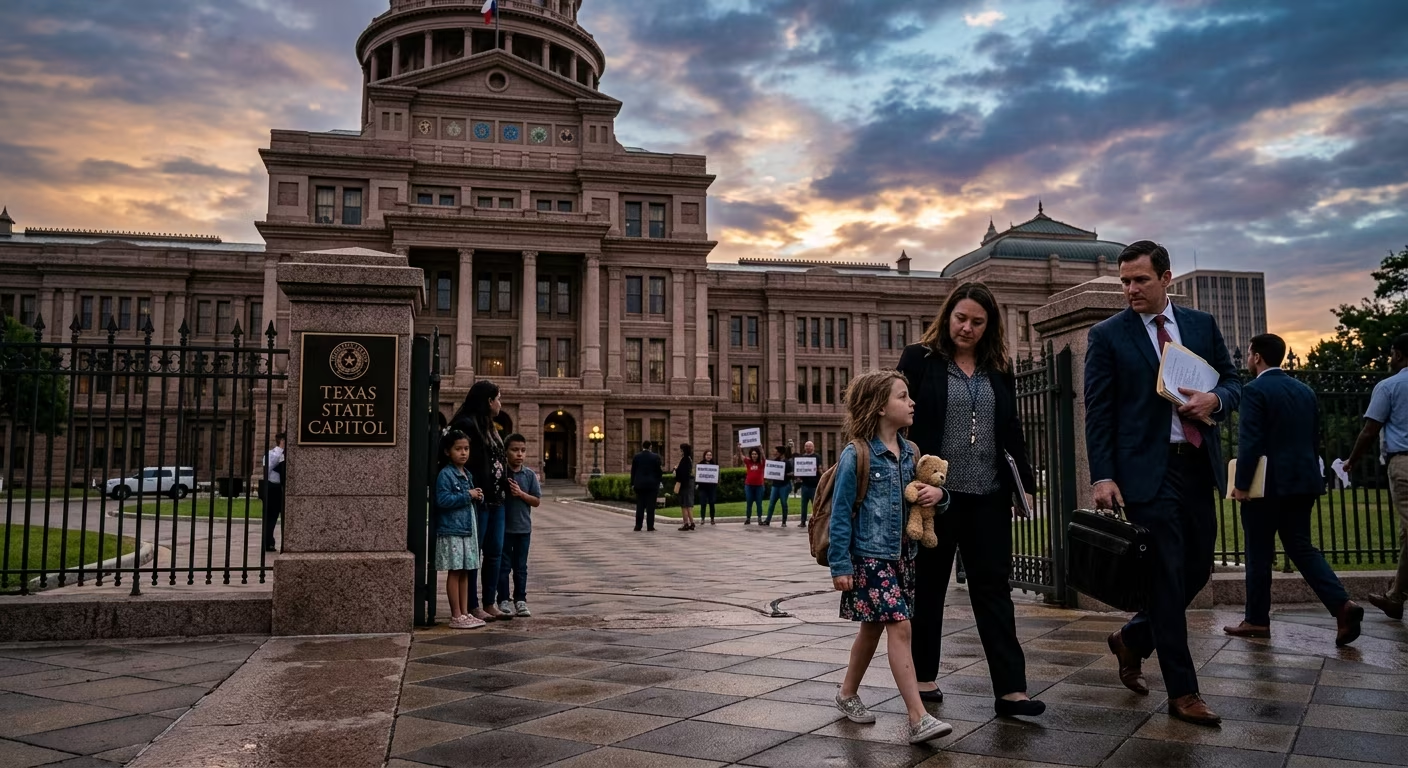
The American child welfare infrastructure is ostensibly designed to act as a secure sanctuary for the nation’s most vulnerable and marginalized youth. However, when a state assumes the ultimate role of a parent and subsequently fails to provide adequate care, the downstream consequences are often catastrophic. Over the past decade, the state of Texas has found itself at the epicenter of a monumental legal, ethical, and moral crisis regarding its management of the foster care system. At the very heart of this political storm is a protracted, highly publicized federal lawsuit that has systematically exposed deeply entrenched structural failures, profound bureaucratic neglect, and an alarming inability to protect the children entrusted to state custody.
For more than ten years, this intense legal battle has highlighted the dire realities faced by thousands of displaced youth, serving as a grim case study of what happens when administrative inefficiencies overshadow fundamental human rights. This comprehensive analysis explores the origins of the landmark litigation, the harrowing discoveries made during extensive court proceedings, the state government’s continued legal resistance, and the ongoing, complex struggle to reform a broken safety net that advocates argue leaves children more traumatized than when they first entered state care.
The Origins of a Landmark Legal Battle
The intense legal and public scrutiny of the Texas Department of Family and Protective Services (DFPS) did not materialize overnight. In early 2011, a sweeping class-action lawsuit, originally filed as M.D. v. Perry and later updated to M.D. v. Abbott to reflect the change in the governor’s office, was brought before the U.S. District Court for the Southern District of Texas. The plaintiffs in this monumental case represented approximately 12,000 children who had been placed in the state’s Permanent Managing Conservatorship (PMC).
PMC is a specific long-term foster care designation utilized by the state when it cannot successfully reunify children with their biological parents or secure adoptive homes within a mandated timeframe, typically ranging from 12 to 18 months. Instead of finding enduring stability, children transitioning into PMC often faced a chaotic and bleak reality. The lawsuit fundamentally alleged severe constitutional violations, arguing that Texas was actively depriving these vulnerable youths of their fundamental right to be free from an unreasonable risk of harm while held in state custody. Advocates argued that extreme systemic underfunding and an egregious lack of operational oversight had turned the state’s protective framework into a direct pipeline for chronic trauma.
Uncovering the Depth of Systemic Neglect
As the complex litigation progressed through the federal courts, the sheer scale of the dysfunction within the Texas foster care apparatus became impossible for the judiciary to ignore. Extensive court proceedings, expert testimonies, and subsequent independent investigations painted a grim, meticulously detailed picture of a severely strained infrastructure teetering on the edge of total collapse. The court uncovered several critical operational failures:
- Unmanageable Caseworker Burdens: Recognized national child welfare standards suggest strict, manageable caseload limits to ensure that each child receives adequate attention and safety monitoring. In Texas, however, caseworkers routinely carried double or even triple these recommended numbers, making meaningful oversight and relationship-building practically impossible.
- Critical Shortages in Safe Placements: The state suffered from an agonizing lack of appropriate, licensed placement options. Children were frequently relocated hundreds of miles away from their home counties, abruptly severing critical ties with their local communities, schools, and siblings.
- Unregulated Housing and Institutionalization: In desperate scenarios stemming from the placement shortage, youth were routinely forced to sleep in unregulated CPS office buildings, budget motels, and unlicensed facilities lacking basic security.
- Pervasive Abuse and Over-Medication: Reports detailed rampant over-medication with heavy psychotropic drugs to control behavior, alongside frequent incidents of unchecked physical and emotional abuse within state-sanctioned residential facilities.
The 2015 Judicial Decree and Federal Oversight
The decisive turning point in this sprawling litigation arrived in late 2015, following a grueling, year-long federal trial. The presiding U.S. District Judge issued a massive, 260-page ruling that unequivocally and severely condemned the state’s management of its child welfare system. The court formally ruled that Texas was actively violating the constitutional rights of its foster children, deliberately subjecting them to an unreasonable and unconstitutional risk of harm.
The ruling’s language was striking, declaring that children regularly left state custody more damaged and broken than when they first entered it. The judicial decree shattered the state’s long-standing defense that it was simply doing the best it could under the constraints of limited financial resources. Instead, the court highlighted that rape, physical abuse, and prolonged psychological instability had become normalized within the system. Recognizing the state’s historical inability to self-correct, the federal judge placed the Texas foster care system under strict, indefinite federal oversight, appointing specialized court monitors to independently track the state’s compliance with a sweeping set of mandatory remedial orders.
A Cycle of Contempt and Bureaucratic Resistance
Despite the clear, legally binding mandates from the federal court, the road to tangible reform in Texas has been heavily characterized by intense bureaucratic resistance, political posturing, and aggressive legal pushback. Over the ensuing years, state agencies have repeatedly clashed with the federal judiciary over their systemic failure to meet the court-ordered safety benchmarks.
This mounting frustration reached a critical boiling point when the state of Texas was formally held in contempt of court on multiple, separate occasions. In one highly publicized instance, the federal court levied a staggering fine of $100,000 per day against the state’s health and human services leadership. These severe financial sanctions were explicitly tied to the agency’s alleged continued recalcitrance in conducting timely, thorough, and accurate internal investigations into allegations of abuse and neglect within licensed foster placements. While top state officials fiercely argued that they had allocated hundreds of millions of taxpayer dollars toward system improvements, hiring thousands of new staff, and updating outdated tracking technologies, the federal court maintained that these financial commitments had frustratingly failed to translate into tangible, verifiable safety improvements for the children currently in custody.
Appellate Interventions and Legal Maneuvering
The legal saga of M.D. v. Abbott took another highly complex turn as the state aggressively utilized the federal appellate process to challenge and dismantle the district court’s aggressive oversight. The U.S. Fifth Circuit Court of Appeals has frequently intervened in the bitter dispute. In direct response to the hefty contempt fines, the appellate court quickly issued temporary stays, effectively saving the state government from paying millions of dollars in penalties while the underlying rulings were appealed.
In a dramatic escalation in late 2024, the 5th Circuit took the extraordinary judicial step of removing the long-presiding district judge from the case entirely. The appellate court’s formal opinion cited a highly antagonistic demeanor toward state officials during critical compliance hearings, arguing that the judge had become too personally and emotionally involved in the adversarial proceedings. The 5th Circuit also noted that the state’s significant financial investments and ongoing organizational efforts to comply with the decrees deserved formal legal recognition. This major appellate intervention underscores the highly charged political and legal environment surrounding the case, raising profound questions about the exact balance of power between federal courts and sovereign state agencies when attempting to enforce institutional reform.
The Human Toll on Vulnerable Youth
While high-powered attorneys debate complex constitutional law and state officials appeal contempt citations in marble courthouses, the true, devastating cost of this protracted battle is borne directly by the children. The systemic delays in achieving safe operational compliance translate directly into prolonged exposure to trauma for thousands of youth.
Children who age out of a fundamentally broken foster care system face exceptionally daunting life odds. Demographic statistics consistently demonstrate that youth transitioning out of long-term state care without finding a permanent, loving family have disproportionately high rates of chronic homelessness, early criminal justice involvement, severe substance abuse, and teen pregnancy. The lack of consistent educational support and comprehensive mental health care during their most critical formative years leaves them tragically ill-equipped for independent adulthood. Every single month that the state government and the federal courts spend locked in procedural legal maneuvering is a month where another entire cohort of youth turns eighteen and is pushed out into society, carrying the deep, unaddressed psychological scars of profound institutional neglect.
Charting a Path Toward Meaningful Reform
Achieving true, lasting reform in the Texas child welfare system will require substantially more than just federal judicial mandates and defensive, bare-minimum state compliance; it requires a foundational paradigm shift in how the state views, supports, and values vulnerable families. Child welfare policy experts emphasize the desperate need for robust, proactive investments in preventative social services that can keep at-risk families safely intact, thereby reducing the total number of children entering the overloaded system in the first place.
For those who absolutely must enter state care, Texas is currently attempting a massive logistical transition to a Community-Based Care (CBC) model. This specific approach delegates direct case management and foster home placement to private, local contractors with the theoretical goal of keeping children closer to their home communities and providing more specialized, localized support. However, the ongoing rollout of CBC has been fraught with its own severe challenges, including high contractor turnover rates and bitter funding disputes. Moving forward, a sustained, bipartisan legislative commitment, completely transparent data reporting, and a relentless, unwavering focus on child well-being over bureaucratic preservation are absolutely essential to turning the tide.
Conclusion
The decade-long legal and political battle over the Texas foster care system serves as a stark, urgent national warning about the profound dangers of institutional apathy and neglect. The federal declarations that the state actively violated the core constitutional rights of its most vulnerable citizens should echo loudly in legislative chambers across the entire country. While recent appellate rulings have undoubtedly altered the immediate landscape of the federal oversight mechanism, the core moral mission remains critically and tragically unfulfilled: ensuring that every single child in state custody is inherently safe, properly nurtured, and given a fair, equitable chance at a stable life. Until the headlines finally stop reporting on youth sleeping on office floors and rampant, uninvestigated abuse, the fight for the soul and integrity of the Texas child welfare system must passionately continue. Genuine accountability is the only true pathway to justice for the thousands of children heavily relying on the state for their very survival.
Frequently Asked Questions
What is the M.D. v. Abbott lawsuit?
It is a long-standing federal class-action lawsuit originally filed in 2011 on behalf of thousands of children in the Texas long-term foster care system. The lawsuit alleged that the state’s systemic failures exposed children to an unreasonable risk of harm, violating their constitutional rights.
What does Permanent Managing Conservatorship (PMC) mean?
PMC is a legal status in Texas denoting long-term foster care. A child is placed in PMC when the state has determined they cannot be safely reunited with their biological parents and an adoptive family has not been found within the standard 12 to 18-month timeframe.
Why was the state of Texas held in contempt of court?
Federal courts held Texas in contempt multiple times for failing to comply with court-ordered remedial measures. Most notably, the state faced massive daily fines for its continued failure to thoroughly and quickly investigate allegations of abuse and neglect inside foster care facilities.
What were the main issues identified by the federal judge in 2015?
The landmark 2015 ruling highlighted deeply systemic issues, including caseworkers handling dangerously high caseloads, a severe shortage of safe placement options, an over-reliance on psychotropic medications, and a normalization of physical and emotional abuse within the system.
How is the state attempting to fix the system?
Texas has poured millions of dollars into hiring more caseworkers and upgrading technology. Structurally, the state is transitioning to a Community-Based Care (CBC) model, which outsources case management and placement to regional private contractors in hopes of providing more localized, effective care.
References
- How a 12-year-old federal lawsuit turned a judge into Texas’ foster care czar — The Texas Tribune. 2023-02-09. https://www.texastribune.org/2023/02/09/texas-foster-care-lawsuit-janis-jack/
- Case: MD v. Abbott — Civil Rights Litigation Clearinghouse (University of Michigan Law School). 2024-04-09. https://clearinghouse.net/case/11698/
- Judge with ‘highly antagonistic demeanor’ must be removed from foster care case, 5th Circuit says — ABA Journal. 2024-10-15. https://www.abajournal.com/news/article/judge-with-highly-antagonistic-demeanor-must-be-removed-from-foster-care-case-5th-circuit-says
- Appeals court blocks $100K daily fine for Texas foster care — The Texas Tribune. 2024-04-15. https://www.texastribune.org/2024/04/15/texas-foster-care-lawsuit-janis-jack/