
Texas Foster Care Crisis: The Battle for Accountability
The decade-long legal battle to protect Texas foster youth.
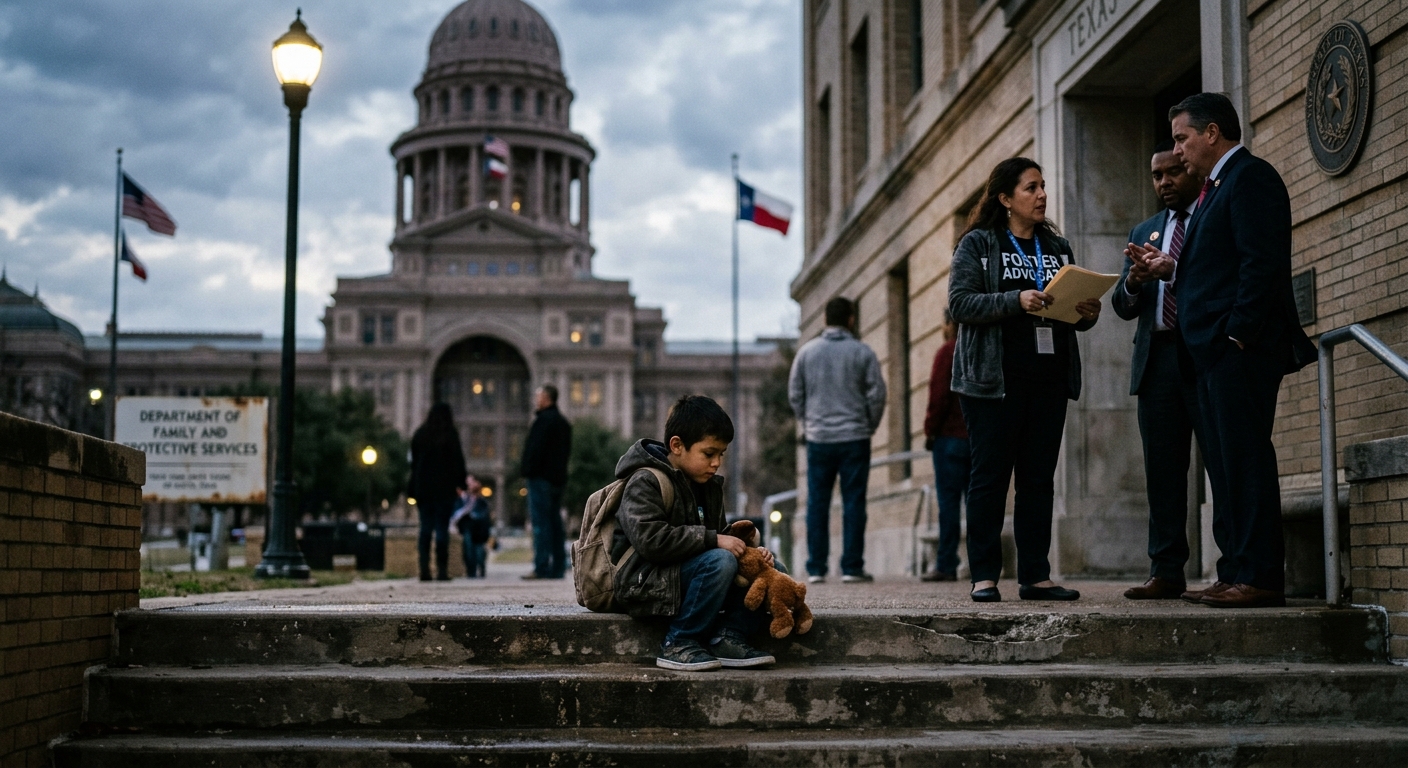
The Texas foster care system has been at the epicenter of a protracted, deeply concerning legal and moral crisis for well over a decade. Tasked with the ultimate responsibility of protecting the state’s most vulnerable population—children removed from their homes due to severe abuse or neglect—the state has repeatedly found itself under aggressive federal scrutiny for failing to uphold its most basic, foundational duties. Instead of providing a secure haven, the system has frequently been exposed as a secondary source of profound trauma, where systemic dysfunction and bureaucratic gridlock place youth at further risk of devastating harm. The culmination of this long-standing battle recently reached a boiling point in federal court, raising urgent questions about what it will actually take to force structural reform and ensure the safety of thousands of children in state custody. This ongoing clash between state authorities and federal oversight highlights a complex web of bureaucratic delays, legal defiance, and a desperate, unyielding need for institutional accountability.
The Genesis of the Federal Litigation
The legal struggle surrounding the Texas Department of Family and Protective Services (DFPS) is not a new phenomenon. The origins of the current federal oversight trace back to a monumental class-action lawsuit filed in 2011 on behalf of roughly 12,000 children placed in the state’s Permanent Managing Conservatorship . The core argument presented by child welfare advocates was as straightforward as it was legally alarming: Texas was actively violating the constitutional rights of the vulnerable children entrusted to its care.
Under the 14th Amendment of the United States Constitution, children in state custody possess a substantive due process right to be free from an unreasonable risk of harm . When a government entity forcibly removes a minor from their biological parents, it essentially steps into the role of the primary caregiver, thereby assuming a non-delegable duty to provide adequate care, safety, and medical attention. Following years of grueling litigation, exhaustive depositions, and heartbreaking testimonies, a federal district judge issued a scathing ruling in 2015. The court determined that the Texas foster care system was fundamentally broken, operating in a manner that routinely resulted in children leaving state custody more psychologically and physically damaged than when they entered.
Uncovering the Depths of Systemic Neglect
The 2015 federal ruling laid bare a shocking reality that child advocates had desperately warned about for years. The court documented a sprawling system where youth were subjected to a perpetually rotating door of overworked caseworkers, rampant housing instability, and alarming rates of physical and psychological abuse. The ruling officially mandated strict federal oversight, appointing specialized court monitors to track the state’s progress in implementing necessary, life-saving reforms . However, obtaining a favorable court ruling proved to be only the first preliminary step. Translating that sweeping legal victory into tangible, on-the-ground improvements for children has proven to be an agonizingly slow and fiercely contested legislative process.
Despite over a decade of litigation and explicit court orders, severe operational flaws continue to plague the Texas child welfare apparatus. At the heart of the most recent legal disputes is the state’s inability to adequately and promptly investigate allegations of abuse within its own supervised facilities. The Provider Investigations unit—the specialized division tasked with examining internal complaints of abuse, neglect, and exploitation involving children in state care—has faced intense, unrelenting scrutiny for its severe operational backlog and bureaucratic paralysis.
Court monitors have highlighted numerous distressing instances where investigations into highly credible allegations of violence or severe neglect against children took well over a year to reach any sort of resolution. In one thoroughly documented instance, a cognitively impaired teenager suffered multiple severe injuries, yet the critical investigations into her trauma languished in bureaucratic limbo for months on end. This systemic failure to urgently respond to crises means that children are routinely left in hazardous, abusive environments, essentially rendering the state’s protective measures utterly hollow and ineffective.
The Dangers of Congregate Care and Unlicensed Placements
Another major point of contention within the ongoing litigation involves the state’s heavy reliance on congregate care settings and dangerously unlicensed placements. Congregate care facilities, which often house large numbers of foster youth in institutionalized, dormitory-style environments, have been frequently criticized by experts as breeding grounds for peer-to-peer abuse and institutional neglect. The lack of individualized attention in these massive facilities starkly contrasts with the therapeutic needs of youth recovering from severe family trauma.
Moreover, a severe, chronic shortage of adequate family-based foster homes has forced the state to place hundreds of children in unlicensed placements, which have shockingly included commercial hotels, temporary office buildings, and rented residential spaces. These ad-hoc, makeshift arrangements severely lack the necessary therapeutic support, trained supervision, and basic security required for highly traumatized youth. Reports of children running away from these loosely monitored unlicensed placements, tragically falling victim to human trafficking rings, or suffering violent assaults have repeatedly surfaced during grueling federal court hearings. The over-reliance on chemical restraints—specifically, the widespread and unmonitored use of potent psychotropic medications to chemically manage behavioral issues—further illustrates a broken system leaning heavily on medical suppression rather than providing genuine, healing therapeutic intervention.
| Area of Concern | Federal Court Mandate | Documented Systemic Failure |
|---|---|---|
| Abuse Investigations | Timely, accurate, and thorough investigations into all internal allegations of abuse and neglect. | Severe operational backlogs; critical investigations taking over a year, leaving children in sustained danger. |
| Safe Housing | Eliminate the use of unsafe, unlicensed placements and expand therapeutic family foster homes. | Hundreds of children housed in unmonitored commercial hotels and office buildings without adequate security. |
| Medical Oversight | Strict tracking and regulation of psychotropic medications to prevent chemical restraint. | Widespread reliance on automated approvals for heavy mood-altering drugs without proper psychiatric review. |
Federal Contempt: Forcing a Reluctant State to Act
The sheer frustration of the federal judiciary regarding these ongoing failures reached unprecedented levels in April 2024, when U.S. District Judge Janis Jack formally held the state of Texas in contempt of court for the third time since the sprawling litigation began . Citing the state’s “continued recalcitrance” and inexplicable failure to conduct timely, accurate investigations into horrific abuse allegations, the judge imposed a staggering $100,000-per-day fine against the state’s health and human services leadership .
This drastic, highly publicized financial penalty was designed not as a purely punitive measure, but rather as a coercive one—intended to remain in full effect until the state could definitively, empirically prove it was actively complying with the court’s basic mandates regarding investigative timeliness and procedural thoroughness. The judge’s exhaustive 427-page contempt order meticulously detailed the catastrophic systemic failures that continuously placed vulnerable children at a heightened, entirely preventable risk of serious harm.
Rather than immediately implementing the desperately requested reforms to halt the escalating fines, Texas officials opted for a highly familiar, defensive legal strategy: immediate defiance and appellate resistance. State attorneys swiftly filed a motion to stay the contempt order, vehemently arguing that they were already in “substantial compliance” with the federal mandates and that the district court had significantly overstepped its jurisdictional bounds . The 5th U.S. Circuit Court of Appeals subsequently issued a temporary administrative stay, legally blocking the $100,000 daily fines while the broader legal arguments are thoroughly reviewed by appellate judges .
The Human Toll and Charting a Course for Genuine Reform
State leadership has consistently argued in public forums that they have poured millions of taxpayer dollars into reforming the embattled system, aggressively hiring more staff, and privatizing vast aspects of the care network in a bold attempt to improve outcomes. They frequently contend that the intense federal oversight is entirely heavy-handed, micromanages complex state agencies, and unnecessarily drains financial resources that could otherwise be spent directly on frontline child welfare initiatives. However, passionate advocates for the foster children push back vigorously, arguing that the state’s aggressive legal maneuvering sends a truly devastating, unacceptable message: that governmental leadership is far more invested in avoiding public accountability than in decisively guaranteeing the safety of the children forcibly held in its custody.
While the intricate legal battles play out in appellate courts and political statehouses, the true, deeply tragic cost of this systemic dysfunction is borne entirely by the youth trapped helplessly within it. For a child who has already tragically endured the intense trauma of being abruptly removed from their biological family, the state foster care system is supposed to represent a necessary reset—a crucial chance for stability, deep healing, and healthy emotional growth. Instead, many former foster youth vividly recount haunting experiences of profound isolation, enduring upwards of twenty to thirty wildly different placements throughout their turbulent childhoods. This perpetual, chaotic instability massively disrupts their education, violently severs their social connections, and entirely prevents them from forming healthy, lasting attachments with reliable adult caregivers.
Resolving a humanitarian crisis of this staggering magnitude requires far more than defensive legal filings and political posturing; it demands a fundamental, sweeping paradigm shift in exactly how the state views, funds, and manages comprehensive child welfare. True compliance with the federal mandates entails a ground-up, comprehensive overhaul of the Provider Investigations unit to absolutely ensure that every single allegation of abuse is addressed immediately and thoroughly by well-trained personnel. Furthermore, structural reform must heavily prioritize the aggressive development of high-quality, fully supported family-based foster homes to permanently eliminate the dangerous reliance on sprawling congregate care facilities and perilous unlicensed placements. Ultimately, Texas must boldly transition from a stubborn posture of legal defiance to one of authentic, urgent moral reform, ensuring that the foster care system truly protects, rather than imperils, the youth it was designed to carefully serve.
Frequently Asked Questions
What is the primary focus of the federal lawsuit against the Texas foster care system?
The primary focus of the massive class-action lawsuit, initiated by child welfare advocates in 2011, is to hold the state accountable for blatantly violating the 14th Amendment rights of children in its permanent care. The lawsuit specifically alleges that the state system continually exposes vulnerable youth to an unreasonable risk of physical harm, psychological trauma, and institutional neglect.
Why was Texas threatened with a $100,000 daily fine by a federal judge?
In April 2024, a federal district judge formally held the state in contempt of court—the third time since the litigation began—due to chronic failures in conducting timely, thorough investigations into severe abuse allegations. The $100,000-per-day fine was designed as a strict coercive measure to force immediate bureaucratic compliance, though it was temporarily stayed by an appellate court.
What does the term “congregate care” mean in the context of child welfare?
Congregate care refers to highly institutionalized, group-home style living arrangements that often house a large number of foster children together. Child welfare experts strongly criticize these environments, noting they frequently lack individualized therapeutic support and are unfortunately notorious for elevated rates of peer-to-peer violence and systemic neglect.
How does the 14th Amendment apply to children in the foster care system?
Under the 14th Amendment, individuals in state custody—including foster children who have been legally removed from their families—possess a substantive due process right to basic safety and adequate care. Because the state acts as the ultimate guardian, it is legally and constitutionally prohibited from exposing these children to unreasonable risks of harm or danger.
What are the primary demands made by the federal court monitors to achieve compliance?
Federal court monitors are explicitly demanding that the state drastically improve the speed and accuracy of abuse investigations, permanently halt the dangerous housing of children in unlicensed facilities like commercial hotels, fiercely recruit and retain qualified caseworkers, and implement strict medical oversight to entirely prevent the overuse of psychotropic medications as chemical restraints.
References
- Foster Care Litigation — Texas Department of Family and Protective Services. https://www.dfps.texas.gov/Child_Protection/Foster_Care/Litigation.asp
- CONSTITUTIONAL CATCH-22: THE UNVINDICATED RIGHTS OF FOSTER CHILDREN — Stanford Law School. 2025-05-03. https://law.stanford.edu/
- Appeals court blocks $100K daily fine for Texas foster care — The Texas Tribune. 2024-04-15. https://www.texastribune.org/2024/04/15/texas-foster-care-contempt-fine-blocked/
- Texas appeals $100K a day contempt fine in long running foster care litigation — KERA News. 2024-04-17. https://www.keranews.org/health-science-tech/2024-04-17/texas-appeals-100k-a-day-contempt-fine-in-long-running-foster-care-litigation
Similar Articles








Read full bio of Sneha Tete


