
Texas Criminal Court Order Violations Explained
Understand how Texas treats violations of criminal court orders, protective orders, and bond conditions in personal crime cases.
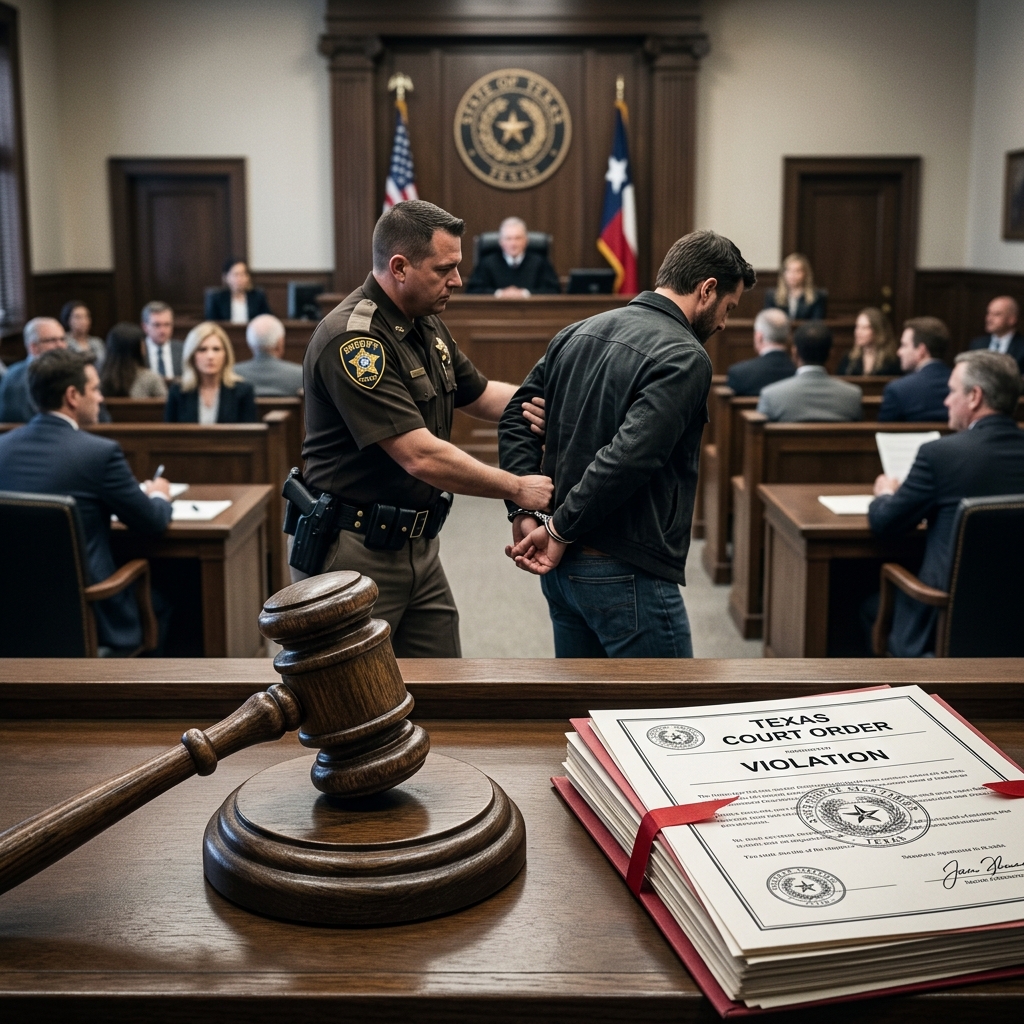
Texas treats violations of court orders in personal crime cases as serious criminal offenses, especially when those orders are designed to protect victims of family violence, sexual assault, stalking, child abuse, or human trafficking. These violations can lead to arrest, criminal charges, fines, and jail or prison time, in addition to being considered contempt of court. Understanding how these laws work helps both victims and accused individuals protect their rights and safety.
What Types of Court Orders Are Common in Personal Crime Cases?
In personal crime cases, Texas courts often issue orders aimed at preventing further harm and ensuring community safety. While the details vary, most orders fall into a few broad categories:
- Protective orders (often called restraining orders in everyday language) in family violence, sexual assault, stalking, and trafficking cases.
- Conditions of bond imposed when a person is released from custody pending trial.
- Temporary ex parte orders that can be issued without the accused present when there is an urgent need for protection.
- Final protective orders entered after a court hearing and typically lasting up to several years or even for life in some sexual assault or stalking cases.
All of these orders can include specific rules that the accused must follow, such as staying away from the victim, not contacting them, and giving up firearms.
Legal Foundation: Texas Penal Code Section 25.07
The core statute governing violations of protective orders and certain bond conditions in Texas is Texas Penal Code Section 25.07, titled “Violation of Certain Court Orders or Conditions of Bond in a Family Violence, Child Abuse or Neglect, Sexual Assault or Abuse, Indecent Assault, Stalking, or Trafficking Case.”
Under this law, a person commits an offense if they knowingly or intentionally violate an applicable protective order or bond condition related to safety in specified personal crime cases. The orders covered include:
- Protective orders under the Texas Code of Criminal Procedure (including emergency protective orders).
- Family Code protective orders (temporary and final).
- Orders issued in child abuse or neglect proceedings.
- Comparable protective orders from other jurisdictions that are recognized in Texas.
Common Ways Court Orders Are Violated
Violations can range from seemingly minor contact to serious new acts of violence. Texas law lists several specific types of prohibited conduct.
Prohibited Contact and Communication
Court orders frequently prohibit any contact with the protected person. Violations related to communication can include:
- Direct communication in a threatening or harassing manner, such as phone calls, texts, emails, or in-person confrontations.
- Indirect communication via third parties—asking friends or relatives to pass messages that violate the order.
- Contact through social media or other online platforms when the order bars communication.
Entering Restricted Locations
Many protective orders and bond conditions specify places the accused must not go. Typical restrictions include:
- The victim’s residence, workplace, or business.
- Schools, childcare facilities, or residences where protected children live or attend.
- Any other location clearly listed in the order (such as a relative’s home or a frequent gathering place).
Appearing near these locations in violation of the order can lead to arrest and prosecution.
Possessing Firearms
Texas generally prohibits individuals subject to certain protective orders from possessing firearms or ammunition. Having a firearm when an order forbids it is itself a violation, even if no other contact with the victim occurs.
Acts of Violence, Harassment, or Tracking
Section 25.07 also criminalizes conduct beyond simple contact, including:
- Committing family violence or an act associated with sexual assault, trafficking, or stalking against the protected person.
- Stalking behaviors such as persistent following, surveillance, or threatening communications.
- Tracking or monitoring the protected person’s vehicle or personal property, including using tracking applications or devices without effective consent.
These actions can result in separate criminal charges in addition to a violation of the court order.
Criminal Penalties for Violating Court Orders
Violating certain court orders in Texas can carry significant penalties, ranging from a misdemeanor to a felony.
| Offense Level | Typical Penalties | Common Situations |
|---|---|---|
| Class A misdemeanor | Up to 1 year in county jail and a fine up to $4,000. | First-time violation of a protective order or bond condition without aggravating circumstances. |
| State jail felony | Typically 180 days to 2 years in a state jail facility and fines (noted in Texas law). | Certain repeated or more serious violations; specific circumstances defined by statute. |
| Third-degree felony | 2 to 10 years in prison and fines up to $10,000. | Multiple prior violations, violations involving new assault or stalking, or other felony conduct while violating the order. |
In addition to criminal penalties, Texas protective orders often state that violations may be punished as contempt of court, which can include fines and jail time ordered directly by the judge. For example, contempt sanctions may involve fines up to $500 and jail up to six months, separate from any criminal case.
How Contempt of Court Fits In
Contempt of court occurs when a person disobeys a clear and specific court order. In the context of protective orders and bond conditions:
- Violating a protective order may trigger both criminal charges under Penal Code Section 25.07 and civil or criminal contempt sanctions.
- Contempt allows a judge to respond quickly to disobedience, sometimes before a separate criminal case is fully developed.
- Fines and short jail terms for contempt can be imposed even if the violation is not prosecuted as a separate offense.
This dual structure emphasizes how seriously Texas courts view compliance with orders intended to protect victims.
What Victims Can Do When an Order Is Violated
Victims and their advocates have several tools available if they believe a protective order has been violated.
Immediate Safety Steps
- Call 911 right away if the abuser violates the order or if there is any immediate threat. Under Texas law, officers must arrest if they personally witness a violation and may arrest based on probable cause even if they did not see it happen.
- Tell responding officers about the protective order and show a copy if available.
- Ask that a police report be completed, even if no arrest occurs at that moment.
Documenting Violations
Thorough documentation strengthens both criminal prosecutions and future protective order proceedings.
- Keep records of calls, texts, emails, social media messages, and any contact in violation of the order.
- Note dates, times, locations, and names of witnesses.
- Photograph injuries or property damage and preserve audio or video evidence where safe to do so.
Working with Prosecutors and Lawyers
Victims can often work with prosecutors or private attorneys to pursue enforcement:
- Local prosecutors may file criminal charges for violating protective orders or bond conditions under Penal Code Section 25.07.
- A victim’s attorney may assist in seeking additional protective orders, modifying existing orders, or filing motions to enforce or hold the violator in contempt.
- Legal aid organizations and advocacy groups in Texas provide guidance on protective order enforcement and safety planning.
Guidance for Individuals Accused of Violating Orders
Facing an allegation of violating a court order is serious and can have long-term consequences. Legal advice is essential, but some general principles are widely recognized.
Take Every Court Order Seriously
- Assume that any violation may result in arrest and charges; protective order violations are criminal offenses in Texas.
- Read the order carefully to understand every restriction, including distance requirements, communication bans, and firearm prohibitions.
- Clarify any uncertainty with a lawyer rather than guessing or relying on informal explanations.
Do Not Contact the Protected Person
Even well-intentioned contact, such as attempting to “clear up misunderstandings,” can violate the order.
- Do not call, text, email, or message the protected person on social media.
- Do not ask friends or relatives to relay messages that may reach the protected person.
- Comply strictly with distance requirements from their home, workplace, school, or other listed places.
Work Closely with a Criminal Defense Attorney
Because violations often carry jail or prison exposure and create a permanent record, timely legal representation is important.
- Consult a lawyer immediately upon receiving a protective order, bond condition, or notice of alleged violation.
- Discuss potential defenses, such as lack of knowledge of the order’s terms, mistaken identity, or inaccuracies in the alleged violation.
- Appear at all scheduled hearings; failing to appear can lead to additional warrants and consequences.
Protective Orders and Long-Term Safety
Protective orders are not only enforcement tools but also long-term safety measures for victims of personal crimes.
- Family violence protective orders typically last up to two years, but courts can set different durations and, in serious cases, can extend for longer.
- Protective orders for sexual assault or stalking can last for life, reflecting the persistent risk these offenses may pose.
- Repeat violations can lead to felony charges, increasing the likelihood of significant incarceration.
Consistent reporting of violations and use of legal remedies can strengthen the protective effect of these orders over time.
Frequently Asked Questions
1. Is every violation of a Texas protective order a crime?
Violations of protective orders and certain bond conditions covered by Penal Code Section 25.07 are criminal offenses when committed knowingly or intentionally. In addition, many orders specify that violations may be punished as contempt of court.
2. What should I do if the police do not arrest the abuser?
Even if no arrest occurs at the scene, you can ask officers to complete a police report documenting the violation. You may then follow up with local prosecutors, victim advocates, or a private attorney to explore criminal charges or contempt proceedings.
3. Can I be charged with a felony for repeated violations?
Yes. Multiple violations or violations that involve new acts of assault or stalking can be enhanced to felony-level offenses, including third-degree felonies with potential prison sentences of 2 to 10 years.
4. Do protective orders from other states count in Texas?
Texas law allows enforcement of certain protective orders issued by other jurisdictions, as long as they meet statutory requirements and are properly recognized. Violating such an order in Texas can still result in criminal liability under Section 25.07.
5. Is possessing a firearm always illegal under a protective order?
For many protective orders related to family violence, sexual assault, stalking, or trafficking, Texas law prohibits the respondent from possessing firearms or ammunition. The specific language of the order and applicable statutes determine whether firearm possession is a violation in a particular case.
6. Can protective orders help in child abuse or neglect cases?
Yes. Section 25.07 covers orders issued in child abuse or neglect matters when they relate to safety. Violating such orders can result in criminal charges, enhancing protection for children and caretakers.
References
- Texas Penal Code § 25.07 – Violation of Certain Court Orders or Conditions of Bond — Texas Legislature. 2025-01-01. https://statutes.capitol.texas.gov/GetStatute.aspx?Code=PE&Value=25.07
- Texas Penal Code § 25.07 (Text and Annotations) — Justia. 2025-01-01. https://law.justia.com/codes/texas/penal-code/title-6/chapter-25/section-25-07/
- Restraining Orders: What can I do if the abuser violates the order? — WomensLaw.org. 2023-05-01. https://www.womenslaw.org/laws/tx/restraining-orders/family-violence-protective-orders/after-hearing/what-can-i-do-if-abuser
- Protective Order Fact Sheet — TexasLawHelp.org. 2022-09-15. https://texaslawhelp.org/article/protective-order-fact-sheet
- Violating a Protective Order in Texas — Law Office of E. Jason Leach. 2021-06-10. https://www.ejasonleach.com/violating-a-protective-order-in-texas
- Violating a Protective Order in Texas: Penalties & Risks — David Hunter Law Firm. 2020-03-05. https://www.davidhunterlawfirm.com/blog/violate-family-violence-protective-order-texas/
- Protective Orders After Criminal Cases Are Disposed — Texas District & County Attorneys Association Journal. 2019-11-01. https://www.tdcaa.com/journal/protective-orders-after-criminal-cases-are-disposed/
Similar Articles








Read full bio of Sneha Tete




