
Examining Systemic Flaws: Testimony Against the Death Penalty
Uncovering the structural inequities and soaring costs of capital punishment through expert and victim testimonies.
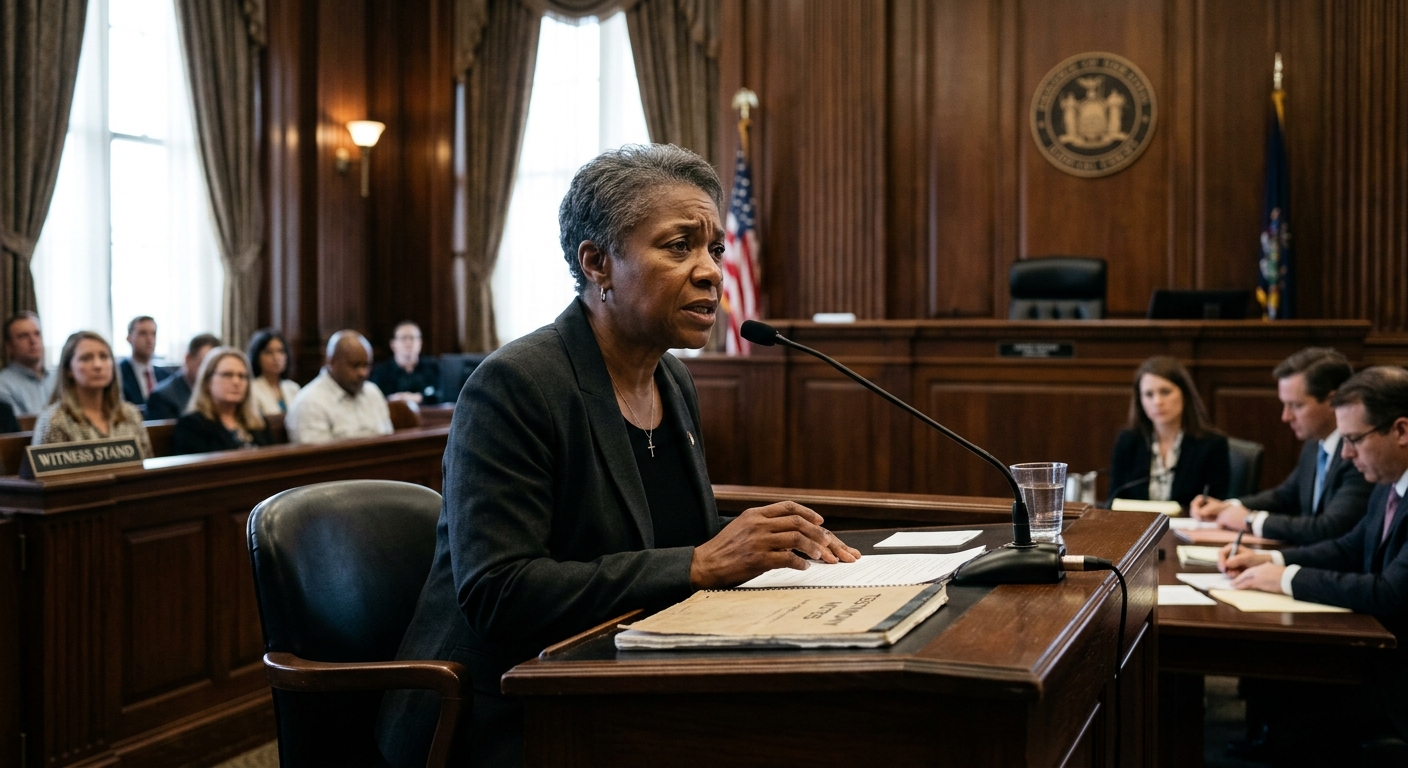
For decades, capital punishment has been a highly debated cornerstone of the American criminal justice system, frequently justified as the ultimate deterrent and the highest form of retribution. However, the tide of public and legal opinion has been shifting dramatically in recent years. Across the United States, government-appointed review commissions and legislative committees have increasingly convened to reevaluate the efficacy, morality, and financial viability of the death penalty. These formal inquiries are crucial, as they provide a structured platform for legal experts, civil rights advocates, and everyday citizens to present empirical evidence and personal testimony regarding the grim realities of capital punishment.
When these commissions open their doors to public hearings, the narrative that unfolds often contradicts the traditional justifications for executions. Far from a flawless mechanism of justice, the testimonies paint a picture of a deeply flawed institution heavily burdened by systemic inequities. By meticulously analyzing the proceedings of these hearings, we can begin to understand the complex arguments driving the modern movement toward abolition.
The Crucial Role of State Review Commissions
State-sponsored review commissions are typically established by governors or state legislatures to conduct independent, objective audits of how capital punishment is administered. Composed of former judges, prosecutors, defense attorneys, law enforcement officials, and academic researchers, these panels are tasked with digging beyond the emotional surface of the death penalty to examine its procedural mechanisms.
The mandate of such commissions is rarely to abolish the practice outright, but rather to determine whether it is applied fairly, accurately, and consistently across jurisdictions. Through rigorous public hearings, they invite testimony from individuals who interact with the system firsthand. These hearings serve as a public record, exposing administrative blind spots and forcing lawmakers to confront uncomfortable truths about geographic disparities, prosecutorial misconduct, and the arbitrary nature of sentencing.
Because these panels demand empirical rigor and sworn testimony, the findings they produce carry significant legislative weight. Historically, the reports generated from these commissions have served as the catalyst for sweeping reforms, executive moratoriums on executions, and, in several states, the total repeal of capital punishment statutes.
Voices of the Victims: A Shift in Perspectives
Breaking the Myth of ”Closure”
One of the most profound developments in recent commission hearings is the powerful testimony delivered by the surviving family members of murder victims. For a long time, the justice system assumed that families of victims uniformly desired the execution of the perpetrator to achieve a sense of ”closure.” However, recent hearings have highlighted a growing demographic of survivors who vehemently oppose capital punishment.
Testimonies from these families reveal that the death penalty process often exacerbates their trauma. Capital cases require bifurcated trials, extensive pre-trial motions, and decades of constitutionally mandated appeals. For the families, this means returning to court repeatedly, reliving the darkest moments of their lives under the glare of media attention. Many survivors testify that true closure is an internal healing process, one that is actively hindered by the prolonged and agonizing legal theater required to put a person to death.
Resource Diversion from Healing and Prevention
Beyond the emotional toll, victim testimonies frequently highlight a stark misallocation of state resources. Witnesses argue that the millions of dollars spent pursuing a single death sentence could be far better utilized if redirected toward initiatives that genuinely aid victims and prevent future violence. Advocates point out that state funds consumed by the capital appellate process actively drain budgets that would otherwise support trauma counseling, grief support services, restitution programs, and specialized investigative units designed to solve cold cases.
Unmasking Racial Bias in Capital Punishment
Perhaps no topic dominates death penalty commission hearings quite like the issue of systemic racial bias. For decades, civil rights advocates have argued that capital punishment is disproportionately wielded against minority populations, a claim that has been repeatedly validated by statistical analyses submitted as evidence in these hearings.
Experts testifying before review panels consistently point to what is known as the ”race-of-victim” effect. Comprehensive empirical studies have demonstrated that the criminal justice system values human lives differently based on race. According to landmark research analyzing execution data in the United States, individuals accused of murdering white victims are significantly more likely to face the death penalty compared to those accused of murdering Black victims. In some jurisdictions, defendants in white-victim cases were shown to be up to four times more likely to be executed than those in minority-victim cases.
Furthermore, implicit bias often infects the jury selection process, the charging decisions made by prosecutors, and the sentencing outcomes. Testimonies from sociologists and legal scholars stress that this bias is not merely a relic of historical prejudice, but an ongoing, measurable phenomenon that renders the equitable application of the death penalty virtually impossible.
The Staggering Economic Cost of Death Row
A persistent public misconception is that executing a prisoner is more cost-effective than incarcerating them for life. When commissions analyze the economic impact of the death penalty, municipal and state accountants deliver testimonies that definitively shatter this myth. The financial burden of a capital case far exceeds that of a non-capital first-degree murder case, primarily due to the stringent legal requirements intended to prevent the execution of the innocent.
Every phase of a death penalty case is exceptionally resource-intensive. Jury selection takes longer, more expert witnesses are required, and the defense must conduct an exhaustive mitigation investigation into the defendant’s background. Following a conviction, the state must navigate a labyrinthine appeals process. Studies submitted to government commissions, such as those evaluating the system in Maryland, have estimated that a single death penalty case can cost taxpayers approximately $3 million—significantly more than housing a prisoner for the remainder of their natural life.
| Phase of Justice Process | Capital Case (Death Penalty) | Non-Capital Case (Life Imprisonment) |
|---|---|---|
| Pre-Trial & Trial | Extensive mitigation, complex jury selection (death qualification), dual-phase trial structure. Costs can exceed $1 million. | Standard criminal trial procedures, single-phase. Substantially lower initial court costs. |
| Appellate Process | Mandatory, automatic appeals at state and federal levels spanning decades. | Standard appeals, usually resolved within a few years. |
| Incarceration | Maximum security ”Death Row” housing, requiring specialized staffing and solitary conditions. | General population housing, which is significantly less expensive per day. |
The Crisis of Adequate Legal Representation
During state hearings, some of the most compelling testimony comes from legal ethics experts and appellate defenders who highlight the severe crisis in legal representation for indigent defendants. A fundamental tenet of the American legal system is the right to a fair trial, yet the reality on death row suggests that capital punishment is often reserved not for those who commit the most heinous crimes, but for those who possess the worst legal representation.
Testimonies reveal that capital defendants are frequently assigned public defenders who are overwhelmingly burdened by massive caseloads, severely underfunded, and lack the specialized training required to navigate complex death penalty litigation. In numerous instances, appellate courts have overturned death sentences because the original trial counsel failed to investigate mitigating evidence, missed crucial filing deadlines, or even slept through parts of the trial. Commissions reviewing these cases recognize that when the state’s power to execute is coupled with an inadequate defense, the risk of a catastrophic miscarriage of justice skyrockets.
Risking the Ultimate Irreversible Error: Exonerations
The gravest concern presented to any death penalty commission is the very real threat of executing an innocent person. Testimonies from exonerated death row survivors provide a chilling reminder of the system’s fallibility. These individuals recount harrowing stories of being convicted based on coerced confessions, flawed forensic science, unreliable jailhouse informants, and prosecutorial misconduct.
Witnesses representing innocence projects emphasize that human justice systems are inherently imperfect, and any system prone to error cannot be entrusted with irreversible punishments. The sheer volume of post-conviction exonerations facilitated by modern DNA testing has fundamentally undermined confidence in the accuracy of capital verdicts, prompting many commission members to question whether the systemic risks outweigh any perceived benefits.
The Path Forward: Reimagining Justice
As state commissions continue to compile thousands of pages of testimony documenting racial bias, financial waste, and unacceptable error rates, the resulting policy recommendations frequently point toward a singular conclusion: the death penalty cannot be meaningfully reformed. Instead, experts advocate for life imprisonment without the possibility of parole as a secure, cost-effective, and reversible alternative that protects society without compromising moral integrity.
By listening to the comprehensive testimonies of victims, economists, and legal scholars, lawmakers are increasingly empowered to dismantle a flawed system. In its place, resources can be reinvested into community violence prevention, actual victim restitution, and creating a criminal justice infrastructure focused on genuine rehabilitation and restorative justice.
Frequently Asked Questions (FAQs)
Why do some victims’ families testify against the death penalty?
Many victims’ families oppose the death penalty because the mandatory, decades-long appeals process constantly re-traumatizes them. Instead of closure, it prolongs their grief. Furthermore, they often advocate for state funds to be reallocated from costly death penalty trials into victim support services and crime prevention.
Is it true that the death penalty costs more than life in prison?
Yes. Comprehensive economic analyses presented to state commissions have consistently shown that the death penalty is vastly more expensive than life imprisonment. The high costs are primarily due to complex pre-trial investigations, bifurcated trials, extensive required appeals, and specialized high-security incarceration on death row.
How does systemic racial bias affect capital punishment?
Statistical evidence demonstrates that race plays an outsized role in capital sentencing. Studies show a persistent ”race-of-victim” bias, where defendants are significantly more likely to receive a death sentence if the victim is white compared to if the victim is a person of color, indicating an unequal valuation of life within the justice system.
What role do review commissions play in death penalty reform?
Review commissions act as independent, objective bodies tasked with analyzing the administration of the death penalty. By hosting public hearings and gathering empirical data, they expose administrative flaws, economic burdens, and legal inequities, often serving as the foundational catalyst for legislative reform or outright abolition.
References
- #BlackLivesDon’tMatter: race-of-victim effects in US executions, 1976–2013 — Frank R. Baumgartner, Amanda J. Grigg & Alisa Margetta. Politics, Groups, and Identities. 2015-04-08. https://doi.org/10.1080/21565503.2015.1024265
- Cost of the Death Penalty in Maryland — John Roman, Aaron Chalfin, Aaron Sundquist, Carly Knight, Askar Darmenov (Office of Justice Programs / Urban Institute). 2008-03-01. https://www.ojp.gov/ncjrs/virtual-library/abstracts/cost-death-penalty-maryland
- An Analysis of the Economic Costs of Seeking the Death Penalty in Washington — Katherine Beckett & Heather Evans (University of Washington). 2015-01-01. https://lsj.washington.edu/sites/lsj/files/research/capital_punishment_beckettevans_10-16-14.pdf
Similar Articles








Read full bio of medha deb




