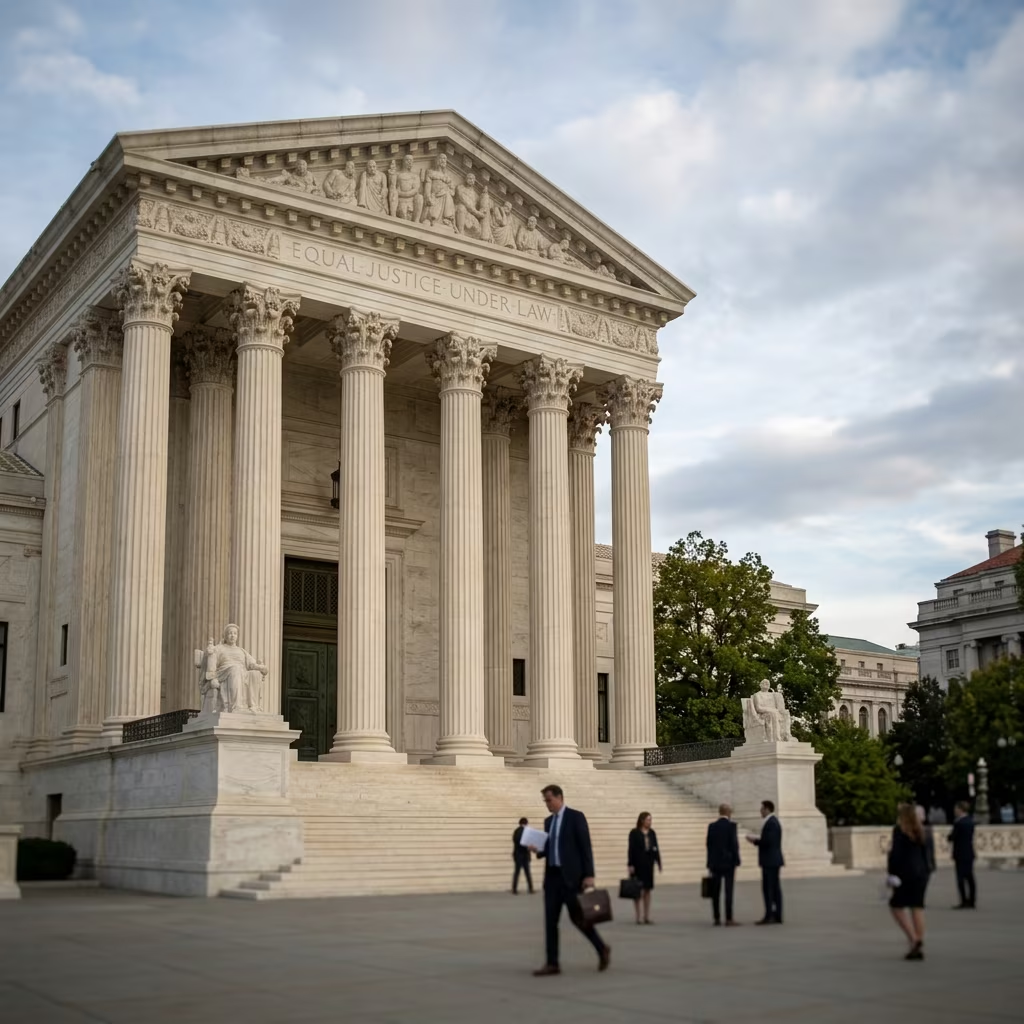
New York City’s **rent control** and **rent stabilization** framework has once again survived a major legal test. Recent petitions by landlord groups asking the United States Supreme Court to dismantle the city’s rent regulation regime were declined, leaving in place lower court rulings that upheld New York’s long-standing tenant protections. This outcome preserves a system that affects hundreds of thousands of apartments and shapes the city’s housing market in fundamental ways.
Background: How New York’s Rent Regulation System Works
New York uses two primary forms of rent regulation: rent control and rent stabilization. While often discussed together, they are legally distinct and operate under different rules.
Rent Control in New York City
Rent control is the older of the two systems and applies to a shrinking group of apartments and tenants. In New York City:
- Covered buildings: Generally buildings constructed before February 1, 1947.
- Tenant eligibility: Typically tenants (or succession tenants) in continuous occupancy since before July 1, 1971.
- Maximum Base Rent (MBR): Rents are governed by a maximum base rent system, adjusted every two years to reflect operating costs, subject to strict limits and conditions.
Under the MBR system, owners who certify that they provide essential services and have corrected violations may raise rents annually by the lesser of 7.5% or the average of the most recent annual rent stabilization increases until the regulated rent reaches the MBR. Tenants may challenge proposed increases if building conditions or owner expenses do not justify higher rents.
Rent Stabilization: The Larger Regulated Market
Rent stabilization covers a much larger portion of the city’s rental housing stock than rent control. In New York City:
- Covered buildings: Generally buildings with six or more units built between February 1, 1947 and December 31, 1973.
- Tenants: Most tenants who took occupancy after June 30, 1971 in qualifying buildings are rent stabilized rather than rent controlled.
- Vacancy decontrol: When a rent-controlled apartment becomes vacant, it typically converts to rent stabilization if the building meets statutory criteria.
Rent stabilization sets rules for annual rent increases, lease renewals, and tenant protections, with specific percentages determined by the Rent Guidelines Board based on economic conditions and operating cost data. New tenants in newly stabilized units may negotiate initial rent but retain the right to challenge the amount as unfair through a fair market rent appeal process.
Comparison of Rent Control and Rent Stabilization
| Feature | Rent Control | Rent Stabilization |
|---|---|---|
| Typical Building Age | Built before Feb. 1, 1947 | Built between Feb. 1, 1947 and Dec. 31, 1973 |
| Tenant Eligibility | Continuous occupancy since before July 1, 1971 | Most post-1971 tenants in covered buildings |
| Rent Setting Mechanism | Maximum Base Rent system, adjusted every 2 years | Annual guideline increases set by Rent Guidelines Board |
| Status on Vacancy | Unit becomes decontrolled and usually moves to stabilization | Rules depend on statute and regulatory changes |
| Scope | Small, shrinking share of units | Much larger share of regulated rental stock |
The Legal Battle: Landlord Challenges to Rent Stabilization
Over the past several years, landlords and trade associations have mounted constitutional challenges to New York’s rent stabilization laws, arguing that strict limits on rent increases, strong tenant protections, and constraints on vacancy turnover amount to an unconstitutional taking of property or violate due process. These lawsuits sought to reframe rent regulation as a burden on property rights rather than a permissible exercise of government authority in housing policy.
Key Federal Cases Upheld by the Second Circuit
The United States Court of Appeals for the Second Circuit played a central role in evaluating these claims. In early 2023, the Second Circuit affirmed decisions from federal district courts in multiple cases, including challenges brought by landlord groups and individual property owners. The court rejected theories that New York’s updated rent stabilization regime constituted a per se physical taking or an unreasonable regulatory taking under the Fifth Amendment.
According to reporting by housing advocates and legal organizations, the Second Circuit’s decision underscored that rent stabilization, as modified in recent state reforms, remained within the bounds of established constitutional doctrine on economic regulation and property use.
Landlord Arguments and Constitutional Theories
Landlord plaintiffs advanced several core arguments:
- Physical takings claim: That rent regulation effectively forces owners to house tenants at controlled rents and unduly restricts the owner’s right to exclude, amounting to a physical occupation of property without just compensation.
- Regulatory takings claim: That limits on rent increases, restrictions on evictions, and occupancy rules so dramatically reduce the economic value of rental property that they become a compensable regulatory taking.
- Due process and contract claims: That changes to rent stabilization, including recent reforms, interfere with existing contracts and property expectations in ways that violate due process.
Courts have largely rejected these arguments, citing long-standing precedents that allow governments to regulate rents and landlord–tenant relationships, particularly in markets with acute housing shortages or affordability crises.
The Supreme Court’s Role: Certiorari Denied
After losing in the Second Circuit, landlord groups petitioned the United States Supreme Court to review the decisions. The Supreme Court, however, declined certiorari—meaning it chose not to hear the cases—thus leaving the lower court rulings intact.
What Denial of Certiorari Means
When the Supreme Court denies certiorari, it does not issue an opinion on the merits of the dispute; instead, it simply declines to review the case. This has two important practical effects:
- The lower court decision remains binding within its jurisdiction—in this instance, the Second Circuit’s rulings continue to govern federal constitutional challenges to New York rent stabilization.
- The denial signals that, at least for now, the Supreme Court is not prepared to use these cases as vehicles to redefine the law on rent control, tenant protections, or takings doctrine.
News coverage highlighted that the Court’s refusal to take the appeals effectively preserved New York’s decades-old rent regulation framework and avoided a nationwide ruling that might undermine similar laws in other jurisdictions.
Related National Litigation on Tenant Protections
Challenges to rent regulation are not confined to New York. For example, landlords in Los Angeles have brought constitutional claims against that city’s COVID-era eviction moratorium, arguing that limits on evictions and rent collection amount to a physical taking requiring compensation. The Ninth Circuit rejected these physical takings claims in 2024, and the Supreme Court has been asked to consider whether to review the case. This broader litigation landscape shows that tenant protection measures remain a point of contention in federal courts across the country.
Impact on Tenants and Landlords in New York
The Supreme Court’s decision not to review the New York cases has immediate and concrete implications for tenants, landlords, and local policymakers.
For Tenants: Continued Stability and Predictability
For tenants in rent-controlled and rent-stabilized units, the denial of certiorari offers a measure of stability:
- Rent protections remain in force: Annual increases continue to be limited under existing rules and guidelines.
- Security of tenure: Strong protections against evictions and non-renewal of leases under the stabilization framework continue to apply, subject to statutory grounds.
- Predictable regulation: The legal status of rent stabilization is reinforced, reducing immediate fear of a sudden deregulation through federal court intervention.
In cities like Kingston, state decisions upholding local adoption of emergency tenant protection statutes further strengthen the landscape of tenant protections. New York’s highest state court recently upheld Kingston’s vacancy study and its implementation of the Emergency Tenant Protection Act, supporting the city’s authority to regulate rents and stabilize housing costs.
For Landlords: Ongoing Regulatory Obligations
Landlords must continue to operate under the existing rent regulation framework:
- Compliance with MBR and guidelines: Owners of rent-controlled units are still subject to the MBR system and related certification requirements.
- Registration duties: When a rent-controlled apartment becomes vacant and shifts to rent stabilization, owners must register the unit and comply with stabilization rules.
- Limited rent flexibility: The refusal of federal courts to recognize rent stabilization as a constitutional taking means that economic frustrations with regulated rents remain policy questions, not constitutional claims.
Some landlords will continue to pursue changes through legislative advocacy or local policy processes, but the path of overturning rent stabilization through federal constitutional litigation is significantly narrowed by the Second Circuit’s rulings and the Supreme Court’s inaction.
Policy and Legal Significance for Housing Regulation
The Supreme Court’s decision not to hear New York’s rent control and stabilization challenges carries broader implications for housing policy nationwide.
Affirming Government Authority to Regulate Rents
By declining to revisit the Second Circuit’s decisions, the Supreme Court leaves in place doctrinal support for the idea that rent regulation can be a legitimate tool of housing policy, even where it substantially affects landlords’ potential income. Courts have consistently treated rent control as part of permissible economic regulation, rather than categorizing it as an automatic constitutional taking.
Influence on Other Jurisdictions
Jurisdictions considering or expanding rent regulation—such as municipalities adopting emergency tenant protection laws—can look to New York and its affirmed framework as a reference point. The New York Court of Appeals’ endorsement of Kingston’s use of the Emergency Tenant Protection Act, including vacancy studies and negative guideline adjustments, illustrates how local governments can craft rent policies responsive to local vacancy rates and affordability conditions while staying within statutory bounds.
Future Litigation Pathways
Although the current round of landlord challenges has been denied at the Supreme Court, future cases could revisit similar issues under different factual circumstances or in other circuits. Litigation over eviction moratoria and other tenant protections continues, and conflicting decisions among appellate courts could eventually draw Supreme Court attention. For now, however, New York’s model of rent stabilization stands as a legally resilient example of robust tenant protection.
Frequently Asked Questions (FAQs)
Is the Supreme Court’s denial of certiorari a ruling that rent control is constitutional?
No. A denial of certiorari simply means the Supreme Court chose not to hear the case. It leaves the Second Circuit’s rulings intact, which upheld New York’s rent stabilization laws against constitutional challenges.
Do rent-controlled apartments still exist in New York City?
Yes, but they represent a relatively small and declining share of the rental stock. Rent control generally applies to apartments in buildings built before February 1, 1947 where tenants have maintained continuous occupancy since before July 1, 1971. When these units become vacant, they typically transition to rent stabilization if the building qualifies.
What is the difference between rent control and rent stabilization?
Rent control uses a Maximum Base Rent system with periodic adjustments, primarily for long-term tenants in very old buildings. Rent stabilization covers a broader set of units in mid-20th-century buildings and relies on annual rent guidelines set by the Rent Guidelines Board, along with standardized protections for lease renewals and evictions.
Can landlords still challenge rent regulation laws?
Landlords can bring new legal challenges, but recent federal decisions in the Second Circuit and the Supreme Court’s refusal to review those rulings make such challenges more difficult. Many disputes now focus on specific implementation issues, local vacancy studies, or the details of emergency tenant protection laws rather than broad constitutional attacks.
How do local tenant protection measures, like Kingston’s ETPA, fit into this landscape?
New York’s state courts have affirmed that municipalities can adopt emergency tenant protection measures when vacancy studies and statutory criteria are satisfied. In Kingston, the state’s highest court upheld the city’s use of the Emergency Tenant Protection Act and related rent guidelines, showing that local governments retain significant authority to regulate rents within the framework of state law.
References
- Supreme Court Declines Landlord Challenge in Major Victory for Rent Stabilization in New York — Selendy Gay Elsberg. 2024-02-22. https://www.selendygay.com/news/general/2024-02-22-supreme-court-declines-landlord-challenge-in-major-victory-for-rent-stabilization-in-new-york
- Federal Court Upholds New York’s Rent Stabilization Law; Plaintiffs Plan to Appeal to Supreme Court — National Low Income Housing Coalition. 2023-02-21. https://nlihc.org/resource/federal-court-upholds-new-yorks-rent-stabilization-law-plaintiffs-plan-appeal-supreme
- Supreme Court Declines to Hear New York Rent Control Case — ABC News (YouTube segment). 2024. https://www.youtube.com/watch?v=Ntbh5jx2p4c
- A Major Property Rights Case Idles on Supreme Court Docket — Liberty Justice Center. 2024-09-09. https://libertyjusticecenter.org/newsroom/a-major-property-rights-case-idles-on-supreme-court-docket
- Rent Stabilization and Emergency Tenant Protection Act — New York State Homes and Community Renewal. 2025-06-18 (decision summary). https://hcr.ny.gov/rent-stabilization-and-emergency-tenant-protection-act
- Rent Control FAQs — New York City Rent Guidelines Board. Updated 2024. https://rentguidelinesboard.cityofnewyork.us/resources/faqs/rent-control/