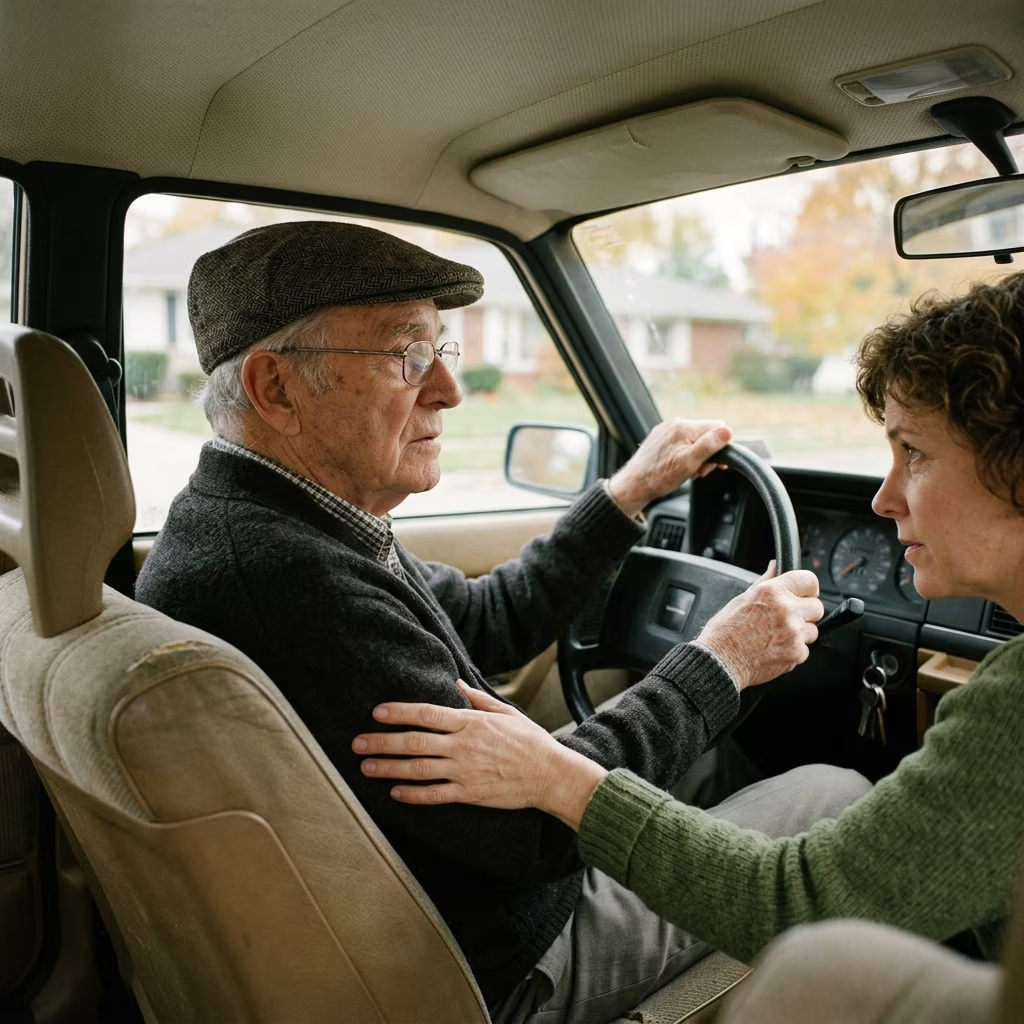
When an older adult can no longer drive safely, families often face a difficult balancing act: protecting the person and everyone on the road while also preserving dignity and independence. There is rarely a single perfect solution. In most cases, the best approach combines honest conversation, professional evaluation, and, if necessary, formal reporting to the state licensing authority.
This guide explains practical steps families can take when they believe an older driver has become unsafe. It also outlines ways to reduce conflict, prepare for a possible transition away from driving, and create alternatives so the loss of a license does not become a loss of independence.
Why the problem should be addressed early
Driving is often tied to identity, freedom, and daily routine. That is why many seniors resist giving it up, even when vision, reaction time, memory, or medical conditions begin to interfere with safe driving. Waiting too long can increase the risk of crashes, injuries, and legal consequences for the driver and family members who knew about the risk but did nothing.
Early action usually works better than a crisis response. Families have more room to talk, compare notes, and seek medical guidance before there is an accident, traffic citation, or emergency room visit. Taking small steps before the situation worsens can also make the eventual transition feel less abrupt.
Signs that driving may no longer be safe
There is no single age at which someone must stop driving. Safety depends on the driver’s abilities, not simply the date on a birth certificate. Still, certain warning signs often show that a person may need more supervision, a medical review, or a restriction on driving.
- Frequent confusion about familiar routes or destinations
- New dents, scrapes, or unexplained damage to the vehicle
- Getting lost in places that were once familiar
- Slow reaction to traffic lights, signs, or changes in traffic flow
- Difficulty turning, merging, backing up, or judging distance
- Vision or hearing problems that affect awareness on the road
- Side effects from medications that cause drowsiness or confusion
- Recent falls, fainting, seizures, or other health events that affect control
- Warnings from doctors, family members, or law enforcement
A single mistake may not mean a person must stop driving immediately. Repeated problems, however, are a strong signal that a closer look is needed. Families should document concerns as specifically as possible, including dates, incidents, and any professional advice already received.
Start with a respectful conversation
The first step is often the hardest: talking directly and respectfully. Many older adults fear that family members are trying to take away control, isolate them, or treat them like children. A calm discussion is more effective than a confrontation.
Choose a quiet time and focus on safety rather than blame. Instead of saying the person is a bad driver, describe the specific concerns you have noticed and explain that you want to help protect them and others. It can help to frame the conversation as a shared problem: how can the family keep the person mobile without relying on unsafe driving?
- Use concrete examples instead of general criticism
- Listen to the person’s concerns about losing independence
- Avoid arguing about every mistake or detail
- Offer alternatives before insisting on an immediate change
- Stay focused on safety, not punishment
Ask a doctor for an objective assessment
Medical input can be especially persuasive because it shifts the issue from family opinion to professional judgment. A primary care physician, geriatric specialist, eye doctor, or driving rehabilitation professional may be able to assess whether vision, cognition, medications, or physical limitations are interfering with safe driving.
If possible, share written examples of dangerous incidents with the clinician. Ask whether the condition should be treated, monitored, or reported. In some situations, the doctor may tell the patient directly that they should not drive, which can make the message easier for family members to support.
| Professional | What they can help evaluate | Why it matters |
|---|---|---|
| Primary care physician | Overall health, medications, chronic conditions | Can identify whether common medical issues affect driving safety |
| Eye specialist | Vision, field of view, night visibility | Visual problems often make driving more dangerous long before the person notices |
| Driving rehabilitation expert | Reaction time, coordination, cognition, road skills | Can give a practical, skills-based assessment |
| Specialist treating memory loss | Judgment, orientation, decision-making | Important when dementia or other cognitive decline is involved |
Make driving changes before removing the keys entirely
For some seniors, a complete stop is not necessary right away. A limited-driving plan may reduce risk while preserving some independence. This can be a useful bridge when a person is still willing to cooperate.
- Limit driving to daylight hours
- Avoid highways, heavy traffic, and difficult intersections
- Keep trips short and familiar
- Restrict driving in bad weather
- Reduce nighttime and long-distance travel
These restrictions are not a substitute for medical or legal intervention when the risk is serious. They are best used when the person still has enough judgment to follow the rules and when the family is monitoring for further decline.
Know when to involve the DMV or licensing authority
If discussions and medical advice do not resolve the issue, the next step may be a formal report to the state motor vehicle agency. Many states allow family members, doctors, police officers, or other concerned parties to report an unsafe driver for review. The agency may then require a medical form, a road test, a vision test, or other evaluation before allowing the person to keep or renew a license.
When making a report, be prepared to provide a factual account of why the person may be unsafe. Detailed information is more helpful than vague concern. Include any relevant health issues, recent accidents, near misses, confusion, or signs of impaired judgment. If the state permits anonymous or confidential reporting, that option may reduce family conflict.
The exact process differs by state, but the goal is the same: trigger a review by the licensing authority rather than relying on family members alone to enforce the decision. That can be especially helpful when the older adult refuses to listen to relatives but may respond to official action.
Build a transportation plan before the car is gone
Stopping unsafe driving is much easier when the family has a replacement plan. If no alternative exists, the older adult may feel trapped, isolated, or forced to keep driving despite the risk. Planning ahead can reduce resistance and preserve quality of life.
- Schedule rides with relatives or trusted friends
- Use senior transportation or paratransit services if available
- Arrange grocery delivery and prescription delivery
- Coordinate medical appointment transportation in advance
- Look into volunteer driver programs or community shuttles
The practical details matter. Where will the person get to church, the pharmacy, the barber, and the grocery store? If the answer is unclear, the family will likely face continued pressure to “just let them drive.” A transportation plan makes the transition more realistic.
Legal authority matters when property and safety are involved
Families sometimes assume they can simply take the keys or remove the car, but property rights still matter. If the senior has capacity and owns the vehicle, relatives may need legal authority such as a power of attorney, guardianship, or conservatorship before making major decisions about the car. The proper legal tool depends on the situation and the person’s decision-making ability.
If the person already has a durable power of attorney, the agent may have authority to manage transportation-related decisions, depending on the document’s wording and state law. If there is no such document and the senior refuses all help, a court process may be necessary in severe cases. Because these issues are state-specific, families should consider getting legal advice before taking action that could be viewed as interfering with property.
Practical steps families use when risk is immediate
When a driver is in immediate danger of harming themselves or others, families sometimes need faster action. The safest approach is always the least confrontational one that still protects people on the road. Depending on the situation, that may include taking steps to make the car unavailable while the family seeks medical or legal help.
- Hide or secure the keys if there is a real and immediate danger
- Park the vehicle in a less accessible location
- Arrange for a trusted person to hold the keys temporarily
- Disable the vehicle only if necessary and legally appropriate
- Contact local authorities if the person is actively driving unsafely
These steps should be used thoughtfully. They may reduce immediate risk, but they can also create conflict. That is why families should pair them with professional input, documentation, and a transportation plan.
How to reduce family conflict during the transition
The end of driving can trigger anger, sadness, and fear. Many older adults experience the change as a loss of status and autonomy. Families can reduce tension by keeping the process predictable and respectful.
- Use one main spokesperson to avoid mixed messages
- Agree on a family plan before the discussion begins
- Focus on future independence, not past mistakes
- Offer concrete help with errands and appointments
- Revisit the conversation gradually if the person is not ready
It is often better to preserve the relationship than to “win” the argument. A person who feels humiliated may hide driving, borrow a car, or refuse all assistance. A person who feels respected is more likely to cooperate.
Frequently asked questions
Can a family member legally stop an older adult from driving? Sometimes, but not always. The answer depends on whether the family member has legal authority, whether the person still has capacity, and what state law allows. In many cases, the safest route is to involve the doctor and the DMV rather than relying only on family intervention.
Can the DMV take away a license because of health concerns? Yes. Many states allow medical or safety-related review of a driver’s license when someone reports a concern. The agency may require additional testing or paperwork before deciding whether the person can keep driving.
What if the senior refuses to stop driving? Refusal is common. That is why families should combine respectful discussion, medical documentation, and, if necessary, formal reporting. If the danger is immediate, temporary steps may be needed to prevent the person from driving while the issue is reviewed.
Does losing a license mean the person must become isolated? No. The transition is easier when transportation alternatives are arranged in advance. Family rides, community services, and delivery options can help preserve independence even without a car.
Should the car be sold right away? Not necessarily. Selling the car may be appropriate in some situations, but it should be timed carefully and handled consistently with any ownership or legal issues. In many families, the first step is to secure safety and evaluate whether the vehicle can be used at all.
References
- Legal Steps to Stop an Unsafe Senior from Driving — Rocket Lawyer. 2026-07-10. https://www.rocketlawyer.com/family-and-personal/estate-planning/power-of-attorney/legal-guide/legal-steps-to-stop-an-unsafe-senior-from-driving
- Seniors and Driving — California Department of Motor Vehicles. 2026-07-10. https://www.dmv.ca.gov/portal/handbook/california-driver-handbook/seniors-and-driving/
- Maryland Resource Guide for Aging Drivers — Zero Deaths Maryland. 2026-04-01. https://zerodeathsmd.gov/wp-content/uploads/2026/04/MD-Resource-Guide-for-Aging-Drivers2.pdf
- When to Take the Car Keys From Elderly Drivers — A Place for Mom. 2026-07-10. https://www.aplaceformom.com/caregiver-resources/articles/keep-senior-drivers-safe
- Can you legally prevent an elderly parent from driving? — AgingCare. 2026-07-10. https://www.agingcare.com/questions/legally-prevent-elder-from-driving-144790.htm